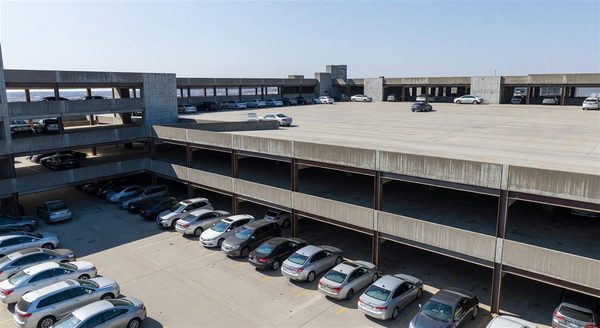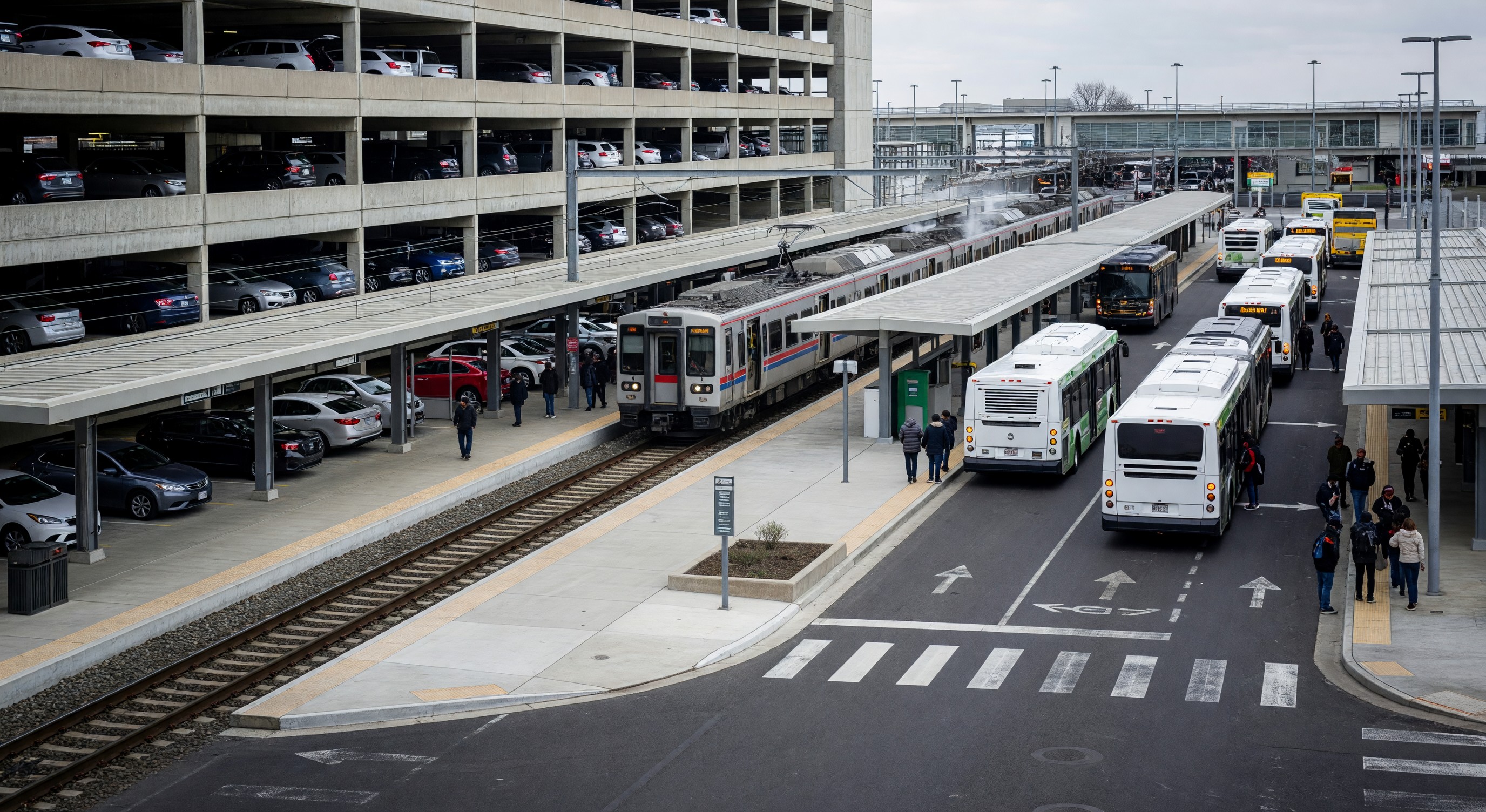
Transit hub parking — at commuter rail stations, major bus terminals, and intermodal transportation centers — serves commuters who use park-and-ride as their commute access mode and connects the transit network to a broader geographic catchment area than walkshed alone would provide. This parking vertical is shaped by transit agency policy as much as parking management practice — transit authorities make fundamental decisions about how much parking to provide, how to price it, and what to do with station-area land that profoundly affect operations. Understanding the intersection of transit policy and parking management is essential for professionals working at transit-adjacent parking facilities.
The Park-and-Ride Access Model
Park-and-ride parking at transit stations extends transit’s geographic reach by allowing drivers from beyond walking distance to access the transit network:
Catchment area extension: Without park-and-ride, a transit station serves riders who can walk, bike, or ride a bus to the station — typically a half-mile to one-mile radius. With park-and-ride, the station serves drivers from a multi-mile radius who can drive to park-and-ride within a reasonable time. In suburban and exurban contexts, park-and-ride dramatically increases the commuter population accessible to transit.
Mode shift benefit: A commuter who would otherwise drive their full commute instead drives to the transit station and completes the journey by train. This partial mode shift reduces vehicle miles on congested corridors into the urban core, reduces parking demand in downtown destinations, and provides the commuter with a cost and time-competitive alternative to full driving.
Demand characteristics: Transit hub parking demand is highly structured — most parkers arrive before the morning commuter train (7 to 9 AM), leave their car all day, and return in the evening (5 to 7 PM). The all-day occupancy model means that each space serves one commuter per operating day, unlike commercial parking where spaces may turn over multiple times.
Monthly Permit Programs for Commuters
Permit as access guarantee: Monthly permits at commuter rail stations provide access guarantees for parkers who depend on the facility to make their transit commute work. A commuter who has structured their life around park-and-ride access — selling a car, moving to a location near the train rather than near their employer — has much higher price inelasticity and access reliability need than a casual parker.
Waitlists as demand indicators: Transit hub parking facilities that consistently have waitlists for monthly permits have demonstrated excess demand at current pricing — an indicator that rates are below market or that supply expansion would be warranted. BART stations in the Bay Area have maintained waitlists for monthly permits for years at facilities where free or low-cost parking was offered, even as development pressure made the land valuable for other uses.
Pricing policy tension: Transit authorities face political pressure to keep park-and-ride pricing low — making transit accessible to suburban commuters who might otherwise drive downtown. But low pricing creates excess demand (waitlists), foregoes revenue that could fund transit operations, and makes a case for large park-and-ride facilities on valuable station-area land. BART’s transition to market-rate pricing at most stations has reduced this tension while generating significant new revenue.
Permit structure variation: Monthly permit programs at transit stations may offer guaranteed reserved spaces (premium), unreserved permits with access guarantee during a morning window, and daily/non-guaranteed permits for irregular commuters. This tiering accommodates different use patterns and willingness to pay.
Intermodal Facility Operations
Multi-modal coordination: An intermodal center that serves commuter rail, regional bus, local bus, shuttle, and rideshare access has more complex operations than a single-mode facility. Parking for commuters using different transit modes, kiss-and-ride (drop-off only) areas for commuters being dropped by vehicles, and TNC/rideshare staging areas all compete for ground space.
Kiss-and-ride design: Kiss-and-ride areas — where commuters are dropped off by a vehicle that does not park — must be adjacent to the station entrance, adequately sized for peak demand, and efficiently managed to prevent congestion. Time limits (5 to 10 minute maximum) and clear enforcement prevent kiss-and-ride areas from being used as parking.
Bus connection coordination: Parking design at intermodal centers must accommodate bus operations — bus maneuvering space, bus lanes, bus passenger loading areas — that differ from automobile circulation requirements. Separating bus circulation from automobile circulation reduces conflicts and safety risks.
Bicycle facilities: APBP (Association for Pedestrian and Bicycle Professionals) standards for bicycle facilities at transit stations call for secure bicycle parking (bike cages, lockers) near station entrances. Bicycle parking at transit stations extends the non-automotive first/last mile radius significantly, reducing parking demand from short-distance commuters who could bike to the station.
Coordination with Transit Authority Policy
Land use authority: The transit authority or regional transit agency typically sets fundamental parking policy at stations it owns or controls — pricing, supply, access criteria, and any restrictions on private parking development nearby. Private parking operators near transit stations must understand and respond to transit authority parking policies that affect demand for their facilities.
TOD policy impact: As transit authorities develop station-area TOD programs (converting surface parking to housing and mixed use), private parking operators near stations may see increased demand from displaced permit holders or, alternatively, decreased demand if TOD development adds housing density that produces transit-walkshed residents. Understanding the specific TOD trajectory at each station is essential for nearby parking operator planning.
Regional pricing coordination: Some regional transit networks coordinate parking pricing across stations to prevent demand concentration at low-priced stations that discourages transit use at higher-priced stations further into the network. MBTA commuter rail parking, BART station parking, and Metro-North parking (Metro-North/LIRR) all involve some degree of system-level pricing coordination.
Revenue and Financial Management
Revenue to transit agency vs. third party: At many transit stations, the transit agency owns the parking facility and captures the revenue — using it to offset transit operating costs. At some stations, transit agencies have leased or sold parking operations to private operators, with revenue sharing or lease payments flowing back to the transit agency. The appropriate structure depends on transit agency financial needs, operational expertise, and strategic goals.
Capital cost recovery: Transit station parking structures are expensive to build ($30,000 to $70,000 per space) and maintain. Revenue bond financing backed by parking revenue, or incorporation of parking cost into broader transit capital programs, must cover life-cycle maintenance in addition to initial construction.
Non-permit revenue: Daytime parking at transit stations — when permit holders are at their destinations — is available for non-commuter users who need all-day or partial-day parking. Revenue from these transient parkers supplements permit revenue without requiring additional space.
Frequently Asked Questions
What is the appropriate market-rate pricing for transit hub monthly permits? Market-rate transit hub monthly permits should reflect what the market will bear given the alternative (daily transient parking, monthly permits at comparable facilities). BART’s experience with market-rate pricing suggests that commuters in high-income markets will pay $100 to $200/month for reliable access, while commuters in lower-income suburban markets may be more price sensitive. Demand analysis — waitlist length at current prices, willingness-to-pay surveys — provides market information for rate-setting decisions.
How should transit agencies handle equity concerns about pricing transit hub parking? Equity concerns about parking pricing at transit hubs should be addressed through income-based discount programs or sliding-scale pricing for eligible low-income commuters — not by providing below-market pricing to all parkers regardless of income. Universal below-market pricing primarily benefits higher-income commuters (who are more likely to own vehicles and drive to park-and-ride) while reducing revenue available for transit service improvements.
What parking technology works best at commuter rail stations? Monthly permit credential management (RFID transponders or license plate-based permits) is the highest-priority technology for commuter rail stations, enabling automated entry without attendant interaction. Real-time occupancy monitoring that feeds availability apps helps commuters make access decisions. License plate recognition for enforcement of permit violations and time limits is effective for facilities with limited staff.
How does remote work affect transit hub parking demand? Remote and hybrid work patterns have reduced peak transit hub parking demand in markets where downtown office employment is the primary commuter destination. Some transit agencies have seen 15 to 30 percent fewer monthly permit holders at stations serving downtown-oriented commuters, while stations serving more varied employment destinations have been less affected. This demand reduction creates space for TOD development on some station-area parking and reduces the waitlist pressure that previously characterized many transit station parking programs.
Takeaway
Transit hub parking management operates at the intersection of transportation policy and parking operations, shaped by transit authority decisions about supply, pricing, and land use that fundamentally affect the context in which private and public operators manage station-area parking. The facilities that manage transit hub parking most effectively — with clear permit programs for regular commuters, efficient intermodal coordination, bicycle and alternative access facilities, and pricing that reflects market demand while accommodating equity considerations — deliver reliable commute access that supports transit ridership while contributing financially to the transit system’s operational sustainability. As TOD policy evolves and parking supply at many stations is reduced, the relationship between transit agencies and nearby private parking operators becomes increasingly important for maintaining commuter access while freeing high-value land for more intensive development.
Further Reading from Authoritative Sources
- US DOT transit hub parking policy, FTA commuter access standards, and park-and-ride guidance — The US Department of Transportation and its Federal Transit Administration publish transit hub parking policy guidance, park-and-ride standards, and commuter access frameworks that govern the transit agency decisions described throughout this article.
- IPMI transit hub parking management and commuter permit program guidance — IPMI publishes transit hub parking management standards, commuter permit program design guidance, and technology resources for parking operators at commuter rail stations and intermodal facilities.