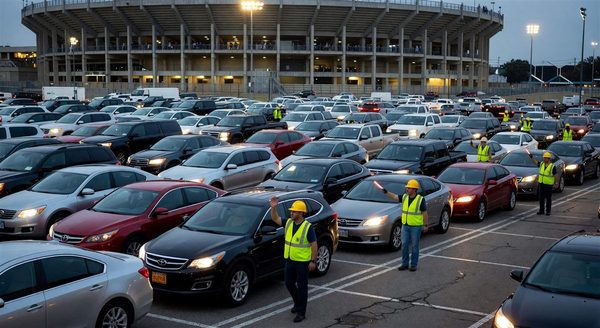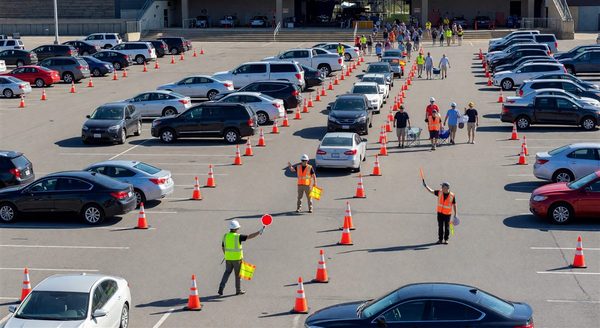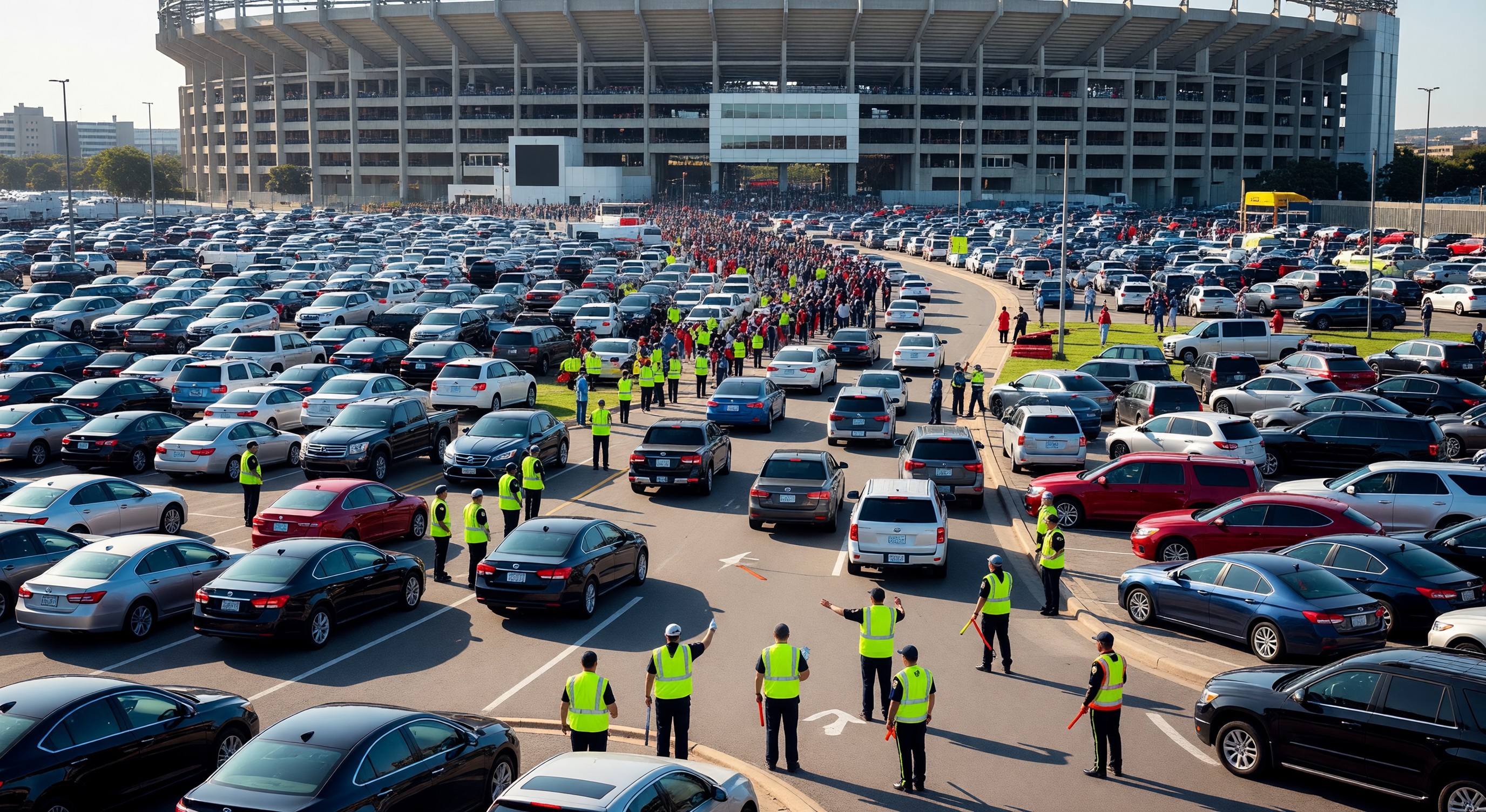
Professional and collegiate sports venues generate some of the most intense and culturally significant parking demand in the event parking vertical. A 70,000-seat NFL stadium hosting eight home games requires parking for 20,000 to 25,000 vehicles — all arriving within a two-hour window and many expecting to tailgate before entering the venue. The cultural significance of the parking and tailgating experience for sports fans means that parking operations at major venues are not just logistics exercises but part of the overall fan experience that affects attendance, loyalty, and venue revenue. Managing this complex, high-intensity, periodic demand requires specialized operational approaches distinct from both daily commercial parking and general event venue operations.
The Sports Venue Parking Context
Sports venue parking has distinctive characteristics:
Periodic high intensity: Unlike continuous commercial parking, stadium parking is inactive between games. A downtown arena hosting 40 NBA home games operates its parking at near-zero demand outside of event days. The parking infrastructure must be sized and staffed for intense event-day demand while sitting largely idle between events.
Fan culture and tailgating: For many sports fans, the pre-game parking lot experience — tailgating — is integral to attendance. NFL and college football tailgating creates demand for early arrival (3 to 4 hours before kickoff for major games), long dwell times, and behavioral accommodations (food preparation, alcohol, social gathering) that standard parking operations do not address. Tailgating policy — what is permitted, in which lots, with what equipment — is a major stakeholder management issue at football venues.
Season ticket holder parking rights: Season ticket holder packages at professional and major collegiate sports programs typically include parking privileges — specific lots or permit tiers assigned to season ticket tiers. Managing season holder parking as a loyalty benefit requires permit programs that reliably deliver promised access, which requires reserving capacity before single-game sales open.
Revenue significance: Parking revenue at major sports venues is significant — a 20,000-space operation at $40 per vehicle for 8 home games generates $6.4 million annually from a single sport season. Multi-sport venues (NBA arena also hosting concerts, hockey) multiply this revenue. Sports venue parking is a major ancillary revenue stream that teams and venue operators manage aggressively.
Game-Day Traffic Management
Zone-based traffic flow: Major stadium parking requires pre-planned traffic flow zones that route vehicles from multiple approach directions to appropriate parking lots without creating single-point congestion. Working with municipal traffic engineering to develop an event traffic management plan — including temporary signal timing plans, designated approach routes, and law enforcement support — is essential for venues generating significant external traffic.
Staggered arrival incentives: Some venues incentivize early arrival through early-bird parking pricing (discounted rates for arrival more than 2 hours before game time) or gate opening benefits. Early arrival distribution reduces the peak inbound traffic surge.
Multiple payment entry points: Long entry queues at single payment gates create dangerous situations as vehicles back up onto public roads. Multiple entry gates with distributed payment processing — or pre-paid passes that allow entry without payment processing — maintain entry throughput during surge arrival.
Real-time lot monitoring: Game-day operations staff need real-time visibility into lot fill rates to redirect overflow traffic before lots become completely full. Radio communication between lot attendants and a central operations coordinator, supported by overhead aerial or camera monitoring at major venues, enables real-time traffic management decisions.
Season Permit Programs
Tiered permit structures: Season ticket holder parking typically follows the same tier structure as ticket tiers — premium seating holders receive the best parking (closest to the venue, reserved spaces, covered if available), standard holders receive general admission parking with guaranteed access, and single-game buyers access remaining capacity at market rates.
Permit renewal and transfer: Season parking permits renew annually with season ticket renewal. Permit transfer policies — whether permits can be transferred when the season ticket holder cannot attend — affect fan satisfaction. Policies that allow permit transfers (accompanied by ticket transfer or separately) create flexibility that season holders value.
Waitlist management: At sold-out venues with more demand for premium parking than supply, waitlists for permit upgrades require fair management. FIFO waitlists with transparent upgrade criteria are preferable to opaque or discretionary assignment.
Single-game vs. season pricing: Single-game parking rates are typically higher than the per-game equivalent of season permit pricing — rewarding season commitment with a discount while capturing premium pricing from occasional attendees.
Tailgating Policy and Management
Tailgating lot designation: Venues that permit tailgating designate specific lots for tailgating activity, defining what equipment (grills, canopies, generators) is permitted, what time tailgating can begin, and when lots close after game end. Clear policy communicated before arrival reduces conflicts.
Safety and fire code compliance: Charcoal and propane grilling creates fire safety requirements — minimum distances from vehicles and structures, fire extinguisher requirements, and in some jurisdictions fire inspection compliance for large gatherings. Venues must ensure tailgating policies comply with local fire and safety codes.
Alcohol policy coordination: Venues with alcohol service face liability questions about tailgating alcohol — at what point does venue responsibility for impaired driving begin? Designated driver programs, rideshare integration, and on-site monitoring that identifies impaired drivers are risk management elements for tailgating operations.
Revenue from tailgating amenities: Some venues charge premium pricing for designated tailgating lots (grilling permitted, guaranteed space, amenities) vs. standard parking at lower rates. Tailgating premium pricing captures willingness to pay among fans who value the full tailgating experience.
Egress Management
Stadium egress — all vehicles attempting to leave within 30 to 60 minutes of game end — is the most logistically challenging element of sports venue parking:
Lot release sequencing: Releasing lots in sequence (farthest lots first, premium lots after a brief delay) distributes egress rather than releasing all lots simultaneously. Sequencing requires clear communication to parkers (announced at game end, signposted in lots) and enforcement that holds exit lanes until the scheduled release time.
Traffic control at chokepoints: External intersections that serve as the primary egress routes for large volumes of departing vehicles require police traffic control or enhanced signal management. Without active traffic control, parking lot exits back up into the lot as vehicles cannot merge into public road traffic.
Real-time app guidance: Navigation app integration that can direct departing vehicles to less-congested exit routes (based on real-time traffic monitoring) distributes post-game traffic across multiple egress routes rather than concentrating on default routes.
Frequently Asked Questions
How do sports venues balance tailgating culture with safety requirements? The most effective approach is clear, published tailgating policy that defines permitted activities, lot-specific rules, and compliance expectations — enforced consistently but respectfully by parking staff who understand the cultural significance of tailgating. Venues that attempt to significantly restrict established tailgating traditions without compelling safety justification risk significant fan backlash; venues that ignore safety requirements expose themselves to liability. The balance is firm, fair, communicated-in-advance policy enforcement.
What parking technology has the highest impact at sports venues? Pre-paid pass systems integrated with ticket checkout are highest-impact — converting the majority of parkers to pre-paid entry reduces gate processing time from 15-20 seconds per vehicle to 3-5 seconds, dramatically increasing entry throughput. LPR-based entry for pre-paid passes improves this further. Real-time lot fill monitoring with operations center visibility is second-highest impact for operational management decisions.
How should venues price parking for playoff or high-demand games? Variable event pricing — higher rates for playoff games, rivalry games, and high-demand events — captures willingness to pay from fans who are particularly motivated to attend specific games. The appropriate premium (50 to 150 percent above regular-season rates for championship games) should be communicated clearly and in advance of purchase, both to avoid customer surprise and to capture pre-sale revenue from enthusiastic fans.
What is the typical parking revenue share arrangement between teams and stadium operators? Revenue sharing arrangements between teams and stadium/parking operators vary significantly based on facility ownership structure, lease terms, and negotiated agreements. Common structures include: stadium operator retains 100% of parking revenue with a fixed lease to the team; revenue split (70/30 to 85/15 operator/team); or team manages parking directly as part of overall venue control. There is no industry standard, and each arrangement reflects the specific power dynamics and ownership structures of the parties.
Takeaway
Sports stadium and arena parking management requires operational excellence in conditions that are extreme by commercial parking standards — massive simultaneous demand, cultural tailgating traditions, high-value season holder relationships, and egress challenges that test every element of the transportation system. Venues that manage these challenges well — with coordinated traffic management plans, tiered season permit programs, thoughtful tailgating policies, pre-paid entry systems, and sequenced egress protocols — deliver a parking experience that supports the overall fan experience rather than detracting from it. For venues where parking is a significant ancillary revenue stream, operational excellence in parking directly supports the financial performance of the franchise or institution.
Further Reading from Authoritative Sources
- ITE event parking traffic management standards for sports and entertainment venues — ITE provides traffic engineering and event parking technical resources directly applicable to sports venue traffic management plans, signal coordination, and egress management described in this article from a transportation engineering standards perspective.
- US Access Board ADA parking guide for sports venue accessible event parking — The US Access Board ADA parking guide provides the accessible space count, dimensional, and route requirements applicable to sports venue event parking described in this article, supporting the accessible parking planning and event-day management requirements.