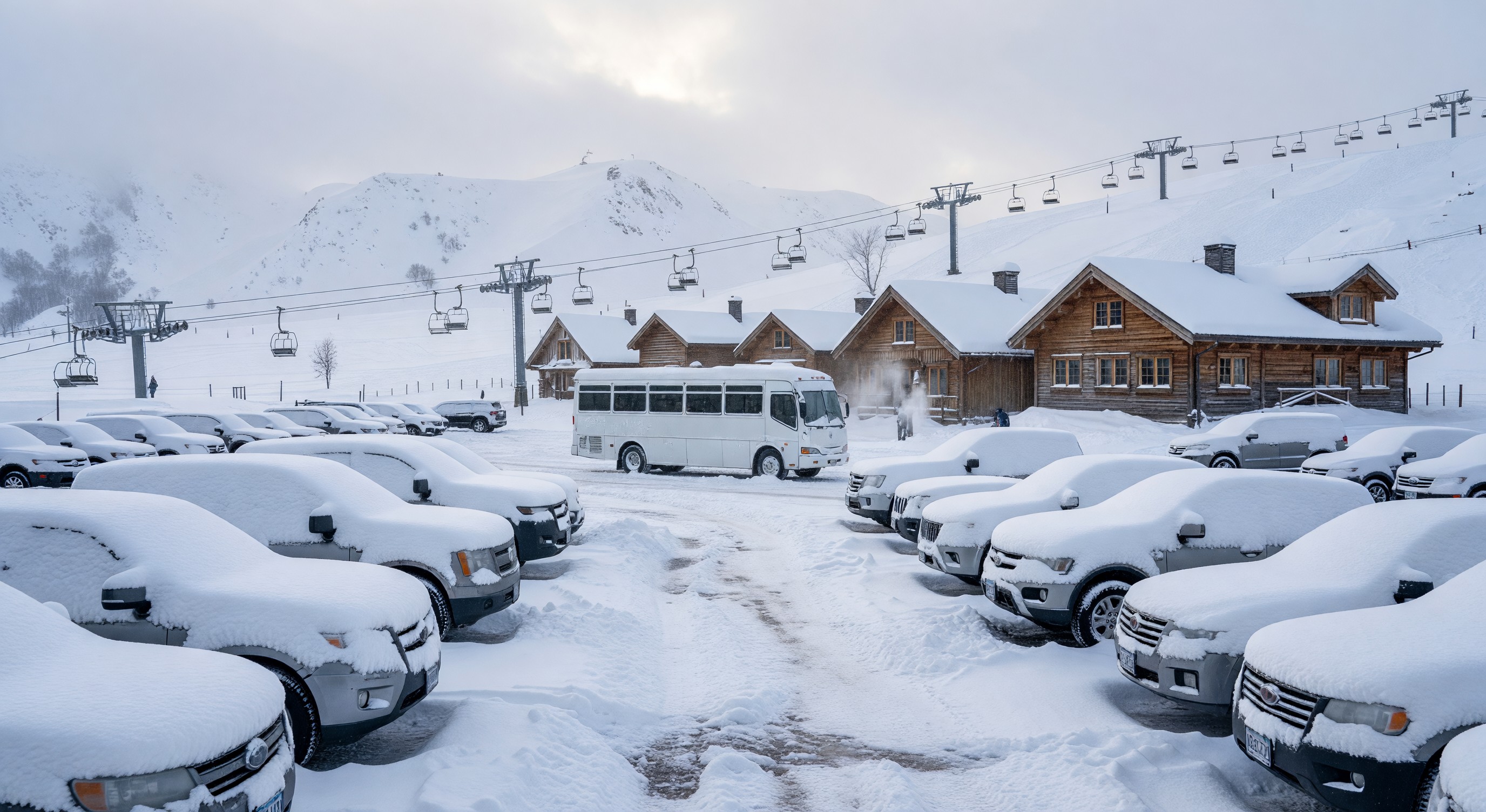
Ski resort parking management combines the demand concentration of event parking with the environmental challenges of mountain winter operations. Skiers and snowboarders arrive in a concentrated morning wave (8 to 10 AM), seek guaranteed parking for a full day of skiing, and return to their vehicles in the afternoon (3 to 5 PM). Meanwhile, the parking surfaces themselves are covered in snow and ice, lots must be plowed and sanded before arrival, drainage and surface conditions present challenges unknown to warm-climate parking operations, and shuttle buses connect outlying lots to the base area through mountain winter conditions. Understanding ski resort parking as a distinct operational vertical helps facility managers and parking professionals deliver safe, efficient parking in one of the most challenging environments in the industry.
Ski Resort Parking Demand Characteristics
Seasonal concentration: Ski resort parking demand is concentrated in the winter operating season — typically December through March or April at most North American resorts, with some operations extending to May or beyond at high-altitude facilities. The off-season is characterized by near-zero demand unless the resort operates summer activities.
Peak day concentration: Within the season, demand is concentrated on certain days — holiday periods (Christmas through New Year’s, Presidents’ Day weekend, Martin Luther King Jr. weekend), powder days after significant snowfall, and weekend days during the season. A resort that averages 1,500 vehicles on a weekday may see 4,000 on a peak holiday Saturday.
Morning arrival surge: Skiers and snowboarders seek early arrival — lift tickets are the same price regardless of arrival time, and early arrival means first access to fresh snow, shorter lift lines, and a full day of skiing. The 8 to 10 AM arrival window is extremely concentrated; parking operations that cannot process this surge quickly create frustration before the ski day begins.
All-day duration: Unlike most parking contexts where spaces turn over during the day, ski resort parking is almost entirely all-day parking — arrival in the morning, departure in the afternoon. No midday turnover occurs (ski boots and equipment make leaving and returning impractical for most skiers). Pricing and capacity planning must accommodate this all-day commitment.
Winter Operations and Snow Management
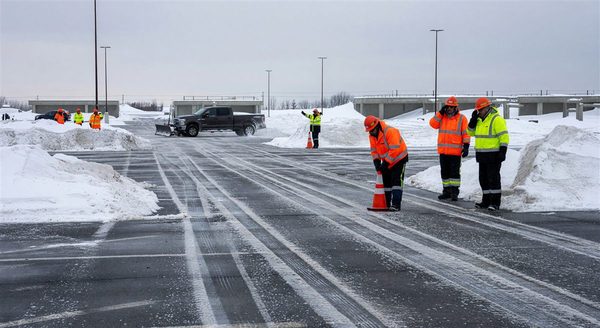
Snow removal logistics: The central winter operations challenge is clearing parking surfaces of accumulated snow before the morning arrival surge. A major storm can deposit 12 to 36 inches of snow overnight; clearing and re-opening a 2,000-space parking lot requires significant equipment capacity (multiple front-end loaders, salt/sand trucks, plow crews) operating through the night.
Equipment requirements: Ski resort parking snow removal requires purpose-built equipment — commercial plow trucks, articulated loaders, sand/salt spreaders — maintained for reliable winter operation. Equipment failure during a major storm can leave lots inaccessible for the morning surge. Maintenance contracts, spare equipment, and mutual aid agreements with neighboring operations are risk management tools.
Surface treatment: Icy parking surfaces at mountain elevations present slip-and-fall hazards that exceed typical urban parking conditions. Sand and salt application, appropriate for the surface type and temperature (salt loses effectiveness below -10°C), maintained throughout the operating day as conditions change, is a liability management requirement as well as a customer service standard.
Drainage in freeze-thaw conditions: Parking lot drainage that functions in summer may fail in winter freeze-thaw cycles — drains freeze, melted snow refreezes as ice sheets, and water accumulates on surfaces. Drainage infrastructure designed for winter mountain conditions includes heated drain collars, positive drainage grades that move water away from walking surfaces, and inspection and maintenance protocols for pre-season readiness.
Season Pass Holder Parking Programs
Priority parking as a benefit: Season passes are the highest-value product for ski resort guests — frequent skiers invest significantly in season access. Priority parking — guaranteed access in preferred lots, specific reserved sections, or timed early entry — is a season pass benefit that meaningfully improves the ski day experience.
Parking permit tiers: Many resorts offer tiered season pass parking options: a base season pass without parking priority; a pass with general lot access priority (guaranteed access if arriving before a specific time); and a premium pass with reserved or premium lot access throughout the season. Pricing differentials between tiers reflect the value of parking convenience.
Digital season credentials: LPR-based or RFID season parking credentials that allow rapid facility entry without payment transaction are appropriate for high-volume mountain operations. Season pass holders who are recognized automatically at entry spend less time in line and more time skiing — a direct experience improvement.
Overflow management for non-pass parkers: When resort-controlled lots fill, non-pass parkers must be directed to overflow lots. Clear overflow designation, shuttle service from overflow to the base area, and real-time lot fill information communicated through resort apps and highway signage reduce the guest impact of overflow situations.
Shuttle Operations
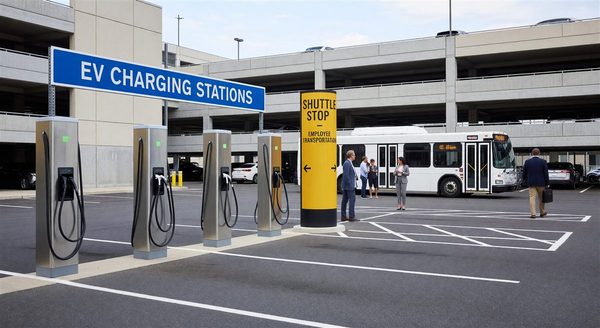
Base-to-outlying-lot shuttle necessity: Mountain resort parking often involves lots at significant distances from the base area — terrain, road access, and land ownership constraints mean that all skiers cannot park within walking distance of lifts. Shuttle service from outlying lots to the base area is a standard resort parking amenity.
Winter shuttle operations: Shuttle buses operating in mountain winter conditions face the same snow and ice management challenges as all mountain vehicle operations — chains or studded tires as required, de-icing protocols, and driver training for mountain winter driving. Shuttle schedule reliability on powder days (when road conditions are most challenging) is most important when guest demand is highest.
Shuttle frequency and wait time: Shuttle wait times affect the perception of outlying lot convenience. Shuttles running every 10 to 15 minutes are generally acceptable for mountain resort parking; longer waits make outlying lots feel inconveniently remote. During peak arrival periods (8 to 10 AM), shuttle capacity must match lot arrival volume.
On-mountain shuttle integration: Some resorts operate intra-resort shuttles (between base areas at multi-mountain resorts, or between on-mountain dining and base areas) that can be integrated with parking shuttles into a unified transit system. App-based shuttle tracking that shows real-time shuttle location and next arrival time improves the shuttle experience significantly.
Pricing and Revenue Management
Daily vs. advance purchase pricing: Resort parking priced lower for advance purchase (online reservation) vs. gate price incentivizes planning behavior and provides demand forecasting data. A resort that sees 80% of peak-day vehicles pre-purchase provides more accurate staffing and operations forecasting than one where all purchases are same-day.
Dynamic pricing by demand: Ski resort parking can implement demand-responsive pricing — higher prices on peak powder days or holiday weekends, lower prices on slow shoulder-season days. Dynamic pricing that communicates higher prices for high-demand days ahead of time (through resort websites and booking platforms) allows guests to make informed decisions about when to visit.
Season parking value calculation: Season parking passes at daily rates below the per-day equivalent of a full season of daily parking capture value for frequent visitors while providing upfront revenue to the resort. Typical season parking passes are priced at 20 to 40 days’ worth of daily parking, making them economically compelling for skiers who attend 30+ days per season.
Frequently Asked Questions
How should ski resorts handle parking on extreme weather days (blizzards, extreme cold)? Resorts should have operational protocols for extreme weather — criteria for temporary lot closures when conditions are unsafe (visibility below a safe threshold for lot operations, temperatures affecting equipment function), communication protocols for guests about closures or modified access, and reopening procedures after conditions improve. Front-loading communication via resort apps and email to season pass holders reduces frustrated arrivals when conditions prevent normal operations.
What ADA considerations are specific to mountain resort parking? Accessible parking at ski resorts serves a significant population — adaptive skiing programs serve guests with a wide range of mobility limitations, and skiers with temporary injuries (post-knee surgery returnees, for example) need accessible parking during recovery. Accessible routes must be maintained with higher snow clearance standards than general lot surfaces — a slippery or snow-covered accessible route violates ADA requirements regardless of the general lot conditions. Accessible shuttle vehicles with ramp or kneeling features are required for shuttle-served lots where accessible guests may park.
How do resorts manage parking revenue during poor snow conditions seasons? Poor snow years reduce skier visits and corresponding parking demand and revenue. This revenue volatility is a known characteristic of mountain resort operations that should be reflected in financial planning with conservative scenarios for poor-season conditions. Season parking pass revenue (collected upfront at the start of season) is partially protected from in-season volatility; daily parking revenue is directly correlated with visit volume.
What is the role of carpooling incentives at ski resorts? Resorts with constrained parking benefit from carpooling incentives — discounted or priority parking for vehicles with multiple occupants, or designated carpool lanes that provide faster entry processing. Environmental sustainability programs at many resorts include carpooling incentives aligned with carbon reduction commitments. Carpooling reduces the number of vehicles per skier, freeing lot capacity and reducing the need for expanded parking infrastructure on ecologically sensitive mountain terrain.
Takeaway
Ski resort parking management requires integrating the demand concentration management of event parking with the snow and ice operations of mountain winter environments — a combination that demands specialized equipment, trained crews, and operational protocols calibrated to conditions that most parking professionals never encounter. The resorts that excel at parking management deliver reliable lot access through mountain winter conditions, prioritize season pass holders through tiered permit programs, operate shuttle systems that make outlying lots genuinely convenient, and use dynamic pricing to manage peak demand while capturing appropriate revenue from the most valuable skiing days. Parking management at a ski resort is a genuine operational challenge where excellence directly affects the guest experience and the resort’s ability to compete in a market where the day on the mountain starts in the parking lot.
Further Reading from Authoritative Sources
- IPMI seasonal parking operations and winter parking management guidance — The International Parking and Mobility Institute publishes seasonal operations guidance and vertical-specific parking management standards that are directly relevant to the ski resort parking operations described in the article.
- U.S. Access Board accessible parking standards for outdoor and recreation facilities — The U.S.