Parking at senior living communities — independent living, assisted living, memory care, and continuing care retirement communities (CCRCs) — requires particular attention to the access and mobility needs of an aging population, the critical importance of family visitor access, and the evolving vehicle ownership patterns among residents who may progressively reduce or eliminate driving as they age in place. This vertical combines elements of residential parking (resident permit programs), healthcare parking (ADA compliance for mobility-impaired populations), and hospitality parking (visitor experience management) in a community context where parking access directly affects residents’ quality of life and family connection.
Senior Living Parking Context
Evolving resident vehicle ownership: Senior living residents have vehicle ownership rates that decline with age and care level. Independent living residents may have near-normal vehicle ownership; assisted living residents may have 20 to 50 percent vehicle ownership; memory care residents typically have very low or zero vehicle ownership as driving cessation is often associated with the cognitive decline that prompts memory care placement. Parking supply at senior living facilities should be right-sized to the specific care level and resident population.
Family visitor importance: For residents who have given up driving, family member visits by car are the primary connection to the community outside the facility. Visitor parking must be adequate, conveniently located, clearly marked, and available at all hours — family visit patterns include both weekday business hours and weekend and evening visits.
Staff parking coordination: Senior living facilities have 24-hour staffing requirements (particularly for assisted living and memory care). Three-shift nursing and care staff need parking at all hours, including overnight. Staff parking must be designed for shift-change overlap and available for overnight staff who cannot use alternatives.
Emergency vehicle access: Senior living facilities must maintain clear access routes for emergency vehicles (ambulances, fire trucks). Parking areas that block emergency access routes, or that allow vehicles to park in fire lanes, create serious safety exposure. Clear fire lane markings and enforcement are life-safety requirements.
Resident Parking Programs
Independent living vehicle permits: Independent living residents with vehicles need convenient, secure parking near their units. For communities with apartment-style units, assigned parking near the building entrance or garage parking with elevator access to units is standard. Community-style independent living campuses may have permits for designated lots near resident clusters.
Decreasing parking ratios by care level: Parking ratio planning should reflect expected vehicle ownership by care level. A 100-unit independent living building might plan for 80 resident vehicles; a 100-unit assisted living building might plan for 20 to 40; a 50-unit memory care building might plan for 5 to 10. Realistic ratio planning prevents over-investment in parking that will remain underutilized.
Car storage programs: Residents who are hospitalized or traveling for extended periods may need their vehicle stored securely on-site. Car storage policies — whether long-term storage is available, at what cost, and where — are a resident service consideration that differs from standard permit programs.
Golf cart and personal mobility vehicle accommodation: Some senior living communities, particularly larger campuses, allow residents to use golf carts or similar mobility vehicles for on-campus transportation. Designated golf cart parking areas, charging infrastructure for electric models, and rules about golf cart operation on campus are community design and management considerations.
Visitor Parking Management
Adequate visitor space allocation: Senior living communities should dedicate a meaningful proportion of their parking inventory to visitor use — particularly for facilities where residents have limited personal vehicles. A 100-unit assisted living facility with 30 resident vehicles may need 25 to 40 visitor spaces to accommodate family visit patterns, including busy weekend afternoons.
Time limits and validation: Time limits may be appropriate to prevent staff vehicles from occupying visitor spaces during day shifts. Visitor validation programs — particularly for family members making regular visits — avoid the perceived unfairness of charging families for visits to their relatives. Visitor validation (either free or subsidized) is a resident experience amenity that affects family satisfaction and community reputation.
Special occasion parking: Holidays, birthdays, and family events generate above-normal visitor parking demand. Senior living facilities hosting community events (resident birthday parties, holiday celebrations with families) need event parking protocols — overflow areas, temporary parking accommodations, communication to visiting families.
Overnight visitor accommodations: Families traveling from a distance may stay overnight near a resident family member. Some senior living communities with hospitality suites or family guest rooms need parking for overnight family visitors — a use pattern distinct from daytime visit parking.
ADA Compliance for Aging Populations
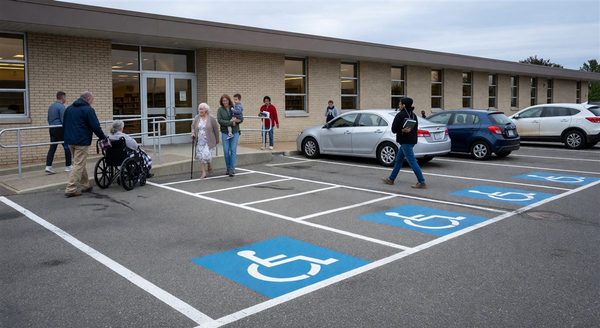
Above-minimum accessible space provision: The senior living population has among the highest rates of mobility limitation of any facility user group. ADA minimums, calculated as a percentage of total spaces, may significantly undercount the actual accessible space need at senior living facilities. Exceeding ADA minimums — targeting 15 to 25 percent accessible spaces at assisted living facilities — is appropriate and advisable.
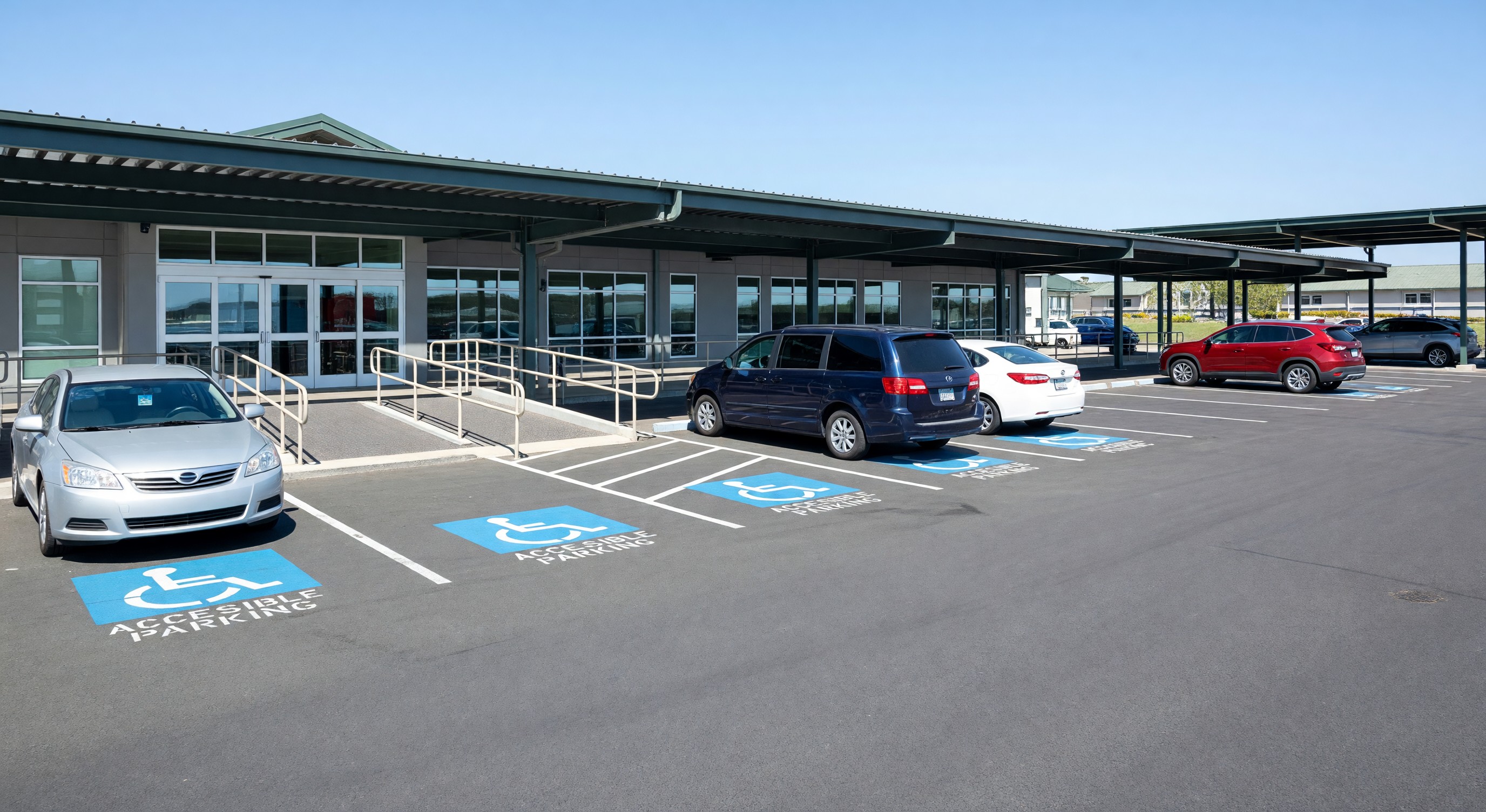
Van-accessible space emphasis: Senior residents who use power wheelchairs, scooters, and mobility vans require van-accessible spaces (8-foot access aisles). The proportion of van-accessible spaces should be higher at senior living facilities than at general commercial facilities.
Accessible route maintenance: Routes from accessible parking to building entrances must be maintained at a high standard — promptly cleared of snow and ice, free from uneven surfaces, well-lit, and with no protruding objects. Falls are a leading cause of serious injury and death among older adults; accessible route maintenance is a critical safety function, not just an ADA compliance matter.
Covered accessible parking: In regions with extreme weather (cold winters, hot summers), covered accessible parking reduces the weather exposure hazard for older residents and visitors with mobility limitations. The value of covered accessible parking at senior living facilities is higher than at general commercial facilities.
Transportation Services Integration
Community shuttle programs: Senior living communities that provide resident transportation — medical appointment shuttles, grocery runs, community outings — reduce the personal vehicle ownership need among residents who rely on community transportation for non-emergency mobility. Adequate parking for the community shuttle fleet (typically 2 to 4 vehicles for mid-size communities) and a loading zone near the main entrance are facility design requirements.
Medical transport vehicle access: Ambulettes, NEMT (non-emergency medical transport) vehicles, and dialysis transport vans serve senior living residents for medical appointments. These vehicles need designated loading/unloading access near the facility entrance, timed to coincide with scheduled medical transport departures and returns.
Ride-hail and family drop-off: As ride-hail adoption grows among older adults (and family members who use ride-hail to visit), designated pickup/dropoff areas near the entrance (separated from parking and emergency vehicle access) improve both safety and convenience.
Frequently Asked Questions
How should senior living facilities handle residents who continue driving despite cognitive or physical limitations? This is a sensitive issue involving resident autonomy, safety, and facility liability. Senior living facility parking policies should address: who has the authority to restrict resident driving (typically the attending physician, with facility support); what process is followed when concerns arise; and what alternatives (community transportation, family coordination) are offered when driving cessation is recommended. Legal counsel familiar with senior living operations should review policies governing resident driving.
What security considerations apply to senior living parking areas? Senior residents and their families are sensitive to security perceptions in parking areas. Adequate lighting, camera coverage, and call stations at key points throughout the parking area — particularly on routes between parking and the building entrance — address safety concerns that may be more acute for older adults who feel vulnerable in isolated parking areas. Parking area security incidents (vehicle theft, personal safety incidents) have amplified reputation effects at senior living communities where residents’ families closely scrutinize the safety environment.
How does the transition from independent to assisted living affect resident parking needs? As residents transition from independent living (likely with a personal vehicle) to assisted living or memory care (likely without), their parking spaces become available. Well-managed communities track this transition through move-in/move-out tracking and parking administration, promptly reassigning spaces from residents who no longer need them. Managing this transition transparently — confirming space return at care level transition, maintaining waiting lists for spaces, and communicating parking changes to affected residents — reduces conflict and administrative confusion.
What parking documentation is required for senior living facilities? ADA-compliant accessible parking requires correct signage (ISA symbol with “Van Accessible” where required), accurate space dimensions, and a documented compliance inspection process. Permit programs should maintain current records of resident space assignments and vehicle registrations. Visitor programs should have documented policies for validation, time limits, and overflow management. Legal counsel familiar with Fair Housing Act and ADA requirements for senior living should review parking policies for compliance.
Takeaway
Senior living parking management is shaped by the specific access and mobility needs of an aging population, the critical role of family visitor access in resident well-being, and the dynamic vehicle ownership trajectory as residents age in place through progressively higher care levels. The communities that manage parking most effectively — with adequate visitor spaces for family connections, well-maintained accessible parking that exceeds ADA minimums for a population that disproportionately needs it, and transportation services integration that reduces personal vehicle dependence — deliver parking as a quality-of-life component rather than an afterthought. In a sector where community reputation and resident and family satisfaction are primary competitive factors, parking management quality is part of the overall care experience that residents and families evaluate.
Further Reading from Authoritative Sources
- US Access Board ADA parking guide for senior living facility accessible space requirements — The US Access Board ADA parking guide provides the accessible space count, van-accessible space, and route requirements applicable to senior living facility parking, supporting the above-minimum accessible parking recommendations and route maintenance standards described in this article.
- ADA.gov parking accessibility and enforcement resources for senior living operators — ADA.gov provides federal guidance on ADA parking accessibility, enforcement, and maintenance applicable to senior living operators managing parking for aging populations with high mobility limitation rates and fall risk described in this article.