Religious institution parking — at churches, synagogues, mosques, temples, and other houses of worship — presents a distinctive parking management profile: extremely high peak demand concentrated in specific worship service windows (Sunday mornings for Christian churches, Friday afternoons for mosques, Saturday mornings for synagogues), significant underutilization during the rest of the week, and a congregation that often includes a higher proportion of elderly and mobility-limited members than the general population. Understanding religious institution parking helps facility managers, board members, and parking professionals serve this community in ways that support the congregation’s mission while managing the practical logistics of high-turnover weekend parking.
Religious Institution Parking Demand Characteristics
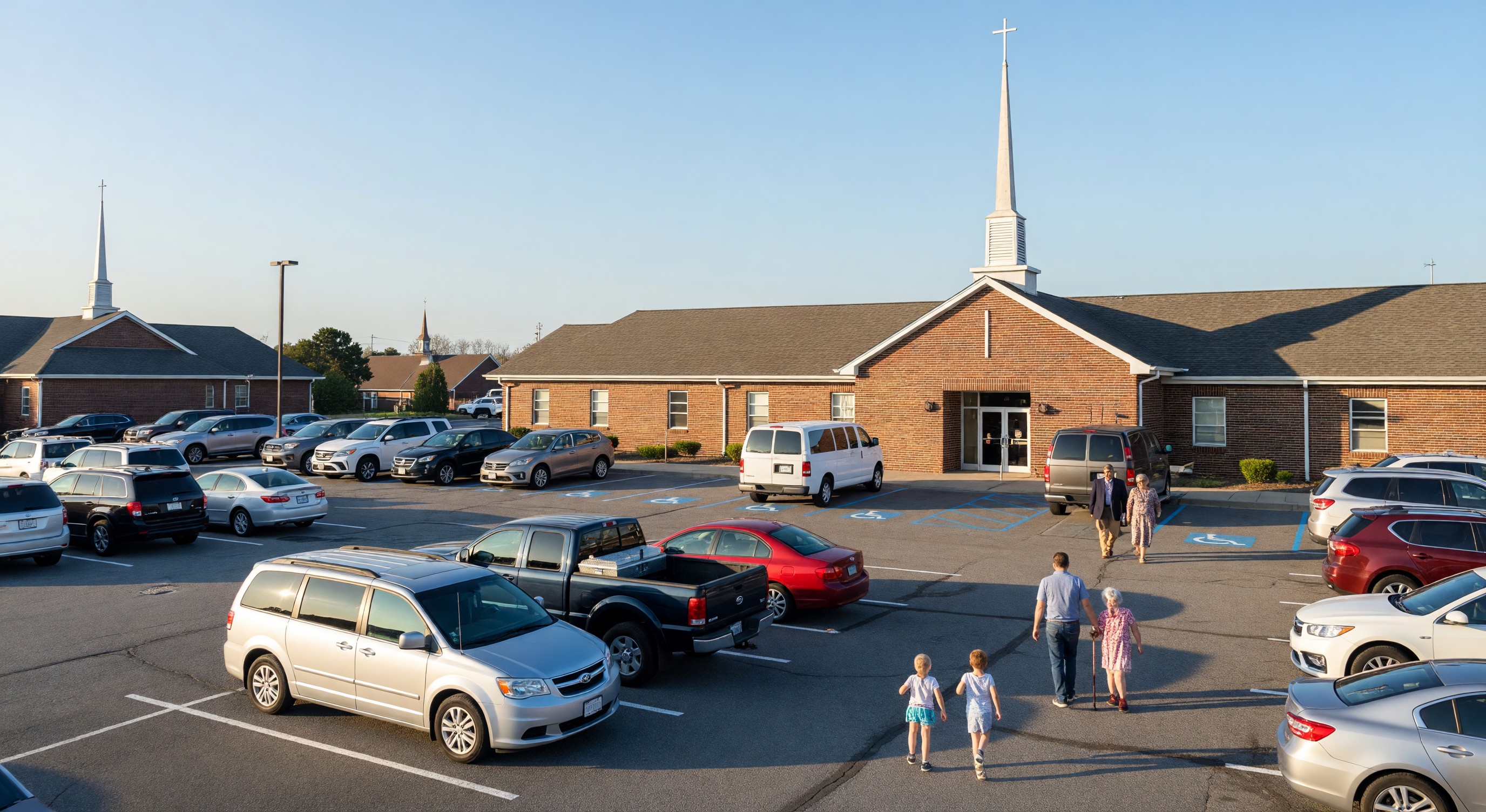
Intense weekend concentration: A Protestant church with 1,000 congregants may require 400 parking spaces for its Sunday worship service — all arriving within 15 minutes of service start and departing within 15 minutes of service end. The same lot sits largely empty on Monday through Saturday. No other parking context has this degree of temporal concentration combined with near-zero off-peak use.
Multiple service timing: Many larger congregations hold multiple services — two or three Sunday morning services, evening services, and special services for major religious holidays. Multi-service scheduling distributes demand across more time periods but requires careful parking management to ensure departing congregation members from one service don’t conflict with arriving members for the next.
Special event peaks: High holy days and religious holidays — Christmas and Easter for Christian churches, High Holidays for Jewish synagogues, Eid celebrations for mosques — generate demand that significantly exceeds typical service attendance. These annual peak demand events require overflow planning and communication even if regular Sunday parking is adequate.
Religious education and weekday programming: Many religious institutions operate religious education programs (Sunday school), community programs (food banks, AA meetings, youth programs), and weekday worship services that generate parking demand beyond primary worship services. Understanding the complete weekly demand profile — not just primary worship service — is essential for accurate parking capacity planning.
Shared Parking Opportunities
Temporal complementarity with commercial uses: Religious institution parking is an ideal shared parking partner for commercial uses with weekday demand — office buildings, government facilities, and professional services that generate 9-to-5 weekday demand and minimal weekend demand. A church parking lot used by an office’s employees Monday through Friday and the congregation on Sunday represents nearly full utilization with no conflict.
Formal shared parking agreements: Shared parking between a religious institution and a commercial tenant requires a formal license or easement agreement that specifies permitted use periods, maintenance responsibilities, liability allocation, and any compensation structure. The religious institution may license its parking for a monthly fee (generating income from an otherwise idle asset) or exchange parking access for services (reduced property maintenance, landscaping support).
Community access programs: Some religious institutions open their parking to neighborhood residents during the week as a community ministry — free or low-cost parking that serves the neighborhood and generates goodwill without significant monetary return. Community parking programs require policies about acceptable use, liability waivers, and monitoring.
Nearby institution coordination: Religious institutions near other weekend-use facilities (parks, libraries, community centers) may benefit from informal or formal coordination — directing overflow to neighboring lots, sharing signage, or establishing reciprocal overflow agreements.
Accessible Parking for Aging Congregations
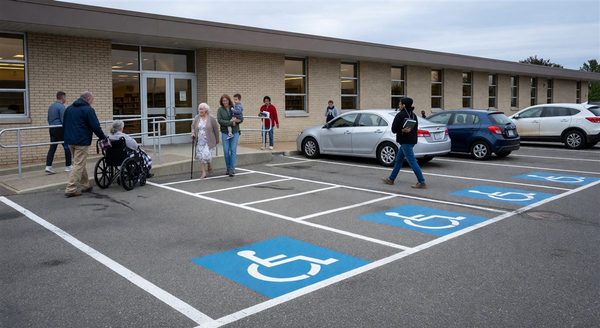
Age profile of religious congregations: Many established religious congregations in the United States have aging demographics — regular attendees who are 65 and older in significant proportions. Older congregants have higher rates of mobility limitations, making accessible parking a more critical service than at facilities serving younger demographics.
Exceeding ADA minimums: ADA accessible parking minimums (typically 2 to 5 percent of spaces depending on total lot size) may be inadequate for religious institution parking lots where 15 to 20 percent of attendees have mobility limitations. Exceeding minimum requirements — targeting 10 to 15 percent accessible spaces — is appropriate for congregations with older membership profiles.
Drop-off zone importance: Many older and mobility-limited congregants are dropped off by family members rather than driving themselves. A designated drop-off zone near the main entrance — clearly marked, large enough to accommodate multiple vehicles simultaneously, with an accessible route to the entrance — is as important as accessible parking for this population.
Volunteer usher coordination: Many religious institutions coordinate accessible parking management through volunteer ushers who direct congregants to accessible spaces, assist with mobility device deployment, and provide personal assistance for members with mobility limitations. This volunteer-managed approach is common in smaller congregations without paid parking staff.
Overflow and Special Event Management
Overflow lot coordination: For regular high-attendance services and special holiday events, overflow parking in nearby lots — school lots, neighboring commercial facilities, municipal lots — requires pre-arranged access agreements and clear wayfinding signage. Spontaneous overflow without prior arrangements creates confusion and potential trespassing on unauthorized properties.
Volunteer traffic management: Volunteer traffic directors — often members of the congregation who organize a parking team — provide significant crowd management capacity during high-demand services. Volunteer parking teams benefit from reflective vests, radio communication with the head volunteer coordinator, and a briefing before each service about current parking conditions and any overflow protocol activation.
Shuttle service for major events: Christmas, Easter, Eid, and High Holiday services that significantly exceed the parking capacity of the institution’s own lot may justify shuttle service from remote overflow lots. Shuttle service requires vehicle, driver (volunteer or paid), and clear communication to attendees about shuttle location and schedule.
Signage and pre-event communication: Communicating parking information to congregants before they arrive — through bulletin announcements, email newsletters, and church website information — reduces confusion at arrival. This is particularly important for holiday services where many attendees visit less frequently and are less familiar with the parking situation.
Multiuse Facility Scheduling
Religious education and youth programming: Religious education programs that coincide with worship services (children in Sunday school while parents attend the service) typically increase overall parking demand because families arrive together but spread between the sanctuary and educational building.
Day care and preschool operations: Religious institution preschools and day care centers generate significant weekday morning drop-off and afternoon pickup demand. These times — 7 to 9 AM and 3 to 5 PM weekdays — require coordination between school operations and any commercial parking uses during those windows.
Community meeting room use: Religious institution facilities used for community meetings (AA, NA, community organizations) generate parking demand at evenings and weekends outside primary worship service times. Clear policies about parking during community use periods — which areas are available, whether reserved spaces are accessible — reduce conflicts.
Facility rental events: Wedding ceremonies, funerals, memorial services, and other events hosted at religious institution facilities generate parking demand that varies significantly by event type and guest count. Event-specific parking planning — reserved spaces for the wedding party, overflow coordination for large funerals — should be part of the facility rental arrangement.
Frequently Asked Questions
Should religious institutions charge for parking? Most religious institutions do not charge congregants for parking — the relationship between the congregation and the institution makes fee collection feel inappropriate in the worship context. Some large megachurches in major urban markets have implemented parking fees for special events or for the most convenient parking tiers, but this is uncommon in congregational contexts. Commercial tenants using the lot during the week typically do pay licensing fees that generate income for the institution.
How should religious institutions handle parking disputes with neighbors? Overflow parking that spills onto adjacent residential streets is a common source of conflict for large churches in residential neighborhoods. Proactive engagement with neighboring residents — providing information about service times, discussing overflow solutions, and monitoring enforcement of on-street regulations — is preferable to reactive response after complaints escalate. Some religious institutions have developed community-neighbor liaison programs that address parking and other adjacency concerns.
What insurance considerations apply to shared parking arrangements? When a religious institution licenses its parking to commercial users, the institution’s general liability insurance must cover the commercial users’ presence on the property during licensed hours. The commercial user should carry their own general liability insurance and name the religious institution as an additional insured during their use period. Insurance requirements should be specified in the shared parking agreement and reviewed with the institution’s insurance agent.
How are religious institutions affected by ADA Title III requirements? Houses of worship are specifically exempted from the ADA’s Title III private entity requirements, which means churches, synagogues, and other religious organizations are not legally required to comply with ADA accessible parking standards under Title III. However, many religious institutions voluntarily meet ADA standards as a matter of mission (welcoming all congregants regardless of ability) and as a practical matter when their facilities are leased to or operated in conjunction with non-exempt entities. Legal counsel should advise on the specific ADA status of a facility that may have both religious and non-religious uses.
Takeaway
Religious institution parking management is shaped by a unique demand profile — extreme weekend peak concentration, near-zero weekday use, a congregation with higher-than-average mobility limitation rates, and a community context that makes standard commercial enforcement and pricing models inappropriate. The institutions that manage parking most effectively leverage shared parking opportunities to generate income from underutilized weekday capacity, exceed accessible parking minimums that reflect their congregation’s needs rather than legal minimums, develop volunteer parking teams that provide event management capacity, and engage proactively with neighboring communities to address overflow conflicts. Parking management at a religious institution is ultimately a ministry function — one that shapes the experience of members and visitors at life’s significant moments.
Further Reading from Authoritative Sources
- ADA Title III exemptions and accessible parking guidance for houses of worship — ADA.gov is the official DOJ resource for ADA compliance guidance, including the Title III exemption for religious institutions that is directly discussed in the article’s ADA section.
- IPMI shared parking and community institution parking guidance — The International Parking and Mobility Institute publishes shared parking guidance and community institution parking management standards that are directly relevant to the religious institution parking strategies described in the article.