Performing arts venues — theaters, concert halls, opera houses, and multipurpose performing arts centers — have distinct parking demand patterns and patron experience priorities that set them apart from sports venues, commercial parking, and general entertainment parking. Evening performances generate demand concentrated into a brief evening window; arts patrons tend to be older with higher proportions of mobility limitations; and the relationship between the parking experience and the overall patron experience is particularly direct — arriving stressed from parking problems colors the pre-performance mood in ways that affect patron satisfaction and subscription renewal. Understanding performing arts parking management requires attention to patron experience as much as operational logistics.
Performing Arts Parking Demand Patterns
Evening event concentration: The defining feature of performing arts parking demand is its temporal concentration in the evening — typically 7 to 8 PM for evening performances. Unlike commercial parking spread across business hours, theater parking demand is almost entirely concentrated in a 60-minute arrival window and a 30-minute departure window at show end.
Matinee and special patterns: Matinee performances (typically Saturday and Sunday afternoons) generate midday demand that may overlap with daytime commercial or retail parking. Multi-venue performing arts campuses (an opera house, a symphony hall, and a chamber theater on the same campus) may have simultaneous evening events that generate combined demand exceeding any single facility’s capacity.
Subscription series patterns: Major performing arts organizations sell subscription series — patrons who attend four to eight performances per season at the same venue. Subscription patrons develop familiarity with parking and often establish preferred parking routines (same garage, same approach route). Subscription series are an opportunity for parking operators to offer parking subscription products aligned with the performance schedule.
Occasional vs. subscriber attendance: The patron mix at any performance includes both subscribers attending as part of their series and single-ticket buyers attending for a special occasion. Single-ticket buyers are less familiar with the venue and more dependent on clear wayfinding and signage; subscribers have established patterns that guide their arrival.
Shared Parking with Daytime Uses
Temporal complementarity: Performing arts venues are an almost ideal shared parking partner with office buildings, government facilities, and most commercial daytime uses. Parking demand at arts venues is concentrated in evenings and weekends; office demand is concentrated on weekday daytime hours. A parking facility that serves an office building during weekday business hours and a theater during evening performances effectively doubles its revenue productivity without requiring double the capacity.
Shared parking agreements: Formal shared parking agreements between performing arts centers and adjacent daytime parking operators specify: the inventory of spaces available to each partner; the time periods during which each partner has priority access; the pricing structure; and the operational coordination required (signage, credential access). These agreements are an important revenue source for performing arts venues that cannot support parking operations on performance revenue alone.
Walking distance considerations: Shared parking is only viable if parkers can walk between the parking facility and the performing arts venue — typically within a quarter-mile or 10-minute walk. Covered walkways, well-lit routes, and clear wayfinding enhance the viability of shared parking that involves some walking distance.
Rate negotiation: The performing arts venue’s parking partner values the evening and weekend traffic that fills otherwise-underutilized spaces; the performing arts venue benefits from accessible, validated parking for patrons. Rate negotiation reflects this mutual benefit — the performance venue typically pays below standard transient rates for the block of evening spaces, in exchange for the predictable, recurring demand.
Patron Experience Priorities
Age and mobility considerations: Performing arts audiences are disproportionately older — symphony orchestra audiences, in particular, skew significantly older than the general population. Older patrons have higher rates of mobility limitations, may be less comfortable navigating unfamiliar parking in the dark, and may have greater anxiety about late arrival affecting their seat access. Parking design, wayfinding, and ADA accessibility are more critical for performing arts venues than many other entertainment contexts.
Pre-performance time pressure: Patrons arriving for a 7:30 PM performance that begins with doors closing at 7:25 PM are under specific time pressure — arriving 20 minutes late means missing the first act. Parking congestion that creates uncertainty about arrival time creates anxiety disproportionate to the actual time delay. Reliable parking access with predictable arrival times is more important than the lowest possible parking price for most performing arts patrons.
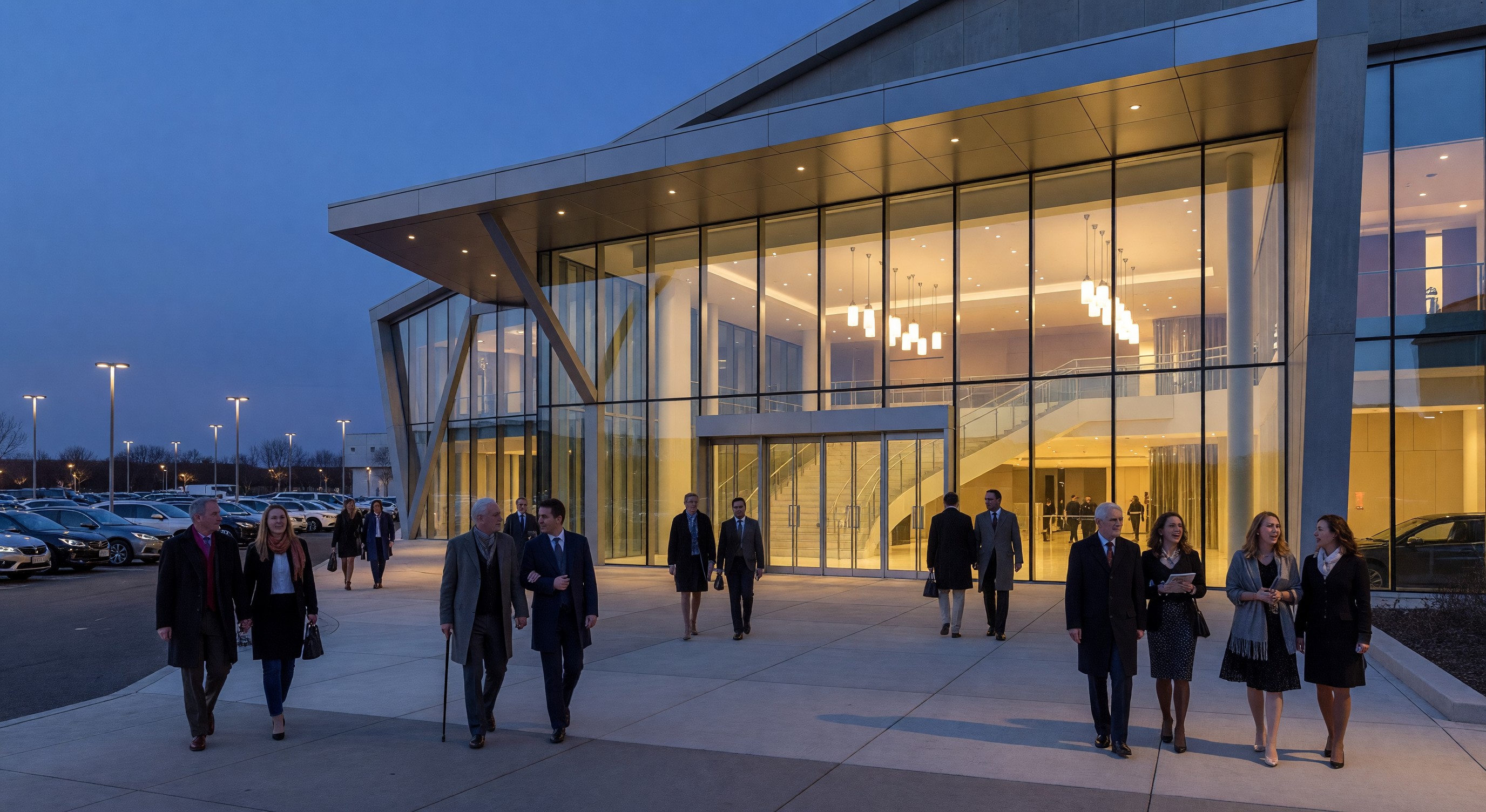
Post-performance safety: The departure from a performing arts venue at 10 or 10:30 PM has safety dimensions that daytime parking does not. Patron safety in parking structures and on walking routes after dark — adequate lighting, visible security presence, well-maintained surfaces — is a patron experience and liability management priority.
Inclement weather management: Patrons who are dressed for a performance (formal or business casual attire) in inclement weather face weather exposure during the walk from parking to the venue. Covered walkways, valet options, and proximity of parking to covered drop-off areas reduce the patron experience impact of rain or snow.
Subscription Parking Programs
Season parking passes: Performing arts organizations that sell subscription series can offer companion parking passes — a parking pass that provides access for each performance in the subscriber’s series. Season parking passes, aligned with the performance schedule, provide convenience for subscribers and predictable revenue for the parking operator.
Digital season credentials: LPR-based or mobile credential season parking passes that are recognized automatically at entry (without requiring the patron to interact with a payment terminal) provide the highest-convenience experience for subscription parkers. The subscriber simply arrives and is recognized; there is no transaction step.
Package bundling: Some performing arts organizations include parking as part of premium subscription packages — subscribers who purchase at a higher tier receive parking included in their subscription price. This bundle increases the subscription’s perceived value and reduces the parking access friction for high-value subscribers.
Waitlist for limited parking: If parking directly adjacent to the arts center is limited, a waitlist for preferred parking permits — managed transparently, with subscribers given priority based on subscription tier or tenure — provides fair access to the most convenient parking for patrons who value it most.
Valet Operations for Performing Arts
Valet as patron amenity: Valet service at the performing arts venue entrance allows patrons to arrive, hand off their vehicle, and proceed directly to the lobby — eliminating the parking navigation experience entirely. For an older, mobility-limited patron population, valet represents a meaningful service.
Pricing and positioning: Performing arts valet is typically positioned at a significant premium to self-park — $30 to $60 for an evening performance — and marketed as a premium amenity. Pre-sold valet reservations (booked at ticket purchase) reduce arrival uncertainty and provide revenue-capture certainty.
Retrieval timing coordination: At show end, efficient valet retrieval is critical. Patrons who wait 20 to 30 minutes for their vehicle after a performance — standing in an evening chill — leave the experience on a negative note. Valet operations that pre-stage vehicles based on expected show-end time and process retrieval tickets early (via app notification to retrieve before the performance ends) can significantly reduce departure wait times.
Frequently Asked Questions
How much of a performing arts venue’s patron base will pay for preferred or valet parking? Research on arts patron parking preferences suggests that 20 to 40 percent of patrons at major arts venues are willing to pay a meaningful premium for convenient, reliable parking — particularly older patrons and subscription holders. Single-ticket buyers for popular performances may have higher premium willingness if parking convenience is a significant factor in their decision to attend. Pricing research and revenue modeling should guide the preferred/valet pricing and capacity allocation decision.
How should performing arts venues communicate parking options to patrons? Parking information should be included in ticket confirmation communications (email, mobile ticket), on the venue website’s “plan your visit” section, and in subscription renewal materials. Clear communication of: available parking facilities, walking distance, cost, and reservation options — before the performance rather than at arrival — reduces patron anxiety and improves the arrival experience.
What lighting standards apply to performing arts venue parking at night? IESNA RP-20 standards for commercial parking facilities establish minimum illumination requirements, but performing arts venues with older patron populations should consider exceeding minimums given the population’s greater sensitivity to inadequate lighting and higher fall risk. Maintained average illumination of 1.5 to 2.0 footcandles in parking areas used primarily after dark is a reasonable target for the performing arts context.
How do performing arts organizations fund parking operations they don’t own? Many performing arts organizations don’t own parking — they arrange third-party parking through validated partnerships, negotiated agreements with nearby parking operators, and city-provided public parking. Patrons are directed to multiple options (nearby garages, validated lots) rather than a single controlled facility. The arts organization may contribute to shared marketing of parking options without managing parking directly. This arrangement works well in urban centers with abundant commercial parking; it is more challenging in suburban or edge-city locations.
Takeaway
Performing arts parking management prioritizes patron experience over operational efficiency, reflecting the arts context where parking is the first and last impression of the overall cultural experience. The temporal concentration of demand in evening windows, the older and mobility-limited patron demographic, the pre-performance time pressure that makes parking reliability more important than price, and the opportunity for shared parking with daytime uses all distinguish performing arts parking from other entertainment parking verticals. Organizations that invest in patron-centric parking — subscription parking programs, well-maintained accessible routes, well-lit departure environments, and valet options for premium-tier patrons — create a consistent parking experience that supports subscription renewal, patron satisfaction, and the overall mission of making the arts accessible.
Further Reading from Authoritative Sources
- US Access Board ADA parking guide for performing arts venue accessible space requirements — The US Access Board ADA parking guide provides the accessible space count, van-accessible space, and route requirements applicable to performing arts venue parking, supporting the recommendation for above-minimum accessible parking provisions for the arts audience demographic described in this article.
- IPMI parking management resources for arts and entertainment venue operators — IPMI provides parking operations guidance for entertainment and arts venue contexts that addresses the patron experience, shared parking, and subscription program management described in this article from a professional parking operations perspective.