Multifamily residential parking — managing parking in apartment buildings, condominiums, and townhome communities — presents operational and financial management challenges that are distinct from commercial parking. Tenants expect access reliability as part of their housing arrangement; parking assignment is embedded in leasing decisions; and the shift toward parking unbundling is changing how residential parking is financed and managed. Parking managers in residential settings navigate the intersection of housing operations, property management, and transportation demand management with a customer base that is simultaneously more stable (monthly residents rather than transient visitors) and more sensitive (parking disputes affecting lease renewal decisions) than commercial parking customers.
Residential Parking Models
Bundled assigned parking: The most common traditional residential parking model assigns one or more parking spaces to each unit as part of the lease, with parking cost embedded in the base rent. The tenant pays the same base rent regardless of whether they use the parking space. This model is simple to administer but hides parking cost, inflates rents for car-free residents, and typically results in some underutilized spaces.
Bundled unassigned parking: Some buildings provide parking permits that allow access to a general parking area without specific space assignment. This model pools the parking inventory across all permit holders and relies on occupancy being below supply during peak demand periods. Unassigned parking reduces administrative burden (no need to assign individual spaces) but creates conflicts when demand exceeds supply during peak hours.
Unbundled parking: Parking is priced and leased separately from the apartment. Residents who want parking pay an additional monthly fee; residents who don’t own vehicles or don’t need parking on-site don’t pay for it. This model creates direct parking revenue accounting, rewards car-free residents with lower costs, and allows parking to be priced at market rates.
Third-party parking for residents: In markets with parking minimum reform, new residential buildings may be constructed without on-site parking, with residents directed to nearby commercial facilities for monthly parking. Property managers may negotiate preferred rates at nearby garages as a resident amenity.
Tenant Parking Assignment and Administration
Lease-time assignment: The most effective time to assign parking is at lease signing — establishing parking arrangements (which spaces, which tier, at what cost) as part of the lease agreement avoids mid-tenancy disputes about parking expectations.
Parking preference documentation: Residents with specific parking needs — accessible spaces, covered parking, proximity to elevators, EV charging access — should document their preferences at lease time. Accessible parking has legal accommodation requirements (Fair Housing Act, ADA for covered properties) that create priority assignment obligations for residents with documented disabilities.
Reassignment and transfer: When residents move to a different unit, change their vehicle, or no longer need a parking space, the reassignment process should be clearly documented in lease terms and managed through a digital permit system that provides an audit trail.
Wait list management: In buildings with more demand for specific parking tiers (covered parking, EV charging spaces) than supply, wait lists managed transparently (FIFO, with reasonable wait time estimates) avoid tenant disputes about perceived favoritism.
Guest and Visitor Parking Management
Guest parking designation: Most residential buildings designate a portion of parking inventory for guest use — typically 10 to 20 percent of spaces. Guest spaces require clear marking, time limits (24 to 72 hours is common), and enforcement that prevents tenant vehicles from occupying guest spaces.
Guest pass systems: Paper guest passes (obtained from management, displayed on the dashboard) are the traditional guest parking credential. Digital guest pass systems — where residents request a digital pass via app for a specific vehicle and time period — reduce pass fraud and create an audit trail of guest parking use.
Short-term rental guest management: Buildings where units are used for short-term rental (Airbnb, VRBO) face guest parking challenges — Airbnb guests arriving for one or two nights may not understand building parking rules. Clear communication to short-term rental hosts and guests about parking rules, and enforcement that treats Airbnb guest violations as tenant-responsibility violations, is necessary.
Delivery and service vehicle access: Delivery vehicles, moving trucks, and service vehicles (plumbers, electricians) need temporary access that doesn’t permanently consume guest parking spaces. Short-term loading zones or designated service vehicle areas reduce conflicts between delivery activity and guest parking availability.
EV Charging in Residential Buildings
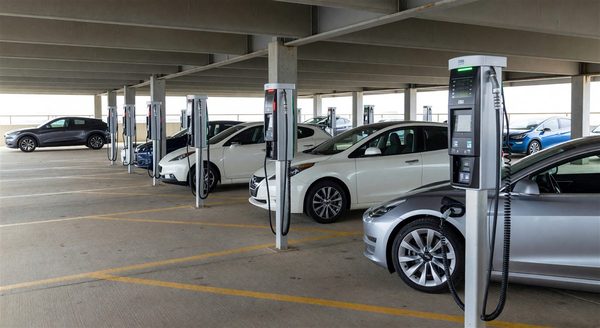
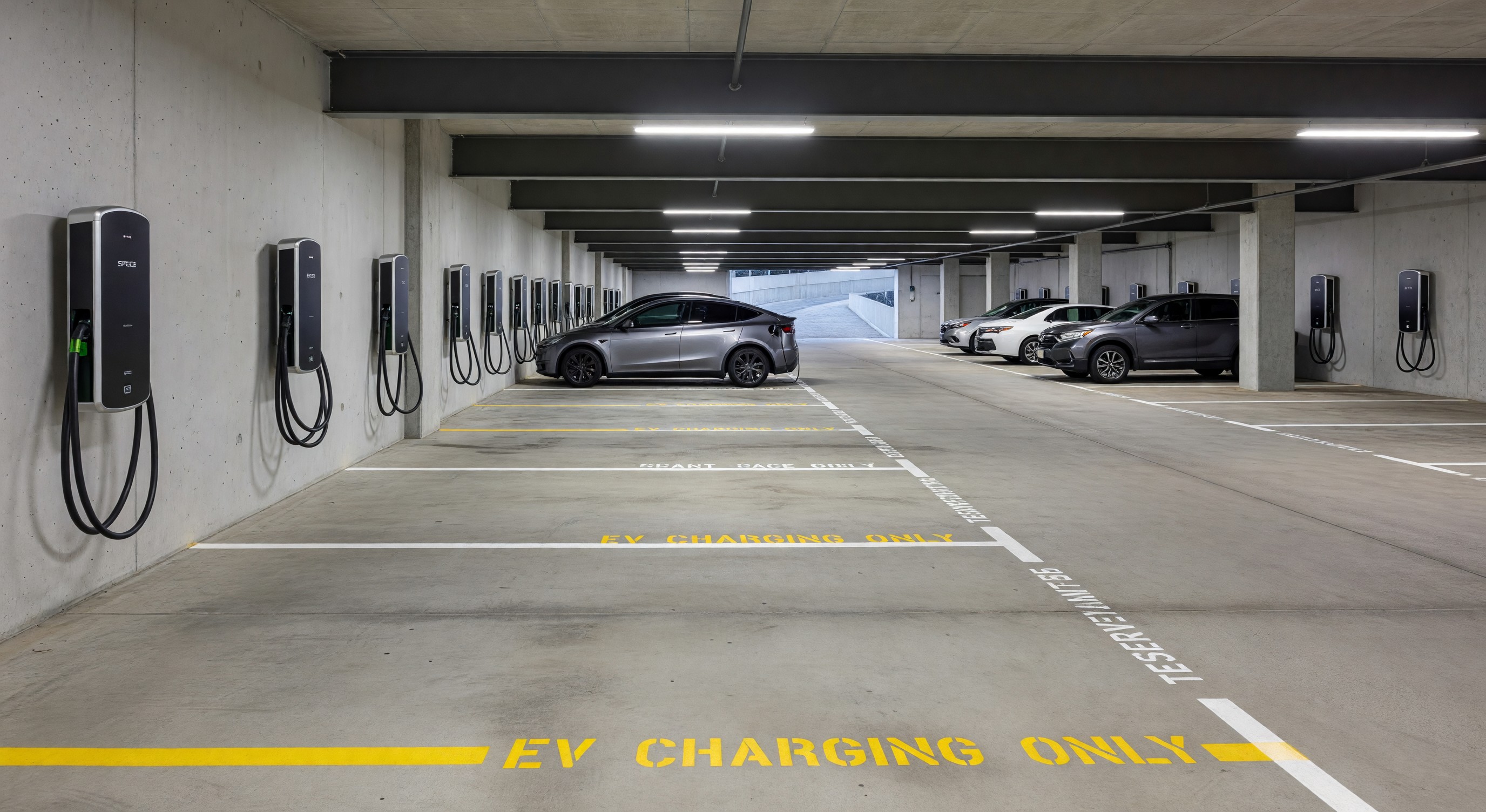
EV charging as a resident amenity: EV charging availability is an increasingly important factor in apartment selection decisions among EV-owning renters. Buildings that provide dedicated Level 2 EV charging spaces command rent premiums in EV-penetrated markets (California, Washington, Colorado, metropolitan Northeast).
Shared vs. dedicated charging: Shared EV chargers (multiple residents share a pool of charging stations) reduce per-space infrastructure cost but require reservation systems to manage access among residents who need to charge. Dedicated EV chargers (one charger per resident EV space) provide guaranteed access but require higher infrastructure investment.
Electrical infrastructure planning: Adding EV charging to existing residential parking structures requires electrical engineering assessment — circuit capacity, panel upgrade requirements, and load management systems. Buildings built before 2010 may require significant electrical infrastructure upgrades to support meaningful EV charging capacity. New construction should plan for EV charging readiness (electrical rough-in) during initial construction to reduce future upgrade cost.
Cost recovery: Recovering EV charging electricity costs from residents requires sub-metering or session metering. Networked charging stations with session billing capabilities (per-kWh or per-session pricing) provide the data needed for accurate cost recovery. Flat-rate monthly EV charging fees (a fixed monthly premium for an EV space) are simpler to administer but may not accurately reflect high-mileage resident charging costs.
Revenue Management for Residential Parking
Market rate pricing: Residential parking should be priced at market rates — the rate at which supply and demand balance, with waiting lists at lower rates indicating below-market pricing. Benchmarking against comparable buildings in the same neighborhood establishes market rate context.
Parking revenue accounting: Under an unbundled parking model, parking revenue is a distinct line item on the property financial statement — separate from base rent. This accounting clarity helps property managers evaluate parking as a business unit and identify underperformance relative to market.
Revenue from parking subleasing: Buildings with excess parking capacity (residents without vehicles who hold bundled parking spaces) have options including subleasing unused spaces to neighboring residents, nearby businesses, or hourly transient parkers through platforms like SpotHero or Parkopedia. Revenue sharing arrangements between the property owner and the sublease manager (or direct management through a parking app) require review of lease terms and HOA restrictions.
Frequently Asked Questions
What Fair Housing Act obligations apply to residential parking? The Fair Housing Act requires reasonable accommodation of residents with disabilities, including accessible parking assignment. Buildings must provide an accessible parking space to any resident with a disability who requests it, even if this requires reassigning a space from another resident. The accessible space must be on an accessible route to the resident’s unit. Property managers should consult legal counsel about specific accommodation obligations and documentation requirements.
How should residential parking rules be enforced? Residential parking enforcement should be consistent, transparent, and proportionate. Unauthorized vehicle towing is an effective enforcement tool but should be used as a last resort after notice — improperly towed tenant or guest vehicles create legal exposure and serious relationship damage. Warning notices with a 24 to 48 hour compliance window before towing are standard practice for most violation types. Clear written rules (in the lease and building rules document) are essential for any enforcement action.
What is the impact of parking unbundling on property values? Research on multifamily properties with unbundled parking suggests that properties in transit-accessible markets with unbundled parking maintain or improve property values relative to comparable bundled parking properties — because unbundled parking attracts car-free residents willing to pay for well-located housing without a parking cost they don’t need. In car-dependent markets, unbundling may have less positive impact because most residents need parking. Local market conditions determine whether unbundling supports or challenges property value.
How should residential buildings handle parking for residents with multiple vehicles? Most residential buildings allow one parking space per unit in standard assignments, with second spaces available at market rates if supply permits. Rules about maximum vehicles per unit (to prevent households from monopolizing parking inventory) should be clearly stated in lease terms. Buildings with limited supply should prioritize equitable distribution before allowing any household to hold multiple spaces.
Takeaway
Multifamily residential parking management requires balancing legal obligations (Fair Housing accommodation, lease enforcement), operational efficiency (permit assignment, guest management, enforcement), and financial management (market-rate pricing, EV charging cost recovery, revenue accounting) in a context where parking decisions directly affect resident satisfaction and lease renewal decisions. Properties that manage parking as a distinct business function — with clear policies, digital permit management, and proactive EV charging planning — provide a resident amenity that supports competitive positioning in the rental market while generating appropriately-priced revenue that reflects the real cost and value of parking in their specific location.
Further Reading from Authoritative Sources
- Fair Housing Act and ADA accessible parking requirements for residential buildings — ADA.gov is the authoritative federal source for the Fair Housing Act reasonable accommodation requirements and ADA accessibility standards for residential parking that are directly cited as legal obligations in this article.
- DOE EV charging infrastructure resources for multifamily residential buildings — The US Department of Energy publishes EV charging infrastructure guidance specifically for multifamily residential buildings, including electrical planning standards, federal incentive programs, and charging management best practices referenced in this article.