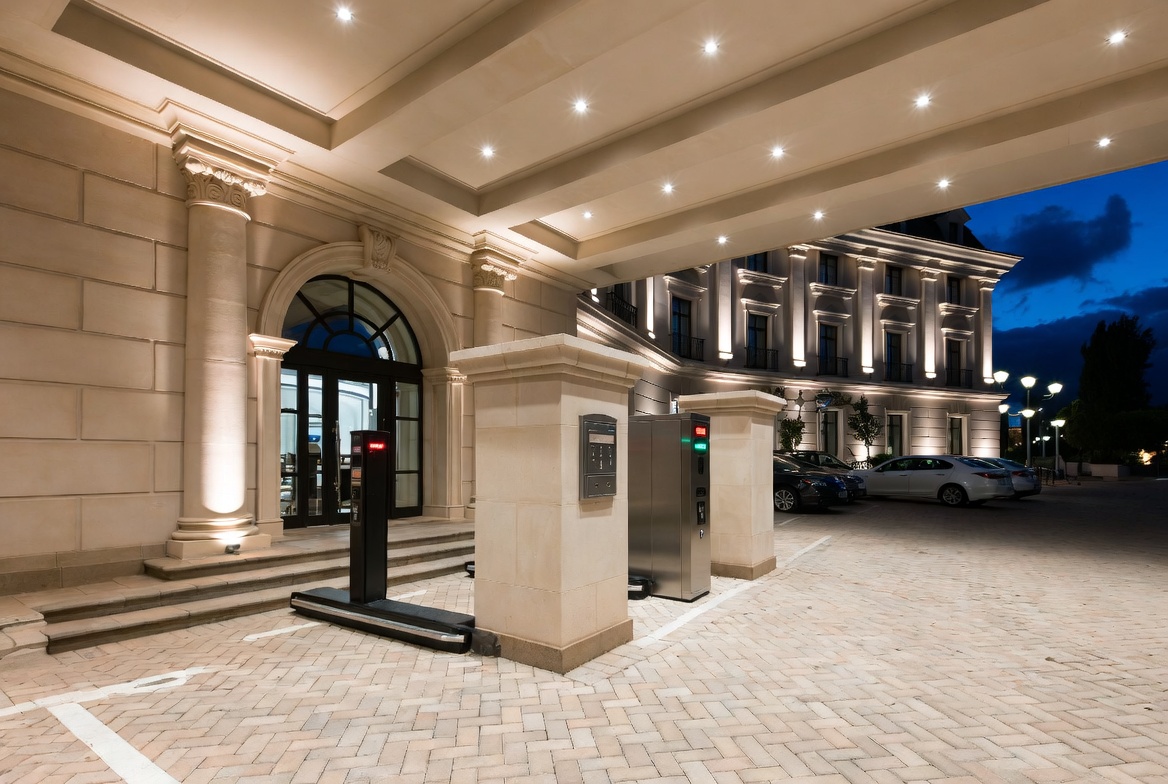
For decades, hotel parking has lived in an awkward gray area. Guests expect it, ownership groups resent paying for it, and operations teams treat it as a necessary evil somewhere between housekeeping and landscaping on the priority list. But a growing number of hotel operators are starting to see their parking facilities differently — not as a cost to be minimized, but as a revenue opportunity waiting to be unlocked.
The numbers tell a compelling story. According to industry estimates from the International Parking & Mobility Institute, parking can generate between $2,000 and $5,000 per space annually at well-managed hotel properties. For a 200-space garage attached to a full-service hotel, that represents potential annual revenue north of $500,000 — revenue that too many properties are leaving on the table.
The Traditional Hotel Parking Problem
Walk into most hotel parking operations and you will find a familiar pattern. The facility was designed by architects who treated parking as an afterthought. Revenue management, if it exists at all, consists of a flat daily rate posted on a sign that has not changed in three years. Staffing is either nonexistent or built around a valet team whose costs eat into whatever revenue the operation generates.
The result is predictable. Parking shows up as a line item that ownership groups want to shrink. General managers view it as a guest complaint generator. And the revenue it does produce rarely reflects the true value of the real estate it occupies.
This is especially painful in urban markets where land costs are astronomical. A downtown hotel sitting on a surface lot worth $15 million that generates $200,000 in annual parking revenue is effectively earning a 1.3% return on that asset. No hotel operator would accept those numbers from their room inventory, yet parking real estate routinely gets a pass.
The Hidden Costs Nobody Tracks
Beyond the obvious staffing and maintenance expenses, hotel parking operations carry hidden costs that rarely show up in standard financial reporting. Liability insurance for parking structures runs significantly higher than most operators realize. Surface lot maintenance, including striping, lighting, drainage, and resurfacing, adds up over time. And the opportunity cost of underutilized spaces during off-peak hours is almost never calculated.
Then there are the guest experience costs. A confusing parking operation creates friction at the exact moment when first impressions matter most — arrival. Studies from J.D. Power, the American Hotel & Lodging Association, and Cornell’s hospitality research have consistently shown that arrival experience correlates strongly with overall guest satisfaction scores. A chaotic parking situation, unclear signage, or a long wait for valet service can drag down an otherwise excellent property.
The Revenue Center Mindset Shift
The hotels that have successfully transformed parking from cost center to revenue center share a few common traits. First, they treat parking as its own business unit with dedicated management attention, clear KPIs, and regular performance reviews. Second, they invest in technology that enables better pricing, access control, and utilization tracking. Third, they think beyond their own guests.
Dynamic Pricing: Borrowing from Revenue Management
Hotel revenue management has been sophisticated for decades. Yield management systems adjust room rates based on demand, booking windows, competitive pricing, and dozens of other variables. Yet most hotel parking operations still operate with flat-rate pricing that ignores demand patterns entirely.
Forward-thinking properties are applying the same principles to parking. Event nights command premium rates. Early-bird pricing encourages turnover. Tiered pricing based on proximity to elevators or covered versus uncovered spaces creates natural price segmentation. Some properties have reported revenue increases of 20 to 40 percent simply by moving from flat-rate to dynamic pricing models.
The technology to enable this is more accessible than ever. Modern parking management systems can adjust pricing in real time based on occupancy levels, integrate with hotel property management systems to offer bundled room-and-parking packages, and provide the data visibility that revenue managers need to optimize performance.
Opening the Facility to Non-Guests
One of the biggest untapped opportunities for hotel parking is serving demand beyond hotel guests. A downtown hotel with 300 parking spaces and 60% average guest utilization has 120 spaces sitting empty on a typical night. During daytime hours when most guests are out, utilization may drop even further.
These empty spaces represent pure incremental revenue potential. Monthly parking contracts with nearby office workers, event-night pricing for sports venues or concert halls, and partnerships with restaurant districts can all fill unused capacity. Some hotels have found success listing available spaces on parking aggregator apps, capturing transient demand they would never have reached through traditional channels.
The key is balancing non-guest revenue with guest experience. Nothing undermines a premium hotel brand faster than a guest arriving to find no parking available because the garage is full of monthly contract parkers. Smart operators use reservation systems and capacity management tools to ensure guest spaces are always protected while maximizing outside revenue.
Technology as the Enabler
The technology landscape for hotel parking has evolved dramatically in recent years. What once required a full-time attendant booth can now be handled through automated systems that are more efficient, more consistent, and less expensive to operate.
Access Control and Payment Systems
Modern access control systems eliminate the staffing costs associated with traditional gate operations while providing a better guest experience. License plate recognition technology can identify returning guests and raise gates automatically. Pre-registered guests can receive mobile credentials that work seamlessly with the parking system. And integrated payment systems mean guests never have to fumble for cash or wait in line at a pay station.
Some manufacturers have developed systems specifically designed for hotel environments, where the technology needs to balance operational efficiency with the kind of seamless guest experience that hospitality brands demand. These systems integrate with hotel property management platforms, enabling features like automatic parking charges posted to room folios and VIP recognition at entry.
Data and Analytics
Perhaps the most valuable thing technology brings to hotel parking is visibility. Traditional operations generate almost no useful data. Modern systems track occupancy in real time, measure peak utilization periods, calculate revenue per space, and identify patterns that inform pricing and staffing decisions.
This data transforms parking from a black box into a manageable business unit. When a general manager can see that the parking facility runs at 95% capacity on Tuesday and Wednesday nights but only 40% on Sundays, that insight drives better decision-making about pricing, outside sales, and staffing levels.
Valet Operations and Technology
Valet parking remains a core service at many upscale hotel properties, and technology is changing how these operations run as well. Digital valet management systems replace the old ticket-in-a-box approach with mobile-based tracking that allows guests to request their vehicles via text or app. This reduces wait times, improves the guest experience, and provides operational data that traditional valet operations never captured.
Some properties have found that technology-assisted valet operations can serve more guests with fewer staff, improving both the financial performance and the service delivery of the valet program.
Case Patterns Worth Studying
While every property is different, several patterns emerge from hotels that have successfully converted parking into a revenue driver.
The Urban Full-Service Hotel
Urban full-service properties often sit on the most expensive parking real estate with the highest potential for outside revenue. The winning formula typically combines dynamic pricing for transient guests, a managed monthly parking program for weekday commuters, event-based premium pricing, and technology that automates the operation to reduce staffing costs. Properties in major metros have reported parking revenue increases of 30 to 50 percent after implementing these strategies.
The Airport Hotel
Airport hotels face a unique parking challenge. Guests want to park for the duration of their trip, which can mean vehicles sitting for a week or more. Smart airport hotel operators have turned this into an advantage by offering competitive long-term parking rates that undercut airport parking garages while still generating strong per-space revenue. The key is high-capacity facilities with low-cost automated access control.
The Resort Property
Resort parking presents different dynamics. Guests typically park once and leave their vehicles for the duration of their stay. Revenue comes less from turnover and more from premium positioning — covered parking, preferred spaces near amenities, and proximity to the main entrance. Some resort properties have found success charging daily parking fees that guests barely notice when bundled into a resort fee, generating significant revenue from an asset that requires minimal active management.
The Convention Hotel
Properties with significant meeting and convention business have perhaps the most volatile parking demand. A 1,000-person conference can overwhelm a parking facility designed for overnight guests. Convention hotels benefit enormously from reservation-based parking systems that allow event planners to pre-purchase parking blocks and attendees to reserve spaces in advance, smoothing demand and capturing revenue that would otherwise go to competing lots.
Common Mistakes to Avoid
Hotels that struggle with parking revenue transformation tend to fall into a few recurring traps.
Underpricing. Many hotels set parking rates based on what they have always charged rather than what the market will bear. A systematic analysis of competitive rates and willingness to pay almost always reveals upside.
Ignoring the guest journey. Parking technology that frustrates guests or creates confusion at arrival does more harm than the revenue it generates. Any system needs to be intuitive, reliable, and aligned with the property’s service standards.
Treating parking as an island. Parking revenue optimization works best when it connects to the broader hotel operation — coordinated with room pricing, integrated with loyalty programs, and managed with the same rigor applied to other revenue streams.
Skipping the data. Making pricing and operational decisions without utilization data is guesswork. Even basic occupancy tracking provides insights that pay for themselves quickly.
Over-automating premium properties. Luxury hotels need to be thoughtful about where technology replaces human interaction. An automated gate system might be perfect for the self-park garage, but the valet experience at the front entrance still benefits from trained staff who know how to greet guests by name.
The Financial Case
For hotel ownership groups evaluating parking investments, the financial case is typically straightforward. A well-executed parking revenue optimization program, including technology upgrades, pricing strategy, and outside revenue development, routinely delivers payback periods of 12 to 24 months.
Consider a mid-sized hotel with 150 parking spaces generating $300,000 annually under flat-rate, guest-only pricing. Implementing dynamic pricing, opening capacity to non-guests during off-peak periods, and upgrading to automated access control might require a $150,000 investment. But if those changes increase annual revenue to $450,000 while reducing operating costs by $50,000, the property recovers its investment in under a year and adds $200,000 to its annual bottom line going forward.
These are not hypothetical numbers. They reflect the kind of improvements that hotel parking consultants and technology providers report regularly from real-world implementations.
Looking Ahead
The hotel parking landscape continues to evolve. Forward-thinking hotels are beginning to explore electric vehicle charging as a potential future amenity, anticipating a growing segment of travelers who may seek out properties where they can charge overnight. Autonomous vehicle technology, still years away from mainstream deployment, raises questions about how hotel parking demand and design will change when vehicles can drop off passengers and park themselves.
For now, the immediate opportunity is clear. Hotels that continue to treat parking as a cost to be minimized are leaving significant revenue on the table. Those that invest in the technology, pricing strategy, and operational expertise to run parking as a proper business unit are finding that their parking facilities can deliver returns that rival or exceed other hotel amenities.
The question is no longer whether hotel parking can be a revenue center. It clearly can. The question is how quickly individual properties will make the shift.