Government facility parking — at federal buildings, state capitols and office complexes, county courthouses, and city hall complexes — operates within a regulatory and policy framework that is distinct from commercial parking. Government employers are often bound by specific employee commuter benefit requirements, procurement regulations that govern parking contracts, GSA (General Services Administration) standards for federal facilities, and public access obligations that commercial facilities do not share. Understanding the specific requirements and operational considerations of government facility parking helps facility managers and parking professionals serving this sector deliver compliant, effective parking programs.
Federal Government Parking Standards
The General Services Administration manages federal building parking under specific policy frameworks:
GSA Parking Pricing Policy: GSA requires that federally owned or leased parking facilities charge market-rate parking to federal employees, with rare exceptions for law enforcement, security personnel, and employees with documented disabilities. The GSA’s market-rate requirement is intended to prevent the federal parking subsidy from undermining transit and carpooling incentives.
Commuter Benefit Coordination: Federal employees receive qualified transportation fringe benefits under IRC Section 132 — pre-tax transit and vanpool benefits of up to $315/month (2024). The federal government generally does not provide free or subsidized parking as an employee benefit at most federal facilities, consistent with its sustainability and commuter benefit policy.
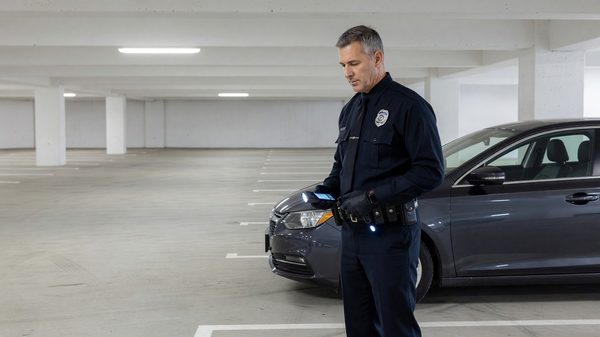
Security requirements: Federal building parking often has security requirements that affect operations — background check requirements for unescorted access, vehicle inspection protocols at high-security facilities, and perimeter security zones that affect where parking can be located relative to the building. GSA’s Public Buildings Service has specific security standards for federal building parking.
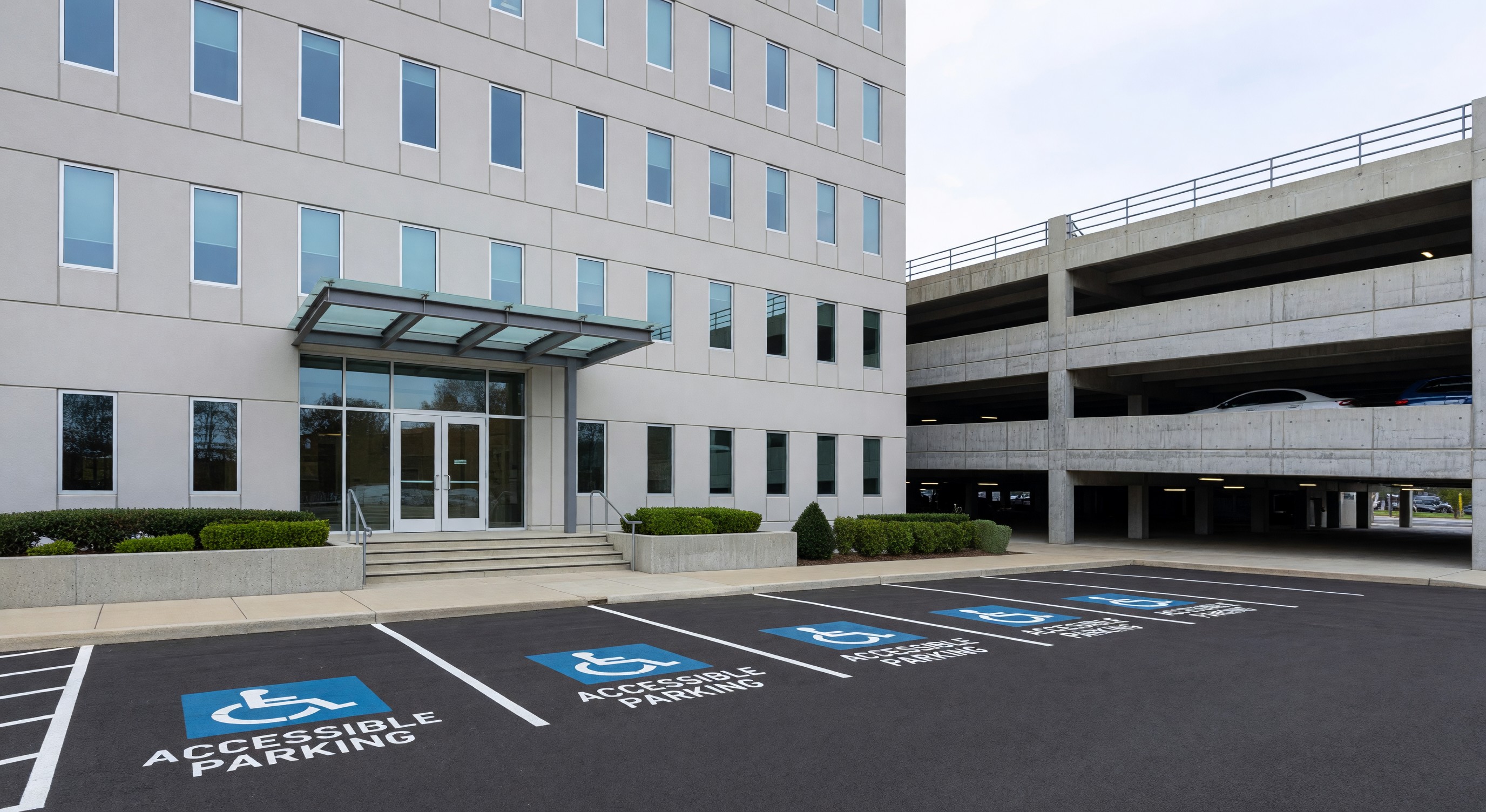
ADA Compliance: Federal facilities must comply with the ADA Standards for Accessible Design, which set requirements for accessible parking space count, dimensions, signage, and route connectivity. Section 504 of the Rehabilitation Act adds requirements for federal facilities specifically. Compliance audits and remediation are more formally structured than at private facilities.
State and Local Government Parking
State capitols, county courthouses, and municipal office complexes face different considerations than federal facilities:
Legislative and judicial access: State capitols and courthouses have multiple distinct user groups — legislators and staff (who may have dedicated parking); judges, court staff, and attorneys (with varying access needs); and the general public accessing government services (visiting courts, county offices, DMV). Managing these distinct populations with appropriate access levels is a core operational challenge.
Public service visitor access: Government facilities that provide public services — DMV offices, courts, social service agencies — have an obligation to ensure that members of the public can access the facility regardless of vehicle ownership. ADA accessible spaces must be adequate; public transit connections must be identified and communicated; and visitor parking must be priced at levels accessible to the service population.
Employee permit programs: State and local government employees typically have permit programs that provide access at subsidized rates compared to market — a legacy of government employment that is distinct from federal GSA policy. Many state and local governments are moving toward reducing parking subsidies as part of sustainability and commuter benefit reform, but these changes require labor agreement negotiations and political management.
Procurement and contracting: Government parking contracts — whether for management services, PARCS systems, or parking enforcement — must comply with public procurement requirements: competitive bidding, public notice, evaluation criteria transparency, and compliance with local preference and minority-owned business enterprise (MBE/WBE) requirements. The procurement process is longer and more formal than commercial contracting.
Courthouse and Legal Facility Parking
Courthouses have specific parking challenges due to the diverse user populations and procedural requirements:
Jury duty parking: Courthouses that regularly assemble jury pools must manage parking for jurors — often providing validated parking or shuttle service from remote lots. Jury parking that is inaccessible or confusing creates attendance barriers that can affect court operations.
Attorney and professional parking: Lawyers who appear regularly in court value convenient parking and may pay for reserved or preferred access. Courthouse parking permit programs that offer attorney-specific permit tiers capture willingness to pay among professional users who expense parking costs.
Security screening and parking: Secured courthouses with vehicle screening at entry must design parking access with screening infrastructure — guard booth, bollard protection, vehicle inspection area — that meets security requirements without creating processing bottlenecks.
Witness and victim access: Some courthouse parking programs provide validated or free parking for crime victims and witnesses called to testify — recognizing that these individuals are often in distressing circumstances and should not face additional barriers to courthouse access.
Employee Commuter Programs in Government Contexts
Transit benefit programs: Government employers — federal, state, and local — typically offer pre-tax transit benefits to employees. Some government employers supplement the employee’s pre-tax contribution with additional employer subsidy, effectively paying part of the employee’s transit cost.
Telework impact on parking: Government telework programs, expanded after 2020, have reduced daily parking demand at many government facilities. Office consolidation and flexible scheduling further affect parking demand. Government facility managers must right-size permit programs to actual attendance, which requires monitoring actual usage rather than relying on historical permit counts.
Carpooling facilitation: Government employers often facilitate carpooling through ridesharing matching programs, designated carpool spaces, and permit discounts for verified carpool participants. GSA’s Federal Commuter Benefits Program provides a framework for federal agency carpooling incentives.
Bicycle facilities: Government sustainability policies increasingly include bicycle commuter support — secure bicycle parking, shower facilities, and bicycle maintenance stations. LEED certification for government buildings often requires bicycle amenities that support non-vehicular commuter options.
ADA Compliance in Government Parking
Title II obligations: State and local government entities are covered under Title II of the ADA, which requires that programs, services, and activities be accessible to persons with disabilities. Title II requires accessible parking for government facilities and may require more accessible spaces than ADA minimums for facilities serving populations with higher disability rates (VA facilities, rehabilitation centers, DMV offices with accessibility-related services).
Self-evaluation and transition planning: Title II entities are required to conduct self-evaluations of their facilities and develop transition plans to address identified accessibility barriers. Parking facilities should be included in self-evaluation, with a transition plan for addressing any accessible parking deficiencies.
Effective communication: Government parking programs must communicate in accessible formats — information about accessible parking locations must be available in alternative formats for customers with vision or reading disabilities.
Frequently Asked Questions
How does GSA determine market rate for federal facility parking? GSA conducts or commissions market rate studies for parking in the areas where federal facilities are located, comparing commercial parking rates for similar use types (monthly employee parking, daily transient) in the same market. Federal facility parking is then priced at or near the market rate rather than below cost. Studies are updated periodically to ensure pricing tracks market conditions.
Are government employees entitled to free parking as a matter of right? At the federal level, free parking is not a general entitlement — GSA policy requires market-rate employee parking charges at most federal facilities. At state and local levels, existing labor agreements may include parking as a benefit, but this is not a constitutional or statutory right. Changes to parking benefits for government employees typically require labor negotiation.
How should government parking facilities handle parking for members of the public who have business at the facility? Public visitor parking should be appropriately priced (at or below commercial market rates), clearly signed and communicated, and adequate in quantity for typical public visitor demand. Validation programs for specific public services (court hearings, DMV appointments) are appropriate where the cost of parking would create a barrier to accessing required government services. Visitor parking should be convenient to the primary public entrance.
What parking procurement regulations apply to government parking contracts? Procurement regulations vary by government level and jurisdiction. Federal contracts must comply with FAR (Federal Acquisition Regulation); state contracts with state procurement codes; and local contracts with municipal procurement ordinances. In general, contracts above certain dollar thresholds require competitive solicitation (RFP or IFB), public notice, and documented selection criteria. Sole-source contracting for parking services is generally disfavored and requires specific justification.
Takeaway
Government facility parking management operates within a framework of statutory requirements, procurement regulations, commuter benefit policies, and ADA obligations that is more complex than commercial parking. The facilities that manage government parking effectively — complying with GSA market-rate requirements or state/local equivalents, administering ADA accommodations rigorously, managing diverse user populations with appropriate access tiers, and procuring services through compliant processes — provide accessible, well-managed parking that serves the government’s public service mission without creating barriers or compliance exposure. The intersection of government parking policy with commuter benefits and sustainability commitments is an area of active evolution that parking professionals serving government clients should monitor closely.
Further Reading from Authoritative Sources
- ADA Title II requirements for government facility parking and accessibility — ADA.gov is the official Department of Justice resource for ADA compliance guidance, including Title II requirements for government facility parking that are directly referenced and explained throughout the article.
- U.S. Access Board ADA standards for government facility accessible parking — The U.S.