Convention centers and conference facilities host multi-day events with attendee profiles that differ substantially from single-event parking contexts — attendees who arrive over multiple mornings rather than a single surge, exhibitors with freight and display vehicles requiring loading dock access, and event calendars that shift dramatically in character from medical conference to trade show to consumer expo within the same week. Managing parking at a major convention center requires flexible pricing structures, coordinated exhibitor vehicle management, hotel and transit integration, and the operational capacity to handle highly variable demand across a diverse event calendar. The conventions and meetings vertical is one where parking management complexity rivals any other market context.
Convention Center Parking Demand Characteristics
Multi-day attendee patterns: Convention and trade show attendees typically arrive over three to five days, not in a single surge. Morning arrival is distributed over a longer window (7 to 10 AM) than sports events, and departure is distributed across the afternoon and evening. This more gradual demand curve reduces the acute surge management challenge but requires sustained staffing and pricing management across multiple days.
Variable event size and profile: A major convention center may host a 30,000-attendee medical device trade show (generating maximum parking demand) the same week as a 500-person regional sales conference (minimal demand) in a breakout hall. Parking operations must scale appropriately across this range without staffing every event as if it were the largest.
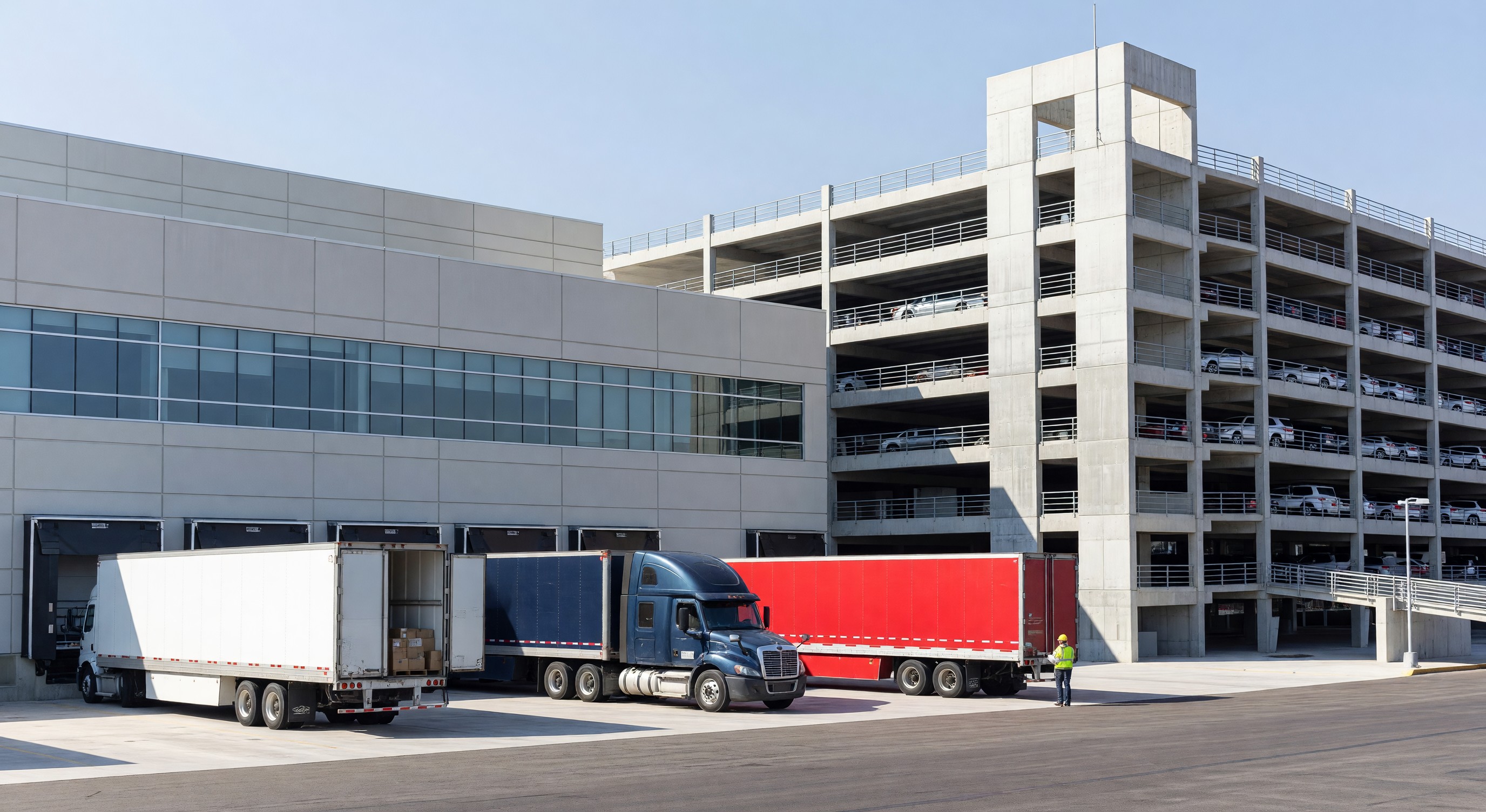
Exhibitor and freight vehicles: Trade shows require exhibitors to bring displays, equipment, and merchandise that arrives by truck, van, and cargo trailer. Exhibitor vehicle management — designated exhibitor parking separate from attendee parking, loading dock access scheduling, drayage (material handling) coordination — is a significant operational element that attendee-only event parking does not require.
Out-of-town attendees: Convention attendees are disproportionately hotel guests who may not need parking at the facility itself. Hotel-to-convention-center transportation coordination (hotel shuttle programs, transit passes included with registration) affects overall parking demand. Understanding the overnight accommodation pattern helps forecast actual parking demand more accurately than simply applying standard event attendance multiples.
Multi-Day Pass Programs
Day pass vs. multi-day pass: Convention attendees benefit from multi-day pass options — a three-day pass priced at a discount to three daily passes rewards multi-day attendance and captures upfront revenue. LPR-based or QR-code passes that work for multiple entries over a defined period (one entry per day, or unlimited entries over three days) serve different attendee needs depending on the event type.
Virtual multi-day passes: Mobile app-based multi-day passes that are purchased during event registration or online in advance simplify the pass distribution process and eliminate physical pass logistics. LPR-based multi-day credentials that simply record the license plate as a valid pass for the event period require no physical credential at all.
Conference registration integration: Integrating parking purchase into the conference registration process — offering parking as an optional add-on at the time of registration checkout — captures purchase intent when attendee motivation is highest and allows pre-sale revenue recognition. Data on parking purchase at registration informs parking demand projections for operations planning.
VIP and speaker parking: Distinguished guests — keynote speakers, VIP attendees, sponsors — receive reserved parking near primary entrance points. Managing a small number of reserved VIP spaces within a larger general parking operation requires clear signage, access credential distribution, and attendant management to prevent unauthorized use of reserved spaces.
Exhibitor Vehicle Management
Move-in and move-out windows: Convention center exhibitors require access for move-in (typically one to two days before the event opens) and move-out (immediately after closing). These windows have very different traffic patterns from event operation days — large trucks and cargo vans arriving at loading docks rather than passenger cars arriving at parking entrances.
Dock access scheduling: Loading dock appointments — scheduled time slots for each exhibitor truck — prevent dock congestion and ensure that large vehicles can maneuver through the facility’s truck access routes without conflicts. Dock scheduling software or even manual appointment sheets coordinated through the show decorator (the company managing exhibitor installation) are standard tools.
Exhibitor parking designation: Exhibitors who drive to the event for the duration and need a daily parking space for their own vehicle during the event receive exhibitor parking permits — typically in a specific area of the parking facility and at a negotiated rate that may be subsidized by the event organizer as an exhibitor service.
Drayage vehicle coordination: Drayage companies (which handle freight movement from loading dock to booth) operate their own vehicles on the convention center floor and between the dock and storage areas. Coordination with drayage operations affects dock scheduling and traffic flow.
Hotel and Transit Integration
Hotel shuttle coordination: Major convention centers are served by hotel shuttle systems that transport guests from nearby hotels. Coordinating shuttle schedules with event programming — ensuring shuttles run from hotels on meeting days during morning arrival and afternoon departure windows — reduces parking demand from hotel-based attendees.
Transit pass programs: Including transit passes in convention registration (or offering discounted transit day passes) encourages attendees to use transit from hotels and local destinations rather than driving. Convention centers in transit-accessible markets can see 15 to 30 percent of attendees arriving by transit when transit access is adequate and transit passes are included or subsidized.
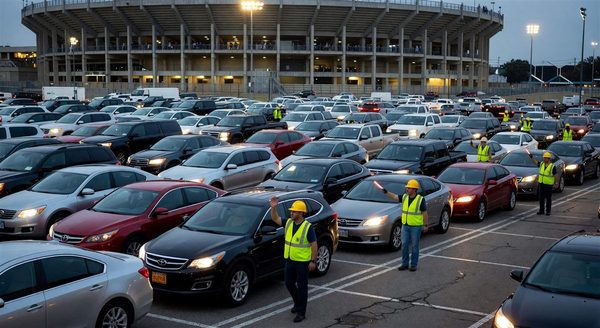
Overflow parking coordination: When convention center parking facilities are insufficient for peak demand (large events that fill all available parking), coordination with nearby hotel parking, municipal garage operators, and surface lot owners enables overflow parking referral. Pre-negotiated overflow arrangements activated during high-demand events are more effective than scrambling for overflow capacity on-demand.
Event-Specific Pricing
Show-by-show rate setting: Convention center parking rates should be set event by event based on expected demand and attendee willingness to pay. A major trade show with 30,000 paid registrations commands higher parking rates than a regional professional association meeting. Blanket annual pricing that doesn’t distinguish between event types leaves revenue on the table during high-demand events.
Exhibitor vs. attendee pricing: Exhibitors who need parking for multi-day access often receive exhibitor-specific rates (negotiated with show organizers or reflected in exhibitor service packages) that differ from attendee day pass rates. This distinction acknowledges the different use patterns and budget treatment of exhibitor vs. attendee parking costs.
Frequently Asked Questions
How should convention centers coordinate parking management with show organizers? Convention center parking should be included in the event services agreement with show organizers — defining parking capacity allocation, rate structures, pre-sale integration with registration, exhibitor vehicle protocols, and shuttle coordination. Show organizers have information about expected attendance, attendee hotel patterns, and exhibitor vehicle plans that is essential for parking operations planning. Early engagement with show organizers (six to twelve months before major events) enables adequate parking planning lead time.
What is the right ratio of parking supply to peak convention attendee demand? Convention center parking ratios are typically planned assuming a significant share of attendees arriving by hotel shuttle, transit, or rideshare — not all by personal vehicle. A common planning assumption is 0.25 to 0.4 vehicles per attendee for urban convention centers with hotel proximity and transit access. Convention centers in suburban or auto-dependent locations may need 0.5 to 0.7 vehicles per attendee. Local data on transportation patterns from prior events is the best guide.
How should convention centers manage parking for consumer shows with general public attendance? Consumer shows (auto shows, home shows, boat shows) attract general public attendees who are more likely to arrive by personal vehicle than business conference attendees. Consumer show parking demand modeling should assume 0.4 to 0.6 vehicles per attendee, with peak arrivals concentrated in morning and early afternoon hours. Pricing for consumer shows should reflect the general public’s price sensitivity compared to business conference attendees whose parking may be expensed.
What parking technology investments have the highest impact at convention centers? Multi-day mobile pass programs integrated with event registration (pre-sale, mobile credential) have highest impact for attendee parking. Dock scheduling software has highest impact for exhibitor vehicle management. Real-time occupancy monitoring with multi-level occupancy display (directing vehicles to available levels rather than circulating through the entire structure) has highest impact for operational management during peak arrival periods.
Takeaway
Convention center parking management requires flexibility, coordination, and operational sophistication that is distinct from either daily commercial parking or single-event sports venues. The combination of multi-day attendees with different patterns than daily commuters, exhibitor freight vehicle requirements, hotel and transit integration, and highly variable event calendars demands parking programs that can adapt to each event’s specific profile while maintaining consistent operational quality. Convention centers that develop strong relationships with show organizers, pre-sell parking through registration integration, manage exhibitor vehicles through scheduled dock access, and leverage hotel and transit options to reduce peak parking demand deliver parking operations that serve the facility’s primary mission of hosting successful events.
Further Reading from Authoritative Sources
- IPMI convention center and event parking management standards — IPMI publishes event parking management standards, convention center operations guidance, and technology resources for parking operators in the events and conference vertical.
- ITE parking demand studies and event traffic management guidelines — ITE publishes parking demand study methodologies, event traffic management guidelines, and parking generation data for convention center and event facility land uses that inform the vehicle-to-attendee ratio planning and peak demand management described in this article.