Casino and resort parking occupies a unique position in the parking management landscape. Gaming properties operate 24 hours per day, generate enormous parking demand from guests who often stay for extended periods, have traditionally offered complimentary parking as a customer acquisition tool, and are navigating a significant transition as many properties shift from free parking to tiered paid or comp-based programs. Understanding casino parking management — the economics of complimentary programs, the operational demands of large-scale valet, and the customer experience requirements of gaming hospitality — requires knowledge of both parking operations and gaming industry dynamics.
The Economics of Casino Complimentary Parking
For decades, Las Vegas and regional casino properties offered free parking as a customer acquisition cost — the assumption was that guests who parked free would spend more inside the casino than the opportunity cost of the parking revenue forgone. This model has been challenged as gaming markets have matured and operating costs have increased:
Historical free parking rationale: Casino gaming revenue was high-margin enough to subsidize free parking as a marketing cost. A guest who drove to a casino, parked free, and spent $200 in gaming generated gross gaming revenue that far exceeded any reasonable value for the parking space. Free parking removed a decision barrier and made the casino more attractive than alternatives.
The Las Vegas shift: Las Vegas Strip casinos began charging for parking in 2016 (MGM Resorts leading the industry-wide transition), citing facility maintenance costs and evolving competitive dynamics. The transition was significant — free parking had been a defining feature of the Las Vegas visitor experience for decades. Guest response was mixed but most properties maintained the change, finding that parking revenue contribution to operating income justified the customer experience tradeoff.
Current comp-based models: Most major casino properties have moved to tiered parking programs — complimentary parking for loyalty program members above a defined tier, discounted parking for lower tiers, full-price parking for non-players. Loyalty comp programs that award free parking based on gaming activity maintain the gaming incentive structure while converting parking from a universal giveaway to a targeted loyalty benefit.
Tiered Parking Comp Programs
Loyalty tier integration: Casino parking comp programs are integrated with the property’s player rewards program. Guests who reach defined loyalty tiers (based on play volume, visit frequency, or direct host relationship) receive comp parking as a tier benefit. Higher-tier players may receive complimentary valet in addition to self-park.
Validation-based comp: Lower-tier players may receive comp parking validation based on gaming activity during a specific visit — inserting a loyalty card into a gaming device for a defined duration, or reaching a spending threshold, triggers a validation that covers the day’s parking cost. This structure incentivizes gaming activity rather than status.
Host-managed comps: High-value players managed by casino hosts receive direct comp authorizations for parking, hotel, food and beverage, and entertainment. The host has discretion to comp parking for guests who represent significant gaming revenue relationships.
Revenue from non-comped parking: Guests who don’t qualify for comp parking — casual visitors, non-players, low-tier players — pay standard parking rates. In major Las Vegas properties, this revenue can be $15 to $25 per vehicle per day, generating millions annually from the non-comped segment.
High-Volume Valet Operations
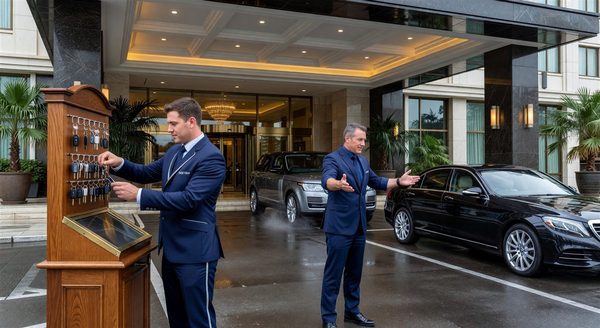
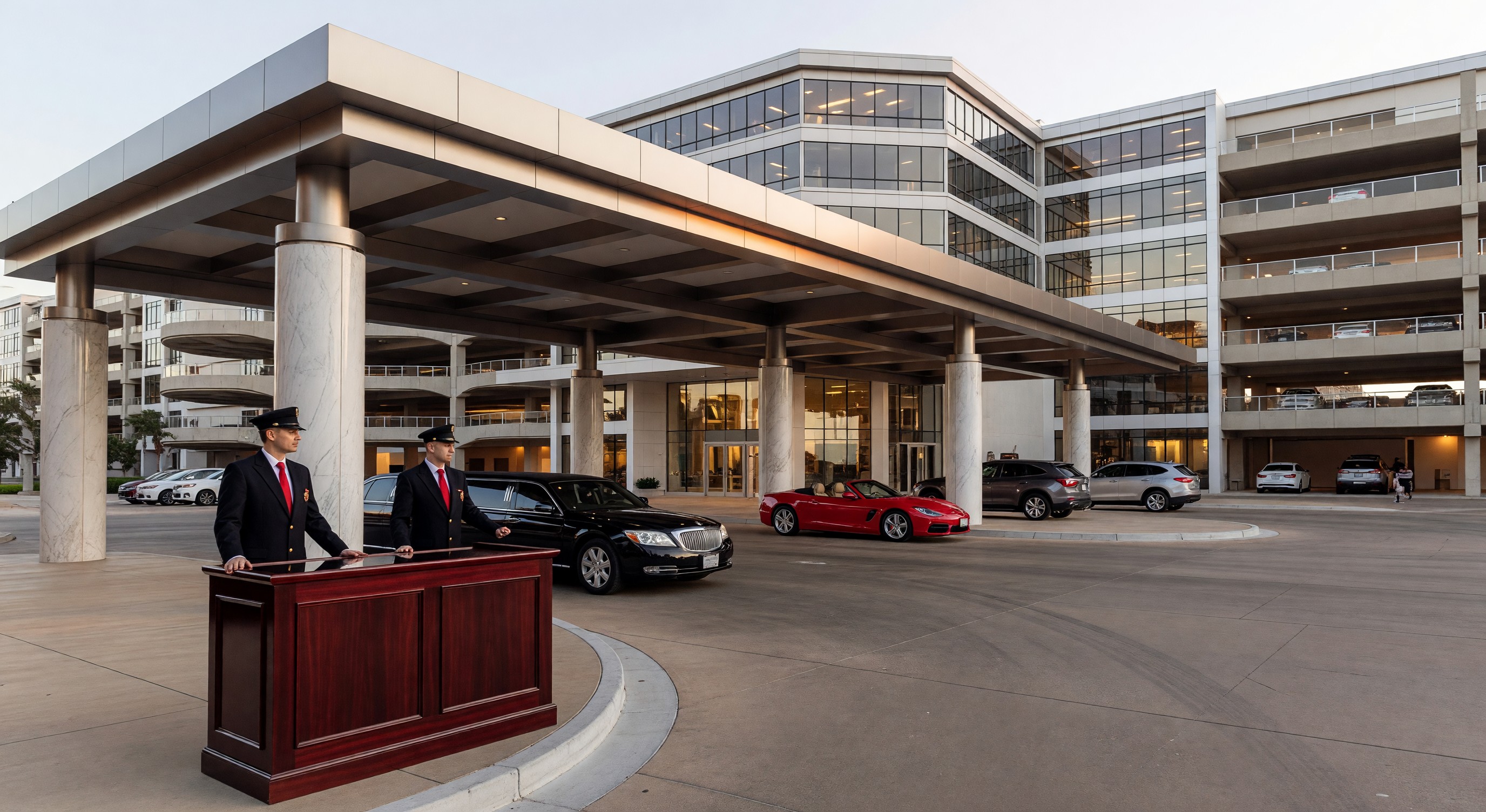
Casino resort valet operations are among the highest-volume in the hospitality industry:
Scale of operations: Major Strip properties may process 3,000 to 5,000 valet vehicles on a busy weekend day, requiring a fleet of valet drivers, a substantial vehicle staging area, and sophisticated ticket management. Vegas resort valet operations are often large-scale service organizations that rival full-service hotel valet programs in complexity.
24-hour operation: Casinos operate 24 hours per day, 365 days per year. Valet operations must maintain staffing through overnight hours when gaming volume is lower but does not stop. Overnight shift management, break coverage, and service quality consistency across all 24 hours are operational requirements that differentiate casino valet from limited-hour hospitality valet.
Premium tip culture: Casino valet is a tipping environment — valet drivers receive significant tip income that supplements their base wage. Managing tip culture (ensuring it doesn’t create disparate service quality based on tip potential) while acknowledging the legitimate income component for drivers requires supervisor attention to service equity.
Vehicle handling at scale: High-volume casino valet operations develop systematic approaches to vehicle placement — staging areas where vehicles are arranged for efficient retrieval, ticket systems that locate vehicles by position rather than plate, and retrieval times managed to meet guest expectations. Modern casino valet operations often use digital ticketing systems with GPS or position-coded lot mapping to reduce retrieval time.
Parking Revenue Management
Dynamic pricing for self-park: Large casino resorts with parking structures can implement time-of-day and day-of-week pricing that reflects demand — higher rates on Friday and Saturday nights, lower rates on weekday mornings. Dynamic pricing captures more revenue from high-demand periods while maintaining accessibility at lower-demand times.
Event parking premium: Casino resorts that host concerts, boxing matches, and special events can apply event pricing premiums to parking during event periods. Event parking revenue is a significant ancillary to gaming revenue for resort properties.
Parking structure utilization analysis: Large casino properties may have multiple parking structures with different proximity and amenity characteristics. Analyzing utilization across structures enables pricing differentiation — premium prices for the closest or most convenient structure, lower prices for remote structures with free shuttle service.
Revenue accounting in gaming context: Casino parking revenue is often modest relative to gaming and hotel revenue, but it is real money that belongs in the facility’s income accounting. Parking operators should provide casino management with clear revenue reporting that distinguishes gaming comp parking costs from paid parking revenue.
Customer Experience in Gaming Parking
Speed is paramount: Casino guests who are there to gamble or see a show want to get inside quickly. Valet return times that exceed 10 to 15 minutes create frustration disproportionate to the time involved — the guest is eager to be doing something else. Self-park facilities with long internal circulation times are similarly frustrating. Fast in, fast out is the primary parking experience metric in the casino context.
Perceived security: Gaming guests may be carrying significant cash or valuables, and may be returning to vehicles at 2 AM from a casino floor. Perceived security — lighting, cameras, security personnel visibility — matters particularly in casino parking environments. Clear lighting, visible surveillance infrastructure, and security patrol presence are customer experience requirements.
Amenity expectations: High-end casino resort guests have elevated expectations — they expect valet staff to remember their vehicle or greet them by name on repeat visits, they expect the valet experience to match the hotel’s overall service standard, and they are more likely to comment on service failures. Training valet staff to meet resort hospitality standards (not just basic parking competence) is essential.
Frequently Asked Questions
Did Las Vegas parking revenue increase after properties started charging? Las Vegas resort operators reported that parking revenue generated from charging non-comped guests was material — some estimates of $30 to $50 million annually for large multi-property operators — while the impact on gaming revenue was less significant than initially feared. Players with high-value relationships are comped; casual visitors and non-players generate parking revenue that is positive to operating income. The transition is widely considered financially successful by the properties that made it.
How should smaller regional casinos approach parking pricing? Regional casinos in competitive markets (where multiple gaming options compete for local players) face different competitive dynamics than Las Vegas Strip properties. In markets where competitor casinos offer free parking, a regional casino that charges for parking may face customer loss that exceeds the parking revenue gain. Market context — the competitive landscape and customer price sensitivity — should drive the decision rather than blind adoption of Las Vegas practice.
What is the appropriate valet-to-self-park ratio at casino resorts? Major Las Vegas casino resorts typically see 20 to 40 percent of vehicles using valet, with the balance in self-park. Properties that market to a luxury or older demographic may see higher valet take rates; properties with strong self-park infrastructure and convenience may see lower valet rates. Valet staffing should be calibrated to peak demand periods (Friday and Saturday evenings, special events) with flexible staffing models for slower periods.
How does resort parking management handle large-scale special events like New Year’s Eve? New Year’s Eve and other peak demand events require pre-planned contingency operations — additional staffing, overflow parking with shuttle service, dynamic signage directing guests to available parking, and extended valet capacity. Pre-selling event parking packages as part of New Year’s Eve hotel or event packages ensures revenue capture and provides demand forecasting data for operations planning.
Takeaway
Casino and resort parking management is shaped by the gaming industry’s customer acquisition economics, the hospitality industry’s experience standards, and the operational demands of 24-hour, high-volume facilities. The industry’s transition from universal free parking to tiered comp programs based on gaming loyalty has generated meaningful parking revenue while preserving the most important benefit — complimentary access — for the guests most valuable to the property’s gaming business. The operations that excel combine high-speed self-park and valet operations, well-designed comp tier structures that incentivize gaming activity, and the service quality standards that high-end gaming hospitality guests expect in every element of the resort experience.
Further Reading from Authoritative Sources
- IPMI casino and resort parking operations guidance — The International Parking and Mobility Institute publishes operations guidance for parking verticals including hospitality and entertainment venues, directly relevant to the casino and resort parking practices described in the article.
- Transportation Research Board hospitality parking and revenue management research — The Transportation Research Board publishes research on parking at entertainment and hospitality venues that provides the evidence-based context for the revenue management and operational scale data discussed in the article.