Airport parking occupies a unique position in the parking industry. Nowhere else do you find the same combination of high demand volatility, extreme customer sensitivity to both price and convenience, complex logistics involving shuttle operations and terminal coordination, and revenue potential that can make or break an airport authority’s budget. According to Airports Council International, the U.S. airport parking market alone generates an estimated $6 to $8 billion annually, and that figure has been climbing steadily as air travel recovered and then exceeded pre-pandemic levels through 2023 and into 2024.
But the airport parking landscape is not monolithic. On-site operations managed by airport authorities face fundamentally different challenges and economics than off-site operators competing for the same customers from parcels across the highway. Both models work. Both have vulnerabilities. And the competitive dynamic between them shapes how travelers experience airport access.
On-Site Airport Parking: The Built-In Advantage
Airport-operated parking starts with a structural advantage that no off-site competitor can replicate: proximity. Walking from a terminal garage to the check-in counter takes minutes. For travelers with carry-on luggage, tight connections, or simple anxiety about missing a flight, this proximity is worth a premium.
The Product Tiers
Most major airports have evolved toward a three-tier product structure:
Terminal or premium parking. The closest spaces to the terminal, often in an attached or immediately adjacent garage. Prices range from $25 to $50 per day at major U.S. airports. The customer profile skews toward business travelers on expense accounts, families with young children who cannot manage a shuttle, and anyone prioritizing time over money.
Economy or remote parking. Surface lots or distant garages connected to terminals by shuttle buses or automated people movers. Daily rates of $10 to $20 undercut terminal parking while remaining more expensive than most off-site alternatives. Economy lots capture price-conscious leisure travelers and long-trip parkers for whom shuttle time is an acceptable trade-off.
Valet and premium services. A growing segment where travelers drop their vehicle at the terminal curb and a professional driver parks it. Pricing of $30 to $60 per day includes the convenience of not searching for a space, not walking from a distant lot, and (at some airports) additional services like car washes, oil changes, and EV charging during the parking period.
Operational Complexity
On-site airport parking operations involve logistics that most other parking environments never encounter:
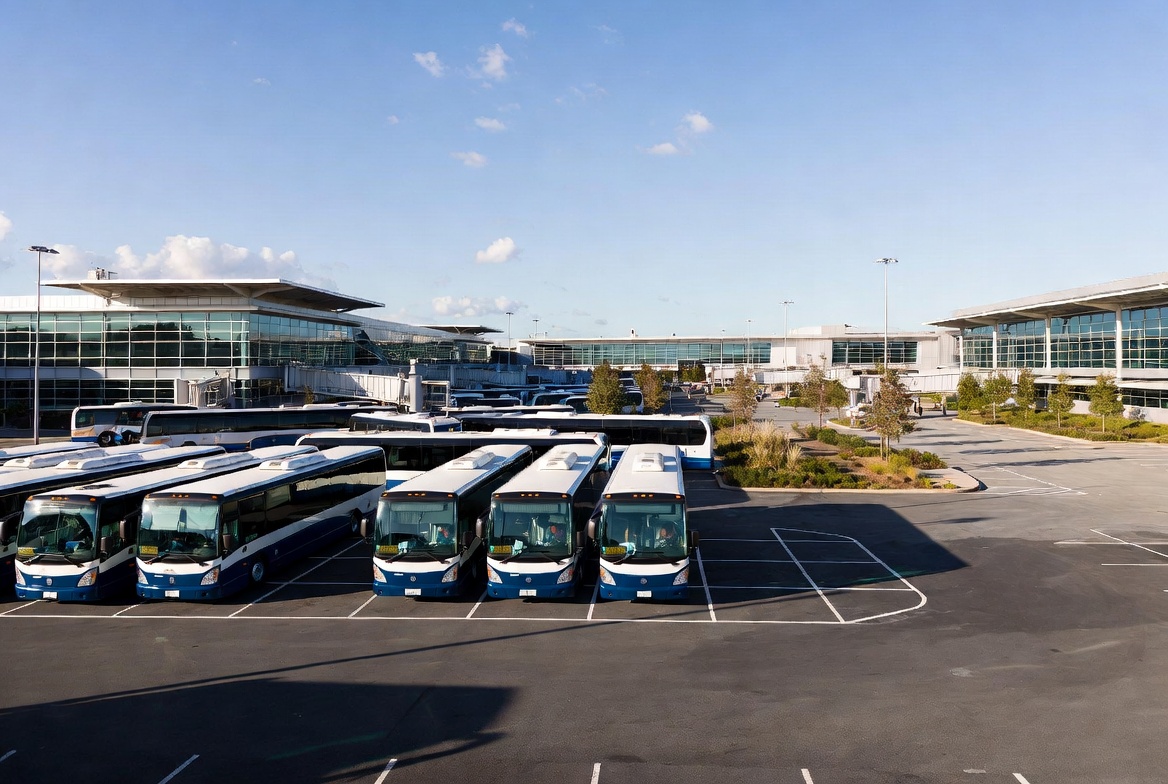
Shuttle operations for economy lots represent a major operating cost and a critical customer experience touchpoint. Shuttle frequency, capacity, route design, and driver quality directly affect customer satisfaction. During peak travel periods — holiday weekends, spring break, major events — shuttle capacity becomes the binding constraint on economy lot throughput. An economy lot with 5,000 spaces and inadequate shuttle service is functionally smaller than its space count suggests.
Security requirements at airports impose costs and constraints that do not exist elsewhere. The Federal Highway Administration and TSA coordinate on ground transportation security standards. TSA regulations, airport authority security mandates, and perimeter control requirements all add complexity. Employee background checks, restricted area access control, and coordination with law enforcement are standard operating requirements.
Terminal coordination means parking operations must adapt to airline schedule changes, terminal closures, construction projects, and security events. A terminal renovation that redirects passenger flow can shift parking demand from one garage to another overnight.
Revenue management at airports is increasingly sophisticated. Dynamic pricing based on occupancy, advance reservation systems, and loyalty programs tied to airline frequent flier programs all aim to maximize yield from a constrained asset. Airport authorities rely on parking revenue to fund infrastructure — at many airports, parking is the second-largest non-aeronautical revenue source after terminal concessions.
The Reservation Revolution
Pre-booking has transformed airport parking over the past five years. Platforms like ParkWhiz, SpotHero, and airport-operated reservation systems now handle a significant share of airport parking transactions. At some airports, 30 to 50 percent of on-site parking is reserved in advance.
Reservations benefit operators and customers alike. Operators gain demand visibility, can implement yield management, and reduce the customer experience risk of a sold-out facility. Customers gain peace of mind, often get a discount for booking ahead, and avoid the stress of uncertainty.
But reservations also introduce operational challenges. How do you hold a space for a reservation that may arrive in a four-hour window? How do you handle no-shows without leaving inventory stranded? And how do you price reservations relative to drive-up rates to incentivize advance booking without cannibalizing revenue from customers who would have paid full price?
The operators who have navigated these questions most effectively treat parking reservations like hotel revenue management — using historical data to set pricing tiers, overbooking by a calculated margin to account for no-shows, and adjusting dynamically as the travel date approaches.
Off-Site Airport Parking: The Challenger Model
Off-site airport parking operators compete on price. They have to — they lack the proximity advantage and must overcome the friction of a shuttle transfer. But successful off-site operators have built businesses that generate strong returns by combining low land costs, efficient shuttle operations, and customer experiences that rival or exceed on-site economy lots.
The Economic Equation
The economics of off-site airport parking are straightforward in principle and challenging in execution. Land near airports costs less than land on airport property. Off-site operators pay market rent or own their parcels outright, avoiding the revenue-sharing arrangements that airport concessionaires must accept. A surface lot with 1,000 spaces on a parcel acquired for $2 to $5 million (depending on the market) can generate $3 to $6 million in annual revenue at rates of $8 to $15 per day with decent occupancy.
The margin equation depends almost entirely on shuttle operations and marketing costs. Shuttle fuel, drivers, maintenance, and insurance represent 25 to 40 percent of operating costs for a typical off-site lot. Marketing — primarily digital advertising targeting travelers searching for airport parking online — can consume another 10 to 20 percent. What remains is the operating margin, which successful off-site operators target at 20 to 35 percent.
Shuttle Operations: The Make-or-Break Factor
For off-site operators, the shuttle is the product as much as the parking space. A traveler who waits 20 minutes for a shuttle in the rain after a red-eye flight will not return, regardless of how much they saved on parking.
Effective shuttle operations require:
Frequency. Peak-period headways of five to eight minutes between buses. Off-peak headways of 10 to 15 minutes. Anything longer and the perceived convenience gap versus on-site parking becomes unacceptable.
Capacity. Buses sized for the passenger mix — luggage capacity matters as much as seating. A 24-seat shuttle that cannot accommodate 24 passengers with full-size luggage effectively has fewer seats.
Routing. Direct routes between the lot and terminal curb, with minimal stops. Multi-terminal airports require route designs that balance coverage with speed. Some operators run separate shuttles for each terminal cluster to minimize ride time.
Communication. Real-time tracking via GPS, communicated to waiting customers through apps, text messages, or display screens at the lot. The perceived wait feels shorter when customers know exactly when the shuttle will arrive.
Reliability. Shuttle breakdowns during peak travel periods are operational emergencies. Spare vehicles and rapid-response maintenance capability are essential.
Technology and Customer Experience
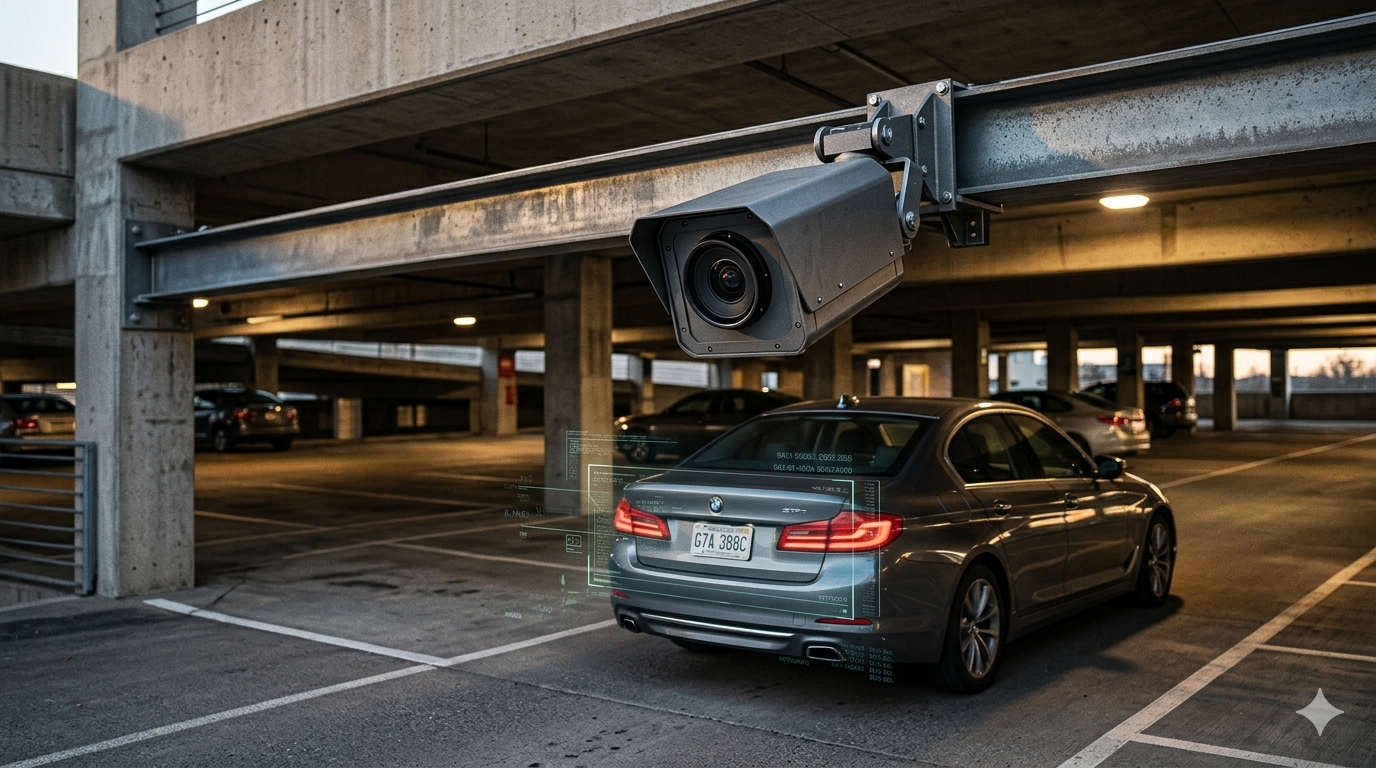
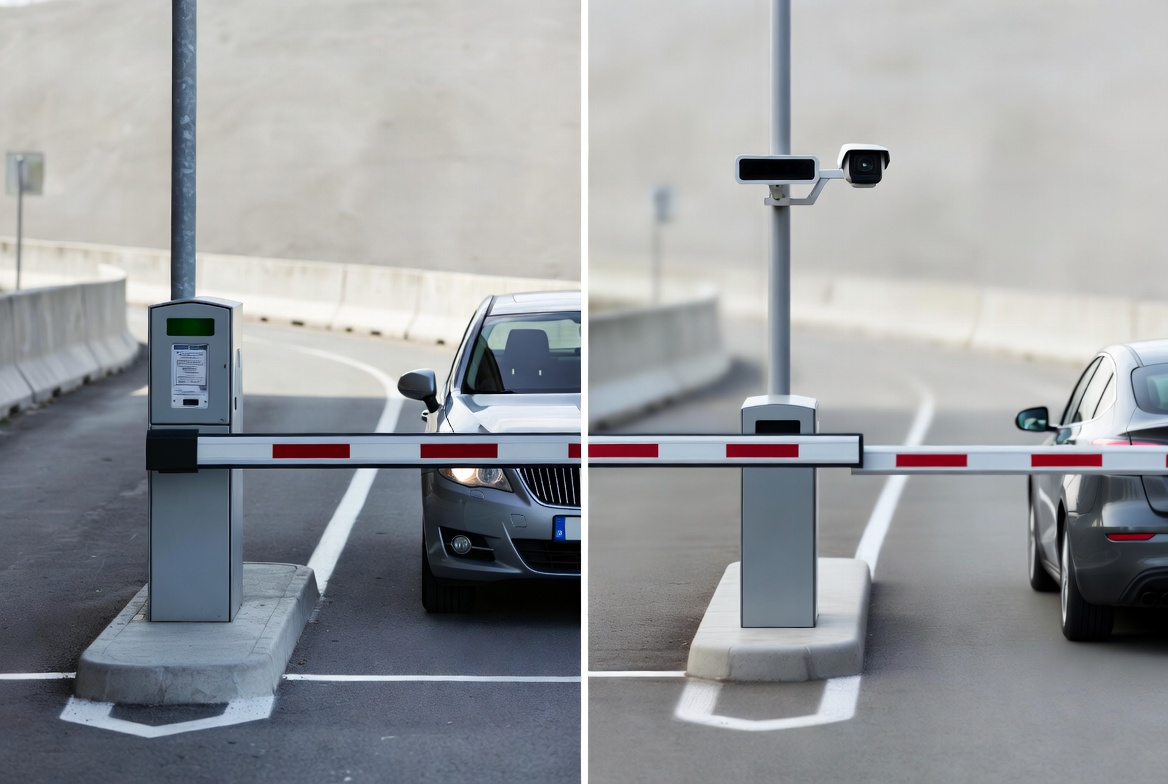
Off-site operators have adopted technology aggressively to compete with the inherent convenience advantage of on-site parking. License plate recognition systems enable frictionless entry and exit — customers are recognized by their plate, greeted by name, and processed without tickets or cards. This technology has become a competitive differentiator, particularly for frequent travelers who value speed and simplicity.
Loyalty programs reward repeat customers with free days, upgrades, and priority shuttle boarding. The most effective programs are simple — park 10 times, get a free day — rather than complex point systems that confuse more than they motivate.
Mobile apps that handle reservations, shuttle tracking, vehicle location, and payment create a seamless experience that can actually exceed the on-site parking experience, where technology adoption has been slower at many airports.
Competitive Threats
Off-site operators face competitive pressure from multiple directions:
Rideshare. Uber and Lyft have captured a meaningful share of airport transportation, particularly for short trips where parking costs would be high relative to ride cost. Business travelers on two-day trips increasingly take rides rather than paying $80 to $100 for parking.
On-site price competition. Airport authorities, recognizing that off-site operators capture price-sensitive demand, have responded with economy lots, advance-purchase discounts, and loyalty programs that narrow the price gap.
Consolidation. The off-site airport parking industry has consolidated significantly. National operators like The Parking Spot and PreFlight have acquired independent lots, bringing economies of scale in marketing, technology, and shuttle operations that smaller independents cannot match.
Real estate pressure. Land near airports is subject to development pressure for hotels, rental car facilities, warehouses, and commercial uses that can outbid parking for parcels. Off-site operators who lease rather than own their land face the ongoing risk of losing their site to a higher-value use.
Technology Across Both Models
Several technology trends affect on-site and off-site operations alike:
License Plate Recognition
LPR has become the dominant access control technology in airport parking. It enables ticketless entry and exit, automatic identification of reservations and loyalty members, and enforcement of time limits and parking rules. Accuracy rates above 98 percent in controlled environments make LPR reliable enough for revenue-critical applications.
LPR also enables operational analytics — tracking dwell times, repeat visit patterns, and lot utilization at a granular level. This data feeds revenue management decisions and helps operators understand customer behavior in ways that ticket-based systems cannot match.
Payment Technology
The shift away from cash and toward digital payment continues to reshape airport parking. Mobile payment, contactless cards, and app-based transactions reduce cash handling costs, speed throughput, and improve the customer experience. Several airports have moved to fully cashless parking operations, with pay-on-foot machines accepting only cards and mobile payments.
Advance payment through reservation platforms changes the revenue recognition model — operators collect revenue before delivering the service, improving cash flow and reducing the risk of drive-offs and payment disputes.
Dynamic Signage and Communication
Real-time availability displays at airport approaches help travelers make informed decisions about where to park. When the terminal garage shows “Full” and the economy lot shows “Available,” travelers adjust their plans. This demand distribution reduces congestion at popular facilities and improves overall utilization across the airport parking system.
Revenue Management: The Common Thread
Whether on-site or off-site, successful airport parking operations share a commitment to revenue management discipline. The principles are consistent:
Know your inventory. Accurate, real-time data on available spaces, reserved inventory, and occupancy trends by hour and day.
Know your customer. Segmentation by trip purpose, duration, price sensitivity, and booking behavior enables targeted pricing and marketing.
Price to demand. Rates that reflect actual demand conditions rather than fixed schedules. Holiday weekends, summer travel peaks, and major events all warrant premium pricing that the market will bear.
Measure everything. Revenue per available space, occupancy rates, average daily rates, reservation conversion rates, shuttle cost per passenger — the operators who manage what they measure consistently outperform those who rely on intuition.
The Road Ahead
Airport parking will continue to evolve as air travel patterns shift, technology advances, and ground transportation alternatives multiply. The operators who thrive will be those who invest in customer experience, embrace technology, and maintain the operational discipline that this demanding vertical requires.
On-site operators will face pressure to justify premium pricing through premium service — better technology, cleaner facilities, more convenient access. Off-site operators will continue to compete on value while investing in technology and customer experience to close the convenience gap.
The travelers in the middle — willing to pay for convenience but sensitive to excess — will continue to have choices. And in a market with choices, the operators who execute best will win.