Buffalo eliminated citywide parking minimums in 2017. Hartford followed later that year, then Minneapolis, San Francisco, and a rapidly growing list of cities including Raleigh, Cambridge, Lexington, Toronto, and Austin in subsequent years. The reform has moved from academic curiosity to mainstream policy in less than a decade.
Enough time has now passed in the early-adopter cities to assess outcomes. The picture that emerges is more nuanced than either the reform advocates or the critics predicted.
What the Early Data Actually Shows
Researchers at Furman Center, the Mercatus Center, and several university planning programs have published outcomes studies covering the 2017 to 2023 window. Across studies, a consistent pattern emerges.
Developer parking provision falls, but not to zero. In Buffalo, Minneapolis, and Seattle’s transit-rich zones, post-reform projects built 30 to 60 percent less parking on average than pre-reform projects in comparable submarkets. Projects did not stop building parking altogether. Developers continued to match parking to perceived market demand, lender requirements, and anchor tenant needs.
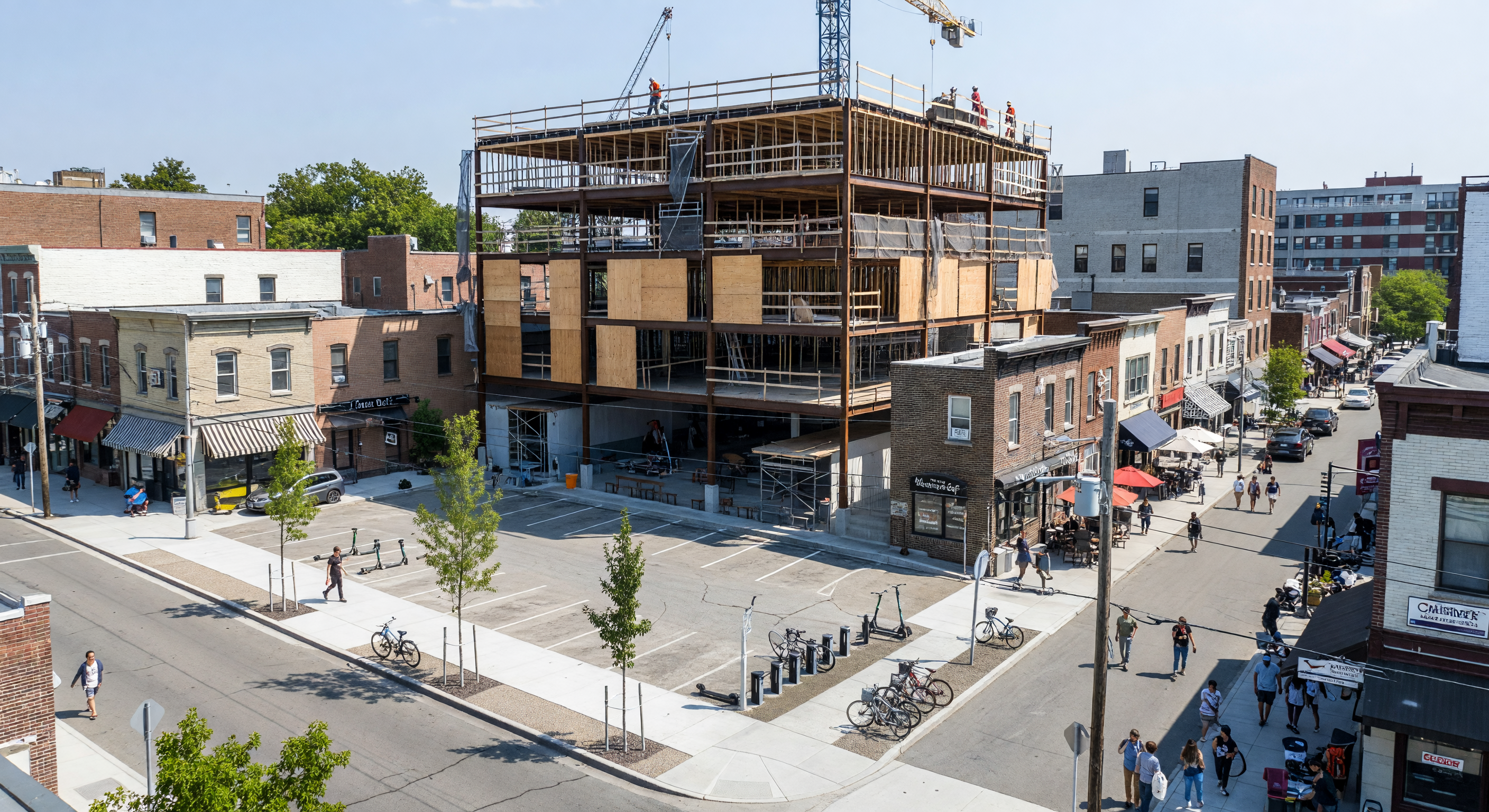
Small and infill projects disproportionately benefit. The largest effects show up in projects that were previously infeasible under minimum requirements — small-lot infill, adaptive reuse, and accessory dwelling units. Reform removed binding constraints on exactly the project types that minimums had made impossible.
Rents and prices respond modestly. Several studies find small but measurable reductions in new-construction rents attributable to reduced parking provision, in the range of 5 to 15 percent depending on submarket. The effect is real but not transformative. Parking is one input into housing costs, not the dominant one.
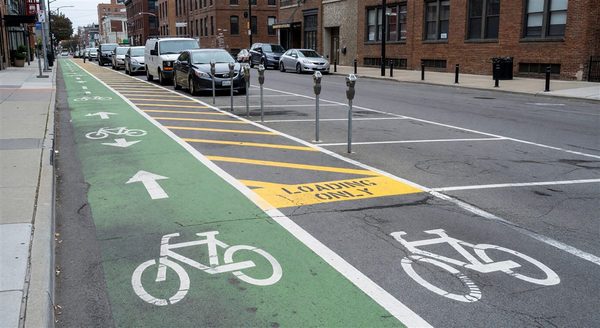
Displacement of demand is largely manageable. The critics’ central concern — that reduced off-street supply would flood adjacent streets with parked cars — has materialized in some neighborhoods but not others. Cities that paired minimum elimination with on-street permit parking, meter expansion, or other curb management tools have generally managed the transition. Cities that did neither have faced more friction.
Where Reform Has Not Delivered What Advocates Promised
The reform literature sometimes implied that parking minimums were the main constraint on housing supply. Outcomes data does not support that claim. Cities with binding land-use constraints, construction cost inflation, interest rate pressure, or restrictive review processes have not seen the housing production surges that minimum elimination was supposed to unlock. Minimums were a constraint, not always the binding one.
Mode shift has been similarly underwhelming at the project level. Buildings built with less parking are occupied by slightly less car-owning households, but the shift is modest and is largely explained by self-selection rather than by the parking supply change driving behavior change. The Transportation Research Board literature on induced demand applies in reverse: reducing parking supply does not automatically reduce car ownership the way simple models suggest.
The Reform Design Variables That Matter
Cities evaluating reform can learn from the variance across early adopters. Three design choices consistently shape outcomes.
Scope. Citywide elimination produces different results than transit-zone elimination. The former is administratively simpler; the latter targets the areas where demand elasticity is highest.
Curb management pairing. Reform without corresponding investment in on-street management produces more political friction. Reform paired with permit zones, metered expansion, or residential parking benefit districts has been more durable.
Affordability tie-ins. Some jurisdictions have tied reduced parking to affordability requirements or density bonuses. The evidence on whether these tie-ins improve or impede project feasibility is mixed.
What Is Still Being Learned
The longer-run questions — how reform interacts with autonomous vehicle deployment, whether reduced parking provision is reversible if demand patterns shift, and how existing parking inventories in reformed zones will be adaptively reused — will take another decade to answer. The American Planning Association is tracking outcomes in an ongoing research series, and the accumulated evidence base will continue to improve.
FAQ
Do cities that eliminate parking minimums see new buildings with no parking at all?
Rarely. Most post-reform projects continue to build some parking, typically 30 to 60 percent less than previously required. A small share of infill and adaptive reuse projects build zero parking; these are projects that were often infeasible to build at all under prior rules.
Does eliminating parking minimums reduce housing costs?
Modestly. Studies find rent reductions in new construction on the order of 5 to 15 percent attributable to reduced parking provision, varying by submarket. Minimum elimination is one input into housing affordability, not a dominant lever.
Does reform overwhelm on-street parking?
Sometimes. Cities that paired reform with curb management — permit zones, meter expansion, or parking benefit districts — have generally managed the transition. Cities that made no complementary curb management changes have faced more friction in residential neighborhoods.
Is there a best-practice reform design?
Evidence points toward pairing minimum elimination with active curb management, targeting reform where demand elasticity is highest (transit-rich zones, dense mixed-use districts), and avoiding rigid affordability tie-ins that complicate project feasibility without clear benefits.