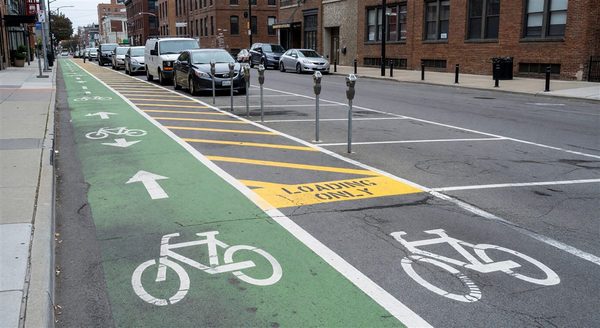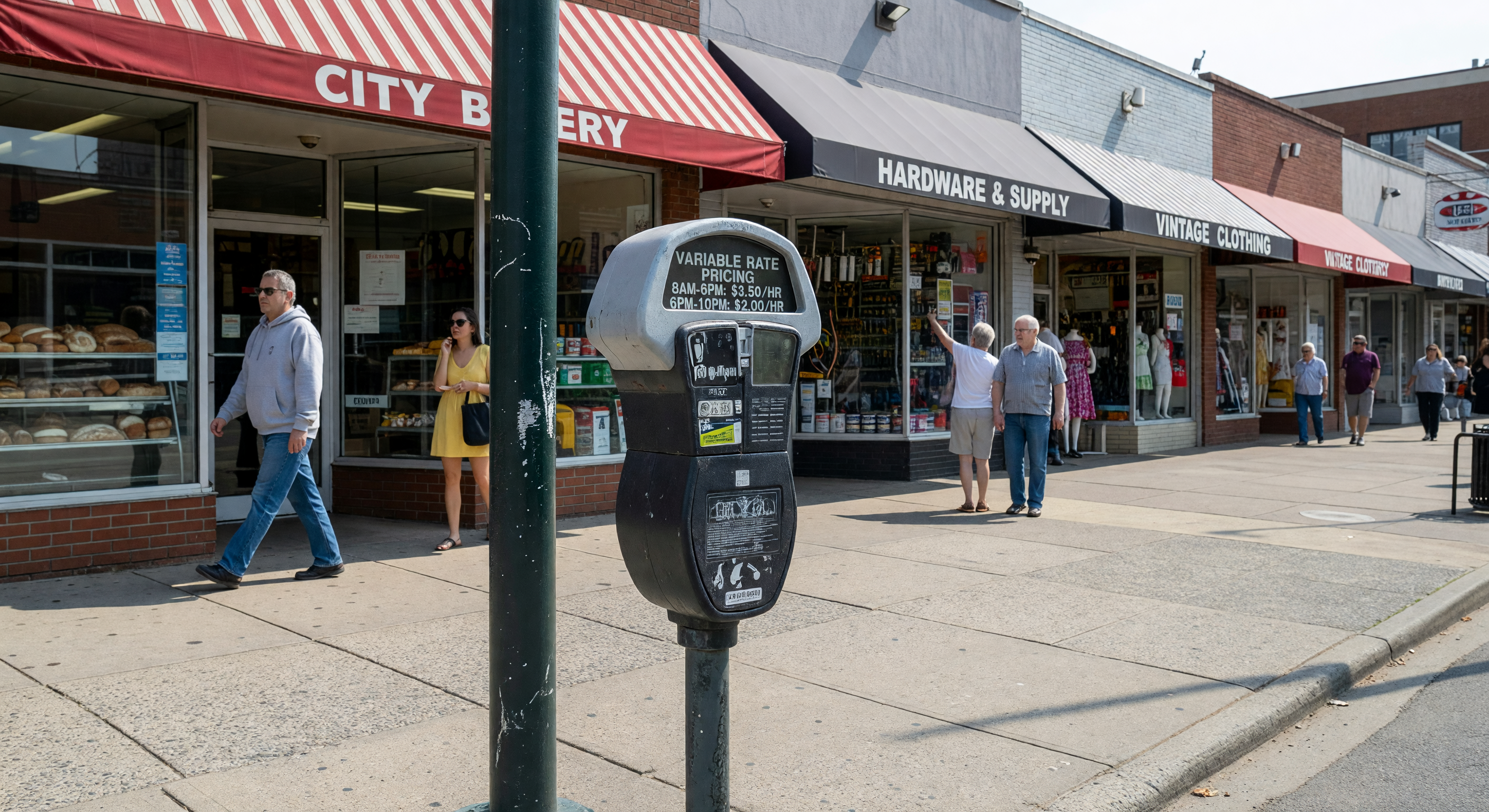
When San Francisco launched SFpark in 2011, the premise — adjust meter rates block by block until roughly one space per blockface is open — was untested at scale. More than a decade later, Seattle, Los Angeles, Washington D.C., Pittsburgh, and a long tail of smaller cities have run their own variants. The accumulated outcomes data is now substantial enough to draw conclusions that were not available during the pilot era.
What the Evidence Supports
Across the better-documented programs, demand-responsive pricing reliably accomplishes three things. It reduces cruising time and circling-for-parking VMT, typically in the 20 to 40 percent range on formerly oversubscribed blocks. It smooths occupancy across adjacent blockfaces by pushing price-sensitive demand to underused streets one or two blocks away. And it modestly increases meter revenue in aggregate, even though rates fall on many blocks where demand is light.
A 2017 Transportation Research Board synthesis of SFpark outcomes found average occupancy moved toward the target band on roughly three-quarters of metered blocks. Seattle’s annual rate-adjustment program, documented in successive reports by the Seattle Department of Transportation, has produced similar directional results over a longer time series.
What the Evidence Does Not Support
The weaker claims deserve more skepticism than they usually get.
Variable pricing is not, on its own, a congestion tool. The VMT reductions are real but small relative to total traffic on the same corridors. Cruising is a fraction of urban congestion, not its dominant cause. Cities that sold dynamic pricing primarily as a congestion fix have struggled to sustain political support when congestion did not visibly improve.
Variable pricing also does not reliably shift mode choice. The price elasticities observed in on-street studies are low enough that meter rate changes, even large ones, move a modest share of trips to transit or active modes. That shift matters at the margin but is not a substitute for transit investment, pricing of off-street parking, or broader travel demand management.
The Implementation Variables That Matter Most
Programs that have produced durable outcomes share a small set of design features.
Rate-change cadence. Quarterly or semi-annual adjustments, tied to published occupancy data, are politically more survivable than opaque dynamic pricing. Drivers tolerate a rate schedule they can predict. Cities that moved toward real-time dynamic pricing without strong public communication have faced sustained backlash.
Blockface granularity. Programs that price in block-scale zones outperform programs that apply district-wide rates. The occupancy heterogeneity that demand-responsive pricing is supposed to resolve is itself block-scale.
Revenue return. Cities that return a visible share of meter revenue to the priced district — streetscape improvements, public realm investments, transit frequency — sustain political support better than cities that return revenue to general fund. The Parking Benefit District literature documents this pattern across multiple jurisdictions.
Enforcement coupling. Pricing without functional enforcement produces compliance erosion regardless of rate structure. Cities that let enforcement capacity decay have seen the benefits of variable pricing evaporate within two to three years.
What Remains Unsettled
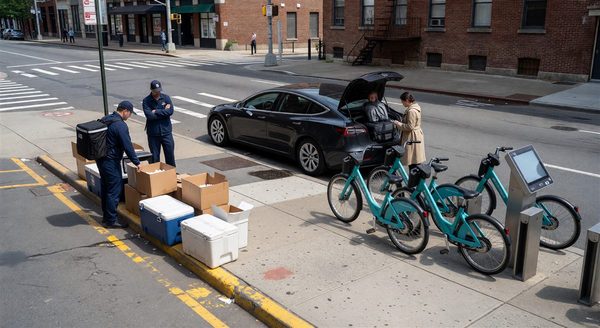
Several questions that were open a decade ago remain open. Whether variable pricing reduces or increases equity impacts depends heavily on discount program design and the baseline demographics of metered districts. Whether off-street private lots should be folded into public pricing signals — through minimum-rate floors, shared occupancy data, or coordinated rate schedules — is technically feasible but politically fraught. And whether dynamic pricing should extend to curb uses beyond passenger parking, including loading and ride-hail, is an active area of experimentation without consensus.
FAQ
Does variable parking pricing actually reduce traffic?
Yes, but modestly and locally. Cruising VMT on priced blocks typically falls 20 to 40 percent, which represents a small share of total corridor traffic. Variable pricing is a useful component of a broader congestion strategy, not a standalone solution.
How often should rates be adjusted?
Evidence from Seattle, SFpark, and similar programs points to quarterly or semi-annual adjustments as the sweet spot. More frequent changes confuse drivers and erode trust; less frequent changes miss the demand shifts the program exists to track.
Is real-time dynamic pricing better than scheduled rate changes?
The outcomes data does not clearly favor real-time pricing. Published, predictable rate schedules appear to produce comparable occupancy outcomes with substantially better public acceptance.
What happens to revenue when rates become demand-responsive?
Most programs report modest net revenue increases. Rates fall on underused blocks, but higher rates on busy blocks and reduced meter-bag discounts generally more than offset those reductions.