Parking operations are labor-intensive businesses at the traditional end of the spectrum — attended facilities require cashiers, lot attendants, and maintenance staff for extended operating hours. The labor market tightening of 2021-2023, minimum wage increases across many states and cities, and the simultaneous maturation of automation technology that can replace human labor at specific parking functions have created a significant workforce transition. Understanding the direction and pace of these changes helps parking operators make informed staffing and technology investment decisions.
Labor Market Tightening and Wage Pressure
The post-pandemic labor market brought unprecedented staffing challenges to parking operations:
Competitive wage pressure: Retail, fast food, and logistics employers competing for similar entry-level workers drove up market wages significantly. Parking operations that previously hired at $12 to $14 per hour found themselves competing at $17 to $22+ per hour in high-cost urban markets to attract and retain staff. Labor cost as a percentage of parking revenue — typically 30 to 50 percent in attended operations — increased substantially.
Minimum wage legislation: State and local minimum wage increases in California (reaching $20/hour for some categories in 2024), New York City, Seattle, and other jurisdictions directly increased minimum parking attendant wages. These increases were not uniformly offset by parking rate increases, compressing margins in attended operations.
Turnover and reliability: High turnover in hourly parking staff creates continuous recruiting and training overhead. A parking facility with 15 percent monthly turnover spends a significant fraction of management time on hiring and onboarding rather than operations improvement.
Geographic variation: Labor market conditions vary significantly by region. Major coastal cities faced the most severe tightening; smaller markets and lower-cost regions maintained more manageable labor conditions.
Automation Reducing Labor Requirements
Technology has enabled parking facilities to reduce the labor required per transaction:
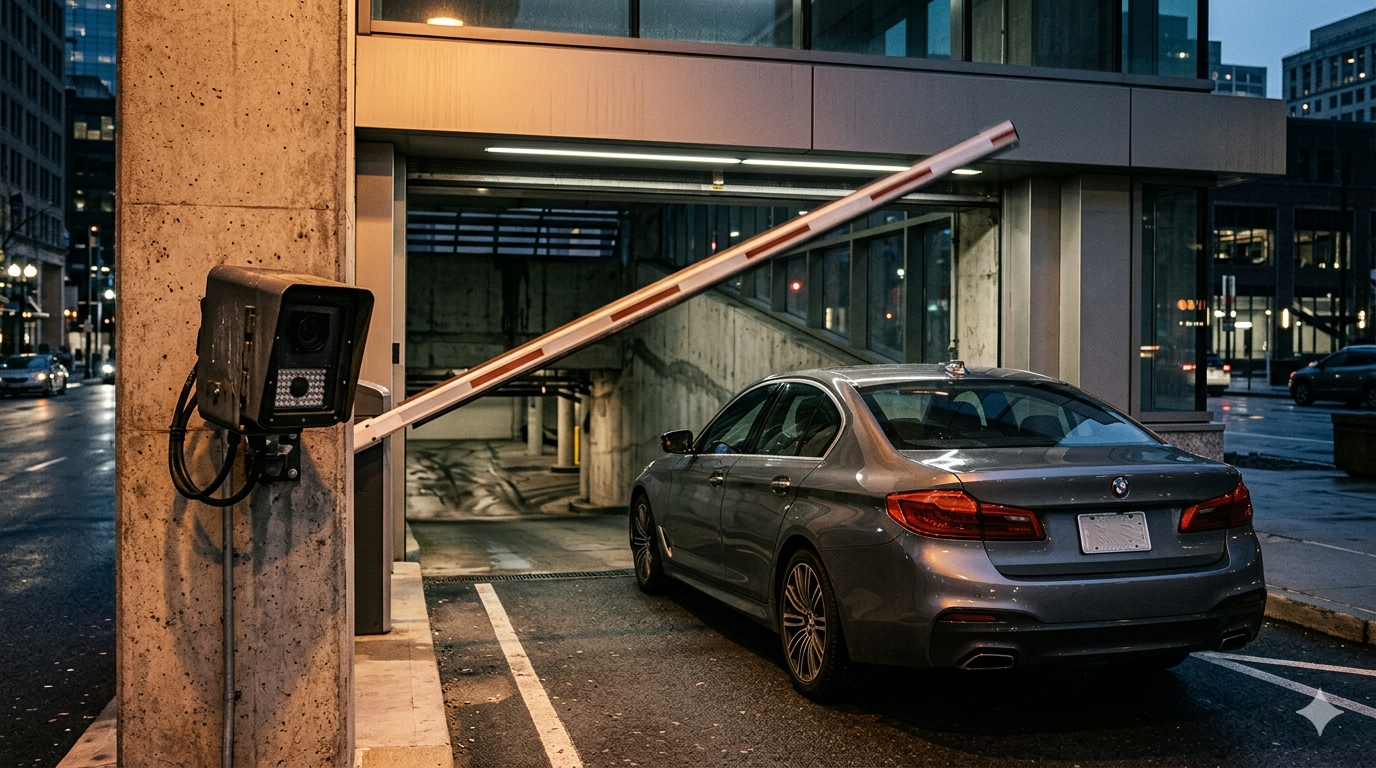
Self-service pay stations: Pay-on-foot and pay-in-lane self-service kiosks have largely replaced cashier booths in most new construction and many renovated facilities. A facility that previously required one cashier per exit lane can operate a self-service pay station with one remote monitoring staff member supporting multiple facilities.
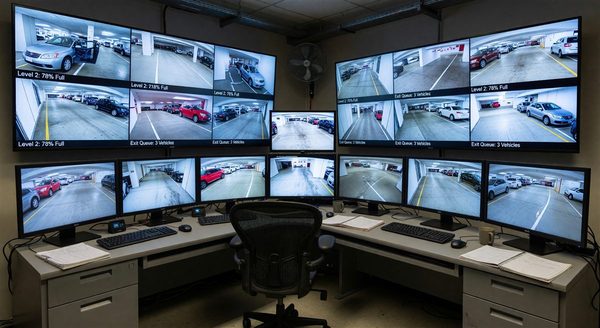
LPR-based touchless operation: License plate recognition at entry and exit, combined with PARCS account management and mobile payment, enables cashless-ticketless operation with minimal on-site staff — a remote monitoring center can oversee multiple facilities simultaneously.
Remote monitoring centers: Centralized remote operations centers replace on-site attendants for routine customer assistance (intercom resolution for pay station issues, gate malfunctions, lost tickets) at multiple facilities simultaneously. One remote operator can cover 5 to 15 facilities depending on transaction volume and complexity.
Automated validation: Digital validation codes (sent by smartphone or generated by merchant POS integration) replace staff-issued paper validation tickets, eliminating validation handling labor.
Maintenance automation: IoT equipment monitoring reduces the maintenance staff time required by predicting and scheduling preventive maintenance rather than responding to failures.
The Shift from Attended to Unattended Operations
The trend toward unattended or minimally attended parking operation has been the most significant structural change in parking staffing:
Pre-2010 attended operations: Most commercial parking facilities operated with full-time cashiers at pay stations or exit booths during all operating hours. This model was economically sustainable when wages were lower and technology alternatives were limited.
Current hybrid models: Many facilities operate a hybrid — unattended pay station or LPR processing for routine transactions, with a remote monitoring center or reduced on-site staff handling exceptions (pay station malfunctions, customer disputes, gate issues). Peak-hour staffing at exit lanes may supplement unattended operations during high-volume periods.
Fully unattended facilities: Facilities with reliable LPR-based payment, robust pay stations, and remote monitoring capabilities operate without any on-site staff during most or all hours. Maintenance staff visit on a scheduled basis rather than being continuously present.
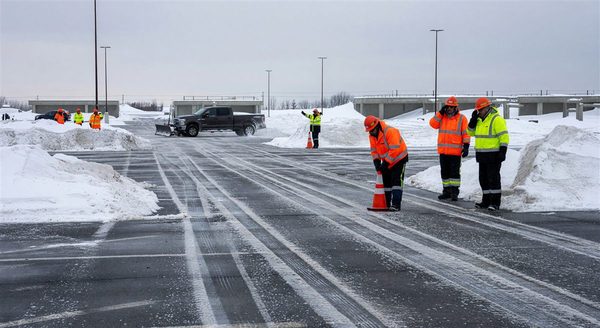
Retained attended operations: Event-heavy facilities, valet operations, and facilities serving customers who value personal assistance (hospital parking serving patients unfamiliar with parking systems) retain higher staffing levels. Attended operations remain appropriate where the customer experience benefit justifies the cost.
Staff Role Evolution
Automation doesn’t eliminate parking workforce needs — it changes what those workers do:
Shift from transaction processing to service and maintenance: As pay station and LPR systems handle most financial transactions automatically, remaining staff focus on customer service (helping confused or frustrated customers), facility maintenance, and security patrol — functions that require human judgment and presence.
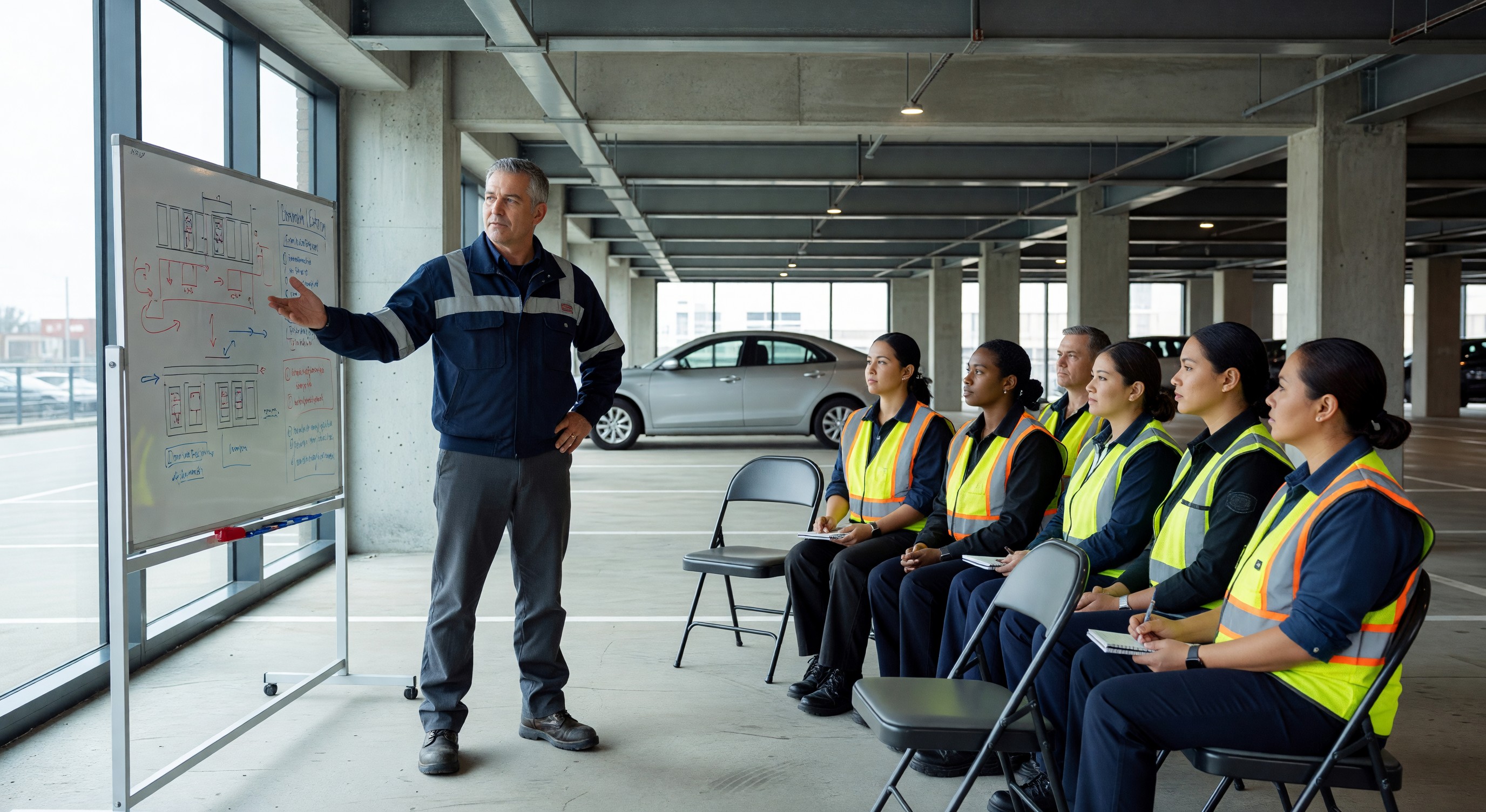
Technology operations skills: Parking staff increasingly need competence with PARCS technology, remote monitoring interfaces, and troubleshooting procedures for malfunctioning equipment. The skillset for parking operations has become more technically demanding.
Remote monitoring roles: The growth of remote monitoring centers creates specialized roles that require different skills than traditional on-site parking attendance — multi-site monitoring, video analytics review, intercom customer service, and remote gate management.
Management skills concentration: As routine operations are automated, management attention concentrates on exception handling, technology management, customer experience improvement, and operational analytics rather than routine transaction oversight.
Staffing Model Selection
For high-volume urban facilities: Remote monitoring + LPR-based access control + self-service pay stations with peak-hour supplemental staffing is the prevailing efficient model. On-site presence is concentrated at peak demand periods and scheduled maintenance.
For event-driven facilities: Staffed for events with a scaled-up temporary workforce; unattended or minimally attended during non-event periods. Technology platforms enable rapid scaling for events (rate configuration, capacity management, communication) without proportional staff scaling.
For valet operations: Labor is the primary operational input; automation reduces friction but doesn’t replace the human driver. Key management focus is recruiting, training, retention, and damage control — the human-intensive elements of valet.
For long-term and storage operations: Minimal staffing with robust technology for payment and access; scheduled maintenance and security patrol rather than continuous on-site presence.
Frequently Asked Questions
Is full automation (no staff) achievable for most parking facilities? For unattended self-service transient and monthly permit operations, fully automated operation is technically achievable. In practice, most operators maintain some level of monitoring and support capability (remote monitoring center or on-call staff) to handle equipment failures, customer assistance requests, and security incidents. True zero-staff operation is rare outside of small low-volume surface lots.
How does automation affect parking labor relations and union agreements? Parking operations in some urban markets are unionized (SEIU and related unions represent parking workers in several major cities). Automation that reduces staff count may be constrained by existing union agreements — operators considering significant staffing reductions should review applicable collective bargaining agreements. New contracts in unionizing markets may need to address automation provisions explicitly.
What is the cost comparison between attended and unattended operations? Labor savings from transitioning to unattended operation can be substantial — $50,000 to $150,000 per year per eliminated attendant position (wages, benefits, management overhead). Technology investment for automation (pay station upgrades, LPR, remote monitoring) ranges from $50,000 to $300,000 depending on facility size and existing equipment. For high-volume facilities, the payback period for automation investment is often 1 to 3 years.
How should parking operators balance automation with customer experience? Customer segments differ in their preference for human vs. automated service. Older adults, customers unfamiliar with parking systems, and facilities serving customers under stress (hospital patients, infrequent parkers) benefit from human availability — even if only via intercom. Facilities serving tech-comfortable commuters and frequent users who understand the system can fully automate with less customer experience impact. Segment-specific staffing decisions rather than blanket automation or blanket attendance is the appropriate framework.
Takeaway
The parking workforce is undergoing structural change driven by labor market tightening, minimum wage increases, and maturing automation technology. The direction is clear: fewer routine transaction-processing roles, more technology-mediated operations with remote monitoring, and a remaining workforce concentrated in customer service, technical operations, and maintenance functions. Operators who adapt their staffing models proactively — investing in automation where it is justified by economics, retaining human presence where customer experience requires it, and training remaining staff for the expanded technical skills modern parking operations demand — will manage through this workforce transition more effectively than those who delay adaptation until labor cost pressure forces reactive decisions.
Further Reading from Authoritative Sources
- IPMI parking workforce development and staffing model guidance for parking operators — IPMI publishes workforce development guidance, staffing model frameworks, and training resources for parking operators navigating the transition from attended to automated operations.
- US DOT transportation workforce and labor market trends in transportation operations — The US Department of Transportation publishes transportation workforce research, labor market analysis for transportation operations sectors, and automation impact assessments that provide the broader workforce context for parking industry staffing trends.