Parking facilities have historically been among the least environmentally favorable urban land uses — large impervious surfaces generating stormwater runoff, energy-intensive lighting and ventilation systems, and land consumed for vehicle storage that might otherwise support housing or green space. This characterization has driven decades of parking minimization in sustainable urban planning discourse. However, parking facilities can also be significant contributors to urban sustainability goals when designed and operated with environmental performance in mind. EV charging infrastructure, solar canopy generation, green stormwater infrastructure, and energy-efficient operations turn parking from environmental liability to sustainability asset.
LEED Certification for Parking Facilities
The U.S. Green Building Council’s Leadership in Energy and Environmental Design (LEED) rating system includes provisions applicable to parking structures and surface lots:
LEED BD+C: Core and Shell: Applies to parking structure new construction and major renovation. Credit categories include site selection and urban development, water efficiency, energy and atmosphere, materials and resources, and indoor environmental quality. Parking structures typically pursue LEED for the site, materials, and energy credits most applicable to their building type.
LEED credits particularly relevant to parking:
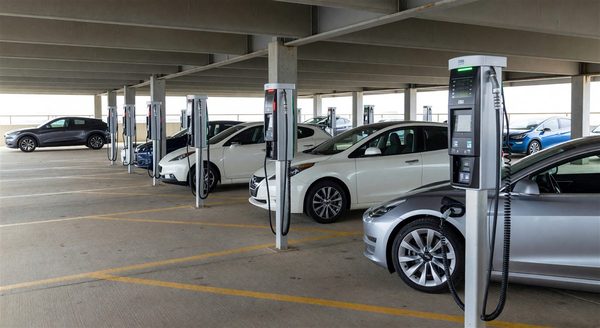
- Sustainable sites credits: Preferred parking for low-emitting and fuel-efficient vehicles, electric vehicle charging infrastructure, bicycle parking and storage, and reduced parking footprint
- Energy credits: LED lighting with occupancy and daylight controls, ventilation demand-controlled by CO sensors (for enclosed structures), EV charging load management
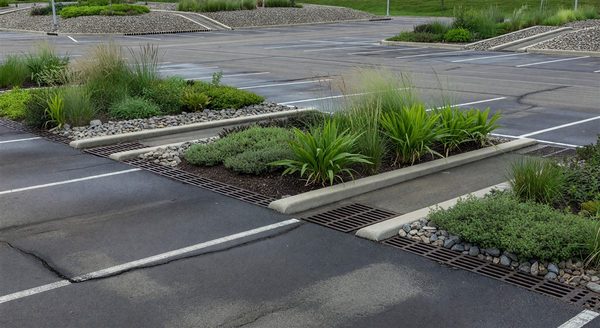
- Water credits: Permeable pavement in surface lots, bioretention for stormwater management, reduction of impervious surface
Market drivers for LEED certification: Corporate tenants, institutional clients, and municipalities increasingly specify sustainability certifications in parking facility requirements. Municipalities seeking LEED certification for public projects may require parking facilities within LEED-targeted developments to pursue certification. Certification also provides marketing differentiation in competitive markets.
Stormwater Management as a Sustainability Priority
Surface parking lots are the most impervious land use in most urban areas — rain falling on a parking lot becomes runoff rather than groundwater recharge or plant uptake. Sustainable stormwater management in parking includes:
Permeable pavement systems: Permeable concrete, permeable asphalt, and grid pavers allow water infiltration through the pavement surface into a gravel storage layer and then into the subsoil. Reduces or eliminates stormwater runoff from the lot surface. Most applicable in low-traffic areas (perimeter stalls, overflow parking) where the lower structural capacity of permeable pavement is adequate.
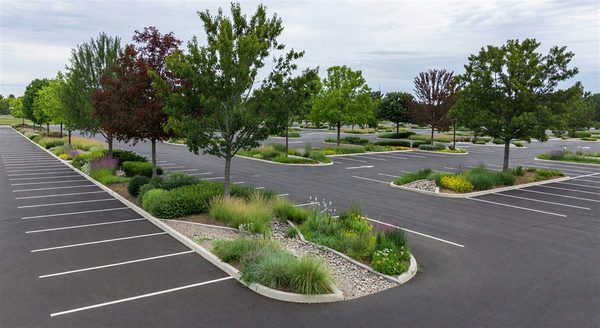
Bioretention cells and rain gardens: Depressed planted areas within or at the perimeter of parking lots that capture runoff, filter pollutants, and allow infiltration. Bioretention can be integrated with parking lot landscaping islands to combine aesthetic and stormwater management functions.
Tree canopy: Parking lot trees reduce the urban heat island effect, reduce stormwater runoff through interception and evapotranspiration, and provide driver amenity. Tree protection from vehicle contact requires appropriate stall dimensions, curbing, and protective bollards.
Bioswales: Linear planted channels that convey stormwater while filtering pollutants. Used at the edges of surface lots to intercept and treat runoff before it enters the storm sewer system.
MS4 permit compliance: Most urban parking facilities discharge stormwater to municipal separate storm sewer systems (MS4s) that are regulated under NPDES permits. MS4 permit conditions may require specific stormwater management practices for parking lots, including pollution prevention measures and stormwater management documentation.
Solar Canopy Integration
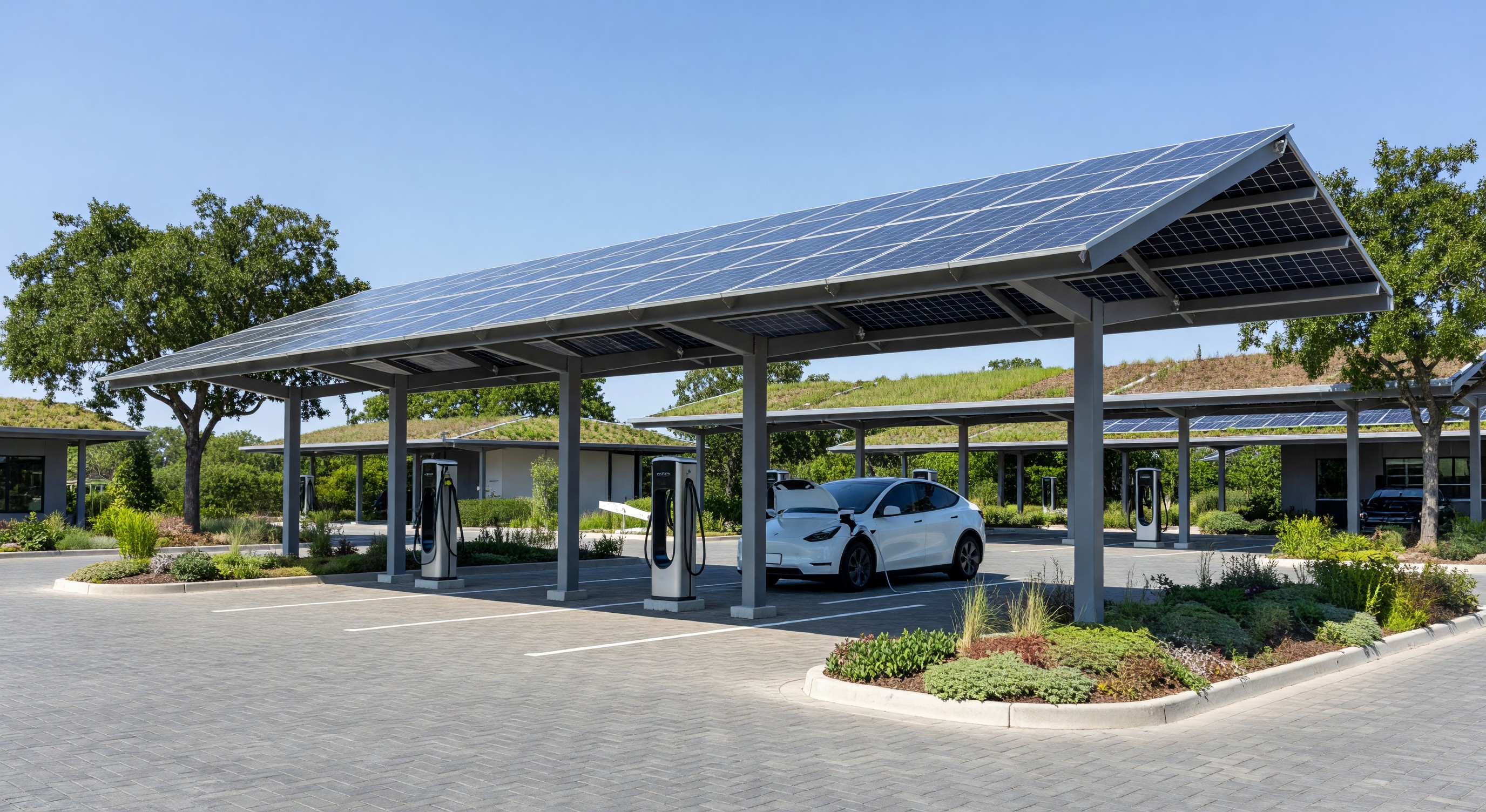
Solar canopies — carport structures with photovoltaic panels on the roof — combine parking shelter with renewable energy generation:
Energy generation: Solar canopies generate on-site electricity that can offset facility energy use (lighting, EV charging, ventilation), provide grid export under net metering programs, or generate revenue through power purchase agreements.
Shading benefits: Covered parking is a valued amenity, particularly in hot climates. Solar canopy shading reduces car interior temperatures, improving the customer experience and reducing the need for extended air conditioning after entering a hot vehicle.
EV charging synergy: Solar-generated electricity paired with EV charging can reduce the effective cost of charging and supports sustainability claims for EV programs (“charged by solar”). Solar + storage systems can further reduce grid dependency and demand charges.
Structural considerations: Solar canopies add structural loading to the parking canopy structure — photovoltaic panels, racking, and wind/snow loading must be accommodated. Foundation and column design for solar canopy carports is specific to the loading conditions and should be engineered.
Financial feasibility: Solar canopy project economics depend on: local electricity rates, net metering or power purchase agreement availability, federal Solar Investment Tax Credit (ITC), state and utility incentives, and projected system generation. High-electricity-cost markets with strong solar resources and available incentives have the most favorable economics.
Energy Efficiency in Parking Operations
LED lighting: LED luminaires have replaced metal halide and fluorescent fixtures in the vast majority of new and renovated parking installations. Energy savings of 40 to 60 percent versus prior technology, with 50,000+ hour lifetimes. Occupancy sensors that dim to minimum levels in unoccupied areas provide additional savings.
Ventilation demand control: Enclosed parking structure ventilation consumes significant energy. Demand-controlled ventilation (DCV) uses CO and NOx sensors to activate ventilation only when pollutant levels warrant — rather than running fans at constant speed regardless of occupancy. DCV reduces ventilation energy consumption by 30 to 60 percent in structures with variable occupancy.
Electric vehicle as grid resource: Bidirectional EV charging (V2G technology) allows facility EV chargers to discharge vehicle batteries back to the building or grid during peak demand periods, reducing facility electricity costs through demand charge management. V2G programs are in early commercial deployment but represent a significant energy management opportunity as technology matures.
Building management system integration: PARCS occupancy data integrated with a building management system allows lighting, ventilation, and HVAC to respond to actual facility occupancy rather than time-based schedules — further reducing energy consumption during low-occupancy periods.
Sustainability as a Competitive Differentiator
Corporate ESG requirements: Large corporate tenants increasingly include sustainability requirements in office lease criteria, which extend to parking facilities associated with corporate campuses. Facilities that can demonstrate LEED certification, EV charging capacity, and carbon reduction programs are more competitive for corporate accounts.
Municipal green fleet programs: City and county governments expanding their electric vehicle fleets require charging infrastructure at municipal parking facilities. Facilities that proactively invest in EV charging and renewable energy are natural partners for public sector fleet electrification programs.
Reporting and disclosure: Sustainability reporting frameworks (GRI, CDP, TCFD) used by public companies and institutional investors increasingly include transportation and parking as scope categories. Parking operators whose facilities generate measurable sustainability data (EV charging, solar generation, stormwater management) can provide sustainability reporting data that clients need for their own disclosures.
Frequently Asked Questions
Is LEED certification worth pursuing for a commercial parking facility? LEED certification adds design and documentation cost (typically $50,000 to $150,000 in direct certification cost) and may require design changes that add construction cost. In markets where corporate or institutional clients specify LEED, the competitive value may justify the cost. For facilities serving primarily transient or residential customers, the marketing value of LEED is lower.
What is the payback period for solar canopy installation on a parking facility? Payback period depends heavily on local electricity rates, solar resource, incentives, and project scale. In favorable conditions (high electricity rates, good solar resource, federal ITC and state incentives), payback periods of 6 to 10 years are typical. In less favorable conditions, payback may be 12 to 20 years. Tax credit monetization (direct pay for tax-exempt entities under IRA provisions) has improved economics for institutional owners.
How do sustainable stormwater practices affect parking lot maintenance? Bioretention cells and permeable pavement require different maintenance than conventional impervious surfaces — regular inspection for sediment accumulation, vegetation maintenance for planted areas, and periodic restoration of permeable pavement infiltration capacity. Annual maintenance costs for green infrastructure are typically higher than conventional hardscape maintenance but provide stormwater management benefits that may offset municipal stormwater fees in some jurisdictions.
What sustainability certifications apply to parking operations specifically? LEED is the most widely recognized building certification applicable to parking. IPMI has developed a Sustainability Framework for parking operations that provides guidance for operators seeking to improve sustainability performance systematically without pursuing building certification. Several cities have developed local sustainability certification programs for businesses that include parking-specific criteria.
Takeaway
Parking sustainability has evolved from an oxymoron to a genuine operational and competitive advantage for facilities that invest in EV charging, solar canopy generation, stormwater management, and energy efficiency. The business case spans from direct energy cost reduction (LED lighting, DCV ventilation) to competitive positioning with corporate and institutional clients who prioritize sustainability in their real estate decisions. The most impactful near-term sustainability investments for most parking facilities are EV charging infrastructure (low controversy, high demand) and LED lighting upgrades (clear ROI, universally applicable) — these lay the foundation for more comprehensive sustainability programs that grow as technology and market expectations evolve.
Further Reading from Authoritative Sources
- EPA stormwater management standards and MS4 permit requirements for parking facilities — EPA administers the NPDES permit program and MS4 stormwater regulations directly applicable to parking facility stormwater discharges, publishes guidance on green infrastructure practices including bioretention, permeable pavement, and bioswales, and provides the regulatory framework for stormwater pollution prevention requirements at parking facilities.
- DOE solar canopy, EV charging, and energy efficiency resources for commercial facilities — The US Department of Energy publishes solar canopy design and financial feasibility guidance, EV charging infrastructure resources, energy efficiency standards, and administers the federal tax credit programs (ITC and Section 30C) and incentive frameworks directly referenced in this article.