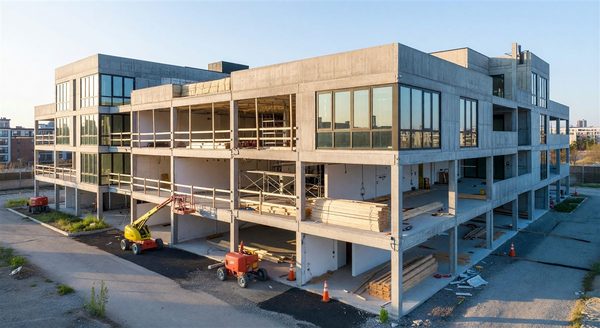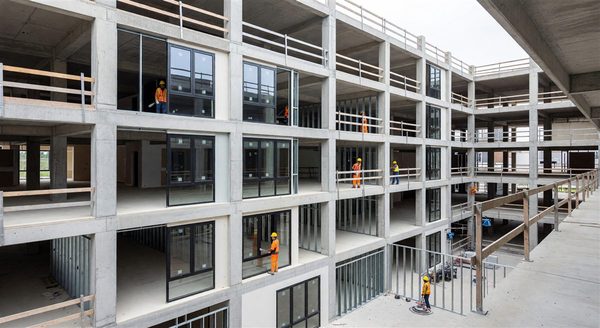
Parking facility real estate is at an inflection point. Structural parking demand uncertainty — driven by hybrid work, EV adoption trajectory, autonomous vehicle speculation, and parking minimum reform — has made the traditional parking-only use case a less certain long-term assumption for parking real estate owners. In parallel, housing shortages in many urban markets, rising logistics real estate demand, and improvements in adaptive reuse construction techniques have expanded the viable conversion options for parking structures. Understanding adaptive strategies for parking real estate — both flexible design that anticipates conversion and active conversion of existing assets — helps owners and developers position their parking real estate for multiple futures.
The Case for Parking Real Estate Flexibility
Conventional wisdom about parking demand held that urban parking was a durable, long-term use — cars were a permanent feature of American life, structured parking served an ongoing need, and parking facilities built in the 1980s and 1990s would continue serving the same function in the 2020s and beyond. Several trends have disrupted this assumption:
Remote and hybrid work demand reduction: Downtown office parking facilities that depend on Monday-Friday commuter demand have experienced 20 to 40 percent demand reductions in high-hybrid-work markets since 2020. Some of this demand has not returned and may not return.
Parking minimum reform: As cities eliminate parking minimums for new development, future residential and commercial construction may include less parking than the past — reducing the baseline demand that would ordinarily fill both new and existing parking inventory.
Autonomous vehicle speculation: While the timeline remains uncertain, widespread autonomous vehicle adoption could reduce private vehicle ownership rates and parking demand. The uncertainty itself makes investors cautious about long-term parking-only commitments.
EV charging infrastructure shift: Electric vehicles require charging that may increasingly occur at home rather than at parking facilities, potentially reducing the trip-ending parking demand that currently anchors urban parking.
These trends don’t necessarily make parking obsolete, but they introduce enough uncertainty that owners of parking real estate benefit from strategies that do not assume permanent parking-only use.
Flexible Design for Parking Structures
Designing new parking structures for eventual adaptive reuse is increasingly accepted practice in markets where long-term demand uncertainty is high:
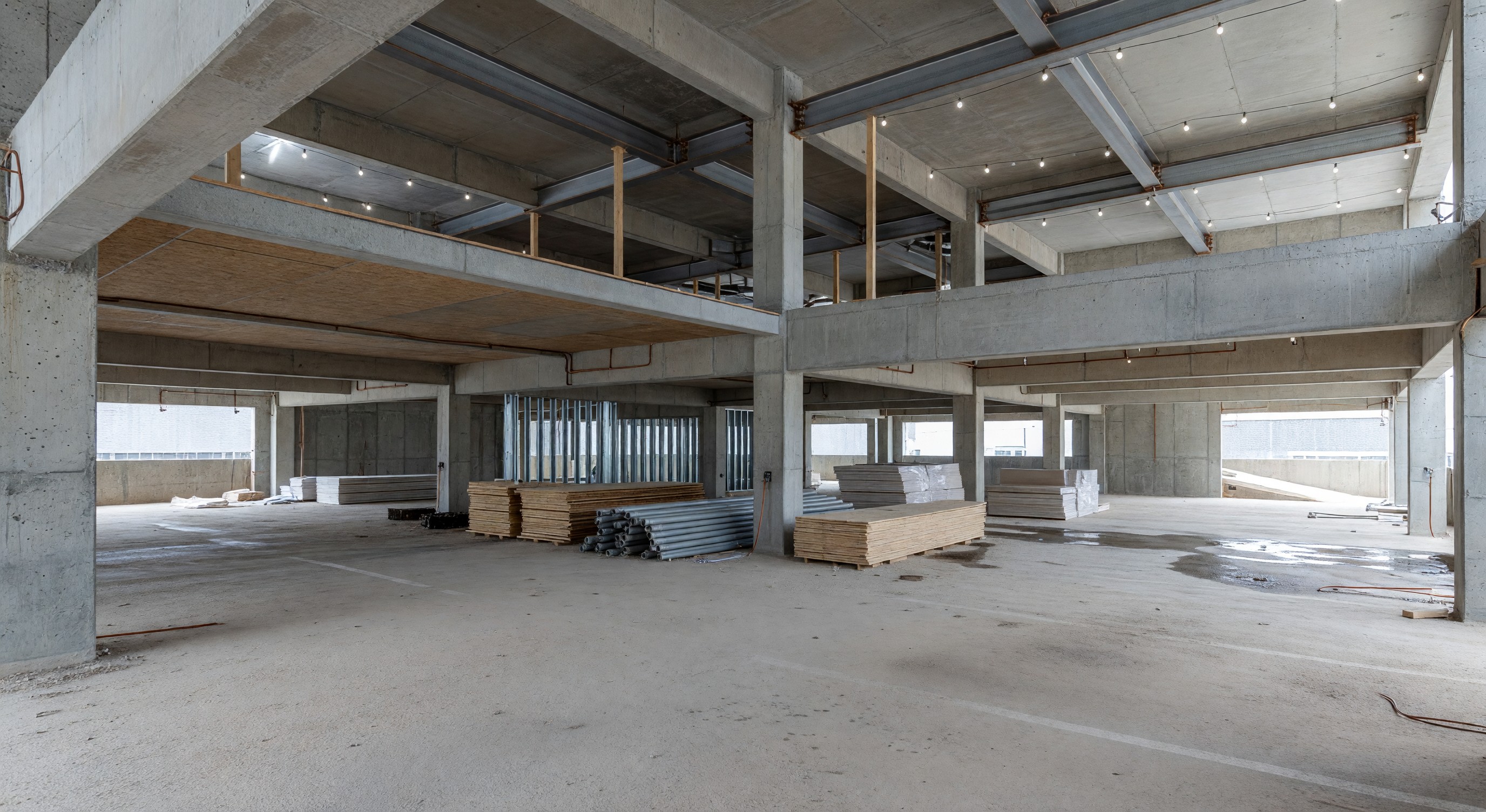
Flat floor plates: Conventional parking structure design uses ramped floors — vehicles drive up continuous slopes to access upper levels. Flat (horizontal) floor plates with separate ramped access cores allow each parking level to function as a conventional building floor with flat, accessible surface area — suitable for residential, office, or logistics conversion without floor reconstruction.
Increased floor-to-ceiling height: Standard parking structure floor-to-ceiling clearance (7 feet) is insufficient for residential or commercial conversion. Designing at 10 to 14 feet clearance (tall enough for future residential or commercial use) adds cost but preserves conversion potential. The additional height cost per space is typically $2,000 to $5,000 — modest relative to the conversion optionality value.
Column spacing: Parking structures typically use column grids of 60 to 62.5 feet (accommodating three 20-foot stall bays). For residential conversion, column spacing of 18 to 30 feet is preferred — shorter than typical parking grids. Some flexible design approaches use column spacing that is a common multiple of both parking and residential use requirements.
Utility roughed-in capacity: Flexible parking structures include roughed-in utility connections (water, sewer, electrical capacity) at each level during initial construction — at low incremental cost — that would be required for future conversion but are expensive to add retroactively.
Structural load capacity: Residential and office uses impose higher structural loads than parking per square foot. Parking structures designed for adaptive reuse typically include excess structural capacity (compared to parking-only requirements) that accommodates future occupied use loads.
Active Conversion Trends
Beyond flexible design for the future, active conversion of existing parking facilities to other uses is occurring in markets where the economics support it:
Parking to residential: Converting structured parking to housing is most viable when: the parking structure has flat or flattenable floors; the ceiling height can be increased to residential standards; the structure is in a location with residential demand; and the land value makes conversion more economically compelling than demolition and new construction. Conversions have been completed successfully in several markets, with the conversion cost typically running $150 to $300 per square foot depending on structural modifications required.
Parking to logistics/last-mile: Urban parking facilities near commercial districts can serve as micro-fulfillment or last-mile logistics facilities — a use with strong demand given e-commerce growth and limited urban logistics real estate supply. Logistics conversion is often simpler than residential conversion because it does not require kitchen, bathroom, or HVAC modifications to the same standard — the primary requirements are ceiling height, floor load capacity, dock or grade-level access, and power for automated systems.
Parking to life sciences: In markets with strong life sciences real estate demand (Boston, San Francisco, San Diego, Seattle), parking structures near research institutions and medical campuses have been identified as potential conversion candidates. Life sciences conversion is complex and expensive due to ventilation, utility, and structural requirements, but the high market rents in life sciences real estate can justify the conversion investment.
Mixed-use integration: Rather than full conversion, some parking assets are being repositioned through partial conversion — converting lower floors to retail, restaurant, or office use while retaining upper levels for parking, or adding new residential or commercial construction above existing parking structures.
Valuation Implications
Adaptive reuse potential premium: Parking facilities with flexible design elements (flat floors, high clearance, appropriate column spacing, favorable zoning) command valuation premiums from buyers who are purchasing both the current parking income and the future conversion optionality. The premium for adaptive reuse potential is market-dependent — higher in markets with active housing or logistics demand, lower in markets where conversion is less viable.
Zoning analysis: The conversion value of a parking facility depends heavily on what the zoning will allow. A parking facility zoned for residential use in a housing-shortage market has higher optionality value than an identical facility in an industrial zone. Entitlement work that establishes conversion-permitting zoning before disposition can materially increase value.
Holding period analysis: Owners who can generate positive cash flow from parking operations while holding for conversion opportunity can defer the conversion decision until market conditions are optimal. Surface lots and underutilized structured parking in development corridors have been acquired specifically for this hold-and-convert strategy.
Frequently Asked Questions
What is the cost premium for building a parking structure with adaptive reuse potential? Estimates from parking structure designers suggest that flexible design features (flat floors, increased height, roughed-in utilities) add approximately 10 to 20 percent to the construction cost of a conventional parking structure. The premium is partially recoverable in the value of the adaptive reuse optionality, particularly in markets where non-parking land uses generate higher returns than parking.
Can existing parking structures with ramped floors be converted to residential use? Some existing ramped structures can be converted, but the process is complex and expensive — floors must be reconstructed or structural infill must create flat surfaces, which can require significant engineering work and may not be structurally feasible in all cases. The feasibility of converting a specific existing structure requires structural engineering analysis. New construction designed for adaptive reuse is substantially easier to convert than retrofitting existing ramped structures.
How do parking-to-residential conversions affect surrounding neighborhood parking? Removing parking supply in urban areas where parking minimums have already been reduced or eliminated may have minimal impact on parking availability if the converted facility had excess capacity. Conversions in markets with constrained parking supply can increase demand pressure on remaining facilities — a benefit for nearby parking operators. Community and regulatory engagement should assess whether the conversion creates parking deficiency for existing users.
What flexibility features can be added to existing parking structures cost-effectively? Existing structures are difficult to retrofit for full adaptive reuse potential, but some improvements are possible: EV charging installation improves the facility for current use while adding infrastructure relevant to future use patterns; structural assessment can quantify available load capacity for future use; and ground-floor activation (converting ground-floor parking to retail or other active uses) is often achievable in structures with appropriate ground-floor dimensions, improving the facility’s urban context and setting precedent for further conversion.
Takeaway
Parking real estate faces genuine long-term demand uncertainty that makes the traditional parking-only investment thesis less robust than it was a decade ago. Adaptive strategies — flexible design that preserves conversion optionality for new construction, active conversion of existing assets where economics support it, and mixed-use integration that diversifies facility use — provide parking real estate owners with more resilient positions as the operating environment evolves. Owners who plan for multiple futures — parking generating income today, conversion to housing or logistics generating higher value when the time is right — are better positioned than those committed to a parking-forever assumption that the market is increasingly challenging.
Further Reading from Authoritative Sources
- US DOT parking demand management and hybrid work transportation impact research — The US Department of Transportation publishes transportation demand management research, commuter behavior analysis, and parking demand impact assessments that directly inform the demand uncertainty context driving parking real estate adaptive strategy adoption.
- IPMI parking real estate strategy and adaptive reuse guidance for parking operators — IPMI publishes parking real estate strategy guidance, flexible design frameworks, and adaptive reuse implementation resources for parking operators and investors.