Municipal parking policy in the United States is undergoing its most significant transformation in decades. The supply-first paradigm that characterized 20th century parking regulation — setting minimum parking requirements for every land use, building parking ahead of demand, providing free or underpriced curb space — is being challenged by a combination of housing affordability pressure, climate policy, transportation demand management goals, and urbanist advocacy. Understanding the policy reform trends reshaping parking regulation helps parking operators, developers, and municipal planners anticipate how the regulatory environment will evolve.
The Decline of Parking Minimums
Parking minimum requirements — rules that specify how many parking spaces per residential unit, per 1,000 square feet of retail, or per seat of restaurant must be provided by new development — have been the foundational element of American parking regulation since the 1950s. The case against them has grown stronger and more accepted:
Economic critique: Parking minimums require developers to build parking even when market demand would support less. The cost of structured parking ($30,000 to $80,000 per space depending on market and structure type) is embedded in development costs, raising housing costs and commercial lease rates. Donald Shoup’s research at UCLA, popularized in “The High Cost of Free Parking,” quantified this subsidy and provided the intellectual framework for reform.
Land use inefficiency: Parking minimums result in more land devoted to parking than market demand would produce, reducing development density and urban vitality. Urban infill markets with transit access build parking at minimums that result in abundant unused capacity while constraining housing supply.
Reform progress: As of 2024, cities that have eliminated parking minimums citywide or in significant zones include Minneapolis (2021), San Jose (2022), Austin (2023), Buffalo, and most of California’s transit-adjacent zones under AB 2097. New York City enacted a sweeping elimination of parking minimums in 2023 — the largest such policy change in American urban history. Portland, Seattle, and Honolulu have progressively reduced minimums over the prior decade.
California as Policy Laboratory
California’s state-level parking policy reforms deserve particular attention as they supersede local requirements across the state’s largest urban markets:
AB 2097 (2022): Prohibits California cities from imposing parking minimums on any development within half a mile of a major transit stop. This sweeping preemption applies to housing, commercial, and mixed-use development across California’s transit-rich urban areas — removing local minimum requirements that might otherwise persist despite reform pressure.
AB 2923 (2018): Requires cities adjacent to BART stations to allow transit-oriented development at minimum densities, with parking provisions subordinated to TOD density requirements. Station-area parking is explicitly deemphasized in favor of housing.
SB 9 (2021): Allows by-right duplexes on single-family zoned lots statewide, with parking requirements limited to one space per unit — significantly reducing parking burden for infill residential development.
The California reforms are being watched by other states as a model for preempting local parking minimums through state legislation rather than relying on city-by-city reform progress.
Paid Parking Mandates and Pricing Policy
In parallel with minimum elimination, some cities are moving toward policies that require or encourage market-rate pricing for parking:
SFpark model expansion: San Francisco’s SFpark program (piloted 2010-2013) demonstrated that demand-responsive pricing of metered street parking reduces cruising, improves availability, and generates revenue. The model has been adopted or adapted in San Diego, Seattle, Portland, and Washington DC, which now use sensor data and dynamic pricing to maintain target occupancy on metered blocks.
Residential permit pricing: Cities that previously provided free residential parking permits are introducing fees that better reflect the value of curb space. San Francisco, Boston, and Seattle have moved toward cost-recovery pricing for residential permits, reducing the implicit subsidy to car ownership in dense urban neighborhoods.
Free parking prohibition zones: Some cities are explicitly prohibiting new free parking in defined zones (typically central business districts or transit corridors) as a transportation demand management measure. Employers who provide free parking to employees are required in some jurisdictions to offer a cash-out alternative of equal value under California’s parking cash-out law.
Curb Space Regulation Evolution
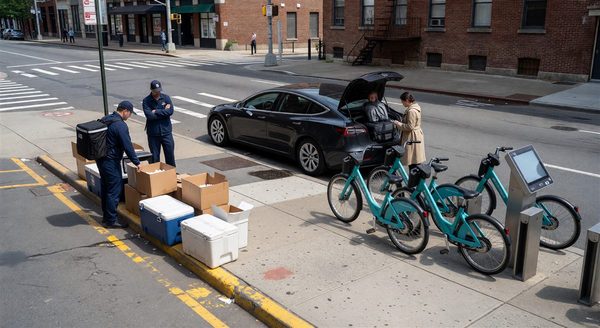
The physical curb — the edge of the street — has become a contested resource as delivery vehicles, TNCs, micromobility, and EVs compete for space previously reserved for parking:
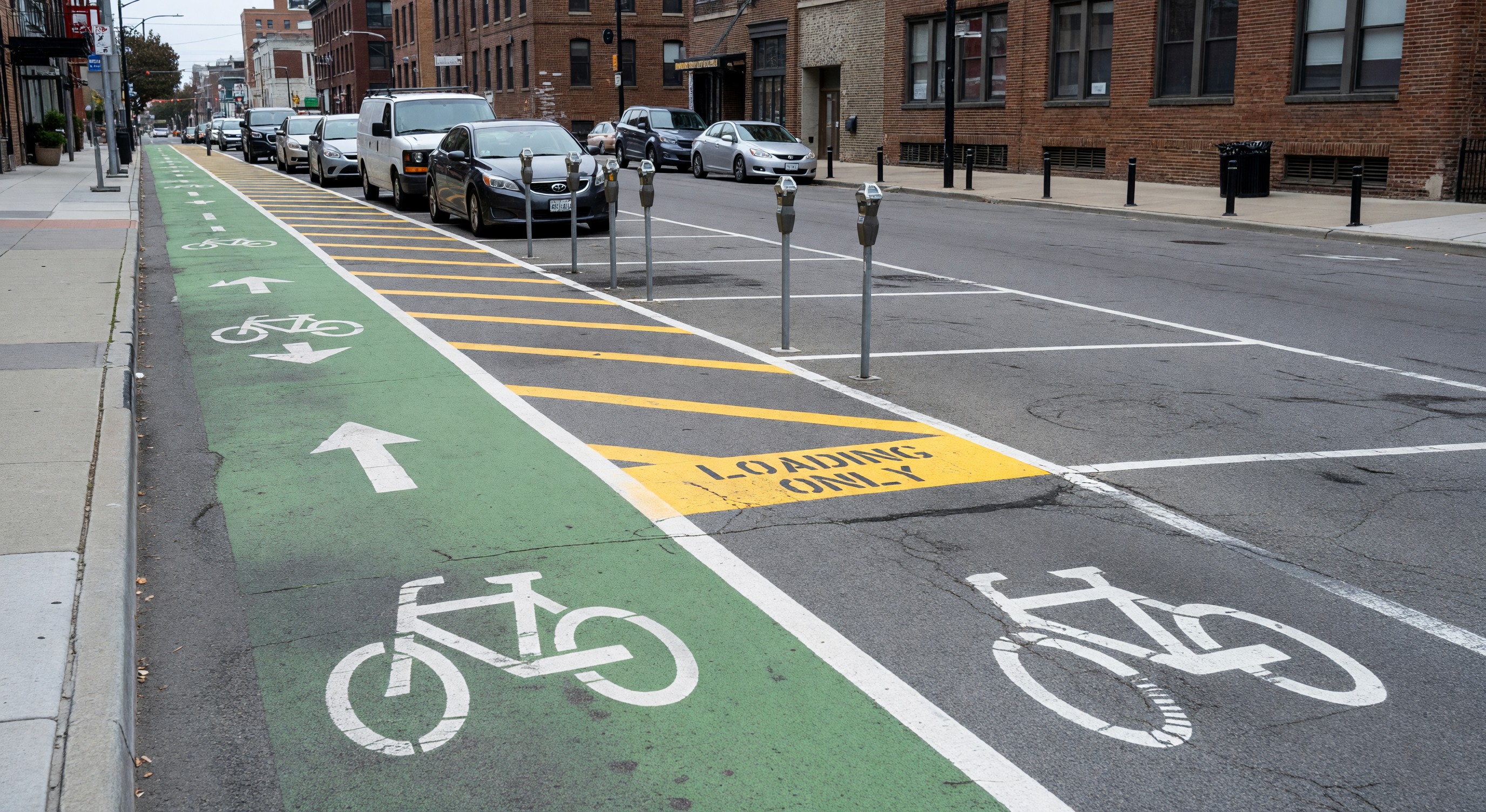
Curb zones and allocation: Cities are replacing static curb use designations (metered parking, loading zone) with dynamic curb management that allows time-of-day or demand-based allocation. A curb zone that functions as morning loading, afternoon metered parking, and evening ride-hail staging reflects the evolving use demand rather than historical defaults.
Delivery vehicle accommodation: E-commerce growth has increased delivery vehicle curb demand substantially. Cities are creating dedicated commercial loading zones, time-limited delivery windows, and off-street consolidation programs to manage delivery vehicle double-parking that blocks traffic and reduces parking availability.
TNC staging regulations: Ride-hail vehicle staging — Uber and Lyft drivers waiting for requests — creates curb occupancy that displaces parking without corresponding revenue. Cities have implemented TNC pickup/dropoff zones, staging fees, and in some cases dedicated TNC staging areas removed from prime curb locations.
EV charging curb space: Installing EV chargers at on-street parking spaces converts parking spaces to charging uses, requiring municipalities to manage the tradeoff between parking revenue and EV infrastructure provision. Cities are developing policies governing on-street EV charging installation, duration limits, and pricing.
Implications for Parking Operators
Reduced new competition from required parking: As parking minimums are eliminated, developers build less parking when market demand doesn’t justify it. New developments in minimum-free zones may have limited or no parking, creating demand for nearby commercial parking from residents and visitors who own vehicles.
Pricing opportunity from market-rate policy: Cities that mandate market-rate pricing for public parking or restrict below-market pricing create a more level playing field between publicly operated and privately operated parking. Private operators who have always priced at market rates benefit when subsidized public competition is reduced.
Curb access for operations: Parking operators whose facilities rely on street access (valet staging, shuttle pickup) are affected by curb management reforms that restrict or price curbside access. Understanding evolving curb regulations in specific markets is operationally important.
Advocacy engagement: Parking operators and operators associations have interests in parking policy reform outcomes — parking minimum elimination can benefit commercial operators while creating housing affordability wins, but poorly designed curb management policies can harm operations. Engagement with municipal parking policy processes through IPMI and local advocacy is valuable.
Frequently Asked Questions
Do parking minimum eliminations reduce parking supply? Not necessarily or immediately. Private developers in most markets still build parking when their market analysis indicates demand — they simply are not required to build more than the market supports. In transit-rich urban areas, elimination of minimums allows housing to be built without attached parking when the developer’s market analysis supports it. In suburban and car-dependent areas, minimums may be non-binding (developers build more than the minimum anyway), so elimination has limited practical effect.
How are cities managing the loss of parking revenue from minimum reform? Cities that eliminate parking minimums don’t directly lose revenue from that policy change — minimums are building requirements, not revenue sources. The revenue impact comes from reduced demand for public parking if overall parking supply decreases over time. Cities that pair minimum elimination with market-rate pricing of remaining public parking often find that revenue per space increases enough to offset reduced space counts.
What is the status of parking reform in suburban markets? Suburban markets have been slower to adopt parking minimum reform than urban cores, reflecting different land use contexts (car dependence is higher, transit less available) and political constituencies (suburban voters tend to be more supportive of abundant free parking). Reform in suburban contexts is more likely to be parcel-specific (TOD zones near transit stations) or applied only to certain land uses (affordable housing projects) rather than citywide.
How should parking operators track parking policy reform in their markets? Operators should monitor local planning commission agendas, zoning code amendment processes, and municipal transportation department initiatives. IPMI and regional parking association communications often track major policy developments. Direct engagement with municipal parking managers and transportation planners provides early notice of proposed changes that affect parking operations.
Takeaway
Parking policy reform is reshaping the regulatory environment for parking in American cities, moving away from supply-first minimums and underpriced public parking toward demand management, market-rate pricing, and efficient curb allocation. The direction of reform is clear: less mandated parking, more market pricing, more dynamic curb management. For parking operators, the reforms create both opportunities (reduced subsidized competition, new demand from minimum-free development) and challenges (curb access regulation, reduced new demand from developments that don’t build parking). Understanding the policy trajectory in specific markets is essential for strategic planning in an environment where the regulatory foundation of the parking industry is actively changing.
Further Reading from Authoritative Sources
- Transportation Research Board parking policy reform and minimum parking requirement research — The Transportation Research Board publishes research on parking policy reform, minimum parking requirement effects, and the evidence base for reform policies discussed throughout the article.
- NACTO urban transportation policy and parking reform guidance — NACTO publishes urban transportation policy guidance that supports parking minimum elimination and demand-responsive pricing as components of transit-supportive urban design — directly relevant to the reform trends described in the article.