Parking facilities trade as commercial real estate assets with valuation methodologies driven by income capitalization — net operating income divided by a market-determined capitalization rate. The parking investment market has been notably dynamic in the 2020s: urban parking assets were repriced during and after the pandemic demand disruption, institutional investor interest has fluctuated, and the dual considerations of remote work and EV infrastructure have introduced uncertainty that makes parking asset valuation more complex than at any prior period. Understanding the investment landscape helps parking facility owners evaluate their asset’s current position and consider strategic options.
Parking Asset Capitalization Rates
Capitalization (cap) rates for parking assets reflect the risk profile of the income stream — higher-risk assets require higher cap rates (lower valuations per dollar of NOI); more stable, predictable assets trade at lower cap rates (higher valuations).
Pre-2020 market cap rates: Prime urban parking garages in major markets were trading at cap rates of 5 to 7 percent, reflecting relatively stable demand and strong income. Surface lots in urban infill markets were valued primarily on land value rather than income, with parking income treated as a bonus on land that might be developed.
Post-2020 repricing: Urban commercial parking assets saw cap rate expansion (value reduction) as hybrid work reduced monthly permit demand and income uncertainty increased. Cap rates on urban office-centric parking expanded by 100 to 200 basis points in the worst-affected markets, reflecting higher income uncertainty.
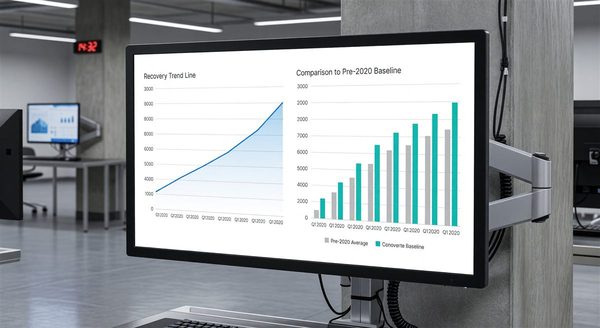
Recovery and current state (2025): Cap rate compression has partially returned for urban parking assets with demonstrated income recovery. Airport and event parking assets have seen strong investor interest with cap rates returning to near pre-2020 levels. Downtown office-centric parking assets in high-hybrid-work markets trade at wider cap rates than pre-2020, reflecting persistent demand uncertainty.
Differentiated valuations: The current market differentiates sharply by income stability — assets with demonstrated, recovering, or stable income trade well; assets with income uncertainty (downtown office, transit-adjacent in markets with persistent commuter reduction) face wider cap rates and more selective buyer pools.
Institutional Investor Interest
Institutional investors — pension funds, insurance companies, REITs, and private equity — are the primary buyers of larger parking assets:
REIT participation: Parking REITs (Central Parking was a major REIT, subsequently acquired) have not re-emerged as standalone vehicles, but large diversified REITs and real estate private equity funds have included parking in broader real estate portfolio acquisitions, particularly when parking is a component of a larger mixed-use or office acquisition.
Infrastructure fund interest: Parking assets — particularly airport and transit-adjacent parking with government or quasi-government relationships — attract infrastructure fund investors who value regulated, contracted income streams with inflation linkage.
Private equity and operator consolidation: Private equity has been the most active acquirer of parking operator businesses (management companies), but also acquires individual and portfolio parking assets as part of operator consolidation strategies.
Caution on urban office parking: Institutional investors have been cautious about urban office-centric parking assets, reflecting the same hybrid work uncertainty that has caused cap rate expansion. Assets in this category require demonstrated income recovery to attract institutional capital at pre-2020 price levels.
EV Charging as a Value Consideration
EV charging infrastructure is increasingly factored into parking asset valuation:
Near-term amenity premium: Facilities with meaningful EV charging capacity (not just 1 to 2 stations) are commanding modest premiums over otherwise-equivalent facilities without EV charging in markets with high EV penetration. Buyers value EV charging as both a current revenue stream and a future demand retention investment.
Capital expenditure requirement: Buyers who must invest in EV charging infrastructure after acquisition factor the capital cost into their price. Sellers who invest in EV charging before marketing receive valuations that can include the infrastructure value — net of the cost already spent.
Long-term infrastructure positioning: Sophisticated investors view EV charging capacity as infrastructure for a future where a growing fraction of the vehicle fleet requires charging at parking facilities. This long-term positioning argument supports current premium pricing for EV-ready facilities in investor markets with horizon thinking.
Surface Lots: Land Value vs. Income Value
Urban surface parking lots are typically valued at the higher of their land value or their income capitalization value. In markets with active development:
Land value ceiling: A surface lot’s capitalization value based on parking income may be well below its land value if the site is in a desirable urban location. In these cases, the lot trades primarily on land value — parking income is income while the land awaits higher-and-better-use development.
Development optionality value: Buyers who acquire surface lots in development markets are often buying optionality — the ability to develop the site when market conditions, entitlements, or capital availability align. The parking income funds carrying costs while optionality is exercised.
Urban core surface lot transactions: Surface lots in growing urban markets have been active transaction markets, with buyers including multifamily developers, mixed-use developers, and parking operators who acquire lots for both current income and eventual development potential.
Parking as a Component of Larger Transactions
Many parking facility transactions occur as components of larger real estate deals rather than standalone parking investments:
Office building acquisitions: Office buildings with attached or nearby parking garages typically transact with the parking as a component. The parking valuation is blended into the overall acquisition, and parking’s share of the total valuation depends on the income allocation between the office and parking components.
Mixed-use development parking: Parking components of mixed-use developments may be valued separately from the residential and retail components for financing and ownership structure purposes.
Portfolio transactions: Parking management companies are often acquired as portfolio transactions that include both the management business and owned or long-term-leased parking assets in the same deal.
Frequently Asked Questions
What capitalization rate should a parking facility owner expect for their asset in 2025? Cap rates depend heavily on asset type, location, income stability, and market conditions. Rough ranges for 2025: airport parking with stable income, 5.5 to 7%; downtown commercial parking in recovered markets, 6 to 8%; downtown commercial parking in markets with persistent demand uncertainty, 7.5 to 10%; surface lots in urban markets, capitalized income value likely below land value in most cases. An independent parking appraisal is the most reliable way to assess current market value for a specific asset.
Has the EV charging investment required to remain competitive affected parking asset investment attractiveness? EV charging is both an investment requirement (to remain competitive as EV adoption grows) and a value addition (current revenue plus future infrastructure positioning). Net investment attractiveness depends on whether the market cap rate appropriately reflects both the capital requirement and the value addition. In markets where buyers price EV infrastructure value correctly, the net effect on attractiveness may be approximately neutral.
Are private equity buyers or operating companies typically better acquirers for parking assets? Private equity buyers typically pay premiums when they see consolidation opportunities or operational improvement potential — and may underinvest in the facility if exit timing drives decision-making. Operating company buyers may pay lower prices but invest more in the facility’s long-term performance. The appropriate buyer depends on the seller’s priority: maximum current price vs. facility stewardship and long-term tenant/customer relationship continuity.
How should parking facility owners think about the timing of a sale given current market uncertainty? The key question is whether the income trajectory of the facility is improving, stable, or declining. Assets with improving income trajectories are typically better monetized after demonstrating the improvement than before. Assets where income is unlikely to improve from the current level — due to structural market changes — may be better sold sooner at current valuations than held while uncertainty persists.
Takeaway
Parking facility investment markets in 2025 reflect the differentiated recovery of the industry — airport, event, and sun belt commercial parking assets are well-valued by an investor community that has seen income recovery, while downtown office-centric parking assets in high-hybrid-work markets face wider cap rates and more selective interest. EV charging infrastructure has become a valuation consideration, and surface lots in urban development markets continue to trade as land value plays. Parking facility owners evaluating strategic options should ground their analysis in current income and trajectory, buyer pool dynamics in their specific market, and the capital investment required for competitive positioning — all of which determine whether current or future valuation is the superior exit.
Further Reading from Authoritative Sources
- IPMI parking benchmarking data for income performance and valuation context — IPMI’s benchmarking program provides the industry-comparative income and performance data that gives parking facility valuations meaningful context, directly supporting the income-based cap rate analysis and investor performance benchmarking described in this article.
- US DOE EV infrastructure investment planning for parking facility owners and investors — The US DOE Alternative Fuels Data Center provides EV infrastructure planning resources that inform the EV charging valuation premium and capital expenditure analysis relevant to parking facility investment decisions described in this article.