The confluence of declining downtown commercial parking demand in some markets, rising housing costs, and increased attention to urban infill development has accelerated interest in adaptive reuse of parking structures — converting underperforming or obsolete garages into residential, office, hotel, or mixed-use buildings. Several completed conversions in cities including Denver, Pittsburgh, and Kansas City have demonstrated feasibility; a much larger pipeline of conversions is under development or evaluation across North America. Understanding the structural feasibility, economic conditions, and design challenges of parking garage conversion informs decisions by garage owners, investors, and municipalities considering conversion programs.
Market Conditions Driving Conversion Interest
Downtown commercial parking demand shifts: Remote and hybrid work patterns have reduced downtown weekday parking demand in some markets, leaving previously high-occupancy commercial garages with chronic underutilization. Owners of underperforming urban parking structures are more likely to evaluate alternative uses than they were in markets with strong demand.
Housing supply shortages: Many North American cities face severe housing shortages, with multifamily development insufficient to meet demand. Parking structures in central locations — typically on desirable urban land, often already zoned or easily rezoned for residential use in minimums-reform environments — represent potential housing sites.
Parking minimum reform creating excess supply: In markets where parking minimums have been eliminated or reduced, some previously required parking supply becomes excess from a regulatory perspective, reducing the carrying capacity justification for underperforming structures.
Incentive programs: Several cities and states have created incentive programs specifically for parking structure adaptive reuse — tax incentives, expedited permitting, or reduced fees for conversions that produce housing or other community benefit uses.
Structural Feasibility Considerations
Not all parking structures are equally convertible. The physical characteristics of the structure significantly affect conversion feasibility and cost:
Floor-to-floor height: Standard parking structures have floor-to-floor heights of 9 to 10 feet — below the 12 to 14 foot minimum preferred for residential or office uses with HVAC systems, lighting, and clearance. Structures with 11+ foot floor-to-floor height are significantly more convertible; structures with 9-foot clearances require significant structural modifications or accept lower ceiling heights in conversion units.
Floor plate geometry: Parking structures are designed for vehicle circulation — long rectangular floors with ramps, often with no windows on the long sides. Residential uses benefit from windows on all sides for natural light; deep floor plates with limited perimeter window-wall area reduce unit quality and may require light wells or central atria.
Ramped vs. flat-floor design: Sloped ramps integral to the floor plate are a significant conversion challenge — they create unlevel floors in converted spaces, require structural filling to level, and reduce net usable area. Flat-floor garages (with separate ramp structures) are significantly easier to convert than ramp-integrated designs.
Structural system: Most concrete parking structures use post-tensioned flat plate or post-tensioned concrete framing. These systems are generally convertible but may have limitations in new opening creation for windows or connections to new structural elements.
Column spacing: Parking structures optimized for vehicle maneuvering typically have 60-foot bay spans — much larger than the 15 to 30 foot column spacing typical of residential construction. While wide bay spacing is not inherently problematic, it affects structural economics for residential conversion.
Types of Conversions
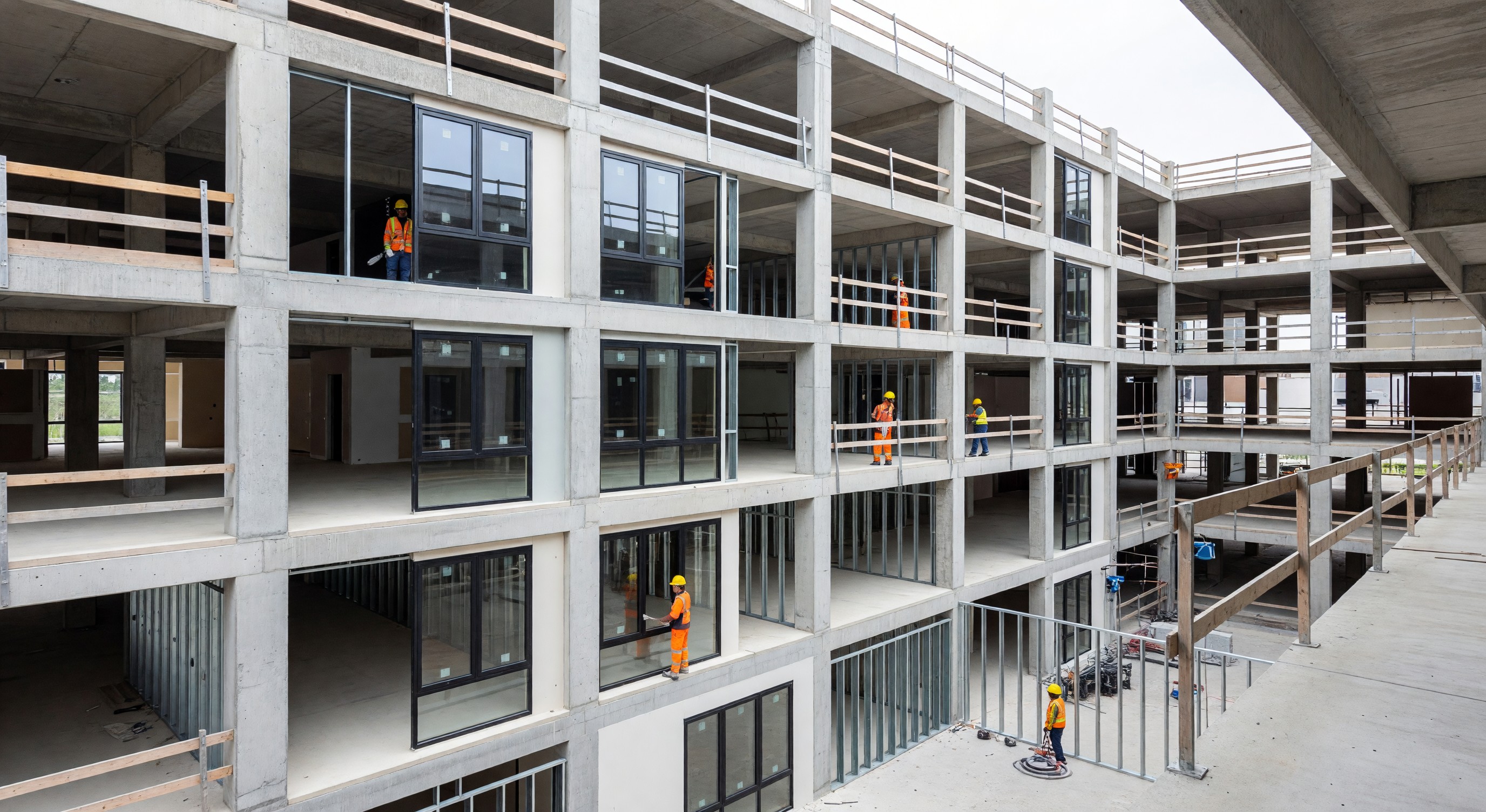
Residential conversion: Converting parking floors to apartments, condominiums, or affordable housing. The most common conversion target given housing demand. Challenges include floor-to-floor height, perimeter windows, and unit layout around the large parking floor plates.
Hotel conversion: Hotels have higher tolerance for unconventional unit layouts and can work with lower floor-to-floor heights in some cases. Hospitality conversions can activate parking structures in high-traffic tourist districts.
Office conversion: Converting parking to office uses faces similar floor plate and floor height challenges as residential, plus requirements for mechanical equipment and fire egress. Less common than residential conversions given current office market conditions in many cities.
Mixed-use retail and residential: The lower levels of a partially-converted structure can remain as parking serving retail and restaurant uses, while upper levels convert to residential. This hybrid preserves some parking function while adding residential density.
Community and institutional uses: Libraries, community centers, healthcare clinics, and educational facilities have sometimes been targeted for parking conversions, particularly in cities with incentive programs that favor community benefit uses.
Regulatory and Permitting Considerations
Zoning: Most parking structures are zoned for parking or general commercial uses; conversion to residential or other uses may require a rezoning or special use permit. In cities with recent parking minimum reform, these rezoning processes have often been streamlined.
Building code compliance: Conversion to occupied uses triggers full building code compliance for the new use — fire suppression, egress, accessibility, mechanical, electrical, and plumbing systems. The cost of bringing an older parking structure into full building code compliance for residential use is a significant conversion cost component.
Historic designation: Some older parking structures in urban historic districts are themselves designated historic resources, which creates both constraints (preservation of architectural character) and potential incentives (historic tax credits) for conversion projects.
Incentive programs: Federal Historic Tax Credits and state equivalents can provide 20 to 30 percent of qualified renovation costs as tax credits for conversions of certain historic structures. Federal Opportunity Zone incentives have applied to some urban parking structure conversion sites. Many cities have created local incentive programs to facilitate conversion projects that produce housing.
Documented Examples
1001 Lawrence Street, Denver: A multi-level downtown parking structure converted to office and retail. Demonstrates conversion in a western U.S. downtown market.
Pittsburgh (multiple garages): Pittsburgh has seen several central city garage conversions as the city addressed both excess parking supply and housing demand. The city’s incentive programs facilitated several projects.
Kansas City, Missouri: A surface parking lot conversion to a mixed-use development has served as a model for underutilized parking site redevelopment.
Biltmore Hotel Garage, Miami: Conversion of a historic parking structure to hotel and retail uses in a historic district.
Frequently Asked Questions
What makes a parking structure a good candidate for adaptive reuse? Key favorable characteristics: flat-floor design (rather than ramp-integrated), adequate floor-to-floor height (ideally 11+ feet), good perimeter exposure for window placement, central location on valuable urban land, and a structural system compatible with the target conversion use. Structures with severe slope issues, low ceilings, or deep interior floor plates with minimal window exposure are more difficult and costly conversions.
How much does parking garage conversion cost per square foot? Conversion cost varies enormously by structure condition, target use, and local construction market. Rough ranges: $100 to $250 per square foot for residential conversion of a structurally sound, favorable-geometry structure in a typical market. More challenging structures (lower ceilings, ramps, poor window exposure) can cost $200 to $350+ per square foot, which may not support residential conversion economics without significant subsidy.
Can parking structures be converted to market-rate housing without subsidy? Some conversions pencil without subsidy in markets with very high residential land and construction costs where the conversion cost is competitive with new construction. Many conversions require some combination of historic tax credits, city incentives, or below-market land cost to achieve economic feasibility. The economic feasibility is highly site and market specific.
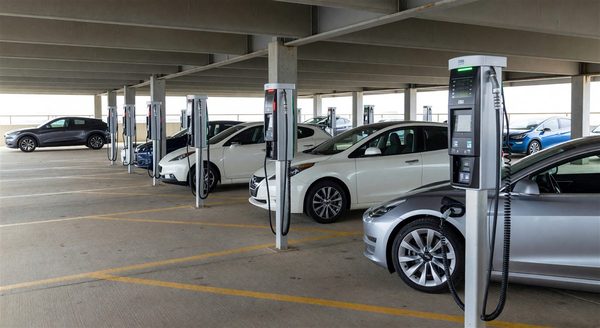
What happens to EV charging infrastructure in parking structure conversions? If a structure being considered for conversion has existing EV charging infrastructure, the conversion program typically needs to account for the electrical capacity already invested. In some cases, partial-floor conversions preserve parking and EV charging on lower floors while converting upper floors to residential.
Takeaway
Parking garage adaptive reuse is a legitimate and growing development practice that addresses simultaneously the need to utilize declining parking assets and the demand for urban housing and other uses. The structural and economic feasibility varies significantly by structure design, location, target use, and market conditions — not all parking structures are convertible at reasonable cost. Owners of underperforming parking assets in urban markets with housing pressure should commission feasibility assessments that evaluate structural convertibility, regulatory pathway, and financial feasibility under the specific conditions of their asset and market. The structures built with conversion flexibility in mind (adequate floor heights, flat floors, good perimeter window exposure) will prove most valuable as market conditions continue to evolve.
Further Reading from Authoritative Sources
- US DOT parking minimum reform and urban infill development policy guidance — The US Department of Transportation publishes parking minimum reform policy guidance, urban infill development frameworks, and transportation demand management research that directly inform the market conditions driving parking garage adaptive reuse interest.
- EPA urban brownfields and adaptive reuse resources for parking and commercial structures — EPA’s Brownfields and Land Revitalization program publishes adaptive reuse guidance, urban infill development resources, and sustainability frameworks for repurposing underutilized urban structures including parking garages.