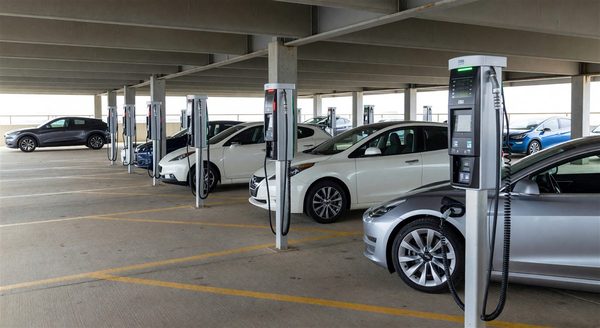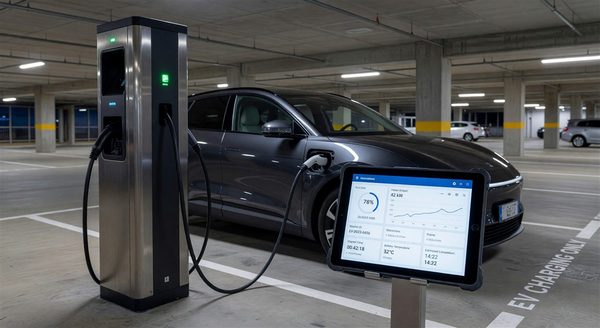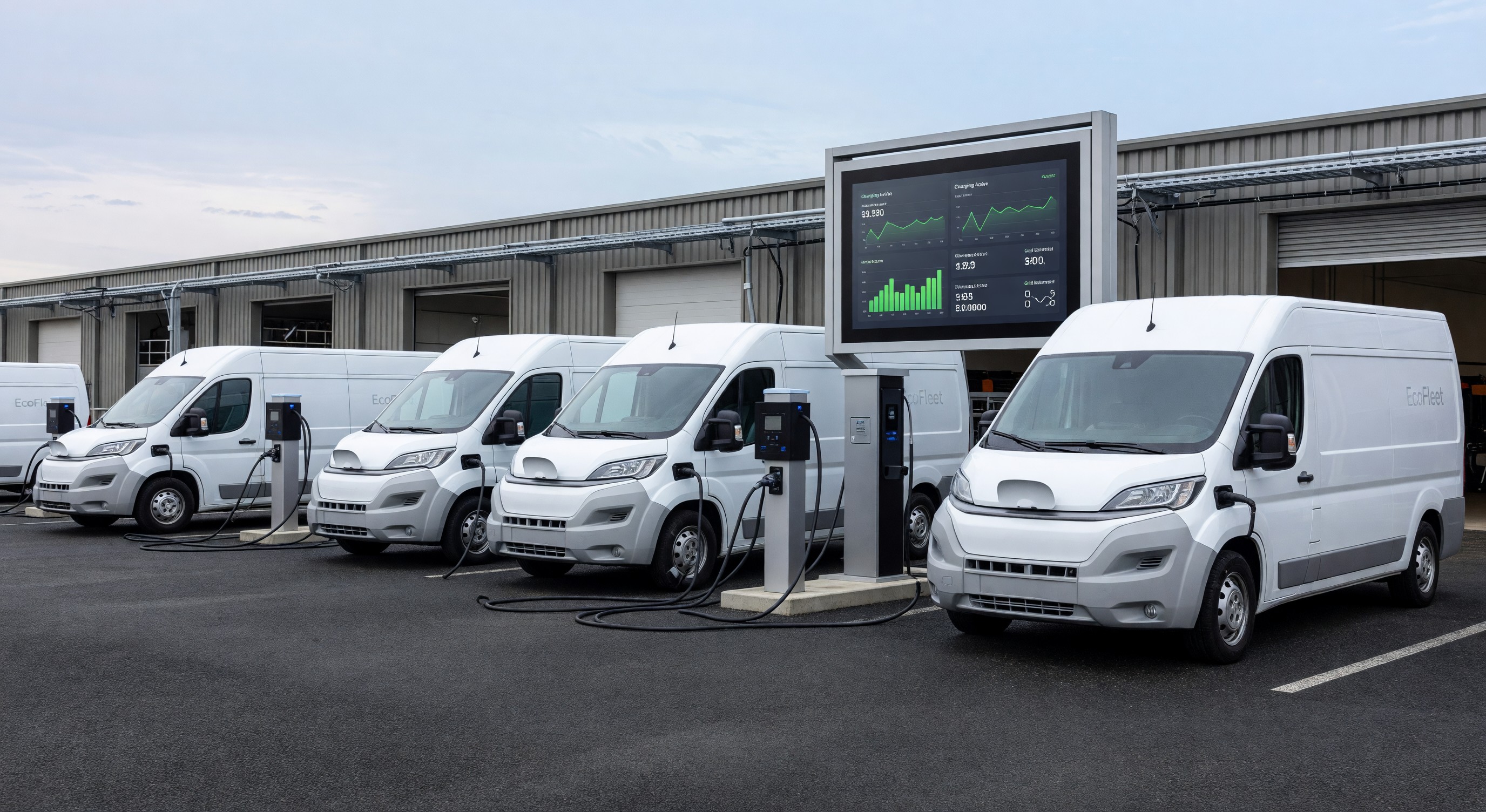
Commercial fleet electrification — the transition of last-mile delivery, municipal, corporate, and service fleets from combustion engine vehicles to battery electric — is creating new parking and charging infrastructure requirements that are distinct from those of personal EV charging. Fleet vehicles have different charging patterns, power requirements, and parking duration characteristics than personal vehicles, and the facilities that serve them require specialized planning. Parking facility operators and developers who understand fleet electrification trends can position their assets to capture this growing market segment.
The Commercial Fleet Electrification Trajectory
Major commercial fleets are under pressure to electrify from multiple directions:
Corporate sustainability commitments: Large corporations (Amazon, UPS, FedEx, Walmart) have publicly committed to electrifying their delivery fleets as part of emissions reduction targets. Amazon’s commitment to 100,000 electric delivery vans from Rivian is the highest-profile example.
Municipal fleet programs: City and county governments are electrifying their service vehicle fleets — parking enforcement, parks and recreation, public works, and general administration vehicles. FHWA and EPA grant programs fund municipal fleet electrification.
Regulatory pressure: California’s Advanced Clean Fleets rule (requiring all medium- and heavy-duty trucks sold in California to be zero-emission by 2036) and similar state-level requirements are accelerating commercial fleet electrification timelines.
Total cost of ownership: For high-mileage commercial applications (delivery vehicles, transit buses), the lower fuel and maintenance cost of electric vehicles creates TCO advantages over combustion alternatives, making electrification financially attractive independent of regulatory pressure.
Fleet Charging vs. Personal EV Charging
Commercial fleet charging differs significantly from personal EV charging in ways that affect parking facility planning:
Power level requirements: Personal EVs typically charge at 7 to 11 kW (Level 2) or 50 to 150 kW (DCFC). Commercial delivery vans and medium-duty trucks may require 19.2 kW to 80 kW Level 2 chargers or DC fast chargers at 100 to 350 kW. The electrical infrastructure required to support commercial fleet charging is significantly larger than for equivalent numbers of personal EVs.
Charging duration and scheduling: Personal EV charging is opportunistic and user-initiated. Fleet charging can be scheduled — departure time is known, vehicle return time is predictable, and smart charging management systems can optimize when charging occurs (during off-peak utility hours, avoiding demand charges) within the operational constraints (vehicle must be charged by 6 AM for a 7 AM departure).
Fleet parking duration: Commercial vehicles park at depot locations for extended periods (overnight for a last-mile delivery fleet, periods between routes for a taxi or rideshare fleet). This extended dwell time supports managed charging programs that minimize demand charges.
Security and access requirements: Fleet vehicles may require restricted-access parking with access control, surveillance, and in some cases vehicle inspection facilities. These requirements are distinct from general transient or monthly parking.
Fleet Depot Parking
Fleet depots — parking facilities designed specifically to house and charge commercial vehicle fleets overnight — represent a specialized parking facility type:
Scale: Fleet depots typically house 20 to 500+ vehicles, with charging infrastructure for each vehicle position. The electrical infrastructure requirements are substantial — a 100-vehicle depot with 50 kW chargers per vehicle requires 5 MW of electrical service capacity (with smart charging management reducing peak demand substantially below that theoretical maximum).
Facility design: Fleet depot design differs from commercial parking in several ways: vehicles may need maneuvering space for large vans or trucks, inspection and maintenance access is desirable, security perimeter fencing is common, and driver break facilities are typically included.
Location requirements: Fleet depots need to be located near the operational base of the fleet — a last-mile delivery depot near the urban area served, a transit bus depot near the route system, a municipal fleet depot at a city maintenance yard.
Ownership models: Fleet depots may be owned by the fleet operator (Amazon building its own charging depots), by a utility or charging infrastructure company, by a real estate developer serving multiple fleet tenants, or by a municipality serving its own fleet.
Opportunities for Parking Operators
Fleet charging as a new tenant category: Parking facility operators with large surface lots or underutilized structured parking near fleet operational areas can market charging capacity to commercial fleet operators. A fleet that needs 50 overnight parking and charging positions represents a significant, reliable, and contracted revenue stream.
Charging infrastructure investment for fleet: Installing higher-power chargers (Level 2 at 19.2 kW or higher, DCFC where appropriate) serves both fleet and personal EV customers — with fleet customers using the chargers during overnight periods and personal EVs using them during daytime hours.
Long-term parking agreements: Commercial fleets prefer long-term parking and charging agreements that provide cost certainty and guaranteed capacity. Multi-year agreements with fleet operators provide stable revenue that is less volatile than transient parking demand.
Municipal fleet partnerships: Municipalities electrifying their service vehicle fleets are natural partners for parking operators with municipal proximity and appropriate electrical infrastructure. City fleet charging partnerships may include favorable public-private partnership arrangements.
Electrical Infrastructure Considerations
Fleet EV charging infrastructure requirements are significant:
Load analysis: The peak electrical load from fleet charging must be analyzed against the facility’s available service capacity. Smart charging management systems that stagger charge initiation and manage demand peaks can significantly reduce the peak load relative to unmanaged charging.
Utility coordination: Large fleet charging loads may require utility distribution system upgrades (transformer capacity, distribution line capacity). Utility lead times for service upgrades can be 12 to 24 months — plan well in advance.
Demand charge management: Smart charging software that optimizes charging schedules to minimize peak demand reduces electricity cost for fleet charging operations, where demand charges are a significant component of total electricity cost.
Grid interconnection: Very large fleet depots (500+ vehicles) may require dedicated grid interconnection that functions as a major utility customer rather than a standard commercial service. The utility relationship is more complex and the rate structure is specialized.
Frequently Asked Questions
What is the best charging infrastructure for a mixed personal EV and commercial fleet parking operation? A tiered approach: Level 2 at standard 7.2 kW for personal EV general parking; higher-power Level 2 (19.2 kW) for fleet parking positions that need faster charging; DCFC where fast-turnaround charging is needed for commercial vehicles. OCPP-compliant equipment with smart charging management that can segment commercial and personal charging sessions supports both customer types from a unified infrastructure.
How much electrical service capacity does a fleet EV charging depot require? A rough calculation: 100-vehicle fleet × 50 kW maximum per charger = 5 MW theoretical maximum. Smart charging management that staggers charging and limits simultaneous peak load to 30 to 50 percent of theoretical maximum would require 1.5 to 2.5 MW of service capacity. Actual requirements depend on charging power levels, charging duration, departure time requirements, and smart charging optimization.
Are there incentives for commercial fleet charging infrastructure? Yes. The federal IRS Section 30C tax credit covers 30% of commercial EV charging infrastructure cost (up to $100,000 per property for non-depot scale, with different limits for fleet depots). DOE grants, NEVI program funding, and utility incentive programs provide additional support. EPA’s Clean Ports program and EPA 111 programs target commercial vehicle fleet electrification.
How should parking facility lease terms accommodate fleet charging customers? Fleet parking leases should specify: the parking stall count, the charging infrastructure type and power level committed to each position, the electrical capacity guaranteed, the term (multi-year, typically 3 to 5 years), the escalation structure, the charging energy cost structure (included vs. metered separately), and termination provisions. Fleet customers will require certainty about charging capacity and may walk away from agreements that leave infrastructure commitments vague.
Takeaway
Commercial fleet electrification is creating a new and growing parking and charging infrastructure market that parking facility operators are well-positioned to serve. Fleet depot parking differs from general commercial parking in power requirements, duration patterns, security needs, and commercial relationship structure — but these differences are addressable through specialized infrastructure investment and long-term customer agreements. Parking operators near fleet operational zones who invest in fleet-appropriate electrical infrastructure and pursue long-term fleet parking agreements will capture a stable, contracted revenue stream that complements the variable demand of general commercial parking.
Further Reading from Authoritative Sources
- U.S. Department of Energy fleet electrification and EV charging infrastructure resources — The U.S.
- EPA fleet emissions standards and commercial vehicle electrification programs — The EPA establishes federal emissions standards for commercial vehicles and publishes guidance on fleet electrification that provides the regulatory context for the fleet EV transition trends discussed in the article.