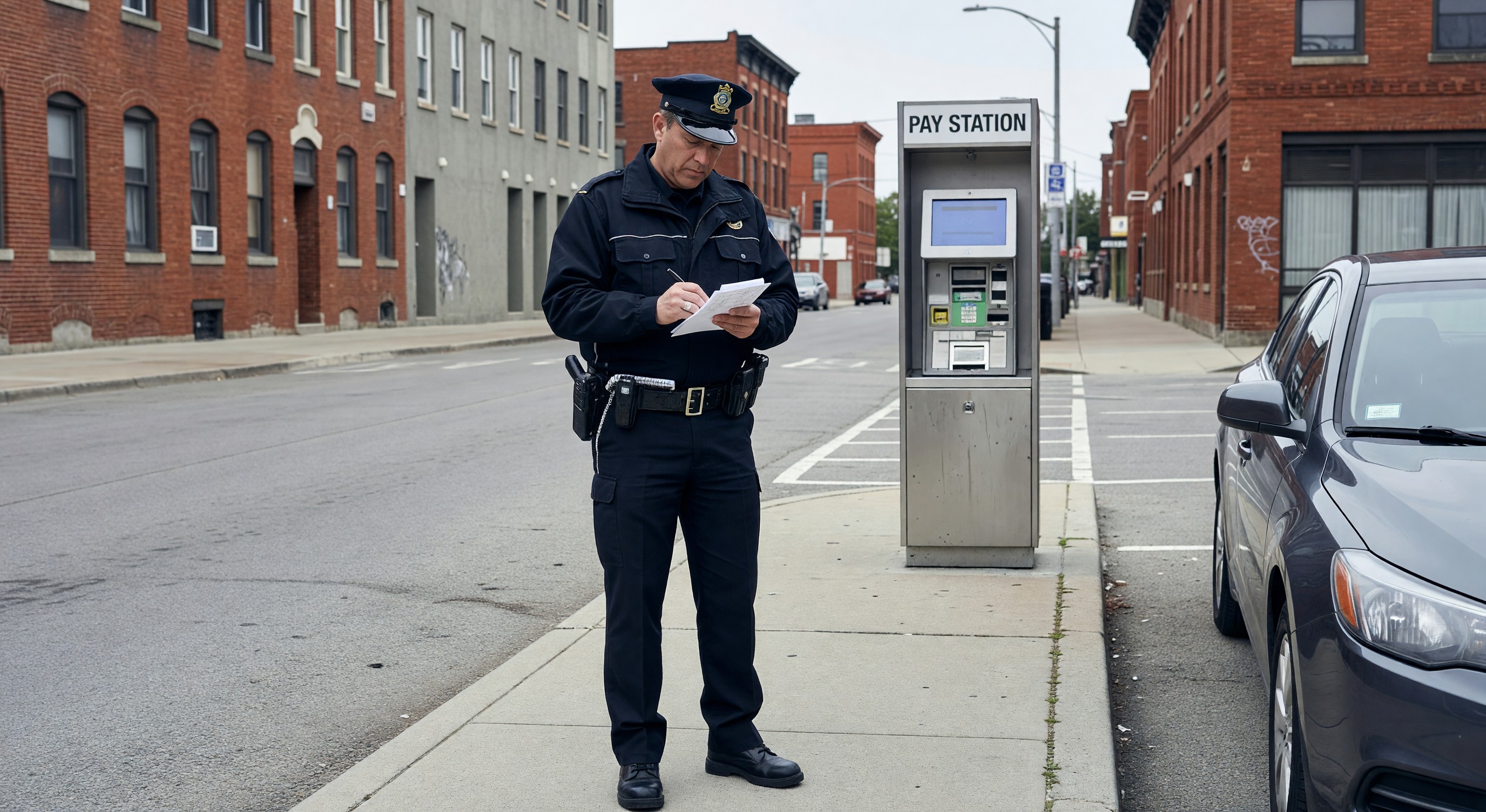
Parking enforcement — the issuance of citations for parking violations, collection of fines, and escalation to vehicle immobilization or impoundment for scofflaw vehicles — has operated under a relatively stable legal and administrative framework for decades. That framework is under scrutiny in many cities as research on the equity impacts of parking fines, the effectiveness of citation-based enforcement, and the social costs of vehicle immobilization has grown. Reform efforts range from income-based fine structuring (day fines) to decriminalization of parking violations, elimination of vehicle boot programs, and alternative compliance mechanisms. Understanding parking enforcement reform trends helps parking professionals anticipate changes in municipal enforcement frameworks and adapt their own enforcement programs.
The Equity Critique of Parking Enforcement
Research on parking citation impacts has consistently found that the burden of parking fines falls disproportionately on lower-income households:
Fixed-fine regressive impact: A $75 parking citation represents approximately 0.5 percent of median household income for a family earning $180,000 — a deterrent but not a hardship. For a household earning $30,000, the same citation represents 3 percent of monthly income — potentially triggering a cascade of financial consequences including missed rent, overdraft fees, and debt collection.
Scofflaw accumulation: Households that cannot afford to pay initial citations accumulate unpaid fines. Late fees, collection costs, and DMV registration holds add to the balance. Scofflaw vehicles may eventually be booted or impounded, with impound fees and daily storage costs adding thousands of dollars to already unmanageable debt. The impoundment of vehicles used for work trips can result in job loss — a consequence wildly disproportionate to the original parking violation.
Geographic disparate impact: Citation issuance rates by neighborhood have been documented to correlate with income and race in several cities. Enforcement resource allocation that concentrates in lower-income neighborhoods (often because those neighborhoods have higher parking turnover compliance needs) compounds the equity impact of fixed-fine structures.
San Francisco and Chicago analyses: Parking ticket studies in San Francisco and Chicago found that citation debt was concentrated in low-income neighborhoods and was a significant contributor to vehicle impoundment and license suspension among lower-income populations. The findings contributed to policy reform discussions in both cities.
Decriminalization Approaches
Several cities have moved to decriminalize parking violations — treating them as civil administrative infractions rather than criminal or quasi-criminal violations:
Administrative adjudication: Under decriminalized parking systems, citations are processed through administrative hearing systems rather than criminal or traffic courts. The standard of proof is preponderance of the evidence rather than beyond a reasonable doubt. Administrative adjudication is faster, less expensive, and more focused on the parking violation than court-based systems where parking cases compete with criminal and civil matters.
Elimination of failure-to-appear warrants: Criminal parking enforcement systems can generate bench warrants for failure to appear at court hearings — creating situations where a parking ticket can result in arrest. Decriminalization eliminates the warrant pathway, separating parking enforcement from the criminal justice system.
Chicago’s administrative decriminalization model: Chicago’s administrative hearing system for parking and red light violations is a frequently cited model that has processed millions of cases efficiently outside the court system. The administrative model has been adopted in whole or part by numerous cities.
Income-Based Fine Structures
Several cities and countries have experimented with income-based parking fines (sometimes called “day fines”):
Day fine model: Instead of a fixed fine amount, parking violations carry a fine calculated as a multiple of the violator’s daily income. A violation worth “three day fines” costs $450 for someone earning $150/day and $75 for someone earning $25/day. The deterrent effect is proportionate to income rather than regressive.
Verification challenges: Income-based fines require income verification, which creates administrative complexity and privacy considerations. Voluntary income disclosure systems (with incentives for disclosure) and linkage to existing income verification databases (tax records, public benefit records) are approaches being tested.
Scandinavia experience: Finland and other Nordic countries have long used day fines for traffic violations with positive results for deterrence equity. U.S. cities considering day fines cite this international evidence base.
Limited U.S. adoption: Income-based parking fines remain rare in the U.S. as of 2025 — San Francisco piloted an income-based fine program for certain violations, and Washington D.C. has discussed the model, but implementation challenges and political resistance to administrative complexity have limited adoption.
Boot and Impound Reform
Vehicle immobilization and impoundment programs have drawn the most intense criticism:
Boot program reform: Several cities have reformed or eliminated vehicle boot programs, recognizing that the costs imposed (boot removal fees, lost productivity while vehicle is immobilized) are disproportionate to underlying violation debt. Denver, Chicago, and San Francisco have modified boot threshold criteria, capped boot fees, or created hardship waiver programs.
Impound reform: Vehicle impoundment programs that hold vehicles until accumulated debt is paid create situations where storage fees grow faster than debtors can pay, making redemption economically irrational and resulting in vehicle forfeiture. Reforms include capping storage fees, creating payment plans for impound release, and limiting impound holds to serious violations rather than parking fine accumulation.
Driverless scofflaw management: As LPR technology makes vehicle identification cheaper, some jurisdictions are exploring warning-based approaches to initial scofflaw identification — attempting payment contact before immobilization rather than immediately booting all vehicles above a debt threshold.
Implications for Private Parking Operators
Enforcement program design review: Private parking operators who employ booting, towing, or citation programs should review their programs against current best practices — both to avoid legal exposure and to align with community expectations around enforcement equity.
Complaint exposure: Aggressive enforcement programs (frequent towing of marginally non-compliant vehicles, high boot fees) generate complaint activity, social media exposure, and in some jurisdictions regulatory scrutiny. Moderated enforcement programs with clear policies, appeal processes, and fee caps reduce complaint risk.
Alternative compliance approaches: Warning systems (notices to move before booting), grace period policies, and payment plan programs for fine accumulation reduce the most severe enforcement consequences while maintaining compliance pressure. These approaches are both more equitable and less likely to generate community backlash.
Municipal contract requirements: Parking operators under municipal management contracts may find that their enforcement programs are subject to municipal equity requirements — including documentation of citation patterns by location, income-based fine waiver programs, or prohibited enforcement practices. Understanding municipal requirements and anticipating their evolution is important for contract compliance.
Frequently Asked Questions
Are private parking operators subject to the same equity critique as municipal enforcement? Private operators using booting and towing on private property are subject to state and local regulations governing those practices, and face civil liability for improper use. The equity critique applies somewhat differently — private operators have legitimate property interests in controlling unauthorized parking — but aggressive booting programs targeting low-income vehicles or communities carry real legal and reputational risk. Proportionate enforcement with clear policies and complaint mechanisms is best practice.
What is a reasonable scofflaw threshold before escalating to boot or tow? Industry and municipal practice varies. Many jurisdictions define scofflaw status as three or more unpaid citations; boot thresholds for public parking enforcement often start at $250 to $500 in unpaid fines. Private operators typically use towing as an immediate enforcement measure for unauthorized parking rather than fine accumulation — a different legal basis than municipal scofflaw enforcement.
How should operators communicate enforcement policies to parkers? Clear signage that states enforcement policies — no parking without payment, towing enforced, citation thresholds — is both a legal requirement (in most states) and a communication best practice. When enforcement occurs, communication of how to pay, appeal, or retrieve a towed vehicle should be clear and accessible in multiple languages where demographics warrant.
How does enforcement technology affect equity outcomes? LPR enforcement technology has reduced the discretion element of citation issuance — cameras identify violations consistently regardless of officer bias. However, LPR deployment decisions (where to concentrate enforcement) still involve human choices that can reproduce geographic disparate impact. Operators and municipalities should monitor citation issuance patterns by location and demographics to identify unintended disparate impact from technology-enabled enforcement.
Takeaway
Parking enforcement is undergoing reform across American cities as equity research has documented the disproportionate impact of fixed parking fines, boot programs, and impoundment on lower-income populations, and as decriminalization, income-based fine structures, and vehicle immobilization reforms gain political support. Private parking operators should monitor municipal enforcement reform trends in their markets, review their own enforcement programs against current best practices, and design enforcement systems that maintain compliance while minimizing the most severe consequences for lower-income parkers. The direction of reform — toward proportionate penalties, clear appeal processes, and hardship accommodations — represents both good public policy and risk reduction for operators who face regulatory and reputational exposure from aggressive enforcement programs.
Further Reading from Authoritative Sources
- IPMI parking enforcement best practices and equity guidance for parking operators — IPMI publishes parking enforcement best practices, equity guidance, and technology standards for parking operators managing enforcement programs.
- US DOT transportation equity and parking policy research — The US Department of Transportation publishes transportation equity research, parking policy guidance, and civil rights frameworks applicable to parking enforcement programs that disproportionately affect lower-income communities.