The parking customer experience has traditionally been defined by friction — hunting for a space, fumbling with a ticket, waiting at a pay station, managing receipts. For most of parking’s history, this friction was accepted as inherent to the activity. The combination of mobile technology, license plate recognition, and cloud-connected PARCS has made much of this friction technically eliminable. Operators who eliminate friction fastest and most completely are differentiating their facilities in competitive markets, achieving measurable customer satisfaction improvements, and creating data assets from digitized customer interactions that support revenue optimization and operational management.
The Anatomy of Parking Friction
Understanding what causes parking friction — and where the greatest experience improvement opportunity lies — requires mapping the complete customer journey:
Pre-arrival friction: Not knowing whether parking is available at a destination, not knowing the price before arriving, not knowing how to get there — all cause anxiety and decision uncertainty that degrades the pre-trip experience. Apps like SpotHero, ParkWhiz, and Google Maps parking integration have addressed pre-arrival friction by providing availability and price information before the parker commits to a destination.
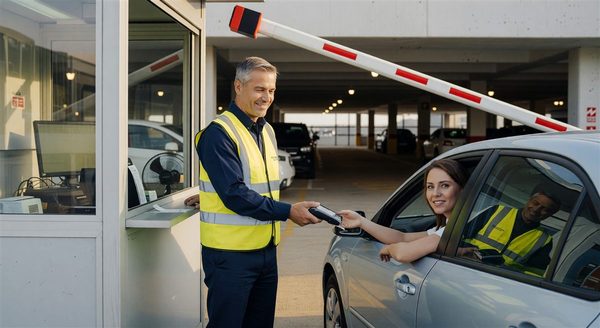
Entry friction: Traditional ticket-based entry requires the driver to stop, lower the window, reach out to press a button, receive a ticket, store the ticket somewhere accessible, and wait for the gate to open — a process that averages 15 to 30 seconds per vehicle and creates queues during peak arrival periods. LPR-based entry (camera reads license plate, gate opens without interaction) reduces entry to sub-5-second passage. Mobile credential entry (phone held to reader, or automatically identified via Bluetooth) eliminates stopping entirely in some implementations.
Wayfinding friction: Once inside a facility, finding an available space — particularly in large structured parking with multiple levels — is a time and frustration source that guidance systems (space-level sensors with directional signs) address. Facilities without guidance systems leave parkers circling floors looking for open spaces.
Payment friction: Traditional pay-on-foot stations require finding the station, inserting the ticket, selecting payment method, paying, retrieving a validated ticket, and then using the validated ticket to exit. Mobile payment (pay by phone, app payment before exit) and LPR-based payment (automatically charge the payment method on file as the car exits) eliminate most payment steps.
Exit friction: Gate-based exits require inserting a validated ticket or credit card, waiting for the gate arm to rise, and proceeding — all while the next vehicle waits behind. LPR-based exit (camera reads plate, gate opens automatically if payment is on file) eliminates the exit transaction entirely.
Frictionless Parking: The State of Deployment
True frictionless parking — entry without stopping, payment without a transaction, exit without stopping — is technically achievable and being deployed at increasing scale:
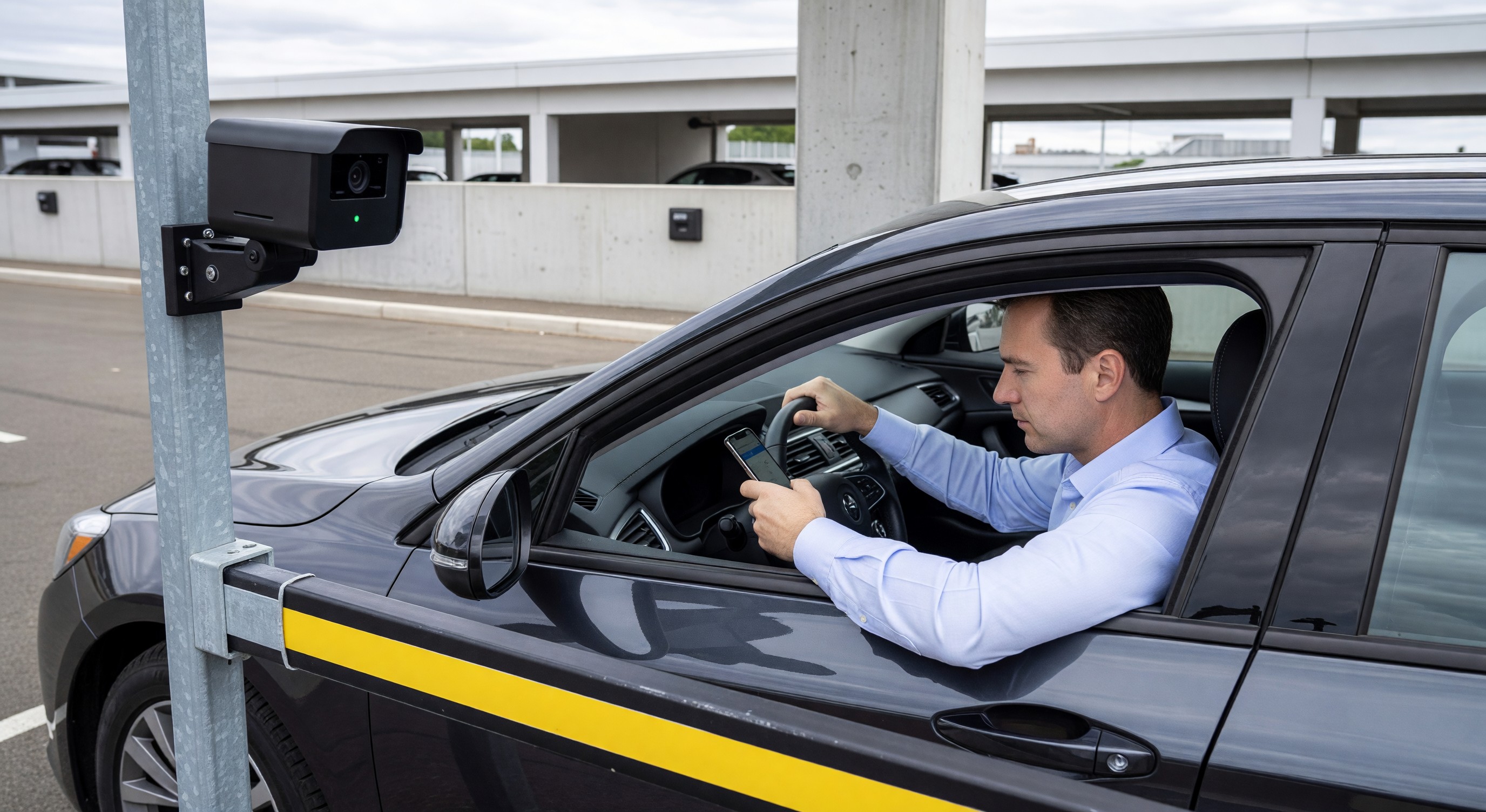
LPR-based frictionless parking: Systems that read license plates at entry (starting a parking session), match to a payment method on file (through a mobile app registration or previous session), and bill automatically at exit require no parker interaction at any point. The parker drives in, parks, and drives out — the system handles the rest.
Deployment scale: LPR-based frictionless systems are deployed at airports, medical campuses, corporate campuses, and commercial garages in major markets. Large-scale deployments include LAX airport parking (full frictionless system), Metropolis facilities in multiple markets, and numerous hospital and university systems.
Accuracy requirements: Frictionless systems depend on LPR accuracy — a license plate misread at entry can cause billing errors or gate failures that create friction worse than traditional ticket systems. High-accuracy LPR cameras, redundancy (front and rear plate cameras), and robust exception handling (human review of unclear reads) are essential for reliable frictionless operations.
Customer registration challenge: Frictionless systems that require pre-registration (creating an account, entering payment method before first visit) have a registration hurdle that can reduce adoption. Systems that can capture payment at first visit (prompting registration via text after exit) or integrate with existing digital wallets lower the registration barrier.
Mobile App as Experience Platform
Parking mobile applications have evolved from simple payment interfaces to comprehensive experience platforms:
Reservation and access: Pre-reserving specific spaces, receiving a QR code or digital pass for entry, and accessing reserved parking without interaction — features that convert parking from an on-demand commodity to a managed experience with reliability guarantees.
Real-time availability: Apps that show current space availability (fed by sensor data or predictive algorithms based on historical patterns) allow parkers to decide before arriving whether space is available — reducing the frustration of arriving at a full facility.
Digital receipts and expense management: Automatic digital receipt generation (emailed after exit) and direct integration with expense management software (Concur, Expensify) address pain points for business travelers who park frequently and need receipt management.
Customer service access: In-app access to customer service — live chat, support request, complaint submission — provides a service channel that does not require leaving the parking environment and reaching a human by phone.
Measuring Customer Experience
Net Promoter Score (NPS): NPS surveys (“How likely are you to recommend this parking facility?”) provide a standard customer experience metric that can be tracked over time and benchmarked against industry averages. NPS measurement requires a mechanism for reaching parkers post-visit — email or text surveys triggered by exit are most common.
App store ratings: For facilities with proprietary mobile apps, app store ratings provide public customer satisfaction signals that affect new user acquisition. Managing app quality and responsively addressing review complaints are customer experience management practices.
Exit survey data: Brief exit surveys (one to three questions via QR code at exit or text message) capture immediate feedback on specific visit experiences. Real-time alerts for negative feedback allow operators to address problems before the parker has left the facility or formed a lasting negative impression.
HCAHPS and Press Ganey integration: For healthcare parking specifically, parking experience data may be integrated into patient satisfaction surveys that affect hospital quality scores. Healthcare operators have particularly strong institutional incentives to improve parking customer experience.
Differentiation Through Experience
Premium experience positioning: Facilities that offer frictionless entry and exit, guaranteed space availability through reservation, and valet-quality service at self-parking prices can position as premium parking and command rate premiums in competitive markets.
Loyalty and recognition: Registered parkers who use the same facility repeatedly can be recognized — welcomed by name on entry signage or app messages, offered loyalty pricing after a defined number of visits, or notified of the same preferred space being available. These recognition touches, borrowed from hospitality industry practice, create emotional connection with the facility brand.
Accessibility improvements: Digital improvements that benefit all parkers disproportionately benefit parkers with disabilities — mobile payment eliminating the need to operate a pay station, LPR-based entry eliminating the reach-and-ticket requirement, and wayfinding apps that navigate to accessible spaces. Experience improvements and accessibility improvements are often aligned.
Frequently Asked Questions
What is the ROI of customer experience investment in parking? Customer experience investment ROI comes from: increased repeat visit rate among registered customers who have positive experiences; premium rate support in competitive markets; reduced customer service cost when self-service and digital support reduce contact volume; and reduced exit wait times that increase throughput and capacity. These returns are real but require measurement infrastructure (tracking repeat visit rates, comparing customer satisfaction NPS against willingness to pay) that many operators have not yet deployed.
How does frictionless parking handle disputes and exceptions? Exception handling is a critical design element of frictionless systems. Common exceptions: plates that cannot be read by LPR require manual processing; parkers who don’t have a registered payment method require alternative payment; parkers who believe they were charged incorrectly need dispute resolution access. Well-designed frictionless systems have clear exception pathways — intercom communication with remote staff, in-app dispute submission, and accessible customer service channels — that handle the minority of sessions that don’t complete without friction.
Is customer experience differentiation sustainable? Customer experience improvements that depend on proprietary technology may be replicated by competitors over time. Sustainable differentiation comes from the combination of technology, service culture (staff who are trained and empowered to resolve customer issues), and physical facility quality (cleanliness, lighting, safety) — factors that are harder to replicate than any individual technology feature.
How do smaller operators compete with national chains on customer experience? Smaller operators can compete on experience through service culture and personalization — knowing regular customers by name, responding immediately to complaints, maintaining facility cleanliness standards — that large national operators may not match through their standardized operating procedures. Technology platforms available through third-party providers (app developers, PARCS vendors) provide many experience-enhancing technologies on a subscription basis accessible to smaller operators.
Takeaway
Parking customer experience is in transition from friction-accepting to friction-eliminating, driven by LPR technology, mobile platforms, and operators who recognize that experience differentiation can support premium pricing and customer retention in competitive markets. The tools for frictionless parking — LPR entry and exit, mobile payment, advance reservation, digital wayfinding — are deployed at scale in leading facilities and becoming accessible to mid-market operators through vendor platforms. Operators who invest in experience improvement, measure customer satisfaction rigorously, and use digital interactions to create recognized, valued customer relationships are building competitive positions that go beyond the commodity pricing competition that has historically characterized urban parking markets.
Further Reading from Authoritative Sources
- IPMI parking customer experience and frictionless technology deployment resources — IPMI provides customer experience guidance and frictionless parking technology resources for operators evaluating LPR-based entry and exit, mobile app integration, and NPS measurement programs — directly supporting the customer journey improvement strategies described in this article.
- US Access Board ADA parking design guidance for accessible customer experience — The US Access Board ADA parking design guidance provides the federal accessibility standard that ensures customer experience improvements in parking are evaluated for their impact on customers with disabilities, supporting the accessibility dimensions of experience improvement described in this article.