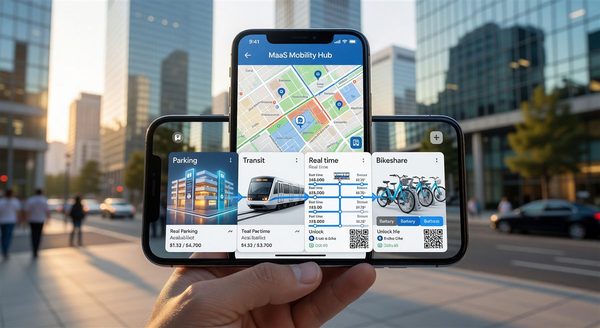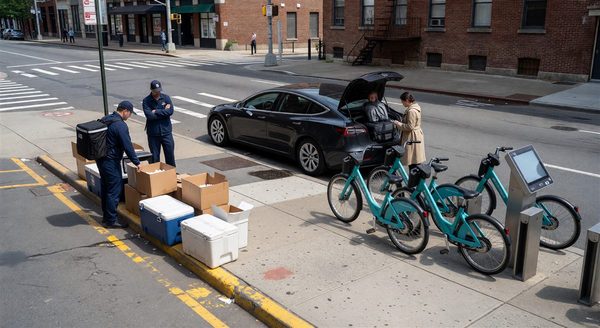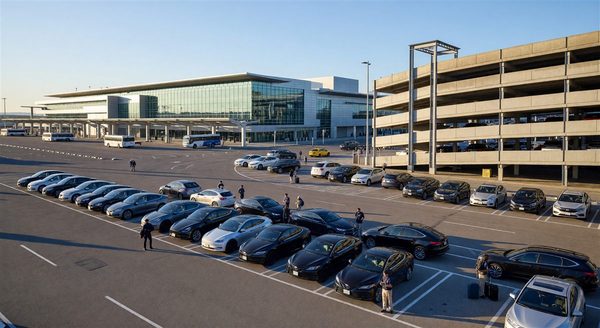
Micromobility — shared bicycles, electric scooters, and similar small personal mobility devices — has grown into a significant component of urban transportation infrastructure in many North American and European cities. For parking facilities, micromobility presents both a competitive consideration (customers who would otherwise drive and park may choose a bikeshare or scooter for shorter trips) and an integration opportunity (providing micromobility access within or adjacent to parking facilities to support first/last mile connections for parkers who drive to a facility and continue by other means).
The Micromobility Landscape
Docked bikeshare: Station-based systems where bicycles are checked out from and returned to fixed docking stations. Established providers include Lyft Bikes (formerly Motivate, operating Citi Bike, Divvy, Capital Bikeshare, and others), PBSC (BIXI in Montreal), and Zagster. Docked systems require physical infrastructure — station installation in the public right-of-way or on private property.
Dockless bikeshare: Bikes with integrated GPS locks can be left and unlocked anywhere within the operating zone. Major operators include Lime and others. Dockless systems require no fixed infrastructure but create clutter concerns when bikes are left in inappropriate locations.
Electric scooters: Shared electric kick scooters deployed by Lime, Bird, Spin, and others in markets that permit them. Typically dockless (parked at designated corrals or anywhere within the operating zone depending on local regulations). High trip volume in warm-weather urban markets; seasonal in northern climates.
Electric cargo bikes: Larger cargo bikes used increasingly for last-mile delivery and family transportation are beginning to appear in urban bikeshare and shared e-cargo programs.
How Micromobility Affects Parking Demand
Substitution for short parking trips: Research consistently finds that bikeshare and scooter trips substitute primarily for walk and transit trips rather than for vehicle trips. However, at the margin, convenient micromobility for short urban trips (0.5 to 2 miles) reduces some vehicle trips that would have involved parking. This substitution effect on parking demand is real but smaller than often assumed — typically measured in single-digit percentage demand reduction in high-bikeshare markets.
Transit multiplier effect: Micromobility significantly extends the effective radius of transit — a transit rider who can take a bikeshare or scooter for the first/last mile of their commute can serve origins and destinations that are too far from transit stops to walk. This transit multiplier effect reduces parking demand for commuters who combine driving with transit (park-and-ride) by enabling transit use without a car for the full trip.
Trip complementarity: Some parkers use micromobility after parking — driving to a central parking facility and then using bikeshare or a scooter to reach nearby destinations rather than moving their car multiple times. This “park once” behavior can increase per-visit trip value for parkers.
Micromobility Integration in Parking Facilities
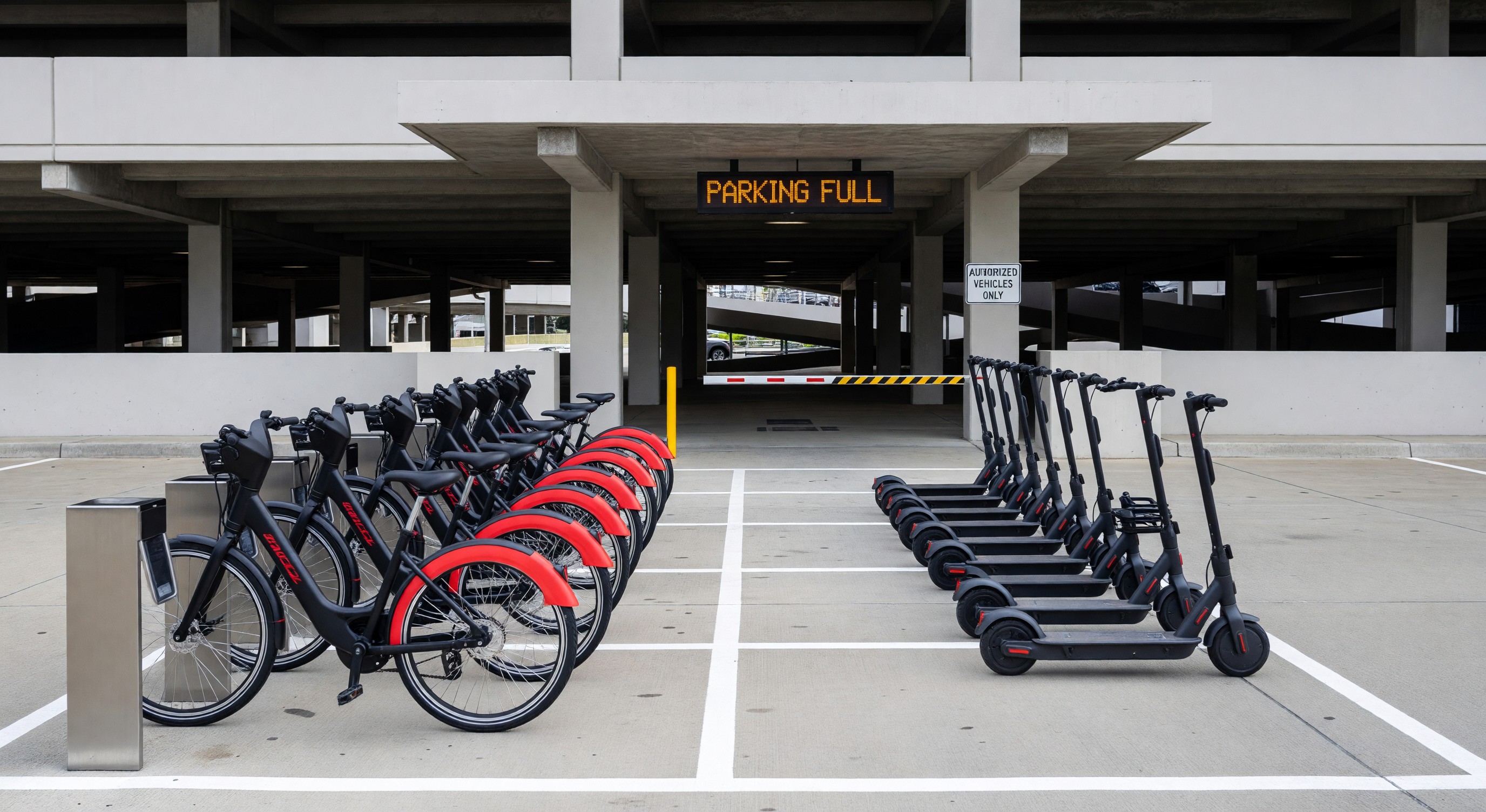
Bikeshare docking stations: Partnering with a bikeshare operator to install a docking station within or adjacent to a parking facility provides parkers and facility visitors with convenient bikeshare access. For transit-adjacent facilities (park-and-ride), bikeshare can extend the transit service area. Docking stations typically require a ground-level concrete pad, a utility electrical connection, and a data connection. Operators negotiate station placement agreements with bikeshare providers.
Scooter parking corrals: Designated scooter parking areas within a parking facility (or at the facility entrance) organize scooter parking that would otherwise be scattered. Corrals can be created with minimal infrastructure (painted areas, signage, and optionally locking posts), and operators can negotiate revenue-sharing agreements with scooter companies for corral hosting.
Secure bicycle parking within parking structures: Monthly parkers who commute by bicycle and need secure, weather-protected parking are a growing market segment in cycling-friendly cities. Dedicated locked bicycle rooms or high-security bicycle parking on a designated floor of a parking structure serves this demand without requiring public right-of-way infrastructure.
E-bike charging: Parking facilities with electrical infrastructure can offer e-bike charging stations alongside EV car charging — a low-cost amenity that supports electric bicycle commuters and generates modest additional revenue.
First/Last Mile Program Integration
Park-and-ride + bikeshare packages: Marketing bundled products that combine monthly parking at a suburban or edge-of-downtown facility with a bikeshare membership enables commuters to drive to a parking facility and complete the last mile by bike rather than driving into the congested urban core. Several cities have piloted such programs with transit agencies and parking operators.
Transit connection marketing: Parking facilities within walking or biking distance of transit stations should market their transit connectivity prominently — commuters who can park and take transit have a valuable alternative to driving through congestion into downtown cores. Marketing bikeshare or scooter availability for the parking-to-transit distance improves the product.
Corporate mobility benefit integration: Some employers offer mobility benefits that bundle parking, transit, and micromobility subsidies. Parking operators who integrate micromobility options into their facility amenities can participate in employer mobility benefit programs that include non-driving transportation options.
Regulatory and Management Considerations
Scooter and dockless bike management: Dockless devices left in parking facilities without designated areas create clutter and management burden. Establishing clear policies (designated areas required for parking, unauthorized devices may be removed) and designated corrals addresses this.
Liability for micromobility users: Bikeshare and scooter users are pedestrians and cyclists in the parking facility environment — subject to the same safety risks as other non-vehicle facility users. Review facility insurance coverage for micromobility user incidents.
ADA accessibility: Designated micromobility parking areas must not obstruct accessible pedestrian pathways. Scooter corrals placed in ways that block accessible routes or curb cuts create ADA compliance issues.
Frequently Asked Questions
Should parking operators actively promote micromobility to their customers? For parking facilities with transit-adjacent locations or park-and-ride demand, yes — promoting micromobility for the transit-to-destination last mile improves the facility’s transit connectivity value and differentiates it from competitors. For facilities where the value proposition is purely proximity to the destination, micromobility promotion may cannibalize some trips.
How do bikeshare station installation agreements typically work? Bikeshare operators generally provide station equipment and installation at no cost to the facility (or the municipality, if the station is in the public right-of-way). In exchange, the facility provides ground space and a utility connection. Revenue sharing for stations on private property varies by agreement — some arrangements include a small per-trip revenue share; others involve only the space use. Negotiate terms directly with the bikeshare operator for the specific market.
Can parking facilities earn revenue from micromobility integration? Modest revenue is possible through corral hosting fees, e-bike charging fees, and in some cases revenue sharing from bikeshare stations with high trip counts. For most parking operators, the primary value of micromobility integration is customer amenity and transit connectivity positioning rather than direct revenue.
What is the relationship between micromobility growth and transit ridership? Research from multiple cities has found that bikeshare increases transit ridership by improving first/last mile connectivity. Stations within a short walk of transit stops generate significantly higher trip volumes than stations farther from transit. This transit-micromobility synergy is the primary mechanism through which parking facilities can leverage micromobility to improve their park-and-ride product.
Takeaway
Micromobility’s relationship with parking is more complementary than competitive in most scenarios. Bikeshare and scooters substitute primarily for walk and transit trips, not for vehicle trips — reducing parking demand at the margin while creating first/last mile opportunities that can enhance park-and-ride and transit-adjacent parking value. Parking operators who integrate micromobility as an amenity (bikeshare stations, secure bicycle parking, scooter corrals) position their facilities as mobility hubs rather than purely vehicle storage operations. This positioning is increasingly relevant as urban mobility becomes more multimodal and as employer mobility benefits programs seek integrated transportation solutions for employees.
Further Reading from Authoritative Sources
- NACTO bikeshare and micromobility design guidance for urban parking and transit integration — NACTO publishes authoritative bikeshare design guidelines, micromobility parking standards, and first/last mile integration frameworks that directly inform how parking operators design and manage micromobility integration within their facilities.
- TRB micromobility and transit first/last mile research — TRB publishes peer-reviewed research on micromobility demand, transit-micromobility interaction, and first/last mile connectivity that provides the empirical basis for the demand substitution and transit multiplier effects described in this article.