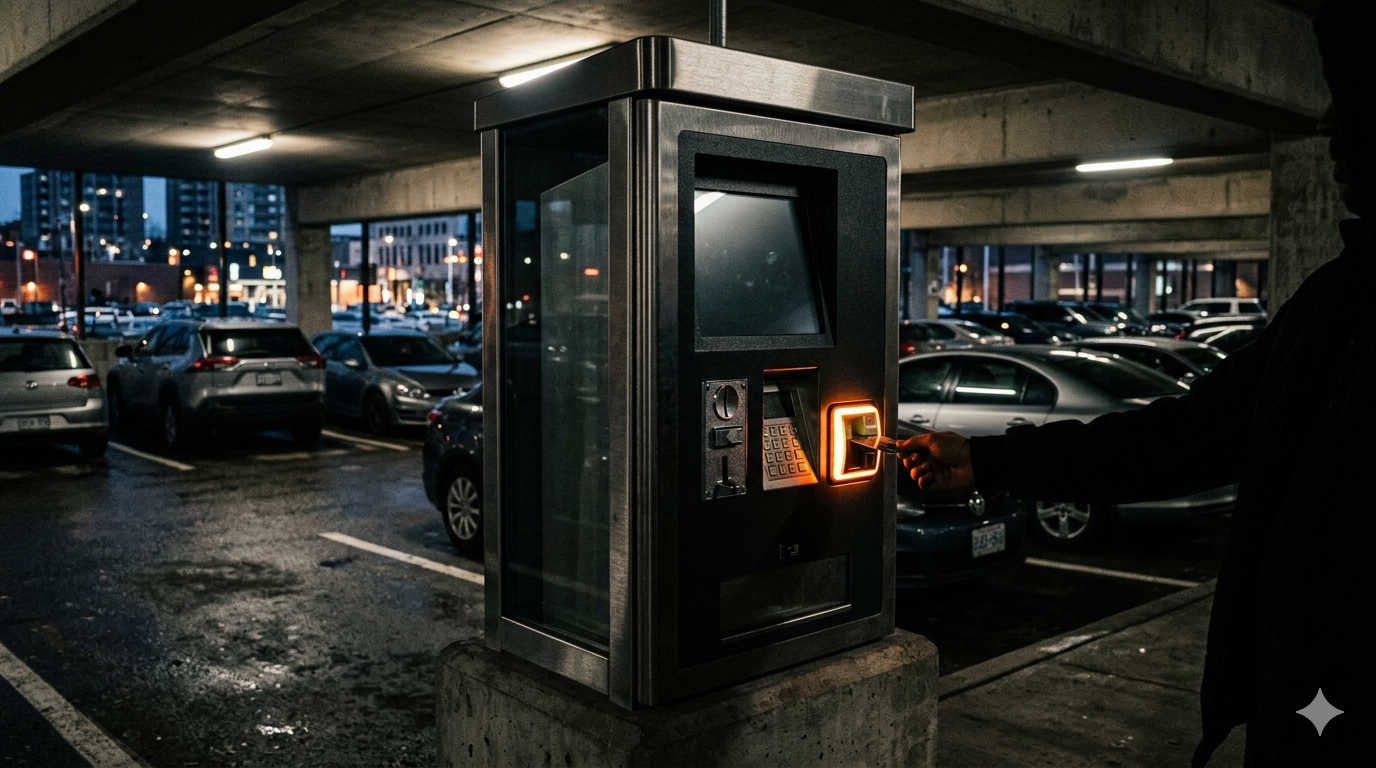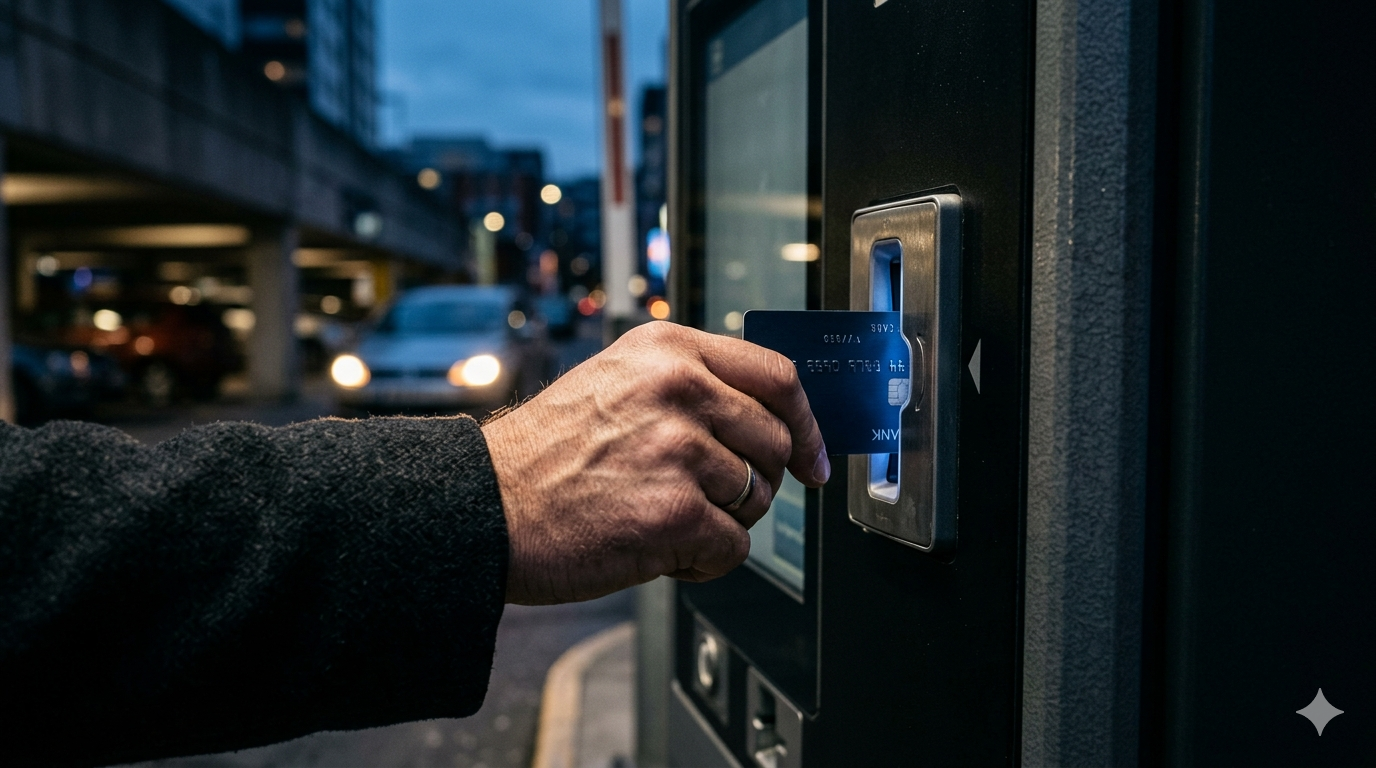
In April 2016, the City of Little Rock, Arkansas quietly made history. The city deployed what became the first EMV chip-and-PIN unattended parking system in the United States, supplied by Parking BOXX. The installation marked a turning point for municipal parking security — and set a precedent that cities across the country would eventually follow.
While the retail industry was still struggling with its EMV migration (many stores wouldn’t have chip readers working for another year or more), a mid-sized Arkansas city had already solved the harder problem: making chip-and-PIN work in unattended outdoor environments.
Why Little Rock Went First
Little Rock’s decision wasn’t about being first for the sake of it. The city faced the same challenge confronting every municipality that accepts credit card payments for parking: the October 2015 liability shift.
After that date, any merchant — including city parking operations — that processed a fraudulent magnetic stripe transaction when an EMV chip card was presented could be held liable for the fraud. For a city processing thousands of daily parking transactions, the cumulative exposure was significant.
Rather than wait for the parking industry to catch up, Little Rock moved aggressively. The city worked with its equipment supplier to deploy certified EMV-capable municipal parking systems that met both Moneris processing certification and PCI security requirements.
The Technical Achievement
What made this deployment notable wasn’t just the EMV capability — it was making it work in an unattended, outdoor, public-facing environment. The technical challenges that had to be solved included:
Chip-and-PIN in weather — Little Rock’s climate ranges from summer heat exceeding 95°F to winter lows below 20°F, with humidity, rain, and occasional ice. The PIN pad and chip reader had to function reliably across these conditions year-round.
Transaction speed — Municipal parking users expect quick transactions. The system had to complete a full EMV chip-and-PIN transaction — card insertion, chip reading, PIN entry, authorization, card removal — fast enough to keep queuing manageable.
Public accessibility — Unlike a private parking garage serving regular users, municipal street parking serves everyone. The payment process had to be intuitive enough for a first-time user who had never used a chip card in a parking meter before.
Dual acceptance — During the transition period, the system needed to accept both chip cards and magnetic stripe cards, since not all cardholders had received chip-enabled cards yet.
What It Means for Municipal Parking
Little Rock’s successful deployment proved several things that other cities were watching closely:
EMV Works Outdoors
The primary concern municipal parking departments had about EMV was reliability in outdoor conditions. Little Rock demonstrated that with properly engineered equipment, EMV chip-and-PIN performs reliably in real-world municipal parking environments.
Citizens Can Adapt
There was concern that the public — especially in markets where chip cards were still new — would be confused by the chip-and-PIN process at a parking meter. Little Rock’s experience showed that with clear on-screen instructions, the transition was smoother than expected.
The Economics Work
The cost of upgrading to EMV-capable equipment is offset by the elimination of fraud liability exposure and the reduction in chargeback processing costs. Little Rock’s deployment validated the financial case for municipal EMV investment.
Early Adoption Has Advantages
By moving first, Little Rock:
- Eliminated its fraud liability exposure before most cities had even started evaluating EMV options
- Gained practical operational experience with the technology
- Attracted attention from other municipalities looking for proven deployment examples
- Positioned itself as a technology-forward city government
The Broader Municipal Parking Context
Municipal parking departments across the United States operate in a challenging environment. They must:
- Serve the public with convenient, accessible payment options
- Generate revenue to fund parking infrastructure and often subsidize transit
- Comply with ADA, PCI, and increasingly EMV security requirements
- Maintain aging equipment while adopting new technology
- Balance political pressure to keep parking affordable with operational costs
EMV adoption is just one piece of the modernization puzzle, but it’s a critical one. Credit card fraud in unattended municipal parking had been a growing problem, with skimming devices found on parking meters and pay stations in cities across the country.
What Other Cities Can Learn
For municipalities considering EMV deployment:
Don’t wait for perfection. Little Rock deployed EMV while many equipment manufacturers were still in the certification process. Being early meant some growing pains, but the liability protection started immediately.
Choose certified equipment. Ensure your equipment has received actual EMV certification from your payment processor — not just a promise that certification is “in progress.”
Plan for dual acceptance. EMV and magnetic stripe will coexist for years. Your equipment must handle both seamlessly.
Train your parking enforcement team. Enforcement officers are often the first point of contact when a citizen has trouble with a payment terminal. They need to understand the chip card process to assist users.
Communicate the change. Public messaging about the new chip card capability — why it exists, how to use it, and how it protects cardholders — smooths the transition.
The Road Ahead
Little Rock’s 2016 deployment was a proof point. In the years following, EMV adoption in municipal parking accelerated across the country. The city demonstrated that the technology worked, the public could adapt, and the investment made financial sense.
For municipal parking departments still operating magnetic-stripe-only equipment, the question is no longer whether to adopt EMV, but how quickly they can make it happen. The liability exposure grows with every month of delay.
Key Takeaways
- Little Rock became the first US city with EMV chip-and-PIN unattended parking in 2016
- The deployment proved EMV works reliably in outdoor municipal environments
- Early adoption eliminated fraud liability and positioned the city as a technology leader
- Other municipalities can follow Little Rock’s example with now-widely-available certified equipment
- The financial case for municipal EMV adoption is clear: fraud liability avoidance plus reduced chargebacks
- Dual acceptance (chip + magnetic stripe) is essential during the transition period
Frequently Asked Questions
Why is Little Rock, Arkansas significant in U.S. parking payment history? Little Rock became the first U.S. city to implement EMV chip-and-PIN payment at unattended parking meters — specifically using Moneris-certified chip-and-PIN technology at city parking pay stations in 2016. This distinction matters because while EMV chip cards had been deployed broadly in the U.S. by that point, chip-and-PIN (requiring a PIN rather than a signature) was far less common in unattended parking applications, making Little Rock a pioneer in the more secure chip-and-PIN authentication method for parking.
What is the difference between chip-and-PIN and chip-and-signature for parking payment security? Chip-and-PIN requires the cardholder to enter a numeric PIN to authenticate each chip card transaction, providing a second authentication factor that a stolen card alone cannot satisfy. Chip-and-signature requires only a cardholder signature, which is not practical for unattended pay stations. For unattended parking terminals, chip-and-PIN provides meaningfully stronger fraud protection than chip-and-signature because the PIN cannot be observed or replicated from the physical card alone.
What fraud liability shift accompanied the U.S. EMV migration and when did it take effect? The U.S. card network liability shift for EMV chip card transactions took effect in October 2015, shifting fraud liability for counterfeit card transactions from card issuers to merchants operating non-EMV-compliant terminals. Before the shift, card issuers bore the cost of most counterfeit fraud. After the shift, parking operators running magnetic-stripe-only terminals bear the cost of any counterfeit fraud that would have been prevented by EMV-compliant hardware — creating a direct financial incentive for EMV migration.
What role did Moneris play in the Little Rock EMV parking implementation? Moneris is a Canadian payment processor that holds certification for chip-and-PIN transaction processing under the EMVCo standard. The Little Rock implementation used Moneris-certified payment technology to process chip-and-PIN transactions at city parking pay stations — leveraging the chip-and-PIN certification more common in the Canadian market (where chip-and-PIN adoption preceded U.S. adoption) to deploy more secure authentication than was typical for U.S. municipal parking at the time.
How did the Little Rock implementation influence other U.S. parking operators? The Little Rock implementation served as a proof-of-concept that chip-and-PIN unattended parking payment was technically and operationally feasible in the U.S. market — where chip-and-signature rather than chip-and-PIN was the dominant standard for attended retail. The documented success of the Little Rock deployment provided other parking operators and municipalities with evidence that chip-and-PIN unattended payment could be deployed without the friction concerns that had led most U.S. payment implementations to choose chip-and-signature.