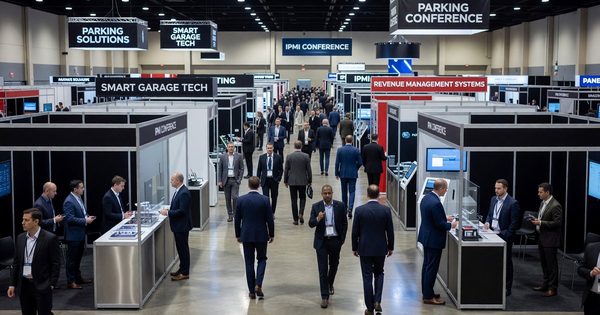
The IPMI 2027 Conference & Expo runs June 6–9, 2027 at the Gaylord Palms Resort & Convention Center in Orlando. The Call for Presentations opened on August 17, 2026 and closes September 10 — which makes this a short window, and one most people notice with about a week to spare.
IPMI’s own framing of who should submit is worth quoting as the starting point: you do not need to have all the answers, you need an idea, experience, or perspective that others can learn from. The conference programme is built around sessions that deliver actionable insight rather than finished theory.
Everything below the published guidance is general reviewing practice rather than IPMI policy. Confirm the current requirements, formats, and timeline on IPMI’s submission pages before writing anything.
The single distinction that decides most proposals
Reviewers are reading a large number of submissions, and the ones that survive nearly always answer a question the abstract makes explicit. The ones that fail describe a subject.
“Access control at universities” is a subject. “How we cut exit queue times at a 4,000-space campus garage after LPR did not deliver what we expected” is a question with an answer attached, and a reviewer can picture the session inside one sentence.
The test to apply to a draft: after reading the abstract, could a reviewer state what an attendee will be able to do differently? If not, the proposal is describing a topic and will be read as one.
What strong proposals have in common
A specific operational context. Facility size, ownership type, market, constraints. Reviewers building a balanced programme need to know whether this is a municipal on-street story or a private airport one, and specificity is also the fastest available proxy for whether the work actually happened.
Something that did not go to plan. Sessions where everything worked are the least useful hour at any conference, because nobody’s project is going to run that way. A proposal willing to name what was harder than expected is more valuable and more credible — and this is the natural reading of IPMI’s own “you do not need to have all the answers.”
Evidence the presenter will bring. Numbers, before-and-after, a policy document, an actual cost. A proposal that promises insight without indicating what will be shown is asking the reviewer to take the outcome on trust.
Takeaways written as actions. Three things an attendee can take back and use, phrased as things they can do. Learning objectives that begin “understand” or “be aware of” describe a state of mind and are not assessable.
A named audience. Who is this for — operators, municipal staff, university administrators, technology buyers, consultants? Proposals that claim to serve everyone tend to be scheduled against something that serves someone.
The recurring weaknesses
The vendor pitch in disguise. Programme committees are practised at spotting this and it is the fastest route to rejection. A supplier with genuinely useful material should co-present with the client whose site it is, and lead with the client’s problem rather than the product.
The solo panel. A proposal listing four speakers with no stated role for each reads as an unformed idea. If it is a panel, say what each person brings and who moderates.
Overclaiming. “Revolutionary,” “game-changing,” and “the future of parking” all make a reviewer more sceptical, not less. Concrete beats emphatic every time.
Recycled material. Reviewers frequently know the circuit. A talk that has run at three regional events without change is visible as one.
Submitting alone when the story is not yours alone. Operational results usually belong to a team and often to a partnership. Bringing the co-owner of the work strengthens both the proposal and the session.
Practical steps before September 10
- Read the programme policies, speaker benefits, timeline, and submission FAQ first. IPMI publishes all four, and formats and requirements change between years.
- Get any employer or client approval now. Permission to present a named site’s data is the thing most likely to be outstanding on the deadline, and it is not in your control.
- Draft the takeaways before the abstract. If three concrete actions cannot be written down, the session is not ready, and writing the abstract first will hide that.
- Have someone outside parking read it. If they cannot tell what the session is about, a reviewer skimming forty proposals will not either.
- Submit before the last day. Submission portals are busiest and least forgiving at the end, and a technical problem on the closing afternoon has no remedy.
A proposal that names a real problem, a real site, a real result including the parts that went badly, and three things an attendee can do on Monday, will be read carefully. That is most of what a programme committee is looking for, and it is achievable inside two weeks.