The parking industry’s largest annual gathering returns to the Midwest this summer. The IPMI Parking & Mobility Conference & Expo runs June 14–17, 2026 at the Baird Center in Milwaukee, Wisconsin — and the agenda reflects an industry that’s moved well past its identity crisis and into active transformation.
For operators, consultants, engineers, and technology buyers who haven’t made it to an IPMI Conference before, this is the piece you should read before booking your flight. For veterans, it’s a look at what’s shaping the session tracks and expo floor conversation this year.
What IPMI Is — and Who Actually Attends
The International Parking & Mobility Institute is the professional association for the parking and transportation demand management industry. Founded in 1962 as the Institutional and Municipal Parking Congress (IMPC), IPMI has evolved alongside the industry itself — broadening its scope from parking operators into a full mobility and transportation management association that now covers curbside management, shared mobility, EV infrastructure, and transportation demand management alongside traditional parking operations.
The annual Conference & Expo is the organization’s flagship event, drawing more than 2,500 professionals from 20+ countries. The attendee mix is worth understanding because it shapes how the conference is structured and what gets covered:
- Municipal and university parking directors — public agency operators managing owned or contracted facilities, focused heavily on policy, enforcement technology, and public-facing customer experience
- Airport parking operators — managing complex, high-volume environments where revenue optimization, PARCS reliability, and multi-modal connections are operational priorities
- Commercial parking operators — independent and branded operators running garages and surface lots for owners and building managers; strong interest in yield management, technology integration, and labor
- Consultants and engineers — parking and transportation planning firms advising on facility design, demand studies, and technology selection
- Technology vendors and suppliers — PARCS manufacturers, software platforms, EV charging providers, signage companies, lighting, enforcement technology — the Expo floor is dominated by this group
The Certified Administrator of Public Parking (CAPP) credential offered by IPMI is the industry’s primary professional certification, and continuing education points are a significant draw for CAPP holders and candidates. Each education session awards 1 CAPP point; the full conference offers up to 8.
The Major Themes at IPMI 2026
EV Charging Infrastructure: From Planning to Operations
EV charging has dominated the IPMI agenda for three consecutive years, but the conversation has matured. Early sessions focused on whether operators should invest in EVSE and how to size initial buildouts. That debate is largely over — the question is no longer if but how well.
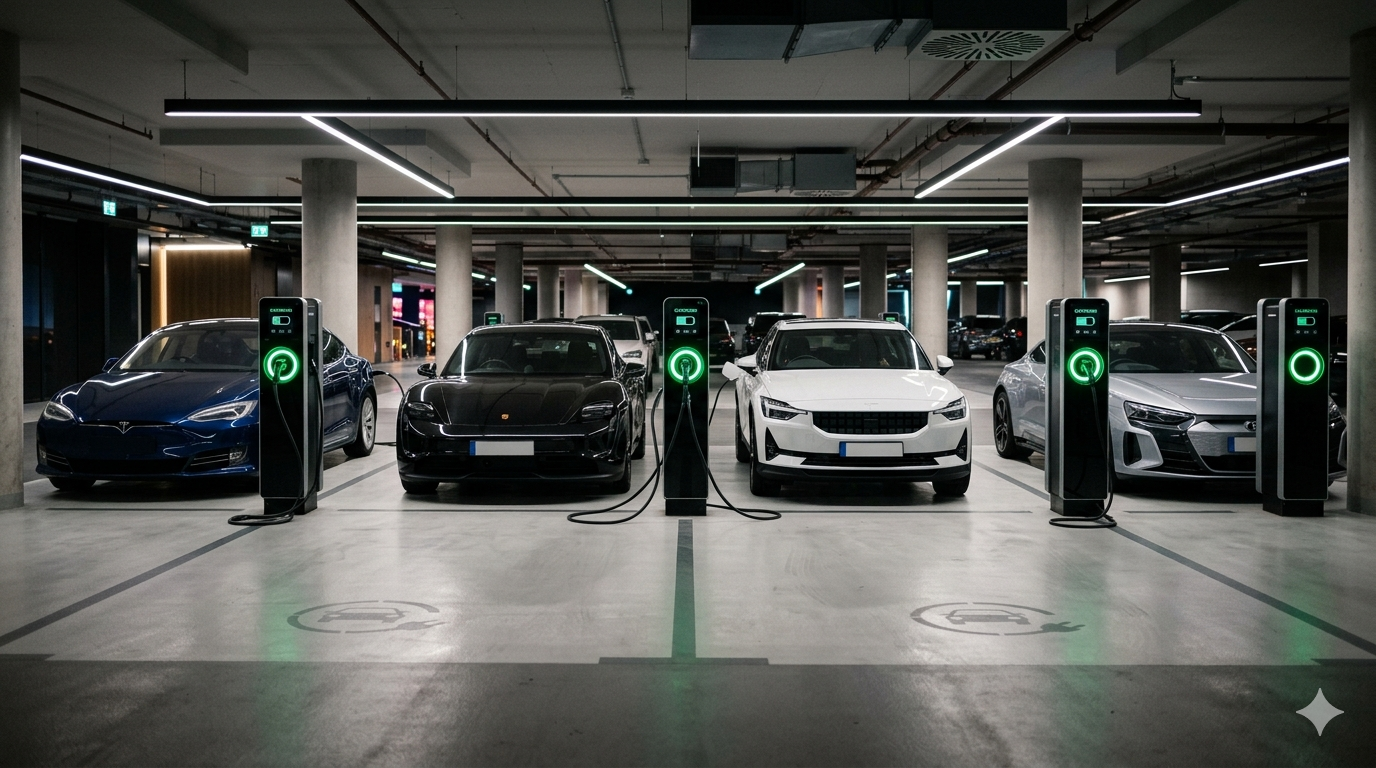
The 2026 sessions are expected to drill into operational complexity: how facilities manage load balancing across mixed-power charging installations (Level 2 alongside DC fast chargers), how to integrate EVSE network data with PARCS and facility management systems, and how to structure EV charging as a managed revenue line rather than an amenity add-on.
The National Electric Vehicle Infrastructure (NEVI) formula program continues to push significant federal funding into charging corridor development, and parking facilities are positioned at critical nodes in that network. IPMI sessions will likely address how parking operators can position themselves as NEVI-compliant deployment partners — a meaningful revenue and relevance opportunity for facilities with the right grid connections and square footage.
The DOE’s Alternative Fuels Data Center provides publicly available guidance on EV infrastructure planning that operators evaluating EVSE investments should consult alongside any vendor proposals.
AI and Automation: Sorting Signal from Noise
Artificial intelligence is the most hyped and least consistently defined term in parking technology marketing. IPMI 2026 sessions reflect what the broader industry is trying to do: establish a grounded baseline for what AI actually does in parking operations, what it costs, what it requires to work, and how to evaluate vendor claims.
Practically useful AI applications in parking — demand forecasting models, computer vision for occupancy sensing, LPR-integrated enforcement automation, and predictive maintenance for PARCS equipment — are distinct from the speculative AI applications vendors have been pitching for several years (fully autonomous parking guidance, dynamic real-time price optimization across fragmented data sources). Sessions are expected to help operators build evaluation frameworks that distinguish between these categories.
Crystal Washington, a technology futurist and keynote speaker at this year’s conference, is scheduled to address how AI is reshaping organizational decision-making — a broader framing that will resonate with operators navigating how to integrate AI tools into existing workflows and staffing models without operational disruption.
Revenue Management Technology
Yield management — setting prices dynamically based on demand signals, competitive positioning, and occupancy forecasts — has been standard practice in airline and hotel revenue management for decades. Parking has lagged, partly because the technology infrastructure required (reliable real-time occupancy data, flexible rate-setting capabilities in PARCS, and consumer-facing channels where dynamic pricing can be communicated) hasn’t been uniformly available.
That infrastructure gap has closed significantly in the past few years. Session topics at IPMI 2026 are expected to address how operators can build revenue management programs using data already available in modern parking platforms, how to structure yield-optimized rate programs for different facility types (airport long-term versus downtown transient), and how to evaluate whether standalone revenue management platforms justify their cost against native capabilities in upgraded PARCS.
For operators still running older PARCS platforms with limited rate flexibility, the revenue management track will also cover the business case for modernization — a perennial IPMI topic, but one with sharpening urgency as the gap between current-platform capabilities and market-available capabilities widens.
Sustainability, Adaptive Reuse, and the Facility’s Future Role
Parking demand is not declining uniformly — but it is declining in specific markets, asset classes, and time-of-day patterns in ways that are difficult to reverse. Minimum parking reform at the municipal level has accelerated since 2021, with cities including Minneapolis, Buffalo, and Portland eliminating or significantly reducing parking minimums. The downstream effect on surface lot values and the long-term case for new structured parking construction is not yet fully worked out.
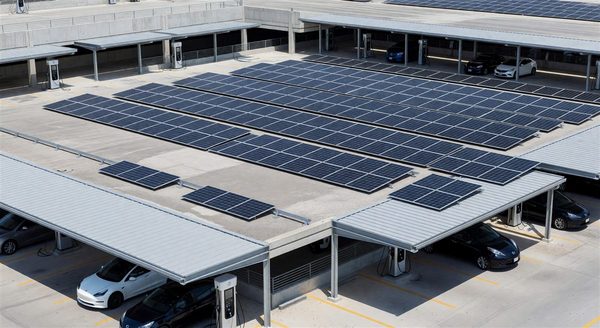
IPMI 2026 sustainability sessions will address both the environmental and strategic dimensions of this shift. Environmental topics will include solar canopy installation on surface lots (turning underutilized real estate into revenue-generating infrastructure), EV-ready garage design standards, and stormwater management for paved surfaces. Strategic sessions will address adaptive reuse — the growing body of work on converting structured parking garages to mixed-use when demand warrants — and how parking operators should be thinking about portfolio flexibility now.
Navigating the Expo Floor: What First-Timers Should Know
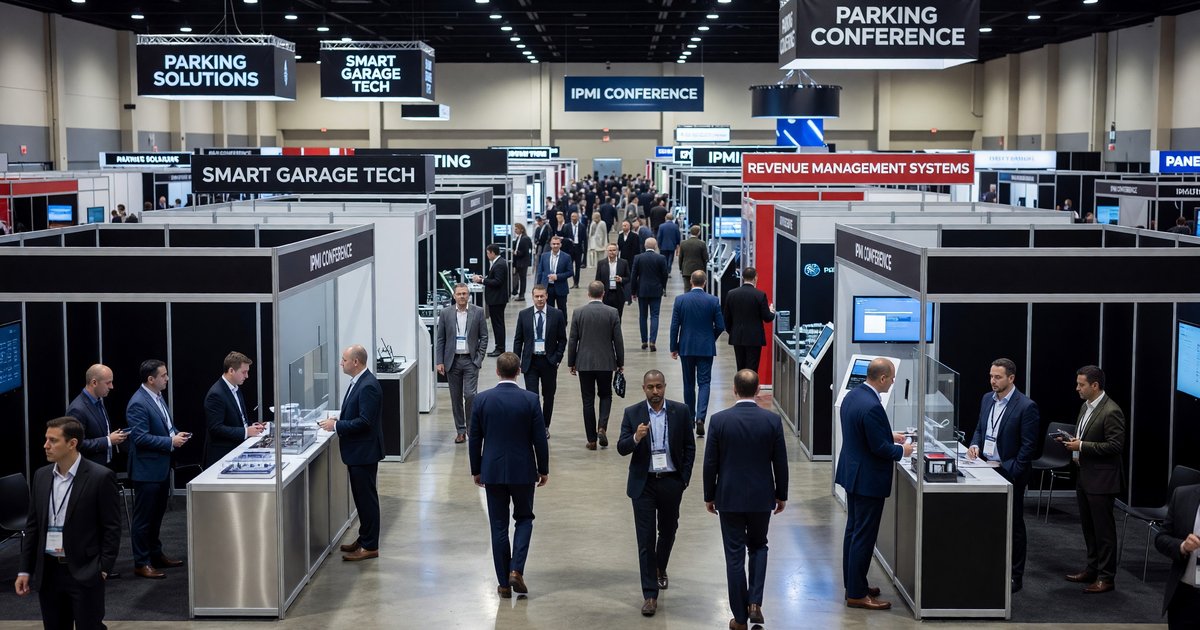
The IPMI Expo is the industry’s largest concentrated display of parking and mobility technology, and it is large enough to be genuinely disorienting if you walk in without a plan. Exhibitors range from large PARCS manufacturers with full system demos to niche software providers showing single-function integrations.
Map the floor in advance. IPMI publishes the exhibitor floor plan and company directory before the event. Identify the specific categories of technology or services you’re evaluating — PARCS, EV charging networks, LPR enforcement, mobile pay platforms, revenue software — and map those exhibitors before you arrive. Walking the full expo floor without a target list is an efficient way to spend several hours and leave without actionable conversations.
Prioritize Sponsored Learning Labs for product deep-dives. These sessions are hosted by exhibiting companies but structured as educational presentations rather than sales pitches. They’re the most efficient way to understand what a platform actually does, how it’s implemented, and what the integration requirements are — in 45 minutes rather than a series of demos spread across the expo floor.
Use Shoptalks for peer benchmarking. Shoptalks are IPMI’s facilitated peer-discussion format — open conversations organized around specific operational topics. For first-timers, these are more valuable than they appear on the agenda. The conversations surface what operators at peer institutions are actually struggling with, what’s working, and what vendor promises haven’t delivered. Moving to Wednesday in 2026 with pre-registration required — plan accordingly.
Build in networking time deliberately. The most durable value from IPMI for most attendees isn’t the sessions — it’s the relationships. Every coffee break, lunch, and evening networking event is an opportunity to have conversations that don’t happen in any other setting. First-timers consistently underestimate how much of the conference value happens outside the session rooms.
Wear comfortable shoes. Milwaukee’s Baird Center is a modern convention facility, but full expo floor days with sessions across multiple levels add up. This is consistent IPMI veteran advice across every conference city.
IPMI also hosts a First-Timers Chat before the conference itself — a virtual session offering logistics, navigation, and community introductions before you land in Milwaukee. It’s worth attending.
Why IPMI Matters to the Industry
The parking industry has a fragmented professional landscape. There’s no single licensing body, no universal operating standard, and no shared certification that every operator holds. IPMI is the closest thing to an industry anchor — setting the agenda for professional education through the CAPP program, publishing Parking & Mobility magazine, conducting industry research, and convening the annual conference as the de facto state-of-the-industry meeting.
That institutional role gives the Conference & Expo outsized influence on what the industry talks about. Topics that make it onto the IPMI session agenda tend to be the topics that show up in budget conversations, technology evaluations, and strategic plans across organizations that never send anyone to Milwaukee. IPMI 2025 sessions on EV charging and PARCS modernization preceded a significant uptick in operator investment planning in both categories. The 2026 agenda’s emphasis on AI evaluation frameworks and revenue management will likely have a similar downstream effect.
For technology buyers specifically, the Expo floor is an efficient way to compress a year’s worth of vendor research into three days. The concentrated competitive environment — where peer vendors are exhibiting 20 booths away from each other — creates pressure that tends to produce clearer capability claims and more honest answers to hard questions than you’ll get in a single-vendor sales process.
Frequently Asked Questions
When and where is the IPMI 2026 Conference & Expo?
The IPMI Parking & Mobility Conference & Expo runs June 14–17, 2026 at the Baird Center in Milwaukee, Wisconsin. The Baird Center is Milwaukee’s convention facility, located downtown adjacent to the Wisconsin Center. Registration and full event information are available at ipmi.parking-mobility.org/2026.
Who attends the IPMI Conference?
Approximately 2,500+ professionals from 20+ countries attend annually. The attendee mix includes parking and mobility directors from municipal governments, universities, airports, and healthcare facilities; commercial parking operators; transportation demand management consultants; facility engineers and architects; and technology vendors and suppliers. It is the primary annual gathering for the professional parking industry in North America.
What is CAPP and how does it relate to IPMI?
CAPP — Certified Administrator of Public Parking — is IPMI’s professional certification program for parking managers and directors. The credential requires a combination of experience, education, and an examination, and it must be maintained through continuing education. The IPMI Conference awards up to 8 CAPP Points; each individual education session awards 1 point. CAPP holders and candidates represent a significant portion of the conference’s education-session attendees.
What technology categories are best represented on the Expo floor?
The IPMI Expo floor is strongest in PARCS hardware and software, parking access control systems, license plate recognition technology, mobile payment platforms, enforcement technology, wayfinding and signage, EV charging equipment and network management, parking guidance systems, revenue management software, and facility management integrations. Virtually every significant supplier to North American parking operators exhibits.
Is the IPMI Conference valuable for technology buyers, not just operators?
Yes — and the Expo floor is specifically designed for technology evaluation. The density of competing vendors, combined with Sponsored Learning Lab sessions that provide structured product education, makes it significantly more efficient than a series of individual vendor evaluations. Buyers who arrive with a clear product category focus and pre-mapped exhibitor list typically complete more substantive vendor conversations in three days than they would in months of remote evaluation.
The IPMI 2026 Conference & Expo runs June 14–17 at the Baird Center in Milwaukee. For registration, agenda details, and exhibitor information, visit parking-mobility.org/conference-expo.