Dynamic parking pricing — adjusting rates based on demand rather than maintaining static rates independent of occupancy — has evolved from a theoretical transportation economics concept to a widespread operational practice in municipal and commercial parking. The evidence from deployed programs, the technology enabling more sophisticated rate management, and the growing acceptance of demand-responsive pricing among parking consumers make dynamic pricing one of the defining trends in parking operations over the past decade. Understanding how pricing programs are structured, what the evidence shows about their effectiveness, and what implementation challenges remain helps operators and municipalities evaluate their own pricing strategies.
The Economic Case for Dynamic Pricing
Static parking rates leave money on the table in two distinct ways:
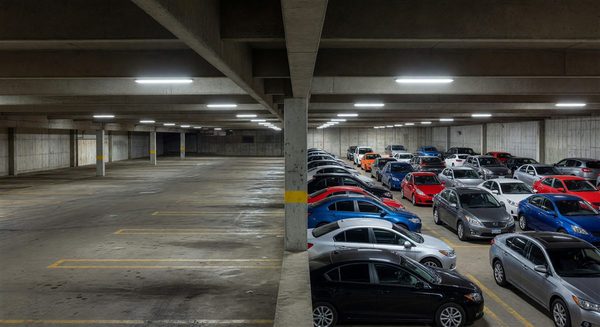
Underpriced peak periods: When facility occupancy regularly exceeds 85 to 90 percent, the rate is below the market-clearing price — more demand exists than supply, and some customers are being served at below-optimal rates while others circle looking for space or park elsewhere. A rate increase that reduces occupancy to 85 percent can generate higher total revenue (fewer transactions at a higher average price) while also improving customer experience through reduced search time.
Overpriced off-peak periods: When occupancy falls below 50 percent during regular operating hours, the rate may be deterring demand that would otherwise use the facility — customers who would park at a lower price are choosing alternatives rather than contributing revenue. A rate reduction that fills otherwise-empty stalls generates incremental revenue at minimal cost (the space was empty anyway).
Dynamic pricing addresses both inefficiencies by adjusting the rate continuously toward the level that achieves target occupancy — typically 80 to 90 percent peak occupancy.
SFpark: The Benchmark Municipal Program
San Francisco’s SFpark program, launched in 2011 and subsequently expanded, is the most extensively studied dynamic on-street parking pricing program in North America. The program used sensor-based real-time occupancy data to adjust metered rates by time of day and block, targeting 80 percent occupancy.
SFMTA (San Francisco Municipal Transportation Agency) and academic evaluators documented:
- Average rate reductions in many areas (demand was below target levels) rather than only increases
- Reduced vehicle miles traveled looking for parking in pilot areas
- Reduced double-parking (a proxy for difficulty finding spaces)
- Improved overall driver satisfaction compared to control areas
The SFpark findings challenged the assumption that dynamic pricing primarily increases rates; in practice, the program reduced rates in areas with excess supply as frequently as it increased rates in areas with high demand.
Commercial Parking Dynamic Pricing
Commercial parking operators have deployed dynamic pricing in multiple forms:
Event-based pricing: The most common commercial dynamic pricing practice is event-based rate increases — higher rates on days of major events at nearby venues. This has long been standard practice, even before formal dynamic pricing programs.
Advance purchase pricing: Reservation-based advance purchase pricing effectively implements demand-based pricing — earlier purchases (less certain demand) receive lower prices; prices increase as an event approaches and inventory fills.
Time-of-day tiering: Differential rates by time of day (morning vs. afternoon, weekday vs. weekend) are a simple form of demand-responsive pricing that doesn’t require real-time occupancy data to implement.
Algorithmic rate optimization: More sophisticated commercial operators use algorithmic rate management — software that adjusts transient rates based on real-time occupancy and demand forecasts — to optimize revenue continuously rather than through manual rate schedule management.
Airport parking rate management: Airport economy lot and garage pricing has become increasingly dynamic, with prices varying by departure date, booking lead time, and advance purchase. Most major airport parking operators now use some form of demand-responsive pricing for advance reservations.
Consumer Acceptance
Dynamic pricing is more accepted in parking than in many other consumer contexts (hotel room rates and airline fares have normalized it over decades). The key factors affecting consumer acceptance:
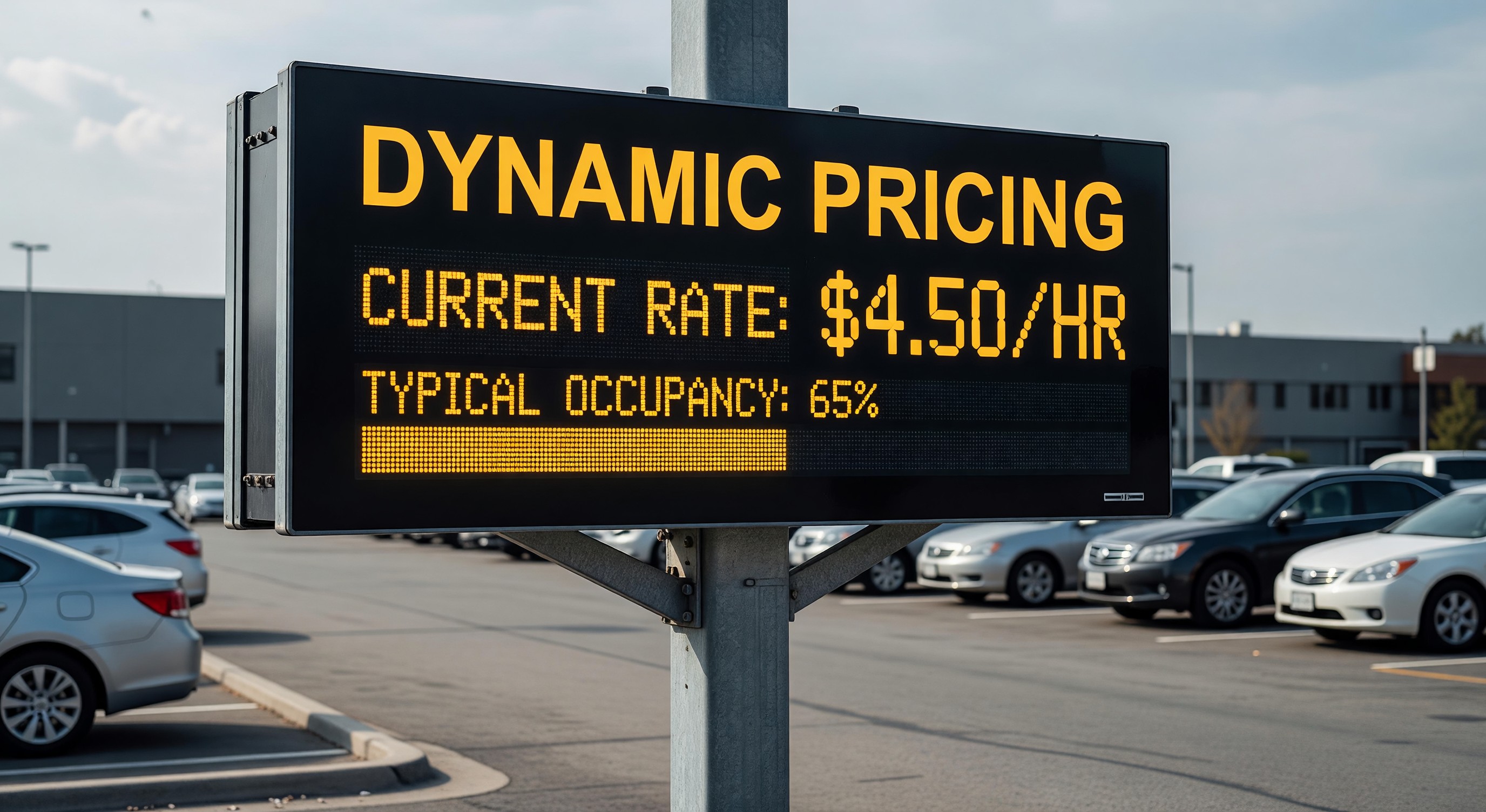
Transparency: Dynamic rates that are disclosed clearly at the point of purchase (before the driver commits to the facility) are accepted more readily than rate surprises at exit. Digital rate display signs and app-based rate information improve transparency.
Perceived fairness: Consumers who understand that lower rates are available at off-peak times and that peak rates reflect high demand are more accepting than those who perceive rate increases as arbitrary gouging. Rate communication that explains the occupancy-rate relationship improves acceptance.
Maximum rate expectations: Consumers become more upset when rates exceed expectations than when rates fall below expectations. Setting and honoring maximum rate caps reduces the most significant acceptance risk.
Technology Enabling Dynamic Pricing
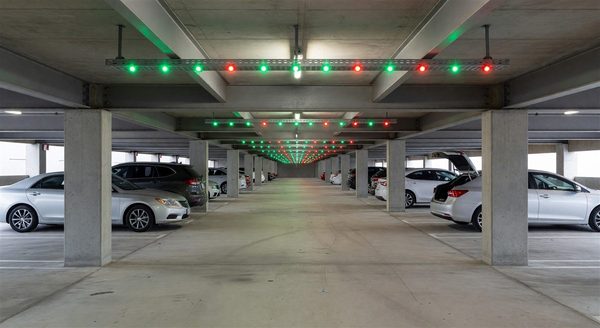
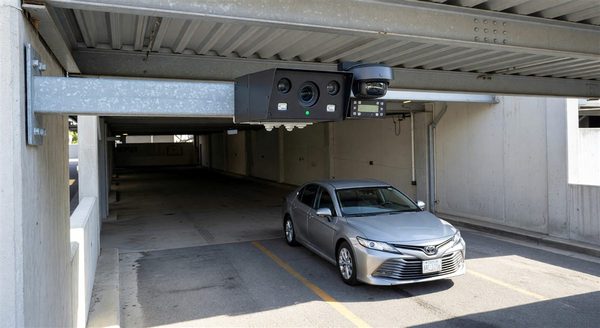
Real-time occupancy data: Accurate, real-time occupancy monitoring (whether from PARCS entry/exit counts, per-space sensors, or parking guidance systems) is the data foundation for occupancy-targeted dynamic pricing.
Rate management APIs: PARCS platforms with rate management APIs that allow external systems to update rates programmatically enable automated dynamic rate deployment — rate changes recommended by a revenue management algorithm can be pushed to the PARCS without manual entry.
Digital rate display: Electronic message signs and app-based rate information that update in real time when rates change are essential for consumer transparency in dynamic pricing programs.
Mobile app pricing integration: Reservation platforms and mobile payment apps that display current rates at nearby facilities enable price-sensitive customers to make facility choices based on current pricing, creating competitive pricing pressure that limits maximum rate levels in markets with multiple facilities.
Implementation Challenges
Regulatory constraints: Municipal on-street parking is often subject to city council rate-setting authority that requires legislative action for any rate change. Delegating rate-setting authority to administrative staff (within defined bounds) is a prerequisite for operational dynamic pricing in many cities.
Consumer communication: Communicating rate variability to consumers who are accustomed to posted static rates requires investment in rate display and communication infrastructure.
Rate change operational process: For operators without automated rate management, manual rate changes at the PARCS and digital signage require staff time and create execution risk (signs that reflect a different rate than the PARCS are charging).
Equity concerns: Rate increases in high-demand areas disproportionately affect price-sensitive parkers who cannot adjust their schedule for lower-cost time periods. Municipal programs have addressed this through reduced-rate alternatives (transit, subsidized parking programs) alongside dynamic pricing.
Frequently Asked Questions
How much revenue improvement does dynamic pricing deliver for parking facilities? Commercial programs with actively managed dynamic pricing report revenue improvements of 5 to 15 percent compared to static rate alternatives, concentrated in facilities with significant demand variability. The improvement is highest for facilities that are frequently near full at peak hours and significantly underutilized at off-peak hours.
Does dynamic pricing reduce total parking demand? Studies of dynamic pricing programs show that properly targeted dynamic pricing redistributes demand across time periods more than it reduces total demand. Total parking demand is relatively price-inelastic — people generally need to park where they need to go. Pricing primarily shifts which time periods and which facilities get demand, not whether parking occurs at all.
What is the minimum technology required to implement dynamic pricing? At minimum: PARCS with rate schedule management capability (ability to set different rates by time period without physical hardware changes), and a process for updating rates in advance. More sophisticated dynamic pricing requires occupancy monitoring, rate management APIs, and digital rate display.
Are there legal constraints on how frequently parking rates can change? Private commercial parking facilities have broad flexibility to change rates at any frequency. Municipal on-street parking is more constrained — specific rate-setting processes and public notice requirements may apply depending on jurisdiction. Rate changes that affect advance reservations already made at a confirmed price require honoring the confirmed rate.
Takeaway
Dynamic parking pricing has moved from transportation economics theory to standard operational practice in commercial parking and an expanding range of municipal programs. The evidence — most extensively from SFpark and commercial airport programs — confirms that demand-responsive pricing can improve revenue, reduce search time, and improve customer experience when implemented transparently with clear consumer communication. The technology to support continuous rate optimization is increasingly accessible through PARCS platforms with rate management APIs and real-time occupancy data. For operators evaluating their rate strategy, the question is no longer whether dynamic pricing works, but how to implement it at a level of sophistication appropriate to the facility’s demand variability and operational capacity.
Further Reading from Authoritative Sources
- IPMI dynamic pricing guidance and parking revenue management resources — The International Parking and Mobility Institute publishes revenue management guidance for parking operators, including dynamic pricing strategies and implementation frameworks directly relevant to the article.
- Transportation Research Board SFpark evaluation and parking pricing research — The Transportation Research Board has published evaluations of the SFpark program and broader parking pricing research that provides the primary evidence base for the dynamic pricing effectiveness claims discussed in the article.