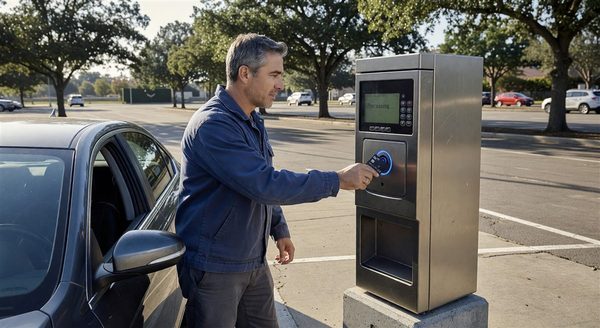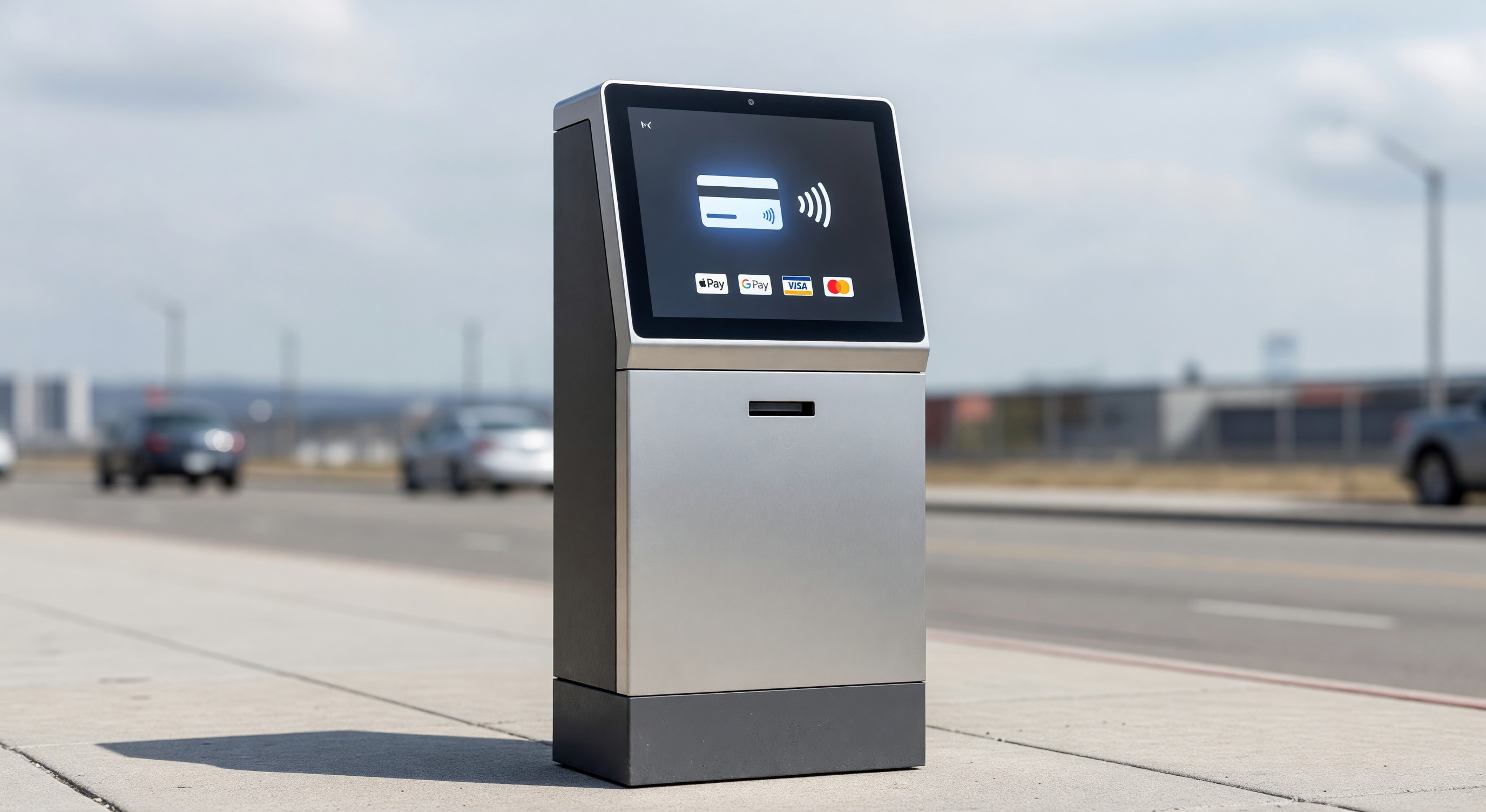
The shift toward cashless parking operations — accepting card and mobile payment while eliminating physical cash — accelerated significantly during the COVID-19 pandemic, as contactless payment became a health consideration alongside a convenience one. Several major cities and commercial operators made cash-free transitions during 2020-2021; others have done so since. The cashless trend reflects genuine operational benefits for operators, but raises legitimate equity concerns about access for unbanked and underbanked populations that operators and policymakers must address thoughtfully.
Why Operators Are Moving Away from Cash
Revenue control improvement: Cash is the highest-risk payment method for revenue leakage — physical handling creates opportunities for diversion between collection and deposit that card transactions eliminate. Cashless operations reduce the complexity of revenue control procedures, eliminate the need for cash counting infrastructure, and reduce variance risk.
Operational efficiency: Cash handling requires vault management, cash counting staff, deposit preparation, bank transport, and counterfeit detection — all overhead that cashless operations eliminate. For unattended facilities, cashless operation removes the need for vault pickups and significantly reduces the operational complexity of operating without on-site staff.
Equipment simplification: Pay stations without bill validators and coin mechanisms are simpler, lower-cost, and more reliable than cash-accepting units. Fewer mechanical components mean fewer failure modes.
Security reduction: Facilities with significant cash on-site are targets for robbery and break-in attempts. Removing cash from the facility reduces security risk and insurance cost.
Reconciliation simplification: Cashless operations eliminate the daily cash reconciliation workflow — settlement reports from payment processors reconcile directly against PARCS transaction records without the physical cash counting and deposit verification steps.
Operational Benefits for Customers
Transaction speed: Card and contactless payment transactions typically process in 3 to 10 seconds at a pay station; cash transactions take 30 to 90 seconds including counting, change dispensing, and receipt. In high-volume facilities, cashless transactions improve throughput at pay stations and exit lanes.
No change required: Drivers who have never carried sufficient change for a parking meter are the customers most naturally served by cashless systems.
Receipt and record-keeping: Card transactions produce automatic digital receipts through email or app, supporting expense reimbursement workflows. Cash transactions require physical receipt retention.
Equity Concerns: The Unbanked and Underbanked Population
The most significant concern with cashless parking is access for the unbanked and underbanked population. Federal Reserve surveys have consistently found that 5 to 7 percent of U.S. households are unbanked (no checking or savings account) and an additional 13 to 16 percent are underbanked (have a bank account but use alternative financial services). These populations cannot use debit or credit cards and cannot access cashless parking facilities.
The unbanked and underbanked population is not uniformly distributed — it is higher in lower-income communities, communities of color, immigrant communities, and older adult populations. Cashless parking policies that effectively deny service to these groups raise equity concerns that are both ethical and, in some jurisdictions, legally relevant.
Who is most affected: Unbanked individuals who need to access parking for medical appointments, employment, childcare, or other essential services — particularly in areas where transit is inadequate — face real access barriers from cashless parking.
Regulatory and Legal Requirements
Several jurisdictions have enacted or are considering laws that require businesses including parking facilities to accept cash:
New Jersey: Among the first states to require cash acceptance at most businesses, New Jersey’s 2019 law (with limited exceptions) requires retail establishments to accept cash.
Philadelphia, San Francisco, New York City: These cities have enacted similar requirements, generally requiring acceptance of cash at businesses serving consumers in person.
Massachusetts: A long-standing state law requires acceptance of legal tender for in-person transactions.
Parking operators should confirm the cash acceptance legal requirements in each jurisdiction where they operate before implementing cashless policies. Violations can result in fines and enforcement actions.
Hybrid Approaches
Cash-to-card kiosks: Some operators address equity concerns through cash-to-card conversion kiosks — machines that accept cash and issue prepaid debit cards that can be used at cashless pay stations. This approach maintains cash accessibility without requiring cash-accepting pay stations at each parking location.
Cash payment at attended point: Facilities with an attended booth or office maintain cash acceptance at the attended location while deploying cashless unattended pay stations in the field. Customers who need cash access can use the attended location.
Reduced cash hours: Some operators accept cash during attended hours and operate cashless during unattended periods, reducing cash handling complexity while maintaining daytime access.
Prepaid parking cards: Operator or third-party prepaid parking cards that can be purchased with cash and used like debit cards at cashless pay stations provide a cash-accessible entry point to cashless payment systems.
Consumer Communication
The cashless transition creates a customer service challenge for customers who expect to pay with cash:
Advance notice: Cashless policy changes should be communicated in advance — signage at the facility before the effective date, communication to monthly parker accounts, and website updates.
Clear on-site communication: Pay stations and facility signage should clearly communicate what payment methods are accepted, with visible guidance for customers who cannot use accepted methods (proximity to a cash-to-card kiosk or attended booth).
Staff training: Any facility staff or call center that receives customer service contacts should be trained to explain the cashless policy and direct customers to accessible payment alternatives.
Frequently Asked Questions
Can a parking facility legally go completely cashless? In some jurisdictions, yes; in others, no. The legal requirement to accept cash depends on applicable state and local law. New Jersey, Massachusetts, Philadelphia, San Francisco, New York City, and other jurisdictions have enacted cash acceptance requirements that would prevent a fully cashless operation. Operators should obtain legal confirmation of applicable requirements in each jurisdiction before implementing cashless policies.
How significant is the unbanked population as a share of parking customers? The share varies by facility type, location, and customer demographics. Airport long-term parking and premium downtown commercial facilities serve populations with higher card ownership rates. Surface lots in lower-income urban neighborhoods may serve a higher unbanked fraction. Facility-level assessment of customer demographics is more relevant than national averages.
Does cashless parking actually reduce revenue leakage significantly? Yes. Revenue control audits consistently find that cash handling is the highest-risk revenue leakage point in parking operations. Eliminating cash eliminates the physical diversion risk — card and mobile transactions create an automatic audit trail that cash does not. Operators who move to cashless operations consistently report simplified reconciliation and reduced variance investigation requirements.
What happens when card payment systems go offline in a cashless facility? Contingency planning is essential for cashless operations. Offline card processing (store-and-forward authorization when connectivity is temporarily lost) can maintain transaction capability during short outages. Extended outages may require manual alternative payment procedures (license plate logging, honor system with retroactive collection) or temporary cash acceptance with appropriate controls. Confirmed backup procedures should be documented and tested before cashless deployment.
Takeaway
The cashless parking transition delivers genuine operational benefits — improved revenue control, simplified operations, faster transactions, and reduced security risk — that have driven broad adoption among operators who have operational flexibility to implement it. The equity concerns are real and require deliberate response: either compliance with cash acceptance law, hybrid payment accessibility approaches, or clear service alternatives for cash-dependent customers. Operators who approach cashless implementation with equity considerations and legal compliance at the center of the decision rather than as afterthoughts will make more sustainable transitions than those who discover legal or community relations issues after deployment.
Further Reading from Authoritative Sources
- IPMI parking operations resources on cashless payment transition and customer management — IPMI provides parking operations guidance on payment modernization and cashless transition strategies that directly address the phased implementation, customer communication, and equity considerations described in this article.
- US DOT transportation equity and performance management framework for cashless transition planning — The US DOT transportation performance and equity framework provides federal-level guidance on transportation accessibility and equity considerations that apply to parking payment policy decisions, particularly for facilities serving public or mixed-income populations described in this article.