Six months ago, touchless parking technology was a differentiator. Operators who offered contactless payment, license plate recognition entry, or mobile-first parking experiences positioned themselves as innovative — forward-thinking operations that had invested ahead of the curve. Their competitors planned to get there eventually. There was no rush.
Then a pandemic compressed a decade of technology adoption into a matter of months.
Today, touchless is not a premium feature. It is becoming the baseline expectation for any parking operation that wants to retain customers and attract new ones. The shift has been so rapid and so thorough that the parking industry’s technology landscape in September 2020 would be nearly unrecognizable to someone who stopped paying attention in January.
This article examines the major touchless technologies reshaping parking, where they stand today, and what operators need to know as they plan investments that will define their operations for years to come.
Contactless Payment: The Foundation
Payment was the first and most obvious touchpoint to go contactless, and the technology options have matured quickly under the pressure of pandemic-driven demand.
Tap-to-Pay Cards
Near-field communication payment — commonly known as tap-to-pay — has been available on credit and debit cards for years, but adoption in the parking industry lagged behind retail and transit. The technology is straightforward: a parker taps their enabled card against a reader, and the transaction processes without inserting, swiping, or entering a PIN.
The pandemic has driven both consumer and operator interest in tap-to-pay to record levels. Visa reported that contactless transactions in the U.S. grew by more than 150 percent since March 2020, with the PCI Security Standards Council updating guidelines to reflect the shift toward contactless payment acceptance. In Canada, where tap-to-pay adoption was already much higher, contactless payments now represent the majority of in-person card transactions.
For parking operations, tap-to-pay offers a compelling combination of low friction, high speed, and zero contact. A tap transaction at a parking pay station takes two to three seconds, compared to ten seconds or more for a chip-and-PIN transaction. That speed improvement matters both for parker convenience and for throughput at busy exit lanes.
The hardware requirements are manageable. Most modern parking payment terminals and pay stations already include NFC readers. Operators running older equipment may need terminal upgrades, but the cost is modest compared to the transaction volume these systems process.
Mobile Wallets
Apple Pay, Google Pay, and Samsung Pay extend the tap-to-pay concept to smartphones and smartwatches. For parkers who may not carry a contactless-enabled card, mobile wallets provide an alternative that is equally touchless and often more convenient — most people have their phone in hand more readily than their wallet.
Mobile wallet adoption in parking has followed the broader consumer trend. Younger demographics who had already shifted to mobile payment for everyday purchases adopted it for parking without hesitation. Older demographics, initially more resistant, have been nudged toward mobile wallets by pandemic concerns about touching shared surfaces.
Operators benefit from mobile wallet transactions in ways beyond the contactless advantage. Mobile wallets have lower fraud rates than physical card transactions, the authentication is handled by the device (fingerprint or face recognition), and the transaction processing is faster.
QR Code Payment
QR codes have experienced a renaissance in 2020 that would have seemed improbable two years ago. In the parking context, QR code payment works by displaying a code on the pay station, meter, or parking sign that the parker scans with their phone. The scan opens a mobile payment page where the parker completes the transaction entirely on their own device.
The appeal of QR code payment for parking is significant. The parker never touches the parking equipment at all. The operator does not need to install NFC readers or upgrade payment terminals. And the system works with any smartphone with a camera — no app download required.
Several parking technology providers have rolled out QR code payment solutions since March, and adoption has been rapid. Municipalities are particularly interested because QR codes can be added to existing meter infrastructure with nothing more than a weatherproof sticker, dramatically reducing the cost and timeline of going contactless.
The user experience of QR code parking payment has improved substantially from early implementations, which often involved clunky mobile web pages and confusing workflows. Current systems streamline the process to scan, confirm the location, enter the duration or license plate, and pay — a flow that takes under a minute for most users.
License Plate Recognition: The Touchless Gateway
License plate recognition technology has been available for parking applications for well over a decade, but adoption was historically concentrated in enforcement and high-volume facilities. COVID-19 has repositioned LPR as the cornerstone technology for touchless parking access.
How LPR Eliminates Touchpoints
In a traditional gated parking facility, a driver enters by taking a ticket from a dispenser (touch), parks, returns to a pay station (touch), inserts the ticket (touch), pays (touch), retrieves the ticket (touch), drives to the exit, and inserts the ticket in the exit reader (touch). That is six or more contact points in a single parking session.
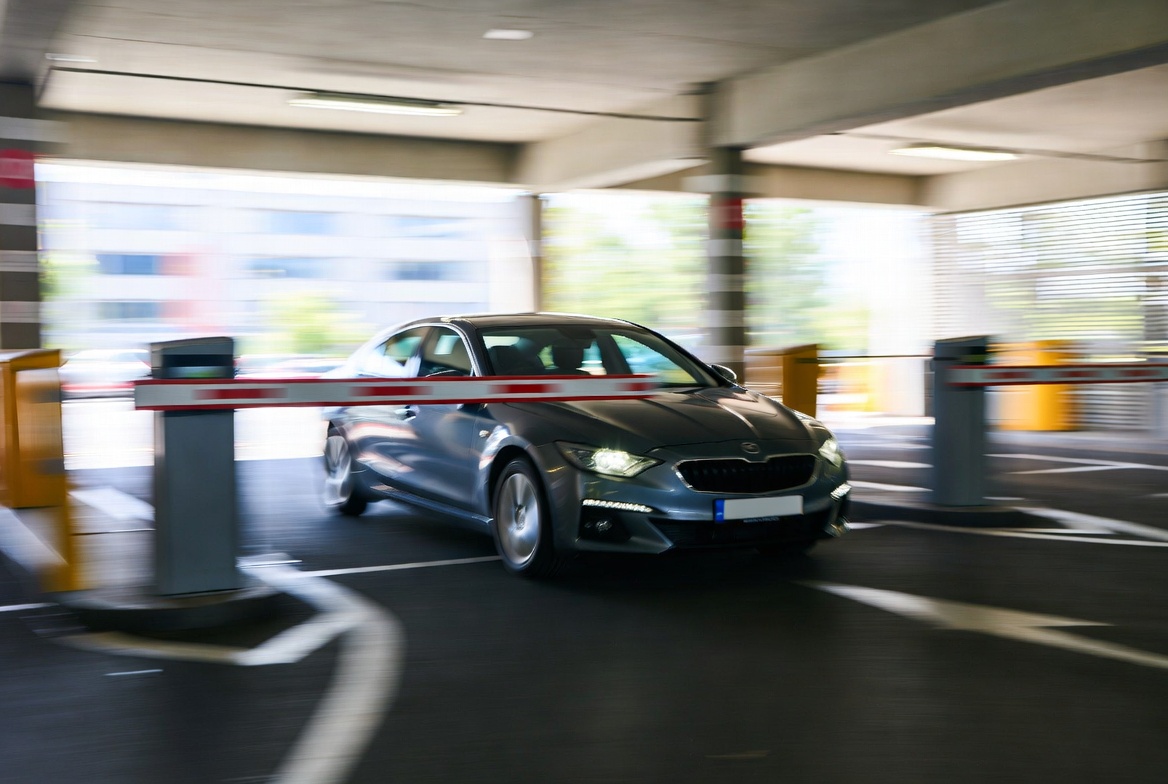
LPR-based access replaces all of these touchpoints with a single camera read. The vehicle’s license plate is captured at entry, the system tracks the parking session, and at exit, a second camera read identifies the vehicle and calculates the fee. Payment can be handled through a pre-registered account, a mobile app, or a contactless pay station — all without the driver touching any shared equipment.
The reduction in contact points is dramatic. A fully LPR-enabled facility with mobile payment can deliver a completely touchless experience from entry to exit.
Technology Maturation
LPR accuracy has improved substantially in recent years. Modern systems using deep learning algorithms achieve read rates above 98 percent in controlled conditions, with some manufacturers reporting 99 percent or higher. This level of accuracy is sufficient for most parking applications, particularly when combined with secondary identification methods for the small percentage of misreads.
Camera hardware has improved in parallel. High-resolution sensors, infrared illumination for nighttime operation, and weather-resistant housings make modern LPR cameras reliable in conditions that would have challenged earlier generations of the technology. Installation has become simpler too, with IP-based cameras that connect to existing network infrastructure rather than requiring dedicated cabling.
Integration Challenges
The primary barrier to LPR adoption is not the technology itself but the integration work required to connect it with existing parking management systems. Many facilities run on legacy platforms that were not designed with LPR in mind, and the integration effort can be substantial.
Operators considering LPR deployment need to evaluate not just the camera and recognition software, but the entire data flow — from plate capture to session management to payment processing to exception handling. Payment systems that are designed from the ground up with LPR integration in mind offer a smoother path than retrofitting LPR onto legacy platforms.
Facilities that mix LPR with traditional ticket-based access during a transition period face additional complexity. The system needs to handle both LPR-identified vehicles and ticket-holding vehicles, ideally with a seamless experience for both. This dual-mode operation is manageable but requires careful configuration and testing.
Mobile Apps: The Parker’s Remote Control
Mobile parking apps have been growing steadily for several years, but the pandemic has accelerated adoption and expanded what parkers expect these apps to do.
Beyond Payment
Early parking apps focused primarily on payment — a digital replacement for the parking meter. Current apps are evolving into comprehensive parking management tools that handle the entire parking journey. Find available parking, reserve a space, navigate to the facility, enter without stopping, pay without touching anything, and receive a digital receipt — all from the phone.
This shift from payment tool to parking management platform reflects a broader change in how parkers think about the parking experience. The app is not just replacing the meter or pay station; it is replacing the entire traditional parking workflow.
Operator-Branded vs. Aggregator Apps
Operators face a strategic choice between building their own branded parking app and participating in third-party aggregator platforms like ParkMobile, PayByPhone, or ParkWhiz. Each approach has tradeoffs.
Branded apps give operators control over the user experience, direct access to customer data, and the ability to build loyalty and communication channels. But they require development and maintenance investment, and most parkers are reluctant to download a new app for every parking operation they encounter.
Aggregator platforms offer immediate reach — ParkMobile alone claims over 20 million users — and the convenience of a single app that works across multiple operators and cities. But operators on aggregator platforms share their customer relationship with the platform and typically pay per-transaction fees that cut into margin.
The trend is toward aggregation for casual parkers and branded apps for frequent users. A downtown garage might serve daily commuters through its own app while accepting payment from visitors through ParkMobile or PayByPhone. This dual-channel approach maximizes reach while maintaining a direct relationship with the highest-value customers.
Adoption Barriers
Despite the pandemic-driven push, mobile parking app adoption faces persistent barriers. Not everyone has a smartphone. Not everyone who has a smartphone is comfortable using it for payments. Older adults, lower-income parkers, and visitors from regions where mobile payment is less common may all struggle with app-only parking experiences.
This reality means that touchless parking operations need to provide multiple pathways, not just mobile. Contactless card payment at kiosks, QR code options that do not require an app download, and accessible alternatives for parkers who cannot use digital payment methods are all necessary to serve the full range of users.
QR Codes in Parking: The Unexpected Comeback
QR codes deserve special attention because their role in parking has expanded so quickly and in ways that go beyond payment.
Wayfinding and Information
QR codes placed on signage throughout parking facilities can link to maps, directions, rate information, and facility contacts. This replaces printed materials that are expensive to update and often outdated. A QR code on a level marker can show a parker exactly where they are in the facility and direct them to the nearest elevator — all on their phone, no touching required.
Validation and Coupons
Parking validation has traditionally required a physical stamp or ticket. QR-code-based validation systems allow merchants to generate a digital validation code that parkers scan to receive their discount. This eliminates shared stamp machines, reduces fraud, and provides the merchant and operator with data about validation usage.
Surveys and Feedback
Post-parking QR codes linking to feedback surveys give operators a low-friction channel for capturing customer sentiment. A code on the exit receipt or on signage near the exit lets parkers share feedback while the experience is fresh.
Implementation Considerations
Operators evaluating touchless technology investments need to consider several practical factors beyond the technology itself.
Infrastructure Requirements
Touchless technologies have varying infrastructure demands. Tap-to-pay requires NFC-enabled payment terminals. LPR requires cameras, processing hardware, and network connectivity. Mobile apps require reliable cellular coverage throughout the facility. QR code systems require little more than printed codes and a mobile-friendly web platform, making them the lowest-infrastructure option.
Network connectivity is often the binding constraint. A parking garage with poor cellular coverage will struggle with mobile payment adoption regardless of how good the app is. Wi-Fi infrastructure or cellular signal boosters may be prerequisite investments before touchless payment systems can perform reliably.
Transition Planning
Moving from a touch-heavy to touchless operation rarely happens overnight. Operators need transition plans that account for mixed-mode operation, customer communication, staff retraining, and the inevitable exceptions and edge cases that arise during any technology migration.
Phased rollouts that start with the highest-volume or most visible areas and expand from there allow operators to learn and adjust without putting the entire operation at risk. Maintaining fallback options during the transition — keeping a few traditional lanes operational while LPR lanes are introduced, for example — provides a safety net.
Cost and ROI
Touchless technology investments range from minimal (QR code stickers on existing meters) to substantial (full LPR-based access control with integrated mobile payment). The ROI case varies accordingly.
For lower-cost touchless additions like tap-to-pay terminal upgrades and QR code payment, the ROI is typically straightforward — reduced cash handling costs, fewer maintenance calls for coin-jammed machines, and faster transaction speeds that improve throughput.
For larger investments like facility-wide LPR deployment, the ROI includes staffing reductions, improved utilization through dynamic pricing enabled by better data, and competitive positioning in a market where touchless is rapidly becoming table stakes.
The Permanence of the Shift
A reasonable question is whether the rush toward touchless will fade as the pandemic eventually subsides. History suggests it will not. Technology adoption driven by crisis tends to be sticky. People who discovered online grocery ordering during the pandemic will not all return to in-store shopping. Employees who discovered remote work will not all return to five-day office commutes. And parkers who discovered touchless parking will not willingly go back to feeding coins into a meter or handling grubby paper tickets.
The International Parking & Mobility Institute has echoed this sentiment in its industry outlook reports. The parking industry should plan accordingly. Touchless is not a pandemic accommodation. It is the new standard. Operators who treat it as a temporary measure and delay meaningful investment risk falling behind competitors who recognized the permanence of this shift early.
The technology is ready. The consumer demand is clear. The economics work. The only question left is how quickly individual operators will make the transition.