The way people pay is changing faster than most industries can keep up. Contactless payment — the ability to tap a credit card or smartphone against a reader to complete a transaction — has been common in transit, retail, and food service. Now it’s reaching parking.
In 2021, Parking BOXX became the first parking technology company to receive Moneris certification for unattended tap transactions, signaling that contactless payments are ready for the parking industry. This development has implications for every parking operator thinking about their payment technology roadmap.
How Contactless Payment Works
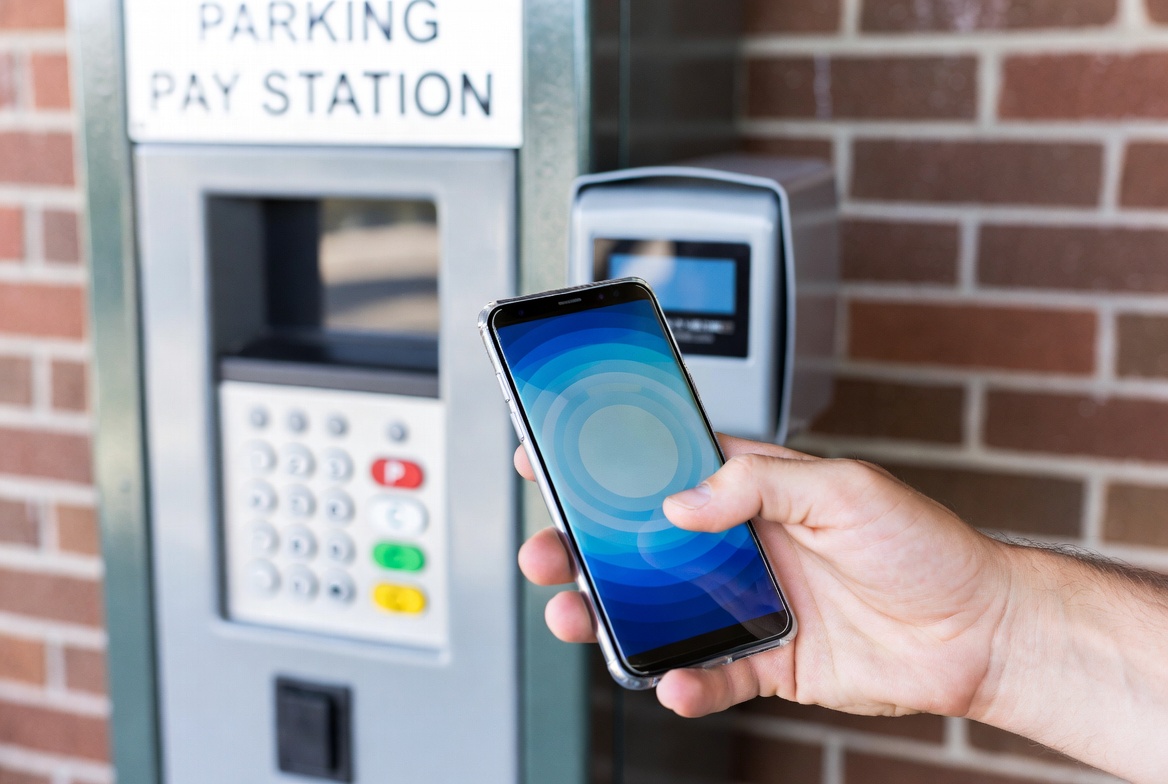
Contactless payment uses Near Field Communication (NFC) technology, built on standards maintained by EMVCo. A small antenna in the credit card or smartphone communicates with an antenna in the payment reader when they’re brought within a few centimeters of each other.
The transaction flow:
- Customer taps their card or phone on the reader
- The NFC antenna transmits encrypted payment data
- The payment terminal processes the transaction (typically under 500 milliseconds)
- Transaction is authorized and confirmed
No card insertion. No PIN entry (for transactions under the contactless limit). No signature. The entire payment takes less than a second.
Why Contactless Matters for Parking
Speed
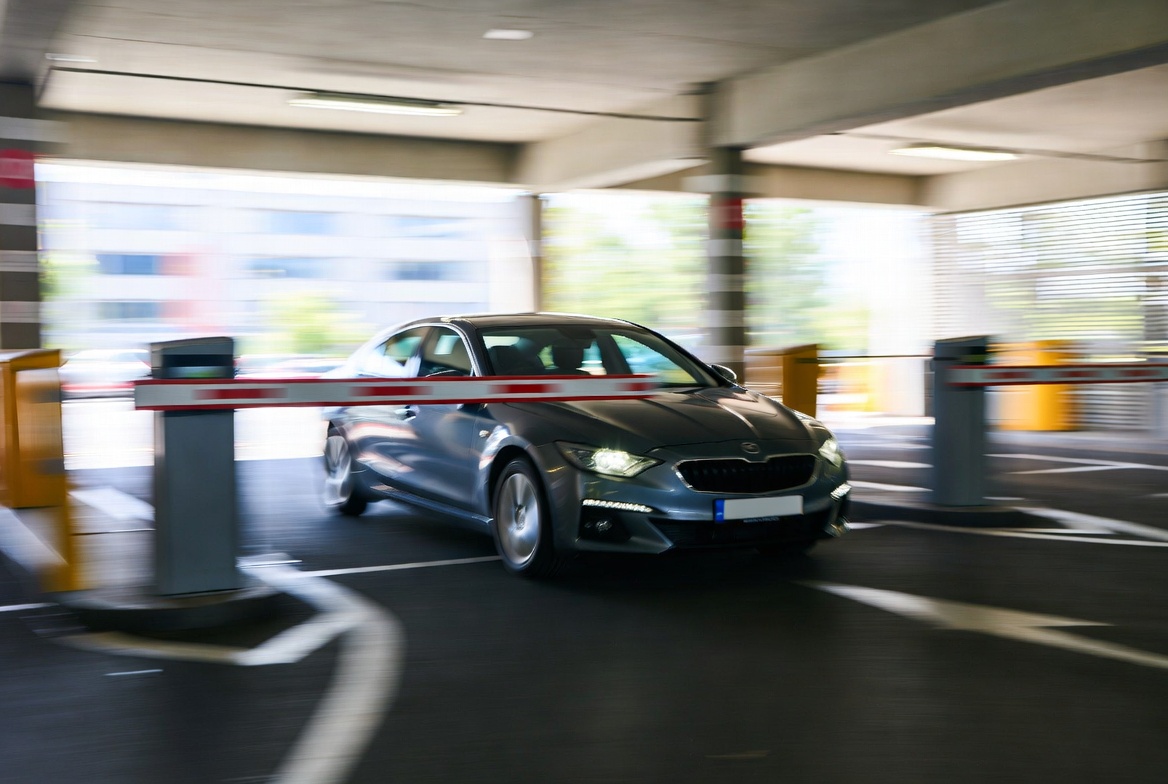
In parking environments where transaction speed directly affects throughput — especially exit lanes — shaving seconds off every transaction has cascading benefits. A contactless tap takes roughly 0.5 seconds compared to 3-5 seconds for a chip card insertion transaction. At a busy exit lane processing 200+ vehicles per hour, those saved seconds prevent queuing.
Hygiene
While not the primary driver before 2020, reduced physical contact with shared surfaces is increasingly valued by parking customers. Contactless eliminates the need to touch buttons, insert cards into slots, or handle cash.
Simplicity
The contactless payment process is the simplest possible transaction flow: tap and go. No decisions about chip vs. swipe, no PIN entry, no waiting for receipt options. For unattended environments where customer confusion causes delays, simplicity has direct operational value.
Mobile Wallet Compatibility
Contactless readers accept not just NFC-enabled cards but also mobile wallets:
- Apple Pay — iPhone and Apple Watch
- Google Pay — Android devices
- Samsung Pay — Samsung devices
As mobile wallet adoption grows, parking facilities with contactless readers are automatically compatible. Facilities without contactless capability miss this growing segment of payment preferences.
The Certification Path
Enabling contactless payments in parking isn’t as simple as installing an NFC reader. The full ecosystem requires certification:
Hardware certification — The contactless reader module must be certified by the card networks in accordance with PCI Security Standards (Visa, Mastercard, American Express, Discover) for the specific use case. Unattended outdoor environments require different certification than attended indoor retail.
Processor certification — The payment processor must support contactless transactions from the specific hardware and software combination. This is the certification that Parking BOXX achieved with Moneris — proving the entire chain works.
Application certification — The payment application software that manages the transaction flow must be certified to handle contactless-specific requirements (transaction limits, CVM handling, fallback scenarios).
What Operators Should Consider
New Equipment vs. Upgrades
Some existing parking payment systems can be upgraded with contactless reader modules. Others require replacement of the entire card reader assembly. Key questions for your equipment manufacturer:
- Does my current hardware support a contactless reader upgrade?
- What’s the cost of the upgrade vs. new equipment?
- Will the upgrade affect my existing EMV chip card certification?
Transaction Limits
Contactless transactions have cardholder verification method (CVM) limits set by card networks. Below the limit (currently $100 in the US for most networks), no PIN or signature is required. Above the limit, the system may need to fall back to chip-and-PIN.
For most parking transactions, the amounts fall well below the contactless CVM limit. However, long-term parking charges at airports or monthly parking payments may exceed it.
Reader Placement
NFC readers need to be positioned where customers can easily tap their card or phone. Considerations include:
- Height — Accessible for both tall adults and wheelchair users
- Angle — Slight upward tilt for easy phone tapping
- Visibility — Clear indication of where to tap (the universal contactless symbol)
- Weather protection — NFC works through light rain but standing water on the reader can interfere
Dual Acceptance
For the foreseeable future, parking payment equipment must accept multiple payment methods simultaneously:
- Contactless (NFC) tap
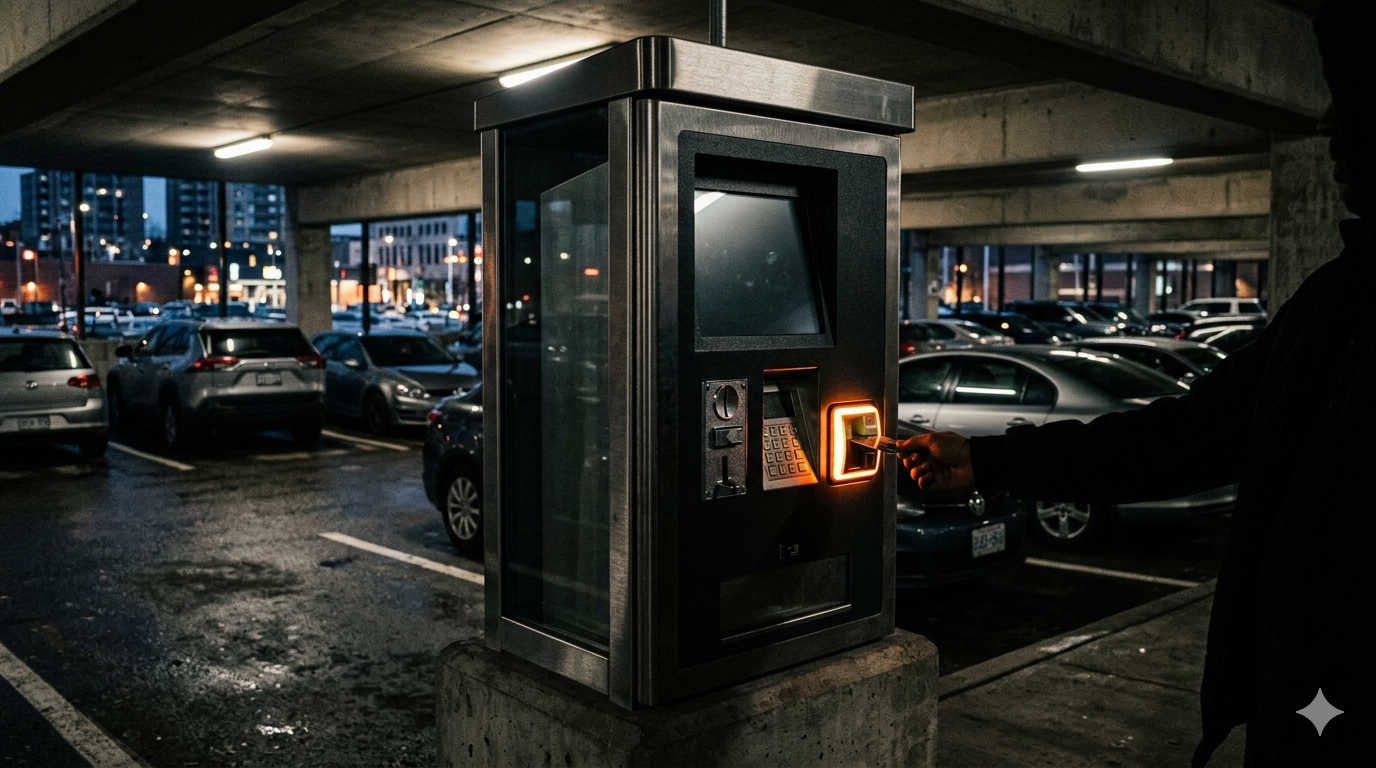
- EMV chip card insertion
- Magnetic stripe swipe (declining but still needed)
- Cash (market dependent)
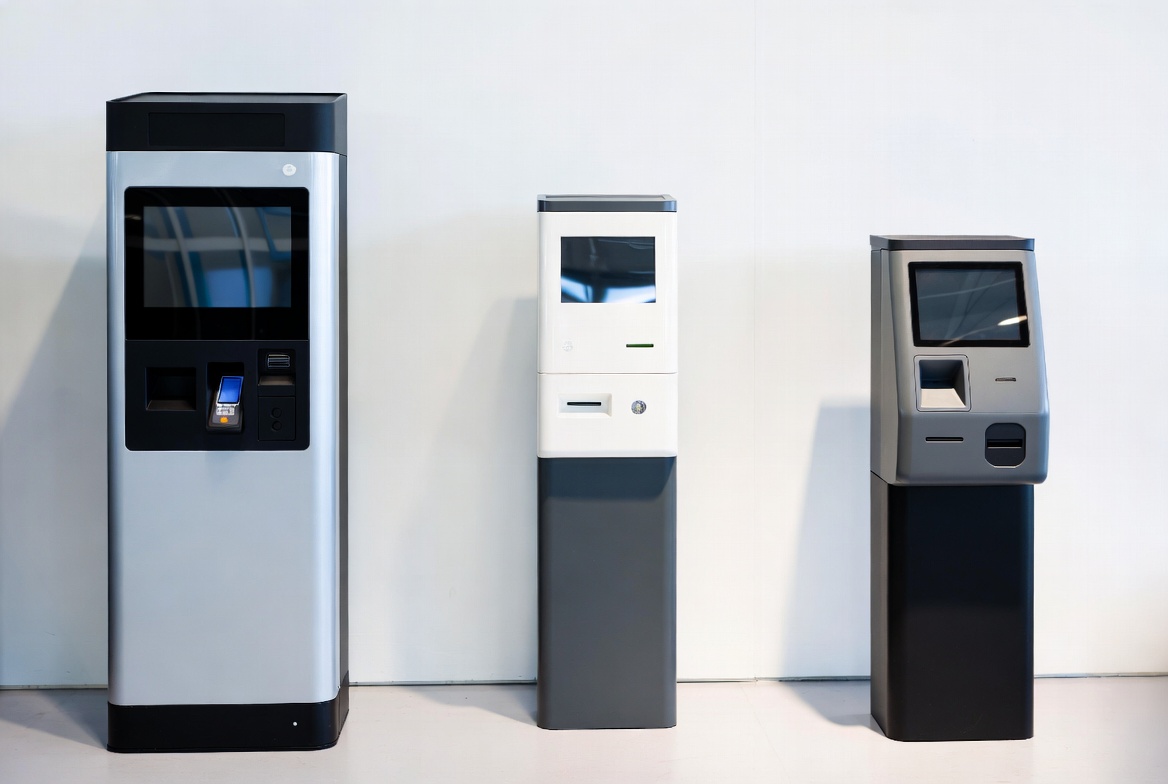
The best approach is payment terminals that support all methods in a single reader, rather than separate devices for each.
The Future of Parking Payments
Contactless tap-to-pay is a step on a longer journey. The progression looks like:
- Cash + magnetic stripe (legacy, declining)
- EMV chip-and-PIN (current standard)
- Contactless tap (emerging now)
- License plate as credential (LPR-based payment, linking plate to payment account)
- Fully invisible payment (vehicle-to-infrastructure communication, autonomous billing)
Parking operators investing in contactless capability today are building the infrastructure for steps 3 and 4. The NFC reader that accepts a tap-to-pay credit card today could potentially accept a vehicle-linked digital credential tomorrow.
Key Takeaways
- Contactless NFC payment is now certified for unattended parking environments
- Tap-to-pay transactions complete in under 1 second vs. 3-5 seconds for chip cards
- Mobile wallets (Apple Pay, Google Pay) work automatically with contactless readers
- The full certification chain (hardware, processor, application) must be in place for contactless acceptance
- Most parking transactions fall under the contactless CVM limit, enabling PIN-free transactions
- Contactless capability is a foundation for future payment innovations including LPR-linked billing