The parking industry has never been short on buzzwords, as anyone who has attended an International Parking & Mobility Institute conference can attest. Over the past five years, conference keynotes and vendor brochures have promised a world where every parking space is connected, every driver is guided seamlessly to an open spot, and facility operators swim in actionable data. The pitch is compelling: deploy sensors, install some screens, connect everything to the cloud, and watch inefficiency evaporate.
But in early 2023, after billions of dollars in global investment — a figure tracked by market analysts at MarketsandMarkets — and thousands of pilot programs, the gap between marketing claims and operational reality deserves honest examination. Some smart parking technologies have genuinely transformed how facilities operate. Others remain expensive science projects with limited payoff. And a few sit somewhere in between — promising in theory but hamstrung by implementation challenges that vendors rarely discuss.
This article separates fact from fiction across the three core pillars of smart parking: sensing and detection, real-time guidance, and data analytics.
The Sensor Question: In-Ground, Overhead, or Camera-Based?
At the foundation of any smart parking system sits the sensor — the device that determines whether a space is occupied. The technology choices here have evolved significantly, and not always in the direction vendors predicted.
In-Ground Sensors
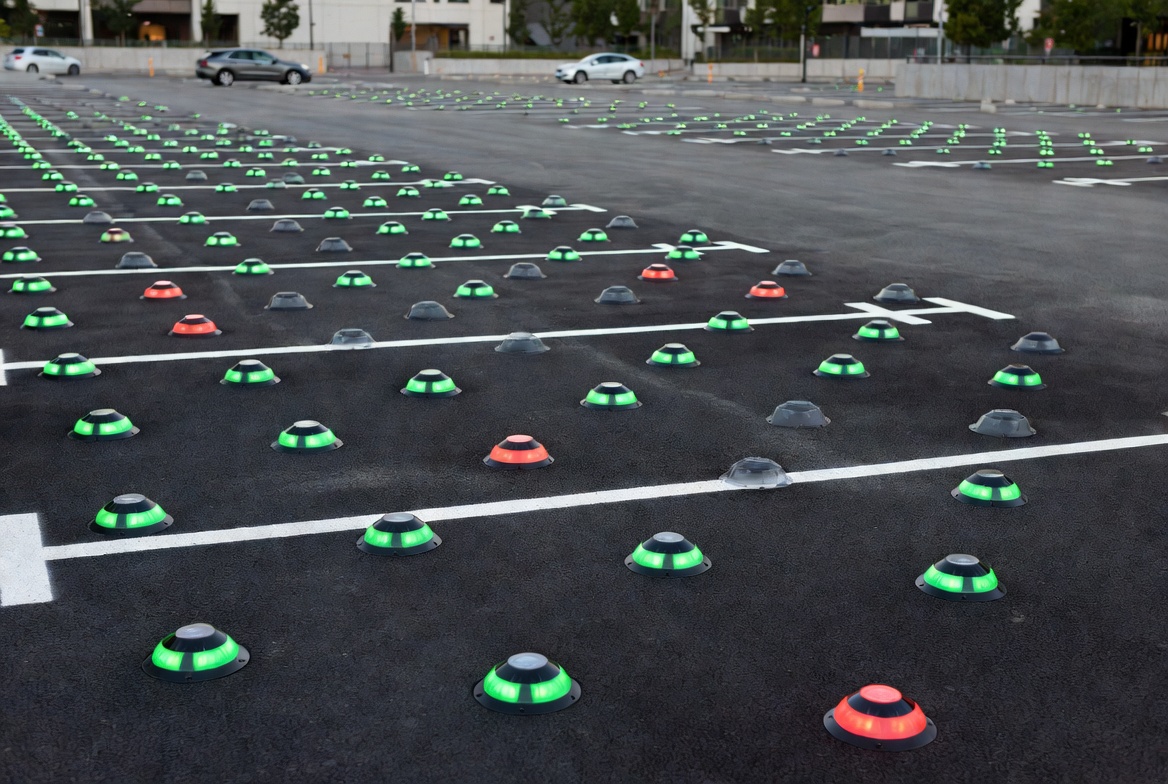
Magnetometer-based in-ground sensors were the darling of the early smart parking era. Companies like Streetline (later acquired by Sensys Networks) and ParkingSoft deployed thousands of puck-style sensors in cities worldwide. The pitch was straightforward: embed a small device in each parking space, and it detects the magnetic signature of a vehicle above it.
The reality has been more complicated. In-ground sensors work, but their total cost of ownership frequently surprises operators. Installation requires cutting into pavement — a process that costs $50 to $150 per sensor beyond the hardware itself. Battery life, initially promised at five to ten years, often delivers three to five in practice, particularly in climates with extreme temperatures. And when a sensor fails in a high-traffic lane, replacing it means closing the space and cutting pavement again.
Municipal deployments have seen mixed results. San Francisco’s SFpark program, one of the largest early adopters, demonstrated that sensor-driven dynamic pricing could reduce circling and improve availability. But the program’s sensor infrastructure required ongoing maintenance investment that strained budgets. Several cities that launched pilot programs between 2015 and 2020 have quietly scaled back or abandoned their in-ground sensor networks.
Overhead Ultrasonic Sensors
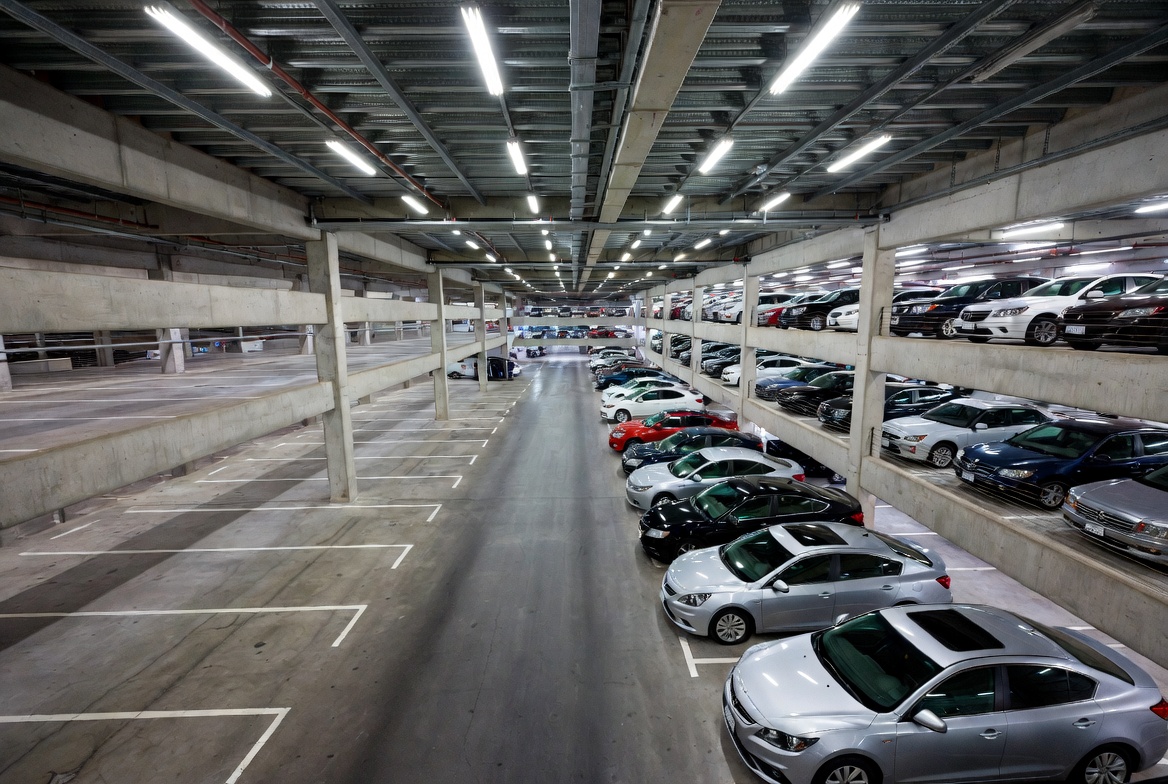
Garage operators have had better luck with overhead ultrasonic sensors — the technology behind those red and green indicator lights you see in airports and shopping centers. Companies like Park Assist (now part of TKH Group) and Quercus Technologies have refined these systems over more than a decade.
Ultrasonic sensors are more reliable than in-ground alternatives in structured environments. They mount to the ceiling, avoiding pavement damage. They are powered by facility wiring rather than batteries. And they deliver accuracy rates above 95 percent in most installations.
The limitation is scope. Ultrasonic systems work well in garages with defined spaces and ceilings. They are impractical for surface lots, on-street parking, or facilities with unusual configurations. At $150 to $300 per space installed, they also represent a meaningful capital investment that takes three to seven years to recover through operational improvements.
Camera-Based Detection
The trajectory of the market in 2023 points squarely toward camera-based detection. A single camera can monitor dozens of spaces, dramatically reducing per-space hardware costs. Computer vision algorithms have improved to the point where occupancy detection accuracy rivals or exceeds sensor-based approaches.
Camera systems also deliver something sensors cannot: visual verification. When a system reports a space as occupied, operators can confirm it. When an incident occurs, there is footage. And the same camera infrastructure can serve double duty for security, license plate recognition, and traffic flow analysis.
The trade-off is processing power and privacy. Edge computing requirements are nontrivial, and cloud-based processing introduces latency and bandwidth costs. Privacy concerns vary by jurisdiction, but operators need clear policies about data retention and use. Several European cities have imposed restrictions on camera-based parking monitoring under GDPR frameworks.
Real-Time Guidance: Does Anyone Actually Follow the Signs?
Parking guidance systems — the digital signs that display available space counts by level, zone, or row — represent one of the most visible smart parking investments. They also illustrate a fundamental tension in the industry: technology that works perfectly in controlled environments often struggles with human behavior.
What Works
Guidance systems deliver measurable results in specific scenarios. Airports, where drivers face unfamiliar garages and time pressure, see the clearest benefits. Studies at Amsterdam Schiphol and several North American airports have documented reductions in search time of 20 to 40 percent when guidance systems are functioning properly.
Large retail garages during peak shopping periods also benefit. When a 3,000-space garage is 85 percent full, directing drivers away from full floors prevents the frustrating experience of circling and improves throughput at entry points.
Healthcare campuses, where stressed visitors need to find specific buildings and time is often critical, represent another strong use case. Several major hospital systems have reported improved patient satisfaction scores after deploying wayfinding-integrated parking guidance.
What Struggles
The challenge emerges in facilities where drivers have routine behavior patterns. In an office garage where the same people park every weekday, guidance signs telling them that Level 3 has 47 open spaces provide little value. These parkers know where they are going. They have a preferred spot or zone, and they will drive there regardless of what a sign says.
Monthly permit holders in urban garages present a similar challenge. They know the facility intimately and often resent guidance systems that suggest they park somewhere other than their usual area.
This behavioral reality explains why some operators report underwhelming returns on guidance investments. The technology works as designed — it accurately counts and displays available spaces. But the assumption that drivers will change their behavior based on that information does not always hold.
The Mobile Integration Gap
The promise of smartphone-based guidance — where your phone directs you to an open space — remains largely unfulfilled in 2023. While several apps offer this capability in limited deployments, the user experience has not reached the tipping point of convenience that would drive widespread adoption.
Bluetooth beacons, indoor positioning, and augmented reality wayfinding have all been demonstrated at trade shows. In production environments, they remain niche. Most drivers still rely on their eyes, the indicator lights overhead, and the occasional digital count sign — a decidedly low-tech approach that works well enough for most situations.
Occupancy Data and Analytics: The Quiet Revolution
If sensing and guidance get most of the attention, data analytics may be where smart parking delivers its most substantial returns. And unlike flashy consumer-facing features, analytics improvements often fly under the radar.
Demand Prediction
Historical occupancy data, when properly collected and analyzed, enables remarkably accurate demand prediction. Operators who have accumulated two or more years of continuous data can forecast daily peak occupancy within five to ten percent accuracy for typical days, and identify anomalous demand events (concerts, sporting events, weather disruptions) with increasing precision.
This predictive capability drives real operational improvements. Staffing can be optimized. Maintenance can be scheduled during predictable low-demand windows. Dynamic pricing, for operators who use it, can be calibrated based on expected rather than reactive demand signals.
Revenue Leakage Detection
Smart systems that track entry, exit, and payment events can identify revenue leakage with a precision that manual auditing cannot match. Tailgating, payment system errors, employee fraud, and equipment malfunctions all leave data signatures that analytics platforms can flag.
Several operators have reported recovering two to five percent of annual revenue after deploying analytics-driven audit tools — a meaningful number when applied to a multimillion-dollar parking operation.
The Data Quality Problem
The caveat, and it is a significant one, is data quality. Smart parking analytics are only as good as the data feeding them. Systems with sensor gaps, miscalibrated cameras, or inconsistent data collection produce analyses that are misleading at best and harmful at worst.
The industry has a tendency to skip past this reality. Vendor demos show clean dashboards with perfect data. Production environments involve sensors that drift out of calibration, network outages that create data gaps, and edge cases (motorcycles, oversized vehicles, cars straddling lines) that confuse detection algorithms. Some manufacturers have focused on building integrated systems that address data quality at the hardware level, recognizing that clean data collection starts with reliable equipment rather than post-processing algorithms.
Operators considering smart parking investments should budget for ongoing data quality management. The initial deployment is only the beginning. Maintaining data integrity over years of operation requires sustained attention and resources.
What Actually Delivers ROI?
After surveying the landscape, several patterns emerge about which smart parking investments reliably deliver returns:
High-confidence investments:
- Camera-based LPR for enforcement and access control. The technology is mature, costs have decreased, and the operational benefits (reduced staffing, faster throughput, better enforcement) are well-documented.
- Occupancy counting at facility entry and exit points. Aggregate counts by level or zone are sufficient for most operational decisions and cost a fraction of space-level sensing.
- Cloud-based management platforms that centralize reporting, payment reconciliation, and operational monitoring across facilities.
Situational investments:
- Space-level detection in high-turnover, high-value environments (airports, premium hospital parking, event venues).
- Dynamic pricing in markets with variable demand and price-sensitive customers.
- Mobile payment integration where cash handling costs are significant and demographics favor app-based payment.
Proceed with caution:
- Full space-level sensor deployment in garages with predictable, routine usage patterns.
- Consumer-facing wayfinding apps without a clear adoption strategy.
- AI-driven analytics platforms without a data quality foundation.
The Integration Challenge Nobody Talks About
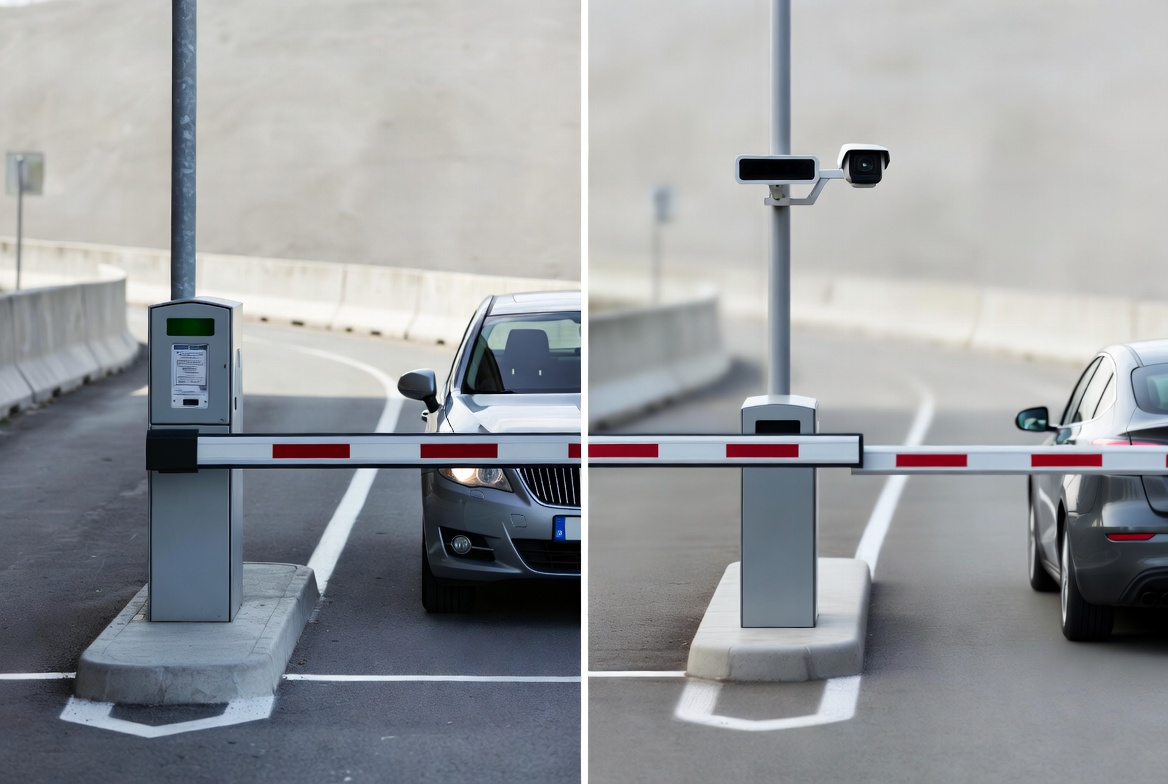
Perhaps the most underappreciated obstacle in smart parking is integration. Most parking facilities are not blank slates. They have existing gates, payment equipment, access control systems, and management software, often from different vendors, installed at different times, running on different protocols.
Layering smart technology on top of this patchwork creates integration challenges that routinely consume 30 to 50 percent of project budgets. APIs that should talk to each other do not. Data formats are incompatible. Legacy equipment lacks the connectivity that modern platforms assume.
The operators who have had the most success with smart parking have approached it as a systems integration project rather than a technology deployment. They invest in middleware, hire integration specialists, and accept that the path from pilot to production is longer and more expensive than the initial proposal suggested.
Looking Ahead
Smart parking is not hype. The underlying technologies — sensing, connectivity, cloud computing, computer vision, machine learning — are real and improving rapidly. What is overhyped is the speed and ease of transformation. The parking industry moves deliberately, capital cycles are long, and the installed base of legacy equipment is enormous.
The most likely trajectory is continued incremental improvement rather than revolutionary change. Camera-based systems will continue displacing dedicated sensors. Cloud platforms will gradually unify fragmented operations. Data analytics will become more accessible as platforms mature and data accumulates.
For operators evaluating smart parking investments in 2023, the practical advice is straightforward: start with clear operational problems, choose mature technologies with proven track records, budget generously for integration, and measure results honestly. The technology can deliver meaningful improvements. It just rarely delivers them as quickly or as cheaply as the sales presentation suggests.