Parking reservations — advance purchase of a guaranteed parking space for a specified time period — have grown from a niche service into mainstream expectation for airport parking, event parking, and increasingly urban transient parking. Reservation platforms benefit both customers (guaranteed availability, price certainty, and often a discount from walk-up rates) and operators (revenue visibility, demand signal for pricing, and reduced peak congestion from pre-committed parkers). Understanding how reservation platforms work technically, how to integrate them with PARCS systems, and how to manage reserved vs. transient inventory helps operators capture reservation revenue without disrupting transient operations.
How Parking Reservation Systems Work
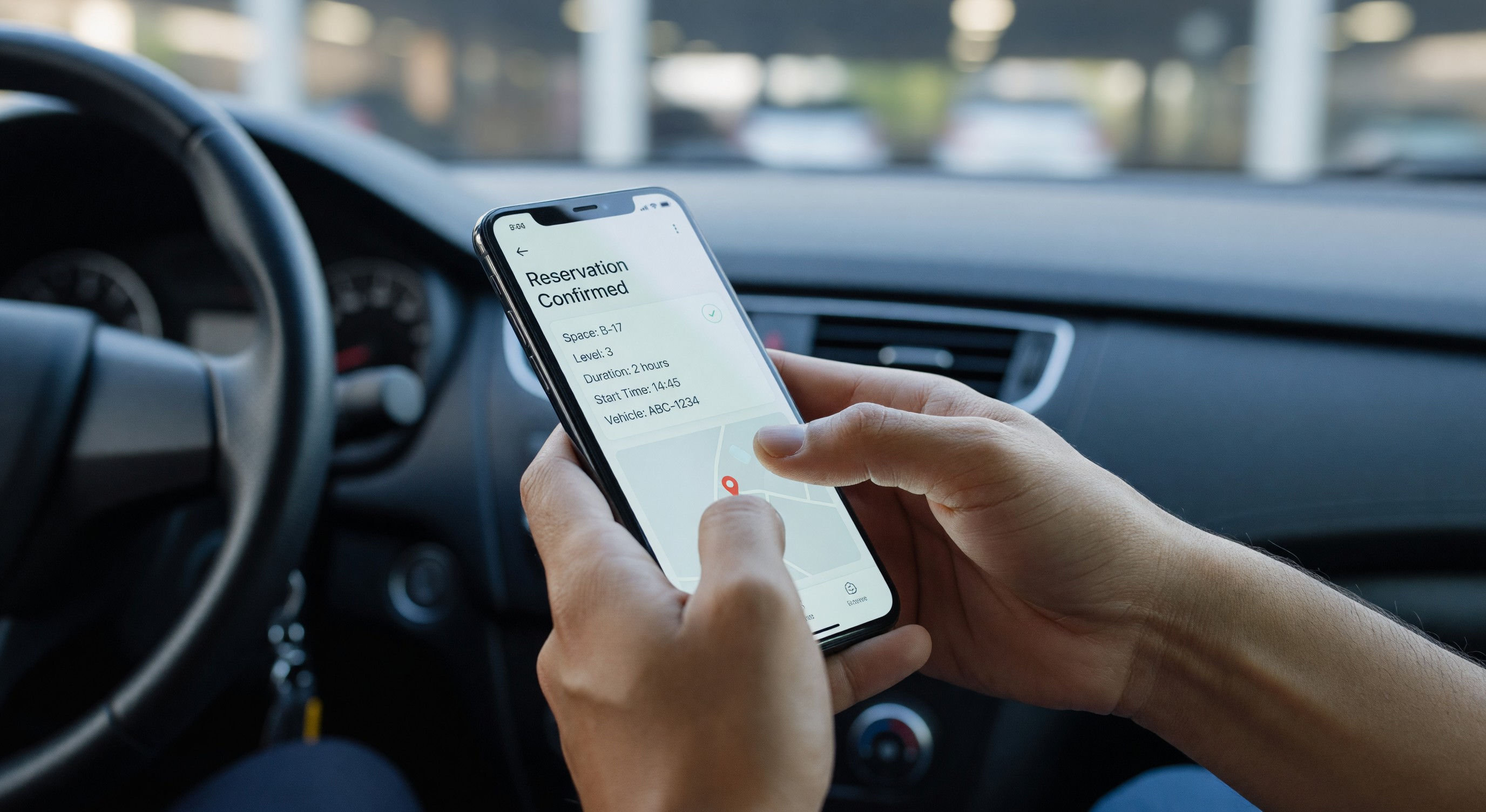
Customer-facing flow: The customer searches for parking at a destination and time on the reservation platform (a third-party app, operator-branded website, or navigation app interface). Available inventory at nearby facilities is displayed with pricing for the requested period. The customer selects a facility, confirms the time period, and pays for the reservation. A confirmation code or QR code is issued.
At the facility: The customer presents their confirmation code (by app display, printed QR code, or license plate if LPR-based validation is available) at the facility entry point. The PARCS validates the code and opens the gate. The reserved parking session is recorded in the PARCS transaction log.
Revenue flow: The reservation platform collects the full parking fee from the customer at booking. The operator receives net settlement (full fee minus platform commission) according to the platform’s settlement schedule. For operator-branded reservation systems, the full fee is collected directly.
Third-Party vs. Operator-Branded Reservation Platforms
Third-party reservation platforms: SpotHero, ParkWhiz/Arrive, and similar platforms manage the entire reservation workflow — customer app, inventory management, payment processing, and customer communication. Operators list inventory on the platform and receive net settlements. Third-party platforms provide instant access to existing consumer user bases; the trade-off is commission cost and brand substitution (the customer relationship belongs to the platform, not the operator).
Operator-branded reservation systems: Software platforms (from PARCS vendors or standalone providers) that enable operators to offer reservations through their own website and app, with the operator’s brand, pricing control, and customer relationship. Lower-cost than third-party platforms (no commission per transaction) but require marketing investment to drive traffic to the operator’s own reservation interface.
Hybrid approach: Many operators list inventory on third-party platforms for discovery and demand (particularly for events and airports where significant consumer volume comes through major apps) while also maintaining operator-branded reservation capability for their regular monthly parker and direct customer base. Managing inventory allocation across multiple reservation channels requires careful coordination to avoid overselling.
PARCS Integration for Reservation Validation
Reservation validation at the facility entry point is the operational linchpin of reservation systems:
QR code validation: The reservation confirmation includes a unique QR code. An entry lane camera reader scans the QR and validates it against the reservation database, opening the gate for valid, non-expired codes. QR validation requires a camera reader at the entry point capable of reading mobile device screens and printed QR codes.
LPR-based validation: The reservation system captures the customer’s license plate at booking. The PARCS LPR camera reads the entering plate and cross-references against active reservations. If the plate matches a valid reservation, the gate opens automatically without any QR interaction. LPR validation provides the smoothest customer experience but requires accurate plate entry at booking and LPR camera capability at the entry point.
Barcode validation: Similar to QR code validation; older reservation systems use 1D barcode formats rather than 2D QR codes.
Integration depth: Reservation platform integration with PARCS ranges from simple code validation (the PARCS checks whether a code is valid and unexpired) to full inventory management integration (the reservation platform has real-time access to facility occupancy and can dynamically manage available inventory against actual PARCS counts). Full integration requires well-documented APIs on both the reservation platform and the PARCS.
Inventory Management for Reserved and Transient Parking
The fundamental inventory challenge in mixed reserved/transient facilities is allocating spaces between advance-reserved and walk-up transient customers:
Reserved inventory allocation: Designating a portion of facility inventory as reservable while keeping the remainder available for walk-up transient customers prevents reservation overselling that leaves transient customers blocked. A facility with 300 spaces might allocate 60 to 80 as reservable, keeping 220+ for transient.
Dynamic allocation: Advanced reservation systems adjust the reserved inventory allocation based on advance booking pace. If reservations fill quickly, additional spaces can be moved from the transient pool to the reserved pool. If reservations are slow, the allocation can be reduced to ensure transient capacity. Dynamic allocation requires real-time communication between the reservation platform and the PARCS inventory management system.
Event day inventory management: For event-adjacent facilities with high event-day demand, event-specific reserved inventory (priced at event premium rates) can be offered for advance booking while maintaining base transient capacity for non-event customers. Managing event inventory separately from base inventory prevents non-event parking from being crowded out by event reservations on days when non-event demand is also present.
Oversell protection: Reservation systems should include physical capacity limits that prevent more reservations from being sold than the facility can physically accommodate. Overselling parking reservations — resulting in customers with valid confirmations being turned away — is one of the most damaging customer experience failures in parking.
Pricing Strategy for Reservations
Advance purchase discount: A small advance purchase discount (5 to 10 percent below walk-up transient rate) encourages reservation adoption without significantly degrading revenue per reservation. The discount is offset by the revenue certainty and demand signal value of advance bookings.
Event premium pricing: Events with high demand can support premium reservation pricing — 1.5x to 3x standard transient rates for desirable event-day reservations. Premium pricing for high-demand events captures revenue that would otherwise go to unofficial resellers or third-party scalpers.
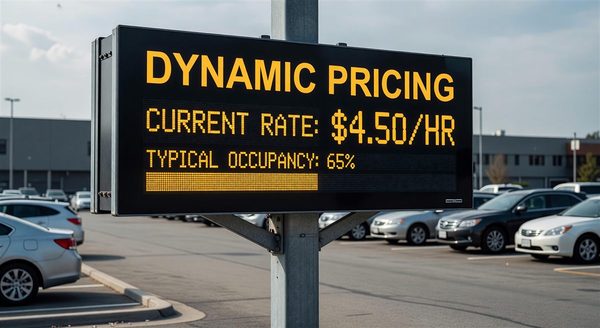
Dynamic reservation pricing: Reservation prices can be adjusted dynamically as the event approaches and inventory fills. Early-booking discounts that gradually increase as the event date nears (similar to airline dynamic pricing) capture both price-sensitive advance planners and last-minute customers willing to pay a premium for guaranteed availability.
Frequently Asked Questions
What commission do third-party reservation platforms charge? Commission structures vary by platform and negotiated agreement, typically ranging from 5 to 20 percent of the gross parking fee. Operators with high-demand facilities or large inventory commitments may negotiate lower commission rates. The commission is typically deducted from settlement before the operator receives payment.
Can operators prevent customers from sharing reservation codes? QR code systems where each code is unique and single-use prevent code sharing — once the QR code is validated at entry, it cannot be used again. LPR-based validation prevents plate sharing (the reservation is tied to a specific plate). Both methods reduce, but cannot entirely eliminate, reservation code sharing.
How should operators handle no-shows for reserved parking? Most reservation platforms define a no-show policy: if the customer does not arrive within a defined window after the reservation start time, the space is released to transient inventory. Revenue for no-show reservations may be refunded or partially retained depending on the platform’s policy and the operator’s contract terms.
What is the typical conversion rate for parking reservation pages? Conversion rates (visitors to the reservation page who complete a booking) vary significantly by platform, event type, and market. Event parking reservation pages for high-demand events may see 20 to 40 percent conversion from intent visitors. General transient parking reservation conversion is typically lower, 5 to 15 percent, reflecting less urgency among customers who can also opt for walk-up transient parking.
Takeaway
Parking reservation platforms — whether third-party marketplaces or operator-branded systems — create revenue opportunities that static walk-up transient operations cannot capture: advance purchase demand from customers who value guaranteed availability, event premium pricing from high-demand event-day parkers, and airport long-term reservation demand from travelers planning weeks in advance. Effective reservation program management requires PARCS integration for smooth validation, inventory allocation that protects transient capacity, and pricing strategy that captures demand-appropriate rates without overselling. The operators who manage reservation inventory and pricing actively — rather than statically allocating a fixed block at a fixed price — consistently generate higher reservation revenue than those treating reservations as a passive additional channel.
Further Reading from Authoritative Sources
- IPMI parking reservation technology and revenue management guidance — The International Parking and Mobility Institute publishes revenue management and technology guidance for parking operators, including reservation platform integration that is directly relevant to the article’s subject matter.
- Transportation Research Board parking reservation and demand management research — The Transportation Research Board publishes research on parking demand management and reservation systems that provides the evidence-based context for inventory allocation and pricing decisions described in the article.