Parking revenue flows through multiple point-of-sale (POS) touchpoints — pay stations, cashier booths, mobile payment platforms, and reservation systems — before reaching the operator’s bank account and financial records. Integrating these revenue streams with accounting and financial management systems requires clear data architecture, reconciliation workflows, and technical integrations that most operators assemble piecemeal rather than design systematically. A well-integrated parking POS ecosystem reduces reconciliation overhead, improves revenue accuracy, and enables the financial reporting that operators and property owners require.
Parking POS Landscape
Unlike retail operations with a single unified POS, parking operations often have multiple revenue collection points with different technology:
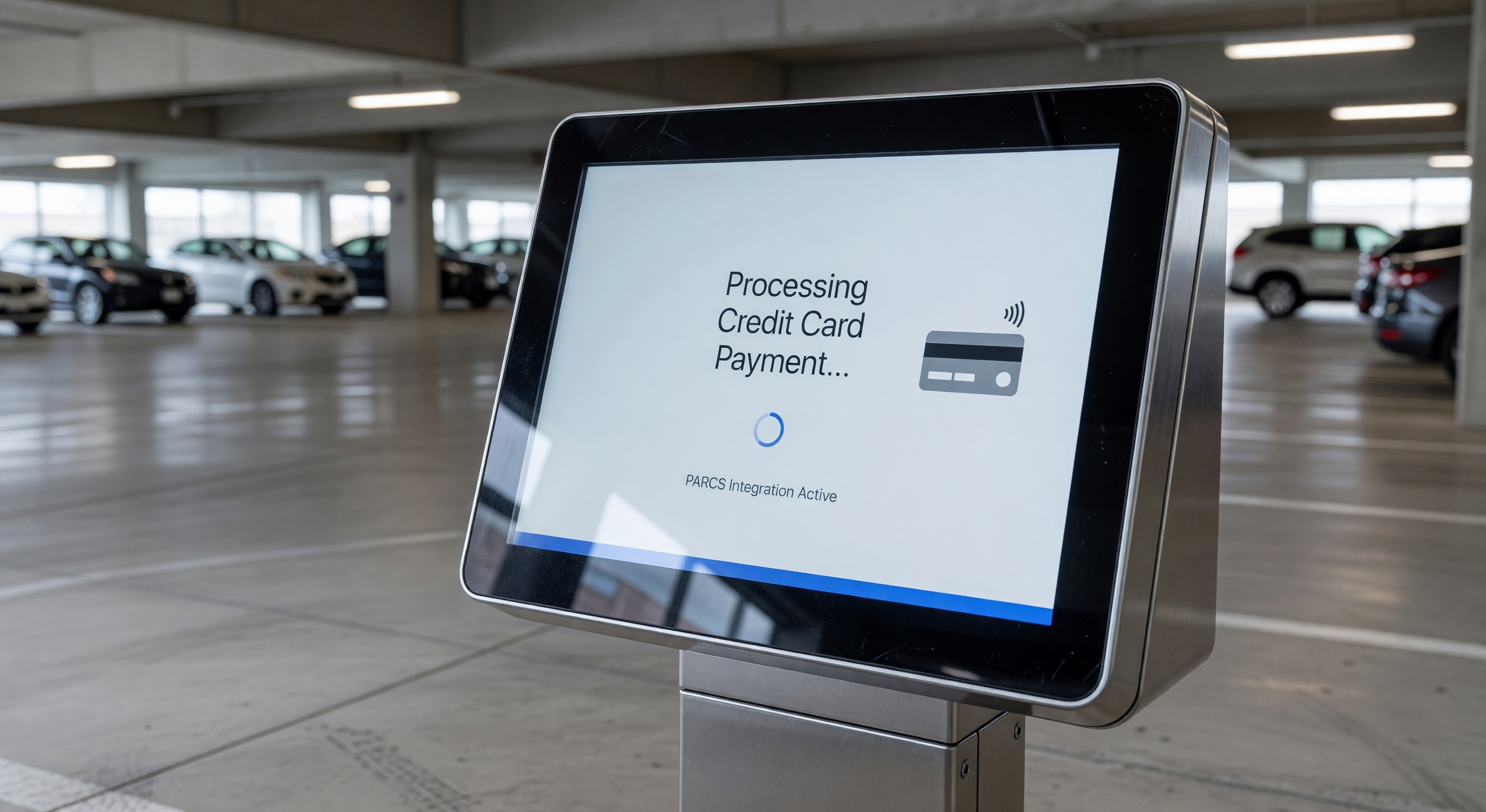
Pay stations: Self-service kiosks in lots and garages that accept cash, credit/debit, and mobile payment. The pay station is the primary POS for transient parking. Pay station software manages the transaction, interfaces with the payment processor, and transmits transaction records to the PARCS management system.
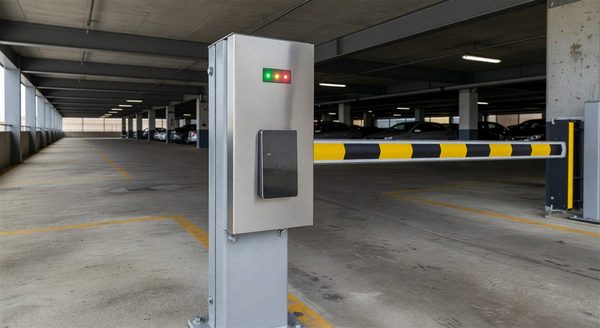
Cashier booths and exit lanes: Attended exit lanes with POS terminals — typically integrated PARCS cashier stations — process credit/debit and cash for exiting vehicles. These transactions are recorded in the PARCS alongside pay station transactions.
Mobile and app payments: Third-party mobile payment platforms (ParkMobile, SpotHero, PayByPhone) process transactions on their own systems and remit net settlement to the operator on defined schedules. These transactions may or may not appear in the PARCS depending on the integration level.
Monthly parker accounts: Monthly permit payments are processed through the PARCS account management system — typically recurring ACH or card charges. Transaction records exist in both the PARCS and the payment processor system.
Reservation platforms: Online reservation platforms (operator-branded or third-party) process advance payments. Reservation revenue may be reconciled against PARCS entry records to confirm arrival for reserved sessions.
Payment Processing Integration
All card-based parking transactions require a payment processor to authorize card transactions and settle funds to the operator’s merchant account. Payment processing integration in parking operates at two levels:
Terminal-level processing: The pay station or cashier terminal communicates directly with the payment processor for transaction authorization. The terminal is certified to the card networks (EMV, NFC) and the payment processor. Settlement is handled at the processor level; funds are deposited to the merchant account according to the processor’s settlement schedule (typically T+1 or T+2).
PARCS-level reconciliation: The PARCS management system receives transaction records from all terminals and aggregates them into the facility’s transaction database. Settlement data from the payment processor (batch settlement totals, transaction-level detail) should be reconciled against PARCS transaction records daily to identify discrepancies.
PARCS to Accounting System Integration
The path from PARCS transaction data to accounting records can be automated or manual:
Direct accounting system integration: Some PARCS platforms include native integrations with QuickBooks, Sage, or other accounting software that automatically post daily revenue journal entries when the day is closed. These native integrations reduce manual data entry but must be configured carefully to map PARCS revenue categories to the correct accounting chart of accounts.
Export-based integration: Most operators use export-based integration — the PARCS produces daily or weekly revenue reports in CSV or Excel format, which are reviewed for accuracy before manual journal entry or import into the accounting system. This approach requires manual steps but provides operator review before posting.
API-based integration: PARCS platforms with revenue reporting APIs can connect directly to accounting systems via middleware (Zapier, Workato, custom scripts) that automatically pull PARCS revenue data and post it to the accounting system on a defined schedule. API integration eliminates manual export steps while preserving the option for review workflows.
Revenue Category Mapping
A critical element of accounting integration is revenue category mapping — ensuring that PARCS transaction categories align with the accounting chart of accounts:
Parking revenue categories in PARCS: Transient hourly, transient daily maximum, monthly permit, validation (gross parking revenue with offset for validation cost), event premium, overnight, reserved premium, and miscellaneous adjustments.
Corresponding accounting categories: The chart of accounts should have corresponding revenue categories that match the PARCS breakdown, enabling revenue reporting by type without manual reclassification.
Common mapping errors:
- Validations recorded as gross revenue without corresponding merchant receivable offset
- Monthly permit payments recorded as monthly revenue in the collection period rather than accrued across the permit period
- Third-party app platform net settlements (after commission deduction) recorded as gross revenue, understating both revenue and platform commission expense
Reconciliation Workflows
A daily parking revenue reconciliation workflow should include:
PARCS daily close report: Cash collected, credit card transactions by batch, mobile/app transactions, validations issued, and monthly account payments. Total revenue by category.
Payment processor batch settlement report: Credit card batch total by terminal. Compare against PARCS credit card total — discrepancy triggers investigation.
Cash verification: Cash removed from vaults, counted in a controlled environment, and compared against PARCS cash total. Variance documented and investigated.
Third-party platform reconciliation: App payment platform settlement reports (received on the platform’s schedule) reconciled against PARCS-recorded app transactions for the corresponding period.
Daily journal entry: Posting of reconciled revenue to the accounting system by category.
Hotel PMS Integration
Hotel parking programs that include parking in room packages or charge parking to the room folio require PARCS-to-PMS integration:
Charge posting: The PARCS sends parking charges directly to the hotel PMS folio via API, eliminating the need for hotel staff to manually enter parking charges. Most hotel PMS platforms (Opera, Amadeus, Mews) have defined API formats for posting charges.
Validation management: Hotel validation programs — where a hotel provides complimentary or discounted parking to guests — require the validation event to be recorded in the PARCS and the corresponding revenue offset tracked in the accounting system.
Settlement reconciliation: Hotel parking revenue settled to the hotel’s account must be reconciled monthly against parking management financial records.
Frequently Asked Questions
What is the most common reconciliation error in parking revenue management? Timing mismatch between payment processor settlement and PARCS transaction records. The payment processor may settle a Friday evening’s batched transactions on Monday; the PARCS records the transaction on Friday. Without clear date alignment in the reconciliation workflow, this timing difference creates apparent discrepancies that require investigation to resolve.
Can QuickBooks integrate directly with PARCS? A handful of PARCS vendors offer native QuickBooks integration. Most operators use export-based integration (PARCS report → Excel → QuickBooks import) or third-party middleware for QuickBooks integration. Before purchasing a PARCS, confirm the specific accounting system integration method and its limitations with the vendor.
How should mobile app platform revenue be handled in accounting? Mobile app platform revenue is typically received as a net settlement (after platform commission) from the platform provider. The correct accounting treatment is to record gross parking revenue (the amount the customer paid) as revenue, with a corresponding commission expense to the platform, rather than recording only the net settlement as revenue. This treatment accurately reflects revenue and expense in the P&L.
What is the difference between payment authorization and settlement? Authorization confirms that a card has sufficient credit/funds for the transaction amount; settlement is when the actual funds move from the cardholder’s account to the merchant’s account. In parking, authorization typically occurs at the point of transaction (entry for virtual permit accounts, exit for traditional ticket-in/ticket-out). Settlement occurs in batches at day end, processed by the payment processor. The authorization amount and settled amount can differ (adjustments, tips, or authorization holds) and must be reconciled against PARCS transaction records.
Takeaway
Parking POS system integration is the operational infrastructure that connects physical revenue collection to accurate financial records. The facilities that manage this integration systematically — with daily reconciliation workflows, clear revenue category mapping, and accounting system integration that reduces manual entry — have more reliable financial reporting, faster identification of discrepancies, and lower month-end close overhead than those treating reconciliation as an occasional audit function. The technical components (PARCS APIs, payment processor reports, accounting system imports) are available in most modern platforms; the operational discipline to use them consistently is the differentiating factor in financial management quality.
Further Reading from Authoritative Sources
- IPMI parking financial management and PARCS integration standards — IPMI publishes financial management standards, accounting integration guidance, and PARCS reconciliation best practices for parking operators.
- NIST payment security standards for parking POS systems — NIST publishes the cryptographic and payment security standards that underpin EMV certification, NFC payment security, and PCI DSS compliance requirements for parking POS systems.