Security patrol in parking facilities — verifying that areas are clear, responding to incidents, and deterring theft and vandalism — has traditionally relied on manual logs and honor-system accountability. Guard tour systems, mobile incident reporting apps, GPS tracking for patrol vehicles, and remote video monitoring integration have transformed parking security into a documentable, auditable, and measurable function. For facility owners and operators who require evidence that security resources are being deployed as contracted, and for operators who want to improve security performance systematically, security technology is an essential management tool.
Guard Tour Systems
Guard tour systems verify that security officers are completing their assigned patrol routes by requiring check-ins at defined patrol points throughout the facility:
NFC checkpoint tags: Small NFC (near-field communication) tags mounted at defined checkpoint locations throughout the facility. Officers carry an NFC reader (or use an NFC-enabled smartphone app) and tap the tag at each checkpoint. The system records the officer’s ID, the checkpoint tag ID, and the timestamp. Missed checkpoints or checkpoints completed outside the expected time window generate alerts for supervisors.
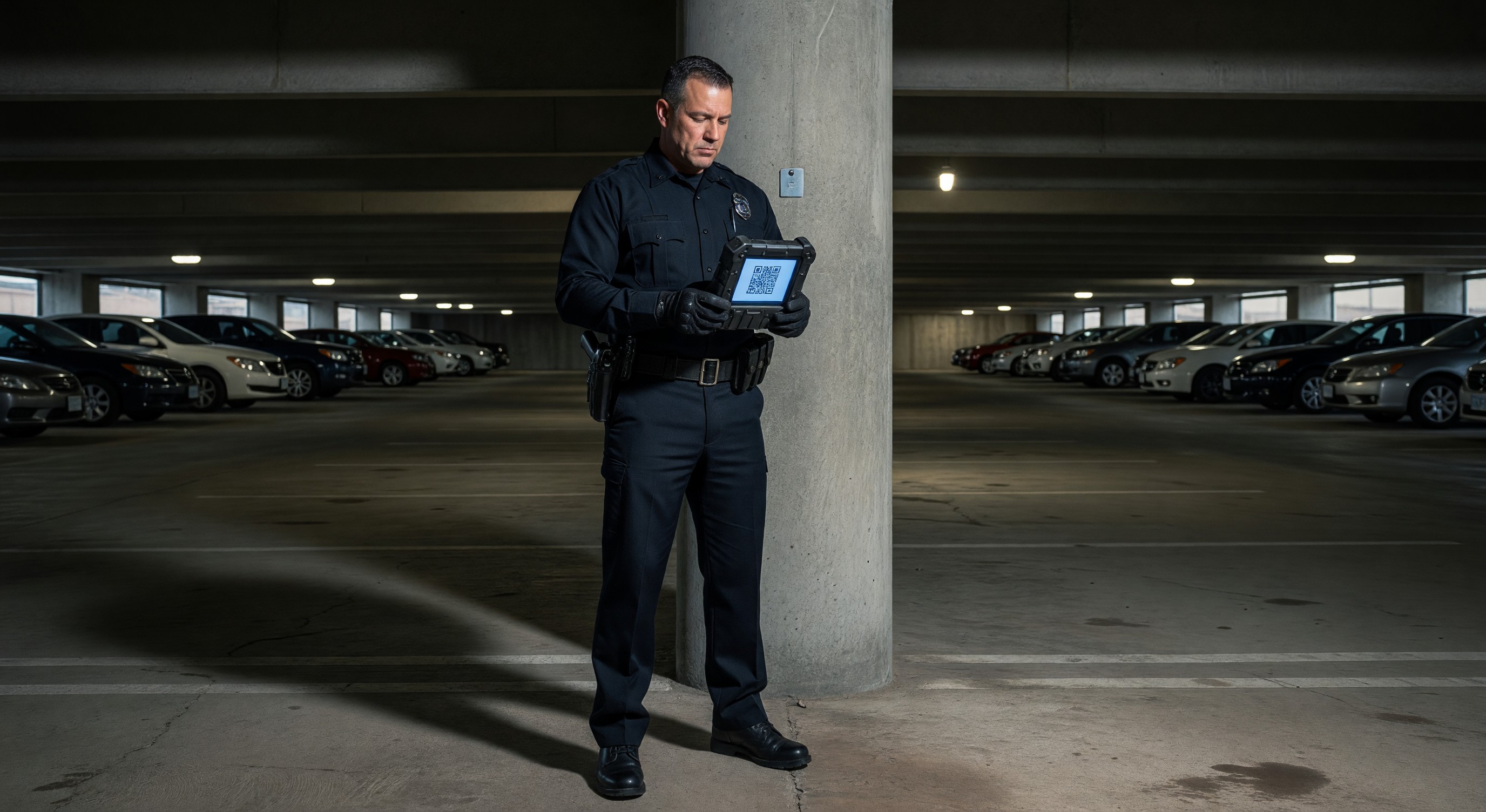
QR code checkpoints: Printed QR codes mounted at patrol checkpoints. Officers scan the QR code with a smartphone camera, and the scan is logged to the patrol management system with timestamp and location. Lower-cost than NFC but potentially easier to photograph and falsely record without physical presence.
GPS-tracked patrol: For vehicle patrol routes, GPS tracking of patrol vehicles creates a location history that can be compared against the defined patrol route. Route deviation and patrol timing are visible in the GPS management system. More appropriate for outdoor surface lot patrol than structured parking interior patrol.
Beacon-based systems: Bluetooth low energy (BLE) beacons mounted at checkpoint locations detect when an officer (with a BLE-enabled device) is physically near the checkpoint, without requiring the officer to actively scan. Passive detection reduces the ability to falsely record checkpoint visits.
Mobile Incident Reporting
Traditional security incident reports are handwritten at the end of a shift, creating detail loss, legibility issues, and delays in management notification. Mobile incident reporting apps enable real-time documentation at the scene:
Photo and video capture: Officers document incidents with smartphone photos and short videos attached directly to the incident report. Vehicle damage claims, vandalism, suspicious persons, and property left behind are documented with contemporaneous visual evidence rather than after-the-fact description.
GPS location tagging: Incident reports are automatically tagged with the GPS location where the report was filed, placing incidents geographically on a facility map for analysis.
Structured report templates: Mobile apps provide structured report templates for common incident types (vehicle damage claim, theft, medical emergency, suspicious activity, equipment malfunction) that guide officers through required information fields, improving report completeness and consistency.
Real-time supervisor notification: Incidents above a defined severity threshold trigger immediate notification to the shift supervisor or facility manager, enabling management awareness and response without waiting for the end-of-shift report review.
Evidence chain of custody: Digital incident reports with photographs, timestamps, and officer credentials provide a stronger evidence chain for incidents that may involve insurance claims, law enforcement, or legal proceedings than handwritten paper reports.
Remote Video Monitoring Integration
Parking facilities increasingly use remote video monitoring (RVM) — off-site monitoring centers that watch facility cameras in real time and respond to detected events — as an alternative or supplement to on-site patrol:
Virtual guard tours: Monitoring center staff conduct virtual tours of the facility through sequenced camera views on a defined schedule, recording tour completion in the monitoring system. This provides tour accountability without the cost of continuous on-site patrol presence.
Video analytics integration: AI-based video analytics systems detect defined events — motion in restricted areas, loitering, objects left behind, license plate matches against watchlists — and alert the monitoring center for human review. Human monitors assess alerts and dispatch response (on-site officer, law enforcement, or recorded observation) based on the assessed situation.
Two-way audio response: IP cameras with integrated speakers allow monitoring center staff to verbally address individuals in the facility — deterring suspicious behavior, assisting lost customers, or directing emergency response. Two-way audio is particularly effective as an intervention tool that eliminates the delay of dispatching an on-site officer.
Emergency response coordination: When a monitored incident requires law enforcement or emergency medical response, monitoring center staff can place calls while simultaneously managing the facility cameras to provide responding units with real-time situational awareness.
GPS and Communications Technology for Patrol Staff
Push-to-talk (PTT) communication: Smartphone-based push-to-talk applications (Zello, Motorola’s Wave PTX) replace traditional walkie-talkies for inter-facility and multi-site communication. PTT apps use the cellular data network, providing communication coverage throughout a facility without requiring repeater infrastructure. Digital PTT also enables communication logging.
GPS personal locator: Officers conducting interior parking structure patrol may carry GPS devices that update their location to a monitoring system, enabling supervisors to locate officers in large facilities and verify patrol coverage. GPS accuracy in concrete structures is limited; BLE-based indoor positioning (using beacon infrastructure) provides better accuracy in covered structures.
Lone worker alerts: For facilities where security officers work alone overnight, lone worker applications periodically check in with the officer (through a prompt that must be acknowledged within a defined period). Failure to acknowledge triggers an alert to supervisors or monitoring center. This technology addresses a genuine safety concern for single-officer overnight assignments.
Security Performance Metrics and Reporting
Security technology enables performance metrics that are not possible with purely manual operations:
Patrol completion rate: Percentage of required checkpoint scans completed per shift, per officer, and per facility. This metric is the primary accountability measure for guard tour systems.
Incident frequency by type and location: Incident data categorized by type and placed geographically on the facility map identifies hotspots that warrant physical or procedural changes.
Response time metrics: Time from incident detection or report to supervisor notification, and from supervisor notification to on-site response, measures the speed of the response chain.
Equipment malfunction reporting rate: Security officers who identify and report equipment malfunctions (gate failures, light outages, elevator issues) during patrol contribute to maintenance management. Tracking malfunction report frequency by officer and shift assesses the quality of maintenance observation during patrol.
Frequently Asked Questions
What is the ROI of guard tour systems for parking facility security? Guard tour systems provide ROI primarily through accountability (ensuring patrols actually occur as contracted or scheduled) and through liability documentation (proving patrol coverage patterns in the event of a claim that the facility was inadequately monitored). The financial benefit of liability documentation depends on the facility’s claim history and insurance rates; the accountability benefit depends on prior patrol consistency.
Can remote video monitoring replace on-site security patrol in parking facilities? For low-crime facilities with adequate camera coverage, remote video monitoring can replace or significantly reduce on-site patrol hours, with dedicated on-site patrol available on-call for response to monitored incidents. For facilities with higher crime rates or significant physical security requirements, RVM is better used as a supplement to on-site patrol than a replacement.
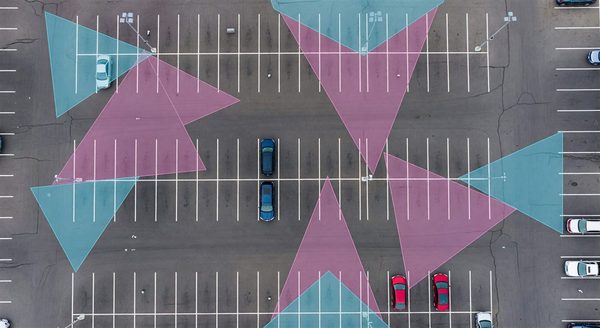
What camera coverage is required to support effective remote video monitoring? Effective RVM coverage requires: all entry/exit lanes, all pedestrian access points, elevator lobbies and stairwells at each level, and sufficient coverage of the parking field that no area is a complete blind spot. Camera density required for reasonable coverage in a typical structure: 1 camera per 20 to 30 stalls in the field, with higher density at access points and interior corridors.
How are security technology systems integrated in a single platform? Security operations platforms (Genetec Security Center, Milestone XProtect, Verkada) integrate video management, access control, incident reporting, and guard tour functions in a unified interface. Fully integrated platforms enable correlation of video evidence with incident reports and access control events, improving both operational response and post-incident investigation.
Takeaway
Parking security technology converts security patrol from a largely unverifiable manual function into a documented, measurable, and accountable operation. Guard tour systems verify that patrol rounds occur; mobile incident reporting captures contemporaneous evidence; GPS tracking provides patrol coverage verification; and remote video monitoring enables cost-effective 24/7 facility visibility. The appropriate technology investment scales with facility risk profile, security staffing model, and management accountability requirements. For facilities where security quality directly affects customer experience and liability exposure — overnight lots, high-crime urban locations, facilities with significant monthly parker populations — security technology investment is justified by both performance improvement and documentation value.
Further Reading from Authoritative Sources
- IPMI parking security technology and patrol operations standards — The International Parking and Mobility Institute publishes security operations guidance for parking facilities, including technology adoption standards that are directly relevant to the mobile patrol technology discussed in the article.
- NIST physical security and video surveillance system standards — NIST publishes security standards for video surveillance and physical security systems (NIST SP 800-116 and related publications) that provide the technical standards framework for the patrol technology and monitoring systems described in the article.