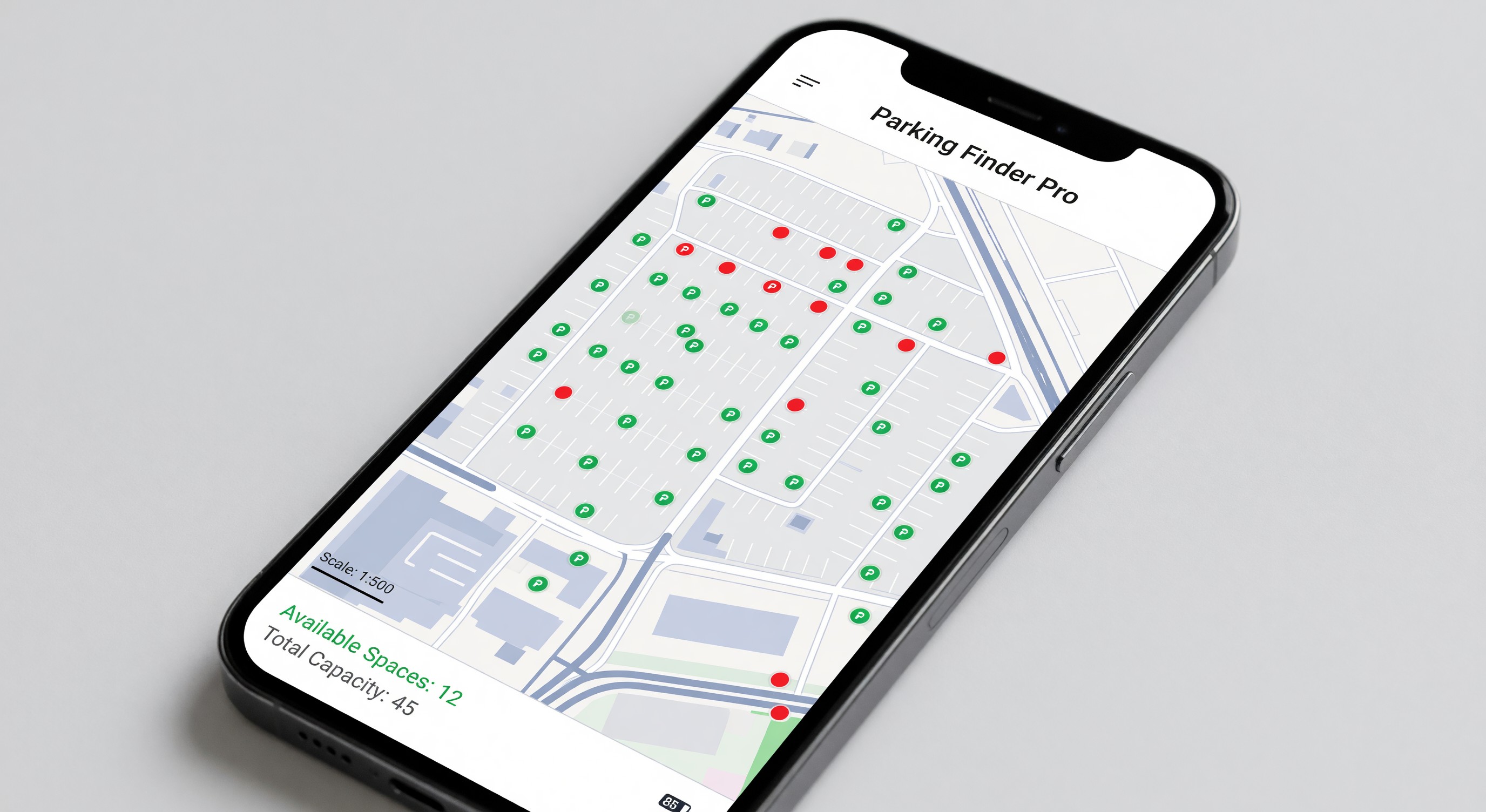
Mobile parking apps have shifted from novelty to operational infrastructure in most North American markets. The question for most parking operators is no longer whether to integrate with mobile platforms, but which platforms to prioritize, how to negotiate the economics, and how to avoid over-reliance on any single third-party distribution channel. The four platforms with the broadest North American footprints — ParkMobile, SpotHero, PayByPhone, and ParkWhiz — each have distinct strengths, business models, and operator economics.
How Parking Mobile Apps Create Value (and Cost)
Mobile parking apps generate value by extending the operator’s distribution reach — connecting the facility with customers who use the app’s search and discovery interface rather than driving until they find a sign. For transient parking, app users often represent customers who would otherwise choose a competitor facility they found first; for reservations, apps provide advance purchase capability the operator may not offer natively.
The cost side is less discussed: every app transaction typically carries a commission (5 to 15 percent of the parking fee, varying by platform and contract), which reduces effective net revenue per transaction compared to a direct PARCS sale. The operator’s calculus is whether app-driven incremental volume justifies the commission, or whether app transactions are cannibalizing direct sales the facility would have made anyway.
A realistic evaluation requires tracking the actual source of transactions — are app bookings coming from new customers who found the facility through app search, or from existing customers who switched to the app for convenience? The former is incremental; the latter is a fee for the same transaction.
ParkMobile
ParkMobile is the largest pay-by-phone parking platform in North America by transaction volume, operating in over 450 cities and processing hundreds of millions of transactions annually. ParkMobile’s primary use case is session-based payment for on-street metered parking and off-street lots where the operator manages space through a zone-code system.
How it works: Parkers enter a zone number posted at the meter or lot entrance and start a parking session via the app. The app allows session extension remotely (without returning to the meter), which is a significant convenience driver for adoption.
Operator integration: ParkMobile integrates with PARCS through API connections and through direct partnerships with parking management systems. For on-street metered parking, municipalities replace or augment pay stations with ParkMobile zone codes. For off-street facilities, integration requires PARCS API compatibility or a separate ParkMobile-provided payment solution.
Strongest use case: On-street metered parking in municipalities (ParkMobile has significant market share in city metered parking programs), and transient parking in markets where ParkMobile zone codes are widely known. The platform’s consumer base skews toward repeat urban commuters who prefer not to carry quarters.
Commission structure: Typically assessed on a per-transaction basis or as a percentage of the parking fee, with specific rates negotiated in platform agreements. Municipalities often negotiate volume-based arrangements.
SpotHero
SpotHero operates as a reservation and discovery marketplace — parkers search for a destination, see available facilities with pre-purchase pricing, and book in advance. SpotHero’s model differs from ParkMobile’s session-based approach; it is a distribution channel for advance reservations and daily parking passes.
How it works: Operators list their facilities on SpotHero’s marketplace, set pricing (daily, event, and monthly rates), and accept bookings. SpotHero provides confirmation codes that customers present at the facility; access can be managed via barcode, QR code, or LPR plate entry depending on the operator’s PARCS integration.
Operator integration: SpotHero has API integrations with several major PARCS platforms that allow real-time rate and availability updates. Operators without API integration can manage SpotHero availability manually through the operator portal.
Strongest use case: Event parking (SpotHero has strong event-day demand in markets near stadiums, convention centers, and arenas), advance-purchase airport parking, and daily commuter parking in markets with significant SpotHero consumer adoption. SpotHero’s discovery interface captures parkers who research parking in advance rather than upon arrival.
Commission structure: SpotHero operates on a commission model, with percentages varying by contract and market. Operators see net revenue after SpotHero’s commission is deducted.
PayByPhone
PayByPhone, owned by Volkswagen Financial Services, is a pay-by-phone platform with strong presence in municipal on-street markets and off-street commercial lots, particularly in Canadian cities and West Coast US markets. PayByPhone’s model is similar to ParkMobile’s zone-code session approach.
How it works: Parkers call or use the app to start a parking session using a posted location code. The platform supports time extension without returning to the vehicle, SMS confirmations, and permit-based payment arrangements for monthly accounts.
Operator integration: PayByPhone integrates with parking enforcement systems and PARCS platforms. For municipalities, integration with enforcement handheld devices allows officers to verify payment status by plate without checking physical receipts.
Strongest use case: Canadian markets (PayByPhone has very strong adoption in Vancouver, Victoria, Toronto, and other Canadian cities), West Coast US cities, and municipalities that have standardized on PayByPhone for their on-street program. Operators in these markets find PayByPhone adoption already embedded in their customer base.
Commission structure: Per-transaction fees and percentage-of-revenue models, negotiated with operators.
ParkWhiz (now part of Arrive)
ParkWhiz was one of the first online parking reservation platforms and has since been integrated into the Arrive platform. ParkWhiz/Arrive focuses on advance reservation and B2B partnerships — embedding parking purchasing into navigation apps, airline apps, hotel booking platforms, and event ticketing systems.
How it works: ParkWhiz inventory appears in third-party app interfaces (Waze, Google Maps, hotel loyalty apps) through API distribution partnerships. A parker booking a hotel may see a “Book Parking” option that routes through ParkWhiz/Arrive inventory without the customer ever opening a standalone parking app.
Operator integration: ParkWhiz/Arrive connects to PARCS through API or management portal. Inventory and pricing are typically managed by the operator through the platform dashboard.
Strongest use case: Operators seeking distribution through embedded partnerships rather than standalone app discovery. If a significant portion of the facility’s target customers books through hotel or airline apps, ParkWhiz/Arrive’s distribution network can reach them at point of trip planning rather than point of arrival.
Evaluation Criteria for Operators
Market presence: Which apps have established consumer bases in your specific city? App adoption varies dramatically by market. ParkMobile dominates some East Coast cities; PayByPhone is standard in most Canadian markets; SpotHero has deepest penetration in Chicago and New York. Operator economics are better when app users are already in the market.
PARCS integration compatibility: Which platforms integrate cleanly with your PARCS? An app that requires manual portal management for every transaction creates operational overhead that erodes the revenue benefit.
Commission vs. volume trade-off: Evaluate actual incremental volume from each platform. If 80 percent of app bookings come from existing repeat customers who would have parked regardless, the commission represents a cost with minimal offsetting benefit.
Exclusivity provisions: Some app platform contracts include exclusivity provisions or preferred listing arrangements that affect operator ability to list on competing platforms. Evaluate these provisions carefully before signing.
Frequently Asked Questions
Should a parking operator list on multiple apps simultaneously? Generally yes, with exceptions. Listing on multiple platforms maximizes discovery surface and consumer convenience. The exception is where contracts include exclusivity provisions or where managing multiple platform relationships creates operational overhead that outweighs the marginal volume benefit from additional platforms.
How do mobile parking apps affect transient parking revenue per transaction? App commissions reduce net revenue per transaction by 5 to 15 percent compared to direct PARCS sales. The net effect on total revenue depends on how much of the app volume is truly incremental (new customers or demand that would otherwise go to a competitor) versus cannibalized direct sales.
What PARCS integration is needed for mobile app platforms? Most major platforms support REST API integration with modern PARCS systems for real-time rate, availability, and access control management. Facilities with older PARCS may need to use manual portal management or a middleware integration layer. Confirm API compatibility during both PARCS and app platform vendor selection.
How are app-initiated transactions reconciled in PARCS reporting? In fully integrated setups, app transactions appear in PARCS reports with a source identifier that differentiates them from direct terminal sales. In non-integrated setups, app transactions are reconciled separately from platform settlement reports. The distinction matters for revenue attribution analysis.
Takeaway
ParkMobile, SpotHero, PayByPhone, and ParkWhiz/Arrive each serve different customer behavior patterns — session-based payment, advance reservation, embedded discovery — and have varying strengths by market and facility type. Operators benefit from evaluating each platform’s actual consumer adoption in their specific market, the quality of PARCS integration, and the true incremental volume contribution before committing to commission-based distribution relationships. A platform that adds genuine distribution reach at a reasonable commission is a net positive; one that primarily processes existing customers at a commission represents a cost without corresponding benefit.
Further Reading from Authoritative Sources
- IPMI parking mobile technology and app integration resources for operators — IPMI publishes mobile parking technology guidance for operators evaluating app partnerships, integration requirements, and platform selection — directly relevant to the marketplace vs.
- US DOT ITS connected mobility and parking app integration standards — The US DOT ITS program addresses connected transportation integration standards that apply to parking app data sharing requirements for real-time availability and multi-modal trip planning systems referenced in this article.