Parking enforcement is the operational mechanism that makes time limits, permit programs, and payment requirements meaningful. Without consistent, efficient enforcement, paid parking in time-limited zones becomes de facto free parking for long-staying vehicles; permit programs become suggestions rather than access controls; and revenue collection falls below what the facility’s physical capacity and rate structure would support. Technology has transformed enforcement from a labor-intensive manual process to an automated, data-driven operation — with significant implications for enforcement coverage, citation accuracy, and appeal management.
Mobile LPR Enforcement Vehicles
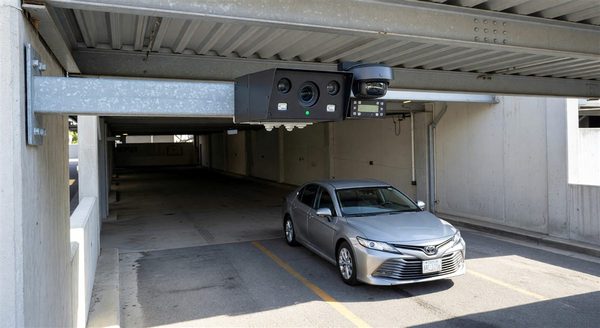
Mobile license plate recognition deployed on enforcement vehicles is the most significant technology advance in parking enforcement of the past two decades. An LPR-equipped enforcement vehicle drives through parking areas and simultaneously reads every visible license plate, comparing each against relevant databases (permit records, violation records, payment-in-progress records, law enforcement hotlists) in real time.
Enforcement throughput: Manual enforcement by officers with clipboards and sticker inspection can cover 30 to 50 vehicles per hour. Mobile LPR-equipped vehicles check 300 to 600 plates per hour depending on driving speed and facility geometry. This throughput advantage dramatically increases the fraction of vehicles that can be verified during an enforcement pass.
Consistency: Manual enforcement is subject to officer discretion in individual situations. Mobile LPR is algorithmically consistent — every plate that fails database verification receives the same enforcement action, regardless of vehicle appearance, parking location, or other factors that may introduce bias into manual enforcement.
Scofflaw identification: Mobile LPR simultaneously checks plates against scofflaw databases (vehicles with unpaid citation balances above a threshold). Scofflaw identification enables targeted enforcement actions — towing or booting — against chronic non-payers who would otherwise receive additional unenforceable citations.
Deployment patterns: Effective mobile LPR enforcement uses data-driven deployment — targeting enforcement passes at times and locations where violation rates are highest based on historical enforcement data. This is more efficient than random or schedule-based patrol patterns.
Digital Chalking
Traditional tire chalking (marking tires with chalk to detect overtime parking) has been supplemented and in many jurisdictions replaced by digital chalking systems:
Wheel Image Chalking: Camera-based systems photograph vehicle wheel positions at first observation. When the enforcement vehicle returns, the system compares current wheel images against the original — unchanged wheel position indicates the vehicle has not moved, confirming overtime status. Eliminates physical chalk marks and the associated equipment.
LPR-Based Time Tracking: In facilities or zones where the enforcement vehicle makes scheduled passes, LPR records the first observation time for each plate. Subsequent passes identify plates that are still present past the time limit. This approach does not require physical wheel images but relies on vehicle plates remaining readable across passes.
Legal considerations: Several courts have addressed the legality of digital chalking, including a 2019 Sixth Circuit ruling that found physical tire chalking constituted an unconstitutional search in one context. Digital systems implemented through LPR plate reading may have different legal standing than physical contact methods. Enforcement agencies should confirm the legal basis for their specific digital chalking implementation with legal counsel.
Handheld Citation Devices
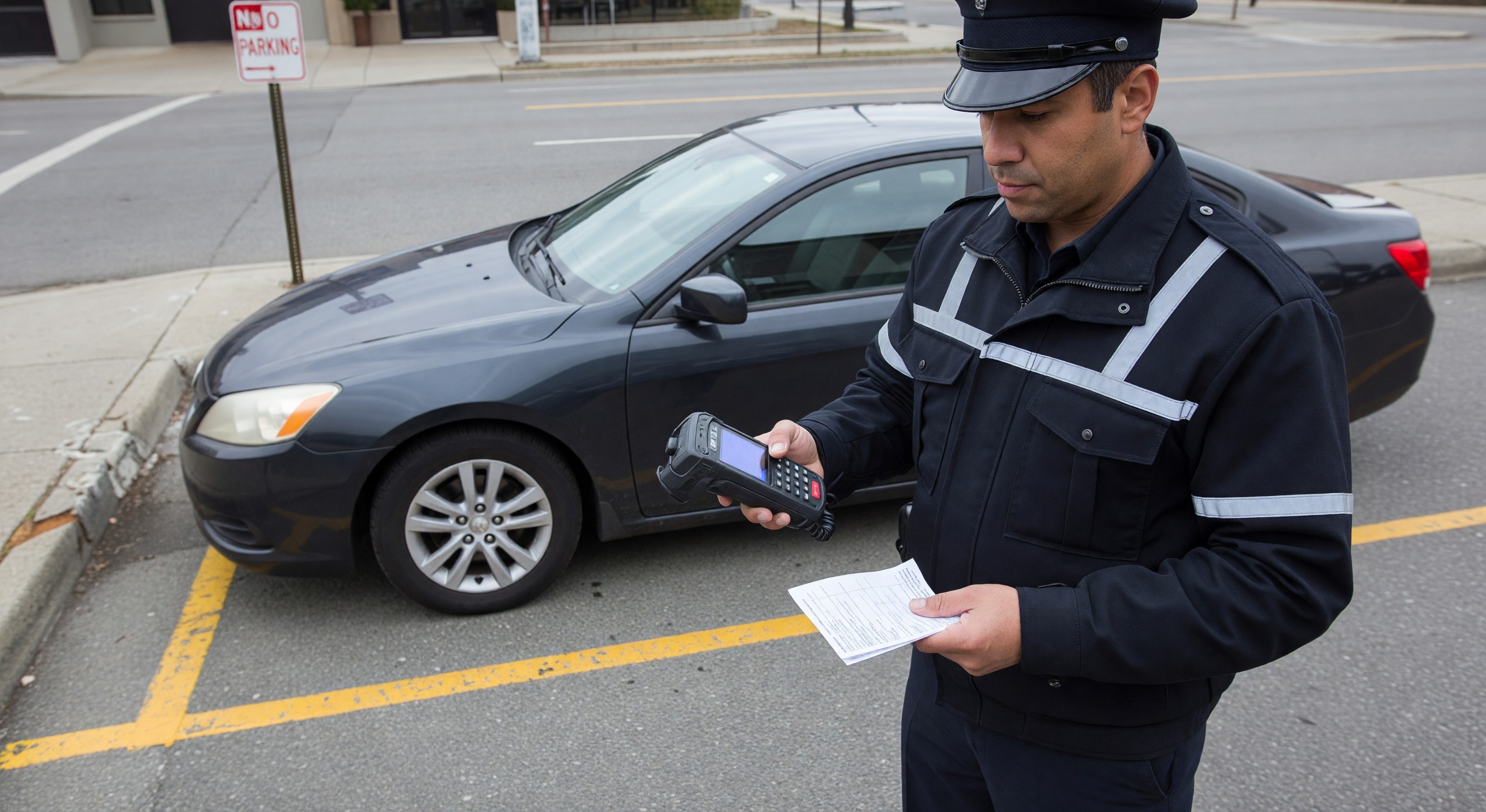
For officers who issue citations on foot (in pedestrian zones, attended facilities, or where vehicles require in-person inspection), handheld citation devices have replaced paper ticket books:
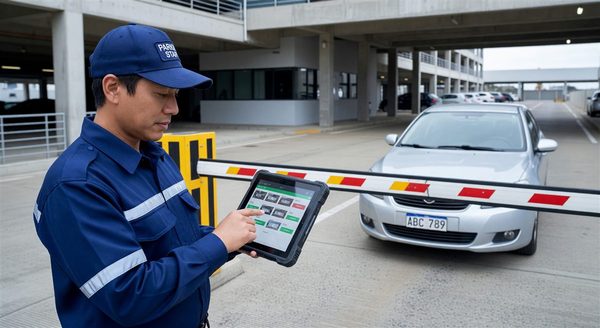
Real-time database integration: Modern handheld devices connect via LTE to the permit and payment databases, allowing officers to verify plate status in real time rather than referencing a printed permit list. An officer who sees an unrecognized vehicle can verify in seconds whether it has a registered permit before issuing a citation.
Citation data capture: Handheld devices capture citation data digitally — plate, violation code, location, date/time, officer ID, and vehicle description. Digital capture eliminates manual data entry at the office, reduces transcription errors, and enables same-day upload to the citation management system.
Digital photography: Most current handhelds include cameras that capture vehicle photographs attached to the citation record. Photographs provide evidentiary support for citation challenges and document vehicle location, meter display, and permit status at the time of issuance.
GPS location tagging: Citation records include GPS coordinates that place the citation geographically without relying on officer manual street address entry.
Citation Management Software
Citation management platforms organize the citation lifecycle from issuance through final payment or adjudication:
Citation tracking: All issued citations are tracked in a database with current status (outstanding, paid, appealed, adjudicated, referred to collections). The database enables real-time balance inquiries, scofflaw threshold tracking, and reporting.
Online payment processing: Most citation management systems include online payment portals where recipients can pay citations without visiting an office. Online payment reduces staff overhead and accelerates payment collection.
Appeal workflow management: Citation appeal management — intake, routing to adjudicators, decision recording, and notification — is significantly more efficient in purpose-built software than in email and spreadsheet workflows. Appeal tracking ensures that appeal deadlines are met and that appeal outcomes are reflected in the citation balance.
Integration with DMV and collection agencies: Unpaid citations are referred to collection agencies after a defined period. Some programs use DMV registration holds to compel payment from vehicles registered in the jurisdiction. Both integration types require documented data sharing agreements and protocols.
Scofflaw Management
Vehicles with multiple unpaid citations represent a disproportionate share of outstanding citation revenue. Scofflaw management programs identify and pursue these vehicles with targeted enforcement actions:
Boot (wheel clamp) programs: Vehicles with citation balances above a threshold (commonly 3 to 5 unpaid citations or a dollar amount threshold) are eligible for booting. When a scofflaw vehicle is identified by mobile LPR or stationary enforcement, a boot is applied. The vehicle cannot be removed until the outstanding balance is paid plus a boot removal fee. Boot programs generate significant revenue recovery from chronic non-payers.
Towing programs: In high-enforcement jurisdictions, vehicles above scofflaw thresholds may be towed. Towing is more disruptive to the vehicle owner and more expensive administratively than booting, but may be appropriate for repeat offenders who have removed boots or posted bond without paying.
DMV registration hold integration: State DMV programs that prevent registration renewal for vehicles with outstanding parking balances are among the most effective scofflaw collection tools — the vehicle owner must eventually interact with the DMV, at which point the parking obligation surfaces.
Frequently Asked Questions
What is the ROI of mobile LPR enforcement compared to manual enforcement? Mobile LPR typically achieves 4 to 8 times the enforcement throughput of manual patrol at comparable total cost (vehicle + LPR system + operator vs. multiple on-foot officers). The ROI depends on citation volume, violation rates, and payment collection rates. Facilities and jurisdictions with high violation rates in large areas see the strongest ROI from mobile LPR deployment.
How does digital citation issuance affect citation appeal rates? Digital citation systems with photograph documentation tend to reduce frivolous appeals (where the vehicle owner disputes facts that are documented in photographs) while improving the quality of legitimate appeal adjudication (where photographs clarify circumstances). The net effect on appeal rates varies by citation type and jurisdiction.
What database integration is required for effective mobile LPR enforcement? Real-time connection to: permit database (active registered plates), payment-in-progress database (plates with open paid sessions), citation outstanding database (for scofflaw identification), and optionally law enforcement hotlist (for stolen vehicle identification). All integrations should operate via documented APIs with sufficient performance for real-time plate verification at patrol speed.
Are LPR enforcement records subject to public records laws? In many jurisdictions, citation records and LPR enforcement records are government records subject to public records disclosure laws. Agencies operating LPR enforcement should consult legal counsel regarding records retention requirements, disclosure obligations, and applicable privacy law protections before establishing retention and disclosure policies.
Takeaway
Parking enforcement technology has transformed what was a labor-intensive, inconsistent, and difficult-to-scale function into a data-driven, automatable operation. Mobile LPR, digital citation management, and scofflaw programs working together create an enforcement environment that increases compliance (the likelihood of a violation being detected is higher, deterring violations) and improves revenue recovery (citations are issued accurately, appealed appropriately, and collected efficiently). For any parking operation where compliance with time limits and payment requirements is an operational priority, the enforcement technology investment is justified by the revenue recovery and compliance improvement it enables.
Further Reading from Authoritative Sources
- IPMI parking enforcement technology deployment and best practices — IPMI publishes enforcement technology guidance and deployment standards for parking operations, providing the professional authority benchmarks for the citation issuance accuracy, appeal management, and scofflaw program design described in this article.
- ITE parking enforcement technology and citation program technical resources — ITE’s parking technical resources address parking enforcement programs including mobile LPR deployment, citation management, and compliance measurement from a transportation engineering perspective that complements IPMI’s operational focus.