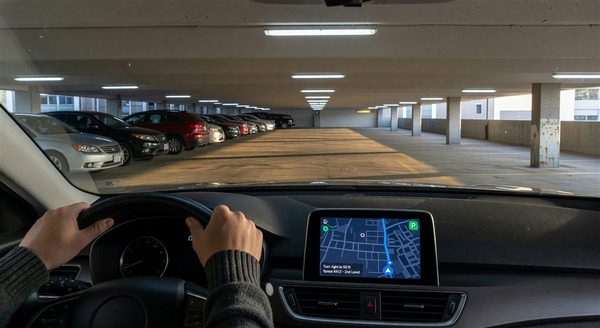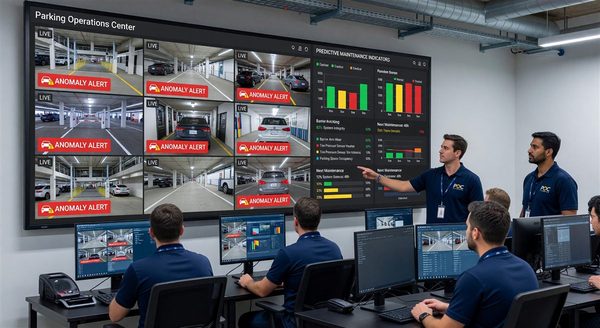
Parking digital signage — variable message signs, LED rate displays, and occupancy count indicators — converts static information into dynamic communication that responds to real-time facility conditions. Rates change based on demand, available space counts update as vehicles enter and exit, and wayfinding messages direct drivers to available zones rather than into full aisles. The technology spans from simple LED count signs above garage entrances to fully networked content management systems controlling dozens of displays throughout a facility. Understanding the options, integration requirements, and operational benefits helps operators make appropriate digital signage investments.
Types of Parking Digital Signage
Occupancy count signs: LED signs displaying the current count of available spaces in a zone, level, or facility. Mounted at facility entry, level transitions, and aisle entrances. Available counts update in near-real-time from the underlying PARCS or parking guidance system. Green/yellow/red color coding provides at-a-glance status without requiring a driver to read a number.
Full/Available status signs: Binary LED signs displaying “FULL” (red) or “OPEN” (green) for a zone or facility. Simpler than count displays; appropriate for facilities where the key information is whether to enter, not how many spaces remain.
Variable message signs (VMS): Electronic signs capable of displaying arbitrary text and graphics. Used for wayfinding direction (arrows directing to available zones), operational messages (facility closure, rate change notification, event instructions), and rate display. VMS require a content management system for message programming.
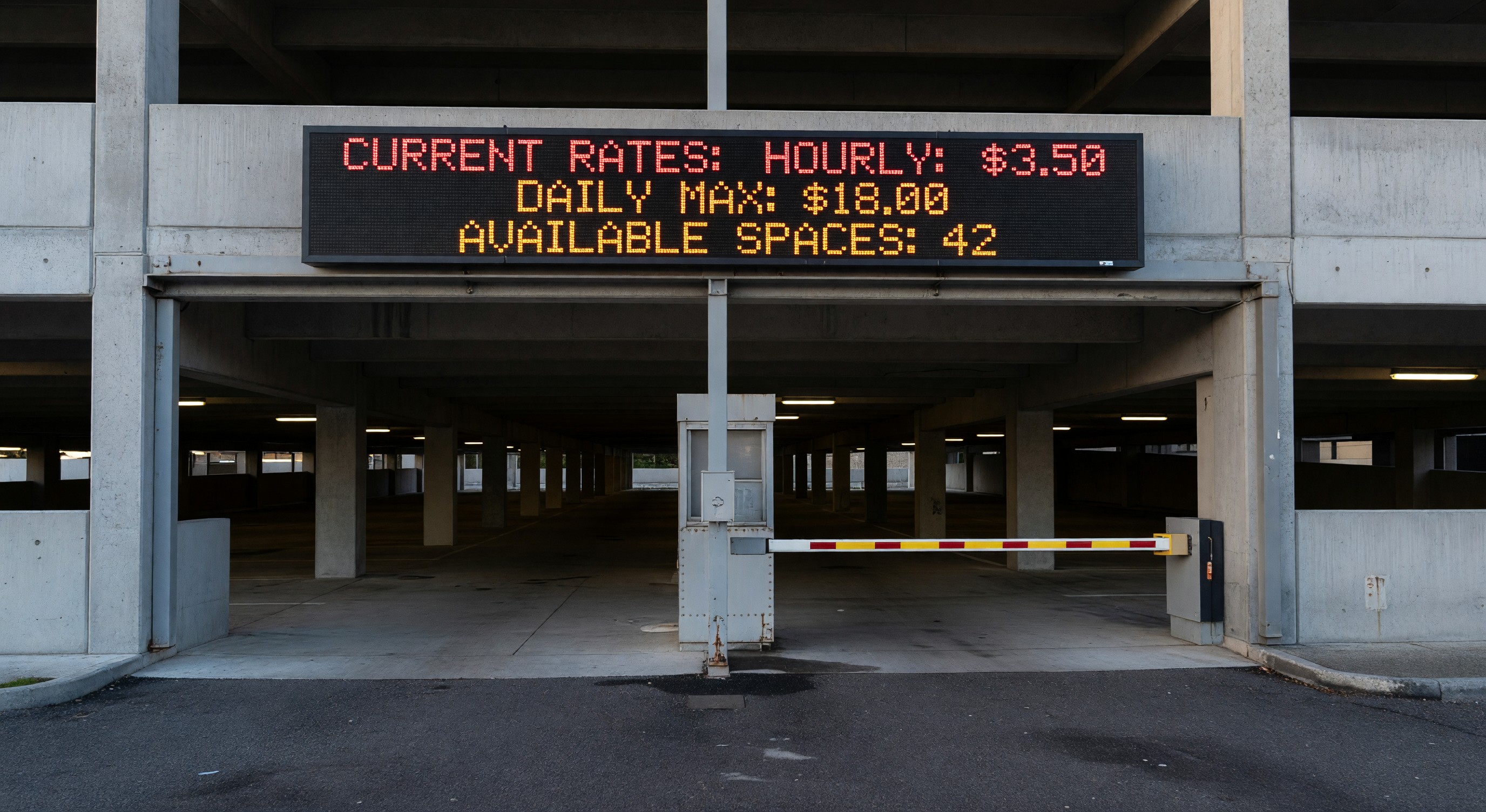
Dynamic rate display signs: Screens or LED matrices that display current parking rates, which update automatically when rates change. Essential for facilities using dynamic pricing — a driver approaching the facility should see the current rate before committing to enter.
Wayfinding directional signs: Signs at aisle intersections that direct drivers toward available spaces (left for 12 available, right for 0 available). Connected to the parking guidance system’s zone-level availability data.
Pedestrian information signs: Digital displays in elevator lobbies, stairwells, and pedestrian areas that show facility status, entry/exit information, and emergency notifications.
Integration with PARCS and Guidance Systems
Digital signage delivers accurate information only when integrated with systems that generate the underlying data:
PARCS integration for occupancy: Entry/exit count data from the PARCS drives occupancy count sign updates. As vehicles enter and exit, the PARCS count changes, and the count is transmitted to the sign controller to update the display. Integration is typically via IP-connected sign controllers that receive count data through a simple API or UDP broadcast.
Parking guidance system integration: Space-level sensor systems provide zone and aisle level availability data that drives more granular wayfinding signs. PGS APIs provide zone-level available counts that map to directional sign content (12 available in Zone A, 0 available in Zone B → arrows pointing toward Zone A).
Rate management integration: For facilities using dynamic pricing, the rate management system must be able to push current rates to dynamic rate display signs when rates change. This requires both the rate management software and the sign controller to support the integration — a consideration in rate management platform and signage vendor selection.
Emergency management integration: Building management systems and fire alarm systems should be able to send emergency messages to all facility digital signs simultaneously. This integration enables evacuation direction, hazard warnings, and emergency contact information to appear on all screens during incidents.
Content Management Systems
Variable message signs and dynamic display networks require content management systems (CMS) for sign programming:
Sign-specific CMS: Many digital sign manufacturers provide CMS software specific to their hardware. These systems support sign programming, scheduling, and remote content updates for the manufacturer’s sign types. Simpler to configure than general-purpose digital signage platforms but limited to the manufacturer’s hardware.
General-purpose digital signage platforms: Platforms like BrightSign, Navori, and Scala support diverse hardware types and provide more sophisticated content management — templates, scheduling, zone-based content mapping, and analytics. Appropriate for larger installations with multiple sign types and complex content needs.
Automated content generation: For signs displaying data-driven content (occupancy counts, current rates, available space counts), the CMS should support automated content generation from live data feeds rather than requiring manual programming of content changes. Signs that require manual updates to reflect changing conditions defeat the purpose of dynamic signage.
LED Sign Technology Considerations
Pixel pitch: The density of LEDs in a sign, measured in millimeters (the distance between adjacent LEDs). Lower pixel pitch = higher resolution for close viewing. For outdoor facility entrance signs viewed from vehicles in a lane, 10 to 20mm pixel pitch is appropriate. For indoor at-aisle signs viewed from 10 to 20 feet, 6 to 10mm pitch provides readable resolution.
Brightness (NITs): Outdoor signs require much higher brightness than indoor signs to remain readable in direct sunlight. Outdoor LED signs should be rated at 5,000 NITs or higher for daylight readability; indoor signs can operate effectively at 800 to 1,500 NITs.
IP rating: Outdoor signs require appropriate weatherproofing ratings. IP65 (dust-tight, protected against water jets) is the minimum for exposed outdoor installation; IP66 or higher for installations in particularly wet environments.
Color capability: RGB full-color LED capability supports the green/yellow/red status color coding standard in parking guidance. Monochrome (red or amber) signs are lower cost but limited to single-color status displays.
Connectivity: Sign controllers should support standard IP connectivity (Ethernet or WiFi) for remote monitoring, content management, and data integration. Proprietary bus systems that require dedicated wiring are limiting for future upgrades.
Operational Benefits of Digital Signage
Reduced search time: Occupancy count and directional signs reduce the time drivers spend circulating to find available spaces. This is particularly valuable at peak occupancy when available spaces are scattered and not easily identified visually.
Rate transparency: Dynamic rate displays at facility entry eliminate the customer experience problem of rate surprises at the pay station — drivers know the current rate before committing to enter.
Operational communication speed: Variable message signs enable immediate facility-wide communication — event day instructions, weather-related changes, temporary closure announcements — without requiring staff to post physical notices throughout the facility.
Enforcement support: Signs indicating time restrictions (“2 Hour Maximum”), permit area boundaries, and reserved space designations support enforcement by making rules visible and legible throughout the facility.
Frequently Asked Questions
What is the ROI case for digital signage in a parking facility? The primary ROI driver is the search time reduction and utilization improvement that occupancy guidance signage provides in facilities that regularly exceed 80 percent occupancy. Secondary ROI drivers include dynamic rate display for facilities with demand-responsive pricing and operational communication cost reduction. For facilities with consistently low occupancy or stable static rates, the ROI case is primarily customer experience improvement rather than operational efficiency.
How do digital signs connect to PARCS systems? Sign controllers typically connect via Ethernet to the facility network and receive count or status data from the PARCS management system through a simple API (REST or SNMP) or UDP data broadcast. The specific integration method depends on both the PARCS platform’s output formats and the sign controller’s input compatibility. Confirm integration compatibility during equipment selection.
What maintenance do digital parking signs require? LED signs have very long operational lifespans (50,000+ hours for LED modules) but require periodic cleaning (particularly outdoor installations), connection inspection, and occasional module replacement for individual LED failures. CMS software requires periodic updates. Annual maintenance budget of 1 to 3 percent of initial sign cost is appropriate for a well-maintained installation.
Can digital parking signs display multiple languages? Yes, with appropriate CMS support and Unicode-compatible display hardware. Multi-language content is particularly relevant for facilities serving international airports, tourist destinations, and multilingual urban markets. CMS scheduling can alternate language display or show multiple languages simultaneously depending on sign size.
Takeaway
Parking digital signage converts the static information environment of traditional parking facilities into a dynamic system that communicates current conditions to drivers in real time. Occupancy count signs reduce search time, dynamic rate displays support transparent demand-responsive pricing, and variable message signs enable immediate operational communication. The technology investment is most clearly justified in high-occupancy facilities where the guidance value of accurate real-time information is highest — but the customer experience and operational communication benefits apply across facility types. Integration with PARCS and guidance systems, rather than standalone operation, is what converts digital signage from decorative display to operational infrastructure.
Further Reading from Authoritative Sources
- IPMI digital signage and parking guidance technology standards — IPMI publishes technology guidance, integration standards, and operational best practices for parking digital signage and guidance systems.
- ITE standards for variable message signs in transportation facilities — ITE publishes standards for variable message signs in transportation and parking facilities, including sign placement, message hierarchy, and driver information system design.