Parking access control — the technology that determines which vehicles can enter a facility, when, and to which areas — has evolved from standalone gate controllers with locally stored permit lists to cloud-connected systems with centralized credential management, real-time access logging, and remote administration. For multi-facility operators and facilities with large monthly parker populations, cloud-based access control creates operational efficiencies that isolated systems cannot match. Understanding the credential types, administration capabilities, and integration requirements of cloud access control helps operators evaluate the transition from legacy to cloud-connected systems.
Access Credential Types
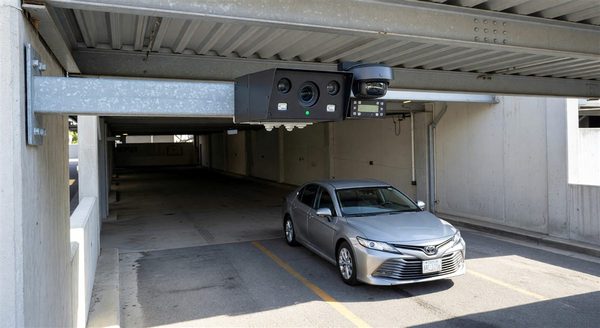
License plate recognition (LPR): The vehicle’s license plate serves as the credential. The plate is registered in the access control database; LPR cameras at entry points verify plate identity against the database and command gate operation. Touchless entry without driver action required. Most flexible for multi-vehicle accounts and immediate activation/deactivation.
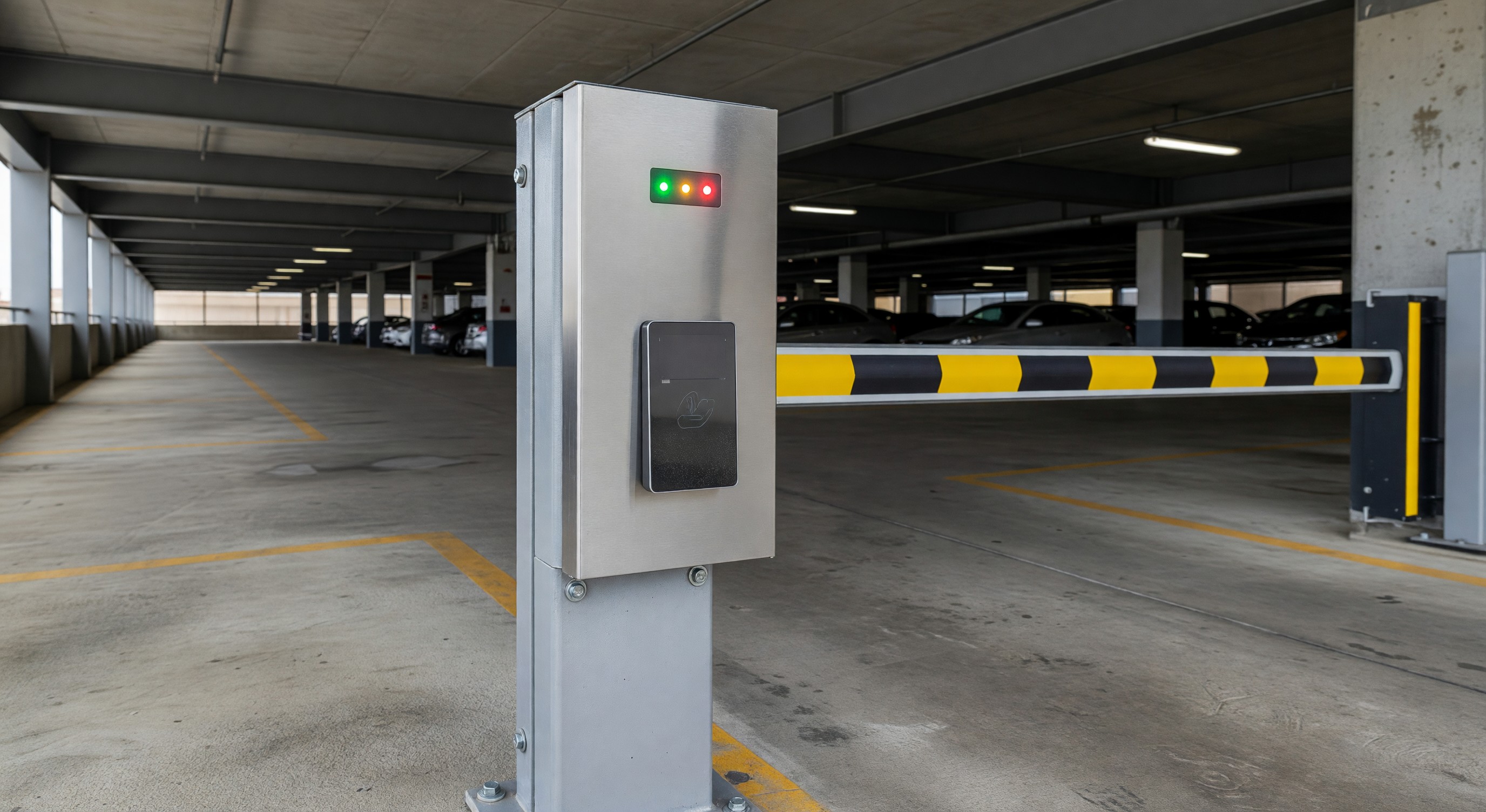
Proximity cards and key fobs: RFID credentials issued to monthly parkers. The parker taps the card or fob to a reader mounted at the entry point, the reader transmits the credential ID to the access control system, and the system grants or denies access based on the credential’s current authorization status. Mature, reliable technology; requires physical issuance and replacement; cannot be transferred instantly.
Mobile credentials: Smartphone-based access credentials delivered through a mobile app. The app presents a credential (via Bluetooth BLE, NFC, or QR code) to a reader at the entry point. Mobile credentials can be issued and revoked instantly without physical media distribution; require smartphone compatibility and app adoption by the parker population.
QR code credentials: Single-use or time-limited QR codes issued for one-time or reserved access. Common for visitor management, event parking, and reservation-based access. QR codes are scanned by a camera reader at the entry point.
Barcode credentials: Similar to QR codes, barcode-based credentials are issued on paper or digitally for specific access events. Common in event parking and reservation systems. Less secure than encrypted QR codes but widely compatible.
Cloud Access Control Architecture
In a cloud-based access control architecture:
Centralized credential database: All authorized credentials (plates, card numbers, mobile credential IDs) are stored in a cloud-managed database rather than in the local memory of individual gate controllers. This centralization enables real-time credential changes — deactivating a card number or removing an LPR plate takes effect at all controlled entry points simultaneously, without programming each controller individually.
Local processing with cloud synchronization: Most cloud access control systems maintain a local cache of credentials at the gate controller to enable access decisions even if internet connectivity is temporarily lost. The local cache synchronizes with the cloud database when connectivity is restored. The sync interval (typically seconds to minutes) determines the delay between cloud credential changes and local enforcement.
Remote event logging: Every access event (entry granted, entry denied, credential presented, gate opened, gate closed) is logged to the cloud platform with a timestamp and the credential identity. Access logs are searchable and reportable from the cloud administration interface without requiring physical access to the gate controller.
Remote gate management: Cloud-connected controllers support remote gate commands — open, close, hold open, disable — from the cloud administration interface. A facility manager can remotely open a gate for a delivery vehicle, hold a gate open for event egress, or disable a malfunctioning gate from anywhere with internet access.
Multi-Site Credential Management
For operators managing multiple facilities, cloud-based access control provides significant multi-site administration advantages:
Portfolio-wide credential visibility: All credentials across all facilities are visible in a single administration interface. Searching for a specific parker’s credential, reviewing their access history across facilities, or modifying their access permissions does not require logging into each facility’s local system separately.
Cross-facility access rights: Monthly parkers who are authorized to use multiple facilities in a portfolio can be managed with a single account credential that grants access at all authorized locations. Changes to the account (adding or removing facility access) update everywhere simultaneously.
Centralized reporting: Access reports across all facilities — total entries by facility, credential denials by site, access pattern analysis — are generated from a single reporting platform rather than requiring compilation from multiple local systems.
Consistent configuration management: Rate schedules, time-of-day access restrictions, and permit type configurations can be pushed from the central platform to all facilities, ensuring operational consistency across a portfolio.
Visitor and Temporary Access Management
Cloud access control platforms typically include visitor management capabilities for facilities that need to grant temporary access without issuing physical credentials:
Time-limited QR or PIN codes: Administrators issue temporary access codes with defined validity periods (one day, one week, one event) through the cloud platform. The code is communicated to the visitor digitally. At the entry point, the code is scanned or entered on a keypad for access.
Pre-registered visitor plates: For facilities using LPR access control, visitor plates can be pre-registered in the cloud database with a defined validity period. The visitor enters without any credential exchange at the gate.
Visitor management portal: Some cloud platforms provide a self-service portal where hosts (monthly parker account holders or authorized administrators) can pre-register visitor plates or generate visitor access codes without involving operations staff.
Integration with PARCS and Property Management Systems
Cloud access control is most valuable when integrated with the broader technology ecosystem:
PARCS integration: The access control database and the PARCS account management system should share a common data layer — a permit account in PARCS automatically creates or updates the corresponding access credential, and payment status changes in PARCS automatically suspend or reinstate access credentials. Without this integration, permit and access control databases can drift out of sync.
Property management system (PMS) integration: Hotel and mixed-use facilities may integrate access control with the property management system, automatically creating parking credentials when hotel guests check in and deactivating them at checkout.
Building access control: Facilities where parking access is linked to building access (tenant parking garages, residential building parking) benefit from unified credential management across parking and building access control. Many enterprise access control platforms (Lenel, Genetec, Software House) support parking access integration.
Frequently Asked Questions
What happens to cloud access control if internet connectivity is lost? Well-designed cloud access control systems cache authorized credentials locally at the gate controller. Access decisions during connectivity outages are made against the local cache rather than the cloud database. Credential changes made during an outage are queued for synchronization when connectivity is restored. The practical implication is that credential deactivations (for non-payment or security reasons) may not take effect during a connectivity gap.
How does cloud access control handle LPR failure? When LPR fails to read a plate (unrecognized, low confidence, camera malfunction), the gate does not open automatically. The facility should have a fallback process — intercom connection to a remote monitoring center or local attendant — for parkers whose plates cannot be read. LPR failure rates should be monitored as a system performance metric.
What are the cybersecurity considerations for cloud access control? Cloud access control platforms are internet-connected systems that control physical access to facilities. Cybersecurity requirements include: strong authentication (multi-factor authentication for administrator accounts), encrypted communication between devices and the cloud platform, regular firmware updates for gate controllers and readers, and network segmentation to isolate access control equipment from other facility networks. Conduct periodic security assessments of the connected infrastructure.
Can cloud access control manage access based on time-of-day or day-of-week restrictions? Yes, time-based access control is standard in cloud platforms. Monthly permits can be configured with specific access windows — daytime weekday access only, overnight access only, or custom schedules. Access attempts outside the authorized window are denied automatically by the access control system.
Takeaway
Cloud-based parking access control replaces locally managed, manually updated credential systems with centralized, real-time credential management that scales from single facilities to large portfolios. The operational advantages — immediate credential changes, remote gate management, centralized multi-site reporting, and visitor management — are most significant for operators managing multiple facilities or large monthly parker populations where the overhead of physically updating each controller is substantial. For single-facility operations with small monthly parker counts and stable credential needs, the incremental benefit of cloud over local access control is more modest, but the trajectory of the technology market strongly favors cloud-connected systems for any new deployment.
Further Reading from Authoritative Sources
- IPMI parking access control technology standards and cloud adoption guidance — The International Parking and Mobility Institute publishes technology adoption guidance for parking operators including access control standards that are directly relevant to the cloud access control topics covered in the article.
- NIST cloud security guidance and access control standards — NIST SP 800-53 and NIST cloud computing security guidance provide authoritative standards for the cloud security requirements — encryption, access control, and security assessment — discussed in the article’s cloud access control security section.