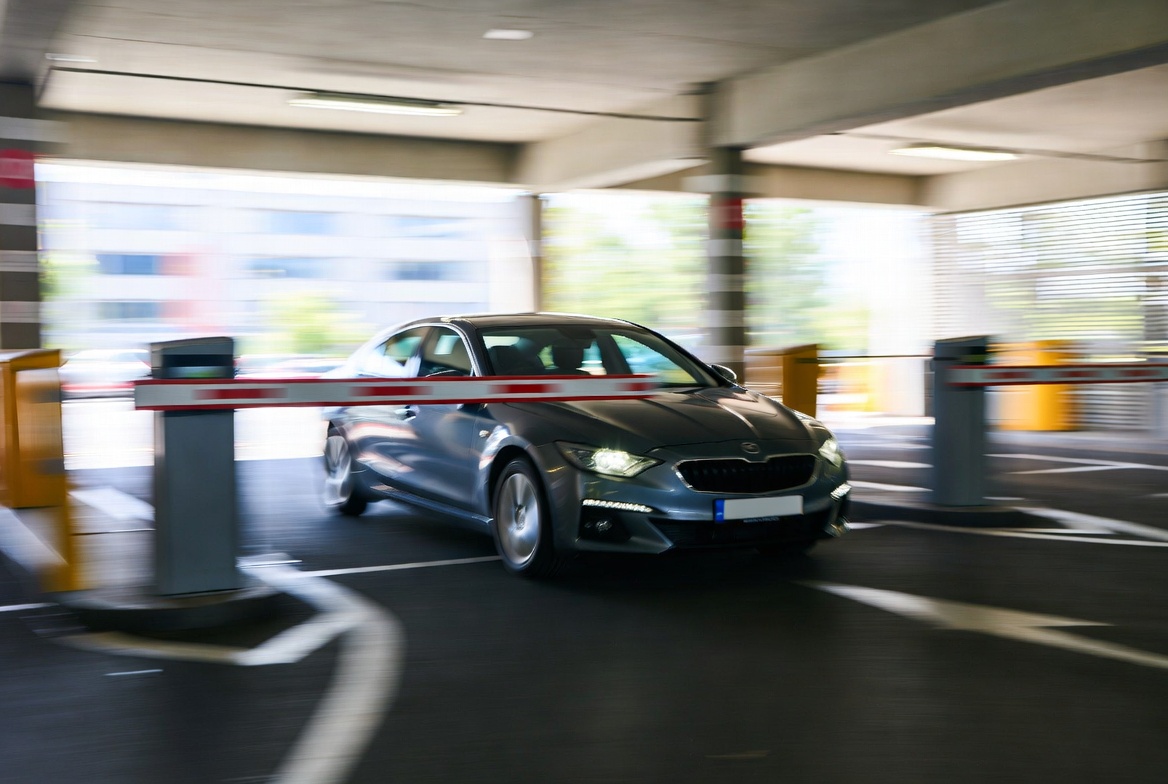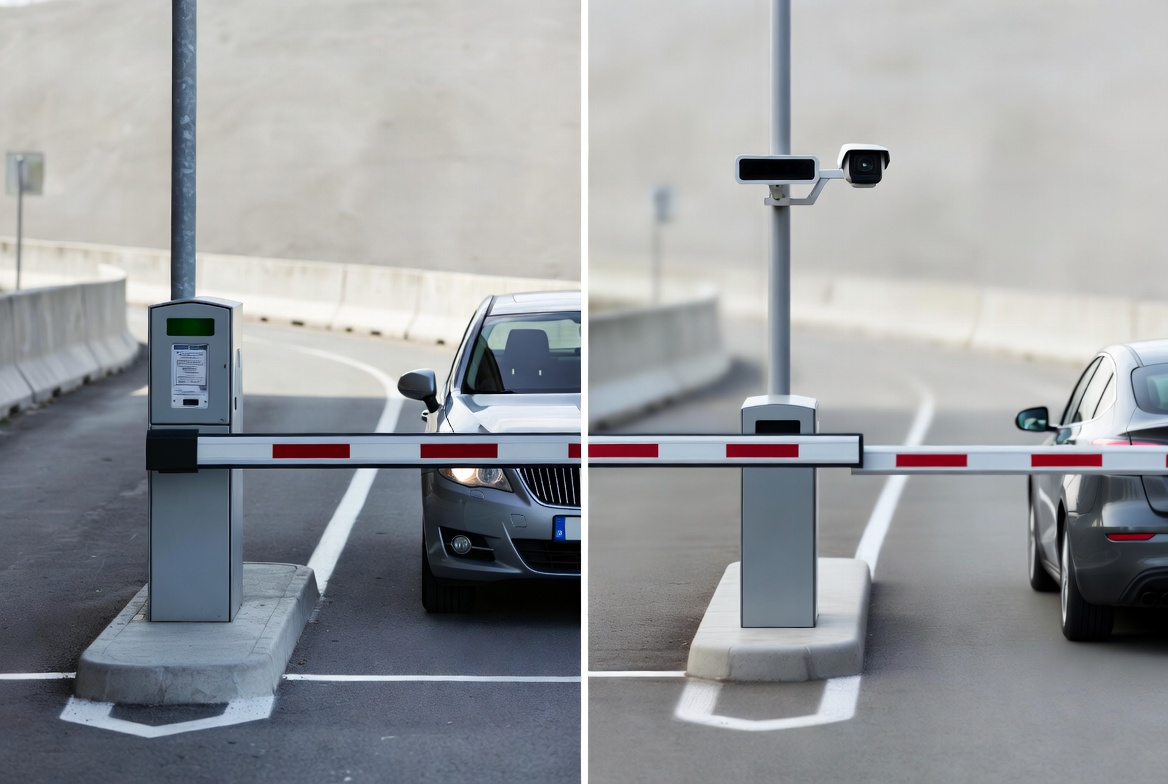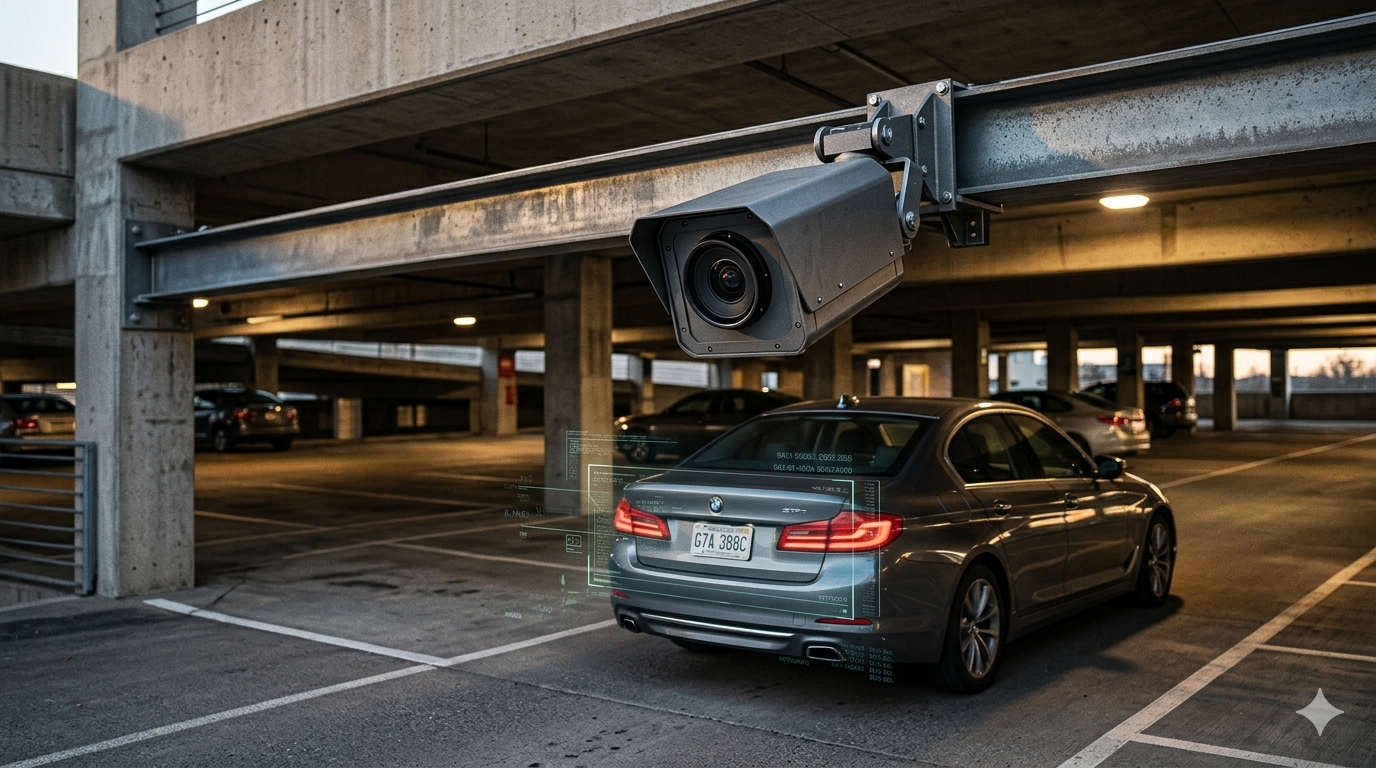
For most of its history in the parking industry, license plate recognition has done exactly what the name suggests: it reads license plates. A camera captures an image, optical character recognition software extracts the alphanumeric characters, and the system matches the result against a database. Entry logged. Exit recorded. Violation flagged. Transaction complete.
That core function remains essential. But the cameras themselves — and more importantly, the software processing their feeds — have outgrown the original job description. Driven by advances in artificial intelligence, computer vision, and edge computing — technologies tracked by the Intelligent Transportation Systems Joint Program Office — LPR cameras are becoming multi-purpose sensing platforms that deliver value far beyond plate reading.
This shift has significant implications for parking operators, enforcement agencies, and facility planners. The camera that reads plates today can count vehicles, classify them by type, detect occupancy in real time, and feed predictive models that help operators make better decisions. The hardware investment is largely the same. The intelligence layered on top is what has changed.
The Evolution of LPR Technology
First Generation: OCR and Database Matching
Early parking LPR systems, widely deployed through the 2000s and into the 2010s, relied on traditional optical character recognition. The camera captured a high-contrast image of the plate — typically using infrared illumination to neutralize the effects of ambient lighting — and OCR software attempted to extract the characters.
These systems worked reasonably well under controlled conditions: vehicles approaching at low speed, plates clean and properly mounted, lighting consistent. Accuracy rates in ideal installations reached 90 to 95 percent. But performance degraded in challenging conditions — heavy rain, snow-covered plates, temporary tags, non-standard plate formats from different states and provinces — and each misread created an operational exception.
Second Generation: Machine Learning OCR
The next wave of LPR systems incorporated machine learning into the character recognition pipeline. Instead of relying on rigid template-matching algorithms, these systems trained neural networks on millions of plate images spanning different jurisdictions, plate designs, fonts, and conditions. The result was a measurable improvement in accuracy, particularly on the edge cases that tripped up earlier systems.
Machine learning also enabled better handling of plate variations across North America. With over 200 distinct plate designs in active circulation across U.S. states, Canadian provinces, and Mexican states, the combinatorial challenge is substantial. ML-based systems learn to recognize design-specific features — state name placement, logo positions, character spacing — that help disambiguate characters.
Third Generation: AI-Powered Vision Platforms
The current generation represents a more fundamental shift. Rather than treating the camera as a single-purpose plate reader, manufacturers and software developers are building general-purpose computer vision platforms that happen to include plate reading as one of several capabilities.
These systems use deep learning models — convolutional neural networks, object detection architectures like YOLO and SSD, and increasingly, transformer-based vision models — to analyze the full camera frame, not just the plate region. The entire vehicle, its position, its surroundings, and its behavior become data.
Companies like Parking BOXX have integrated AI-powered LPR into their access control platforms, delivering plate recognition alongside vehicle detection and classification capabilities that extend what operators can do with a single camera installation.
Beyond Plates: What AI-Powered Cameras Can Do
Occupancy Detection
Knowing how many vehicles are in a lot or garage — in real time — is one of the most requested capabilities in modern parking management. Traditionally, occupancy has been measured by counting entries and exits at gates, but this approach has limitations. It does not work for ungated lots, it drifts over time due to counting errors, and it cannot provide zone-level or aisle-level granularity.
Camera-based occupancy detection changes the equation. AI models can analyze overhead or angled camera views to identify occupied and vacant spaces within the frame. Each camera covers a section of the facility, and the combined feeds produce a real-time occupancy map.
The practical applications are immediate:
- Dynamic signage at lot entrances displaying available space counts
- Mobile app integration showing parkers where spaces are available before they arrive
- Utilization analytics that reveal peak-hour patterns, underused areas, and the true capacity of facilities that operators have historically managed by gut feel
Occupancy detection does not require the same image resolution as plate reading. A single camera positioned at the right height and angle can monitor 30 to 50 spaces, making the per-space cost of camera-based occupancy sensing competitive with in-ground sensor alternatives — and significantly less disruptive to install.
Vehicle Classification
AI models trained on vehicle images can classify vehicles by type — sedan, SUV, pickup truck, van, motorcycle, commercial vehicle — with high accuracy. This capability has several practical applications in parking:
Oversized vehicle management. Garages with low clearances or narrow stalls can identify oversized vehicles at entry and route them to appropriate areas, reducing damage to both vehicles and infrastructure.
Rate differentiation. Some facilities charge different rates for motorcycles, standard vehicles, and oversized vehicles. Automated classification eliminates the need for attendant judgment or self-reported vehicle type.
Fleet and commercial vehicle tracking. Properties that need to manage delivery vehicle access — shopping centers, office complexes, residential towers — can use classification data to enforce time-limited commercial vehicle access.
Demand analysis. Understanding the vehicle mix in a facility informs design decisions. A lot that consistently fills with SUVs and trucks may need wider stalls than one that primarily serves compact sedans. Classification data provides the evidence base for these decisions.
Vehicle Color and Make Recognition
Beyond type classification, some AI systems can identify vehicle color and, in some cases, make and model. This extends LPR’s utility in enforcement and security scenarios:
- A plate that returns a stolen-vehicle hit can be cross-referenced against the vehicle’s registered color and make, reducing false-positive alerts
- Security incidents where witnesses report a vehicle color but not a plate number become searchable
- Parking operators can identify vehicles that are present for extended periods (potential abandoned vehicles) with greater specificity
Tailgating and Piggybacking Detection
In gated facilities, tailgating — where a second vehicle follows an authorized vehicle through the gate before it closes — is a persistent revenue and security concern. Traditional detection relies on double-loop vehicle detection, which can identify that two vehicles passed but cannot determine whether the second was authorized.
AI-powered cameras can detect tailgating events with greater accuracy by analyzing vehicle separation, speed, and timing. The system can flag incidents for review, trigger alerts, or — in some configurations — capture the tailgating vehicle’s plate for follow-up.
Directional and Behavioral Analysis
Advanced vision models can track vehicle movement patterns through a facility — which aisles drivers use to search for spaces, where they make U-turns, where they stop and wait. This behavioral data, aggregated and anonymized, reveals circulation patterns that inform wayfinding design, signage placement, and facility layout.
For example, if camera data shows that 70 percent of entering vehicles turn right and circulate clockwise through the garage, the operator can optimize directional signage and space-availability displays to align with actual driver behavior rather than assumed patterns.
Enforcement Applications
LPR has been an enforcement tool since its earliest deployment in parking, but AI-powered systems significantly expand what is possible.
Mobile LPR for Street and Lot Enforcement
Enforcement vehicles equipped with roof-mounted LPR cameras can scan plates continuously while driving through a district or campus. Modern systems read plates at highway speeds and across multiple lanes, covering vastly more ground than officers on foot.
The AI layer adds context. Rather than simply checking plates against a violation database, the system can:
- Identify vehicles that have exceeded time limits by cross-referencing current reads against historical data
- Flag vehicles parked in zones where their permit type is not valid
- Detect vehicles that have moved from one space to another to reset a meter (the “space shuffler” problem)
Scofflaw Identification
Chronic violators — vehicles with multiple unpaid citations — represent a disproportionate share of enforcement revenue leakage. LPR systems that maintain a hot list of scofflaw plates can alert officers in real time when a flagged vehicle is spotted, enabling targeted enforcement that recovers outstanding fines and encourages future compliance.
Permit Verification
In environments with virtual permits — universities, corporate campuses, residential districts — LPR serves as the primary enforcement mechanism. The camera reads the plate, the system checks permit status, and non-compliant vehicles are flagged for citation. The entire process is automated, consistent, and far more efficient than manual hang-tag inspection.
Data and Analytics
Perhaps the most transformative aspect of AI-powered LPR is the data it generates. Every camera read produces a structured data record: plate number, timestamp, location, confidence score, and — with advanced systems — vehicle type, color, and direction of travel.
Aggregated over weeks and months, this data enables analytics that were previously impossible or prohibitively expensive:
Demand Forecasting
Historical plate-read data, combined with calendar information (day of week, holidays, events), weather data, and local activity indicators, can feed forecasting models that predict parking demand with useful accuracy. Operators can use these forecasts to adjust staffing, modify rate schedules, or pre-position resources.
Customer Segmentation
Plate-level data reveals customer behavior patterns. How often does a vehicle visit? What time does it typically arrive? How long does it stay? Which facility does it prefer? This information supports loyalty programs, targeted communications, and pricing strategies tailored to different customer segments.
Revenue Optimization
Understanding demand patterns at a granular level allows operators to implement dynamic pricing — raising rates during high-demand periods and lowering them during slack times. LPR data provides the demand signal that makes dynamic pricing practical rather than theoretical.
Operational Efficiency
Camera-based monitoring of facility conditions — queue lengths at entry, space availability by zone, traffic flow through aisles — enables real-time operational adjustments. A central operations team monitoring multiple facilities can dispatch resources based on actual conditions rather than schedules.
Privacy and Data Governance
The expanded capabilities of AI-powered LPR raise legitimate privacy concerns. License plate data is personal information in many jurisdictions, and the additional data streams — vehicle type, color, movement patterns — add layers of identifiability.
Responsible operators are addressing these concerns through:
Data retention policies. Defining how long plate data is stored and under what conditions it is purged. Many parking-specific applications require only short-term retention (the duration of a parking session plus a reconciliation period), and policies should reflect this.
Access controls. Limiting who can query plate data and for what purposes. Operational staff need access to active sessions. Historical data access should be restricted and audited.
Anonymization for analytics. Aggregate analytics — demand patterns, occupancy trends, circulation studies — do not require plate-level identification. Anonymization techniques allow operators to derive value from data without retaining individual identifiers.
Transparency. Clear signage informing parkers that LPR is in use, along with accessible privacy policies that explain what data is collected, how it is used, and how individuals can exercise their rights.
Regulatory compliance. Data protection regulations — including state-level privacy laws in California, Virginia, Colorado, and others — impose specific requirements on the collection and use of personal information. The International Parking & Mobility Institute has published data governance frameworks to help operators navigate these requirements. Operators must ensure their LPR data practices comply with applicable law.
Implementation Considerations
Camera Placement and Coverage
AI-powered capabilities do not eliminate the fundamentals of camera installation. Correct mounting height, angle, illumination, and field of view remain critical. Plate reading requires specific optical geometry — the camera must see the plate face-on within a defined capture zone. Occupancy detection and vehicle classification are more tolerant of angle variation but still require thoughtful placement.
Processing Architecture
AI inference — the process of running a neural network model on camera images — requires computational resources. Some systems perform inference at the edge (on processors built into or co-located with the camera), while others stream video to a central server or cloud service for processing. Edge processing reduces latency and network bandwidth requirements but may limit model complexity. Cloud processing enables more powerful models but depends on network reliability.
Integration with Existing Systems
The value of AI-powered LPR is maximized when it integrates with existing parking management, enforcement, and access control systems. Open APIs and standard data formats facilitate this integration, but operators should evaluate interoperability carefully before committing to a platform.
The Practical Takeaway
The LPR camera has evolved from a single-function device into a versatile sensing platform. For parking operators, this evolution means that a camera installed today for plate reading can — with the right software — also provide occupancy data, vehicle classification, behavioral analytics, and enhanced enforcement capabilities.
The investment thesis is straightforward: the hardware cost of an AI-capable camera is not dramatically higher than a traditional LPR camera, but the range of applications it supports is significantly broader. Operators who invest in flexible, AI-ready camera infrastructure position themselves to adopt new capabilities as they mature, without ripping out and replacing hardware.
The plate is still the starting point. But it is no longer the finish line.