License plate recognition (LPR) — also called automatic license plate recognition (ALPR) — has moved from specialty enforcement tool to core parking technology infrastructure. LPR enables touchless access control, automates permit verification, powers enforcement without physical sticker checks, and integrates with payment systems to enable license-plate-based payment without tickets or cards. Understanding how LPR works, where it performs well, and where it has limitations is essential for parking operators evaluating the technology.
How LPR Technology Works
LPR systems use cameras, image processing software, and optical character recognition (OCR) algorithms to read vehicle license plates and convert the plate characters to text data that can be checked against databases. The key components:
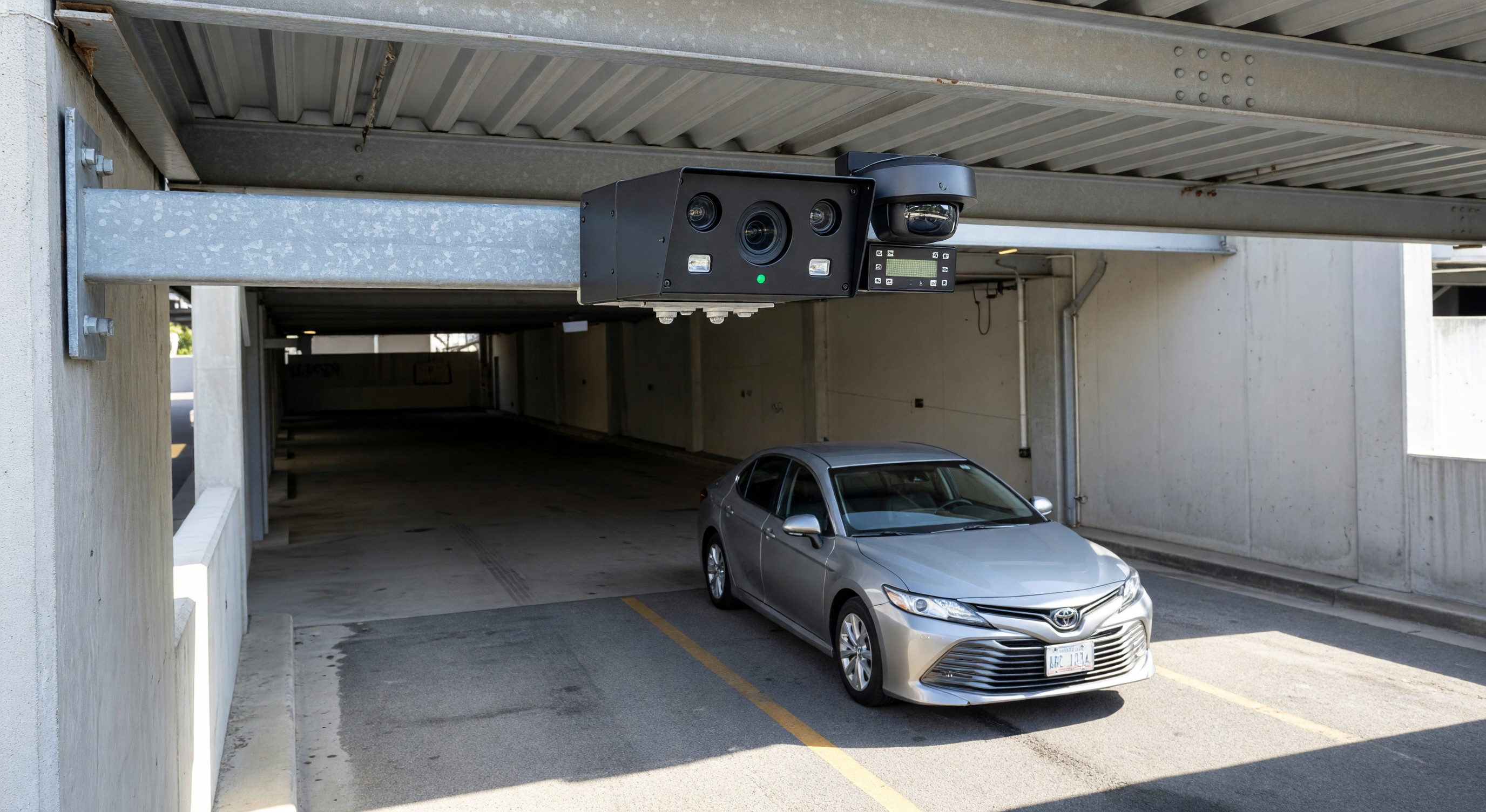
Camera hardware: LPR cameras are optimized for plate capture — typically with high shutter speeds to capture moving vehicles, infrared illumination for nighttime operation, and focal lengths matched to the capture zone. Fixed LPR cameras are mounted at entry/exit points; mobile LPR cameras mount on enforcement vehicles.
Image processing: The camera captures the plate image and passes it to OCR software that identifies the plate characters. Modern LPR systems achieve high read rates (90 to 99 percent in controlled conditions) on clean, properly illuminated plates.
Database matching: The read plate is compared against one or more databases: monthly permit holders, enforcement violation records, payment-in-progress records, or law enforcement hotlists. The match result triggers the appropriate action (gate open, enforcement flag, alert).
Read confidence scoring: LPR systems typically provide a confidence score for each read. Low-confidence reads (where the OCR is uncertain of individual characters) can be routed for human review or treated as no-read depending on the system configuration.
Fixed LPR for Access Control
Fixed LPR at facility entry and exit lanes replaces ticket-in/ticket-out systems, proximity cards, and other physical credential approaches for monthly parkers and permit holders:
Monthly parker access: The vehicle’s plate is registered in the PARCS permit database. When the vehicle arrives, the LPR camera reads the plate, the system confirms it matches an active permit, and the gate opens — no card, ticket, or app interaction required. The touchless experience is a significant convenience improvement for daily commuter parkers.
Visitor and transient management: Fixed LPR captures plates for all entering vehicles, enabling virtual ticketing (the plate becomes the parking session identifier, retrieved on exit to calculate fees) and eliminating the ticket dispenser mechanical failure mode.
Virtual permit enforcement: In facilities that enforce permits by vehicle rather than physical sticker, LPR cross-references each entering plate against the permit database. Unpermitted plates trigger alerts in the PARCS system or deny access.
Mobile LPR for Enforcement
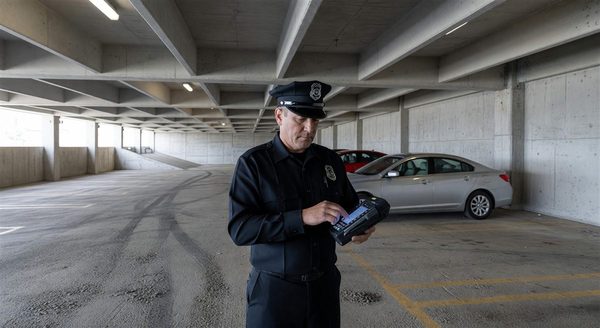
Mobile LPR systems mount cameras on enforcement vehicles, allowing officers to drive through parking areas and check every visible plate against violation databases simultaneously:
Efficiency: A mobile LPR-equipped vehicle can check hundreds of plates per hour compared to the 30 to 60 physical checks possible with manual sticker inspection. This dramatically increases enforcement coverage in large surface lots or distributed permit areas.
Violation detection: Mobile LPR checks plates against: expired permit database, scofflaw lists (vehicles with unpaid citations), payment-in-progress records (for time-limited zones), and law enforcement hotlists. Violations trigger an alert to the officer, who can then issue a citation.
Chalking replacement: Mobile LPR can replace tire chalking for time-limit enforcement in some municipalities. The vehicle’s plate and arrival time are recorded; when the officer returns and the plate is still present past the time limit, a violation is confirmed without physical chalk marks.
Accuracy Considerations
LPR accuracy varies with environmental conditions and plate characteristics:
Factors affecting read accuracy: Plate condition (dirty, damaged, or partially obscured plates have lower read rates), lighting (high-contrast or improperly illuminated conditions reduce accuracy), plate state/province format (systems must be configured for the plate formats present in the coverage area), and vehicle speed (faster-moving vehicles produce more motion blur).
Character confusion: Common OCR errors involve similar-looking characters: 0/O, 1/I/l, B/8, S/5, Z/2. LPR systems use plate format rules for each state/province to constrain plausible character combinations, reducing but not eliminating character confusion errors.
Practical accuracy: In well-configured environments with maintained cameras and typical vehicle speeds, commercial LPR systems achieve read rates of 93 to 98 percent for in-state plates. Out-of-state and specialty plates (vanity plates with unusual character spacing, temporary plates) may read at lower rates. Systems should be tested against the actual plate mix at the facility before full deployment.
Human review workflow: Most LPR deployments include a manual review queue for low-confidence reads and dispute resolution. Staff should be able to view the captured plate image alongside the OCR result to confirm or correct reads.
LPR Vendor Evaluation
Read accuracy data: Request accuracy rate data from vendor references at comparable facilities. Self-reported vendor accuracy claims should be validated against actual performance at reference sites in similar climatic and operational conditions.
Database integration: Confirm that the LPR system integrates cleanly with the PARCS platform’s permit and violation databases via documented APIs. Proprietary databases that cannot be accessed by other systems create data portability problems.
Image retention and privacy: LPR systems capture images of vehicles (and potentially visible occupants) at every read. Confirm the system’s image retention period, data security practices, and compliance with applicable state laws — several states have enacted LPR data retention and use restrictions.
False positive rate: In enforcement applications, false positives (valid permits flagged as violations) create customer service problems and appeal workload. Ask vendors specifically about false positive rates in permit verification applications.
Privacy and Legal Considerations
LPR systems collect location and time data for every vehicle read, including vehicles with no violation or permit relationship with the facility. This data has significant privacy implications:
State LPR laws: Several states (including California, Utah, Arkansas, and others) have enacted laws restricting how private entities can collect, retain, and share LPR data. Review applicable state law before deployment. A 2026 California appellate ruling, Bartholomew v. Parking Concepts, underscores how seriously this gets enforced — the court held that simply failing to post the state-required LPR privacy policy is itself actionable, independent of any data misuse.
Retention limits: Best practice (and, in some states, law) limits LPR image and data retention to the minimum period needed for operational purposes — typically 30 to 90 days for non-violation records. Longer retention creates both liability and privacy risk.
Data sharing restrictions: LPR data sharing with law enforcement or third parties should be governed by a documented policy and, in some jurisdictions, requires a legal process. Operators should not assume commercial LPR data can be freely shared with law enforcement on request.
Frequently Asked Questions
What read accuracy should operators expect from LPR systems? In well-configured environments, 93 to 98 percent read accuracy for in-state plates is typical. Out-of-state plates, damaged plates, and specialty vanity plates read at lower rates. Operators should test accuracy against their specific plate mix before committing to full deployment.
Can LPR fully replace physical permits and access cards? Yes, for most parking permit and access control applications. LPR-based virtual permitting eliminates physical permit issuance, loss/replacement overhead, and sticker inspection. Access card replacement via LPR is practical for monthly parkers; visitor management may still require supplemental credentials in high-security facilities.
How does LPR handle rental vehicles and shared vehicles with registered plate changes? Rental vehicles and fleet vehicles change plates frequently. LPR permit databases must accommodate plate updates for accounts where the registered vehicle changes regularly. Most PARCS systems allow account holders to update registered plates via self-service portal; enforcement staff should have a process for vehicles presenting with unregistered plates but valid accounts.
What privacy laws affect commercial LPR deployment in parking facilities? California, Utah, Arkansas, and several other states have enacted LPR-specific privacy laws that restrict data retention periods, govern data sharing, and in some cases require notice to individuals whose plates are read. Operators should consult legal counsel to identify applicable state requirements before deploying LPR systems that retain plate data.
Takeaway
LPR technology provides substantial operational value in parking access control, permit verification, and enforcement — when deployed in environments suited to the technology and with realistic expectations about accuracy. Operators who evaluate LPR with specific accuracy requirements, confirm PARCS integration capability, address data privacy obligations, and establish human review workflows for low-confidence reads will find LPR to be one of the most impactful technology investments in the modern parking operation. The systems that fail are typically those deployed without accuracy validation or without the operational workflows to manage the inevitable small percentage of reads that require human review.
Further Reading from Authoritative Sources
- IPMI LPR technology deployment guidance and best practices — IPMI publishes LPR deployment guidance and vendor evaluation resources specific to parking operations, providing the professional standards that underpin the accuracy, integration, and operational workflow recommendations in this article.
- ITE parking technology access control and LPR enforcement resources — ITE’s parking technology resources cover access control and enforcement technology implementation including LPR systems, providing the transportation engineering technical context for the operational deployment guidance in this article.