Removing the gate arm from a parking facility entry lane eliminates a physical bottleneck — but it does not eliminate the need for revenue control. It relocates that control entirely to license plate recognition (LPR) cameras, enforcement workflows, and the operational discipline to act on what those cameras capture. Operators who treat gateless conversion as a cost-reduction project and skip the enforcement design work typically discover the problem through revenue variance reports, not through any camera alert.
This guide covers the operational and compliance realities of gateless parking powered by LPR as the technology stands in 2026: what the enforcement model actually requires, where the known failure points are, and what the growing body of state LPR regulation means for operators who deploy and retain plate data.
How the Gateless LPR Model Works
In a gated facility, the physical barrier enforces payment or credential verification at the point of entry and exit. The gate cannot open without a valid transaction. In a gateless facility, vehicles move freely. Revenue control depends entirely on what happens after the camera reads the plate.
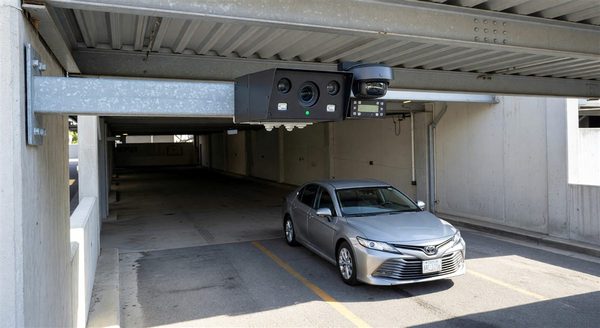
The basic workflow: fixed LPR cameras at entry and exit capture every plate. The PARCS system timestamps each read and creates a virtual parking session keyed to the plate. On exit, the system calculates the fee based on session duration and checks whether payment has been completed — via a pay station, pay-by-phone, or license-plate-based payment app. If payment is unresolved, the plate is logged for enforcement follow-up.
For permit operations, plates registered to active monthly accounts are validated automatically; unregistered plates generate alerts. For transient operations, the enforcement loop closes only when unpaid sessions are actually pursued — which requires either follow-up notifications with payment links or physical enforcement by staff issuing notices.
The enforcement outcome depends on what happens in that follow-up loop. Gateless systems do not automatically collect payment from non-payers; they identify them. Collection is a separate process.
Where Revenue Leakage Occurs
Walker Consultants’ 2026 analysis of gateless parking revenue noted that without effective follow-up mechanisms, LPR-based systems become vulnerable to revenue leakage — the loss of expected income due to incomplete or failed payment collection.
Several specific conditions create leakage:
Private operator DMV access limitations: Municipal parking authorities often have statutory access to DMV records to identify registered owners of vehicles with unpaid obligations. Private operators typically do not. When a private lot’s LPR system flags an unpaid plate, identifying the registered owner requires third-party skip tracing services — adding cost and delay, and reducing the effective recovery rate on low-value unpaid sessions.
Civil enforcement constraints: Private operators can pursue unpaid fees civilly, but civil collection has meaningful overhead per account. For transient sessions of a few dollars, the cost of collection can exceed the fee value. High-volume gateless facilities need to analyze their enforcement economics: what ticket threshold justifies pursuit, and what percentage of flagged plates are actually collectible.
System read failures: Even well-configured LPR systems do not achieve 100 percent read accuracy. Real-world accuracy in controlled conditions runs 93 to 98 percent for standard in-state plates. Temporary plates, heavily soiled plates, non-standard plate formats, and obscured plates produce lower read rates. Each missed read at entry or exit creates a session the system cannot account for.
Hybrid-session edge cases: Vehicles that reenter the facility within a session window, delivery vehicles parked across multiple lanes, and vehicles with recently changed plates (common in rental fleets) create session ambiguity that requires manual review to resolve correctly.
The Human Oversight Requirement
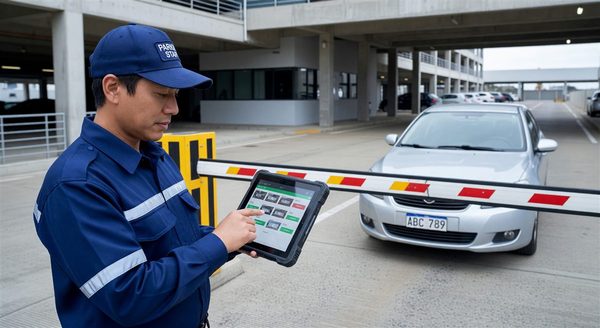
One of the more persistent misreads about gateless parking is that removing the gate reduces the need for parking staff. The operational reality runs the opposite direction: removing the gate shifts enforcement from hardware to people.
In a gated facility, the gate handles a significant portion of access control automatically. In a gateless facility, every enforcement action that would have been handled automatically at the barrier requires a human decision — whether to pursue a low-value unpaid session, how to handle a dispute about a plate read, what to do when the enforcement notice bounces because the address on file is outdated.
Operators who have converted surface lots and garages report that staff time shifts from booth operations toward enforcement follow-up and dispute resolution. The net staffing impact varies by facility type and the volume of unpermitted or unpaid sessions. Facilities with high transient volume and no pre-screening (such as pay-by-plate-only surface lots) require the most active enforcement management.
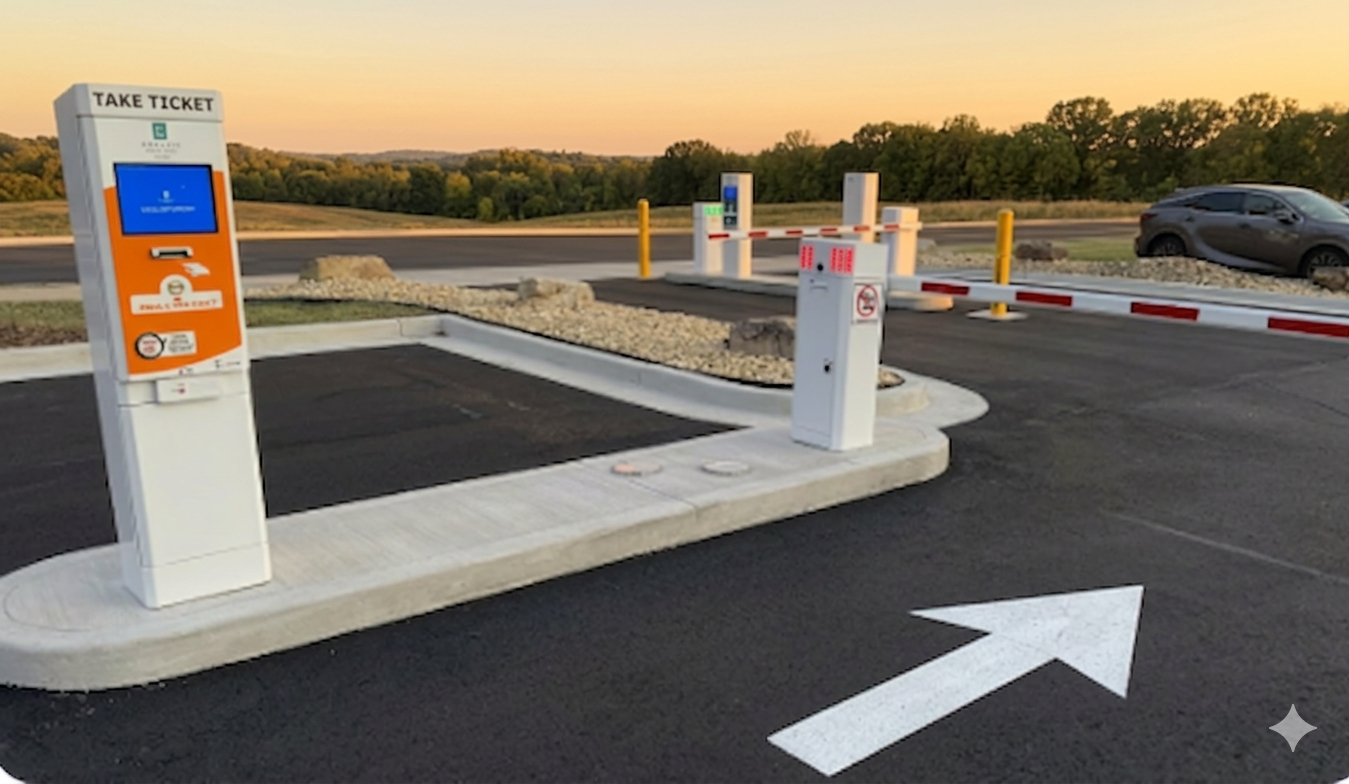
Some operators have addressed this by combining gateless entry with controlled exit — the lane out of the facility retains a gate or intercom, so the exit creates a friction point where unresolved sessions must be addressed before the vehicle departs. This recovers much of the revenue-control function of a traditional gated system while preserving the frictionless entry experience.
LPR Accuracy in Operational Conditions
Camera placement and environmental conditions matter as much as camera hardware specification. Common accuracy problems in deployed systems:
Lighting transitions: Cameras positioned where vehicles move from bright exterior light into a shaded garage entry often struggle with exposure adjustment during the transition. Infrared illumination and cameras with Wide Dynamic Range capability handle this better; standard cameras may miss plates in high-contrast entry zones.
Speed and angle: Fixed LPR cameras are designed to capture plates at expected approach speeds. Vehicles moving faster than the designed capture speed produce motion blur that degrades OCR accuracy. Camera angle relative to the lane also affects read rate — plates captured at steep angles (above 30 degrees from perpendicular) produce lower accuracy.
Plate condition and format: Damaged, bent, or heavily soiled plates read at lower rates than the headline accuracy figures. Specialty vanity plates with non-standard character spacing and graphic overlays on state plates can confuse OCR algorithms trained primarily on standard formats.
Plate database latency: LPR accuracy in permit and enforcement applications depends not just on reading the plate correctly but on having current permit and payment records to match against. Databases that lag behind real-time permit changes or payment completions will generate false alerts on accounts that are actually current.
Operators should require vendors to provide accuracy validation data from comparable facilities — same climate, similar plate mix, similar lane geometry — rather than accepting headline accuracy percentages from controlled-condition tests.
Privacy and Data Retention Obligations
The regulatory environment for LPR data has shifted materially in 2025 and 2026, and operators who have not reviewed their data handling practices against current law are carrying compliance risk.
California: A February 2026 California appellate decision, Bartholomew v. Parking Concepts, established that a parking garage’s failure to maintain and publicly post a privacy policy governing its LPR system constitutes actionable harm even without evidence of data misuse. California law requires a publicly accessible ALPR privacy policy explaining how plate data is collected, used, stored, and protected, along with access logging to track who interacts with that data. The statute authorizes liquidated damages of $2,500 per affected individual — a figure that multiplies by facility volume in class action litigation.
Washington: Governor Bob Ferguson signed SB 6002 — the Driver Privacy Act — on March 30, 2026, creating Washington’s first comprehensive ALPR statute. The law restricts retention periods, limits permissible uses, prohibits use for immigration enforcement purposes, and creates a private right of action for violations.
New Hampshire: The most restrictive framework nationally requires ALPR data to be purged within three minutes of collection absent a law enforcement hit.
The directional trend across states is consistent: shorter retention windows, transparency requirements, and private rights of action. Operators should conduct a current review of data retention policies, confirm that privacy notices are posted at facility entry and digitally accessible, and ensure that LPR data access is logged. Consult legal counsel to identify which state frameworks apply to each facility location, as the operative rules vary significantly by jurisdiction.
Vendor and Integration Evaluation
Operators evaluating gateless LPR systems should focus evaluation on the enforcement workflow support, not just the camera hardware:
Enforcement workflow tools: Does the system provide a usable dashboard for managing unpaid session queues? Can enforcement staff issue notices, record follow-up actions, and track resolution status within the same system, or does enforcement require separate tools that duplicate data entry?
PARCS integration: The LPR system should integrate bidirectionally with the PARCS platform — permit updates, payment confirmations, and session data should flow in real time, not in batched updates that create windows where the enforcement database is stale.
Dispute resolution access: Staff handling disputes need to retrieve the actual plate image captured at entry and exit, not just the OCR result. Verify that images are accessible from the enforcement interface and retained for an appropriate period consistent with your dispute window.
Skip tracing and collections integration: For private operators without DMV access, ask vendors specifically about their skip tracing partnerships and collection rates. A system that generates enforcement alerts but has no pathway to actually collect on those alerts is not providing full enforcement value.
Operational Checklist Before Going Gateless
Operators considering gateless conversion should work through these questions before removal of gate hardware:
- What is the facility’s current transient revenue as a percentage of total revenue, and what percentage of transient payers are expected to pay voluntarily versus requiring enforcement follow-up?
- Does the current PARCS system support LPR-based virtual ticketing and enforcement workflow, or does gateless conversion require platform replacement?
- What is the legal framework for LPR data collection and retention in the facility’s state? Is a current-compliant privacy notice drafted and ready to post?
- What is the plan for enforcement follow-up on unpaid sessions — in-house staff, a contracted enforcement service, or a combination?
- Is the exit lane retaining physical access control, or going fully open? What is the revenue protection rationale for the chosen configuration?
- Has camera placement been validated with the LPR vendor for the specific lane geometry and lighting conditions of this facility?
Gateless parking is a viable operational model for many facility types, particularly monthly-permit-heavy garages where the permit population is stable and well-managed. For high-transient facilities or those in jurisdictions with limited civil enforcement authority, the model requires honest analysis of what the enforcement workflow will actually collect — not just what the LPR system will flag.
Further Reading from Authoritative Sources
- IPMI technology and access control resources — IPMI’s technology section covers LPR deployment, enforcement integration, and operational best practices for parking facility operators considering gateless conversion.
- ITE parking and access management technical resources — ITE provides the traffic engineering and access management framework that informs lane design and LPR camera placement guidance referenced in this article.