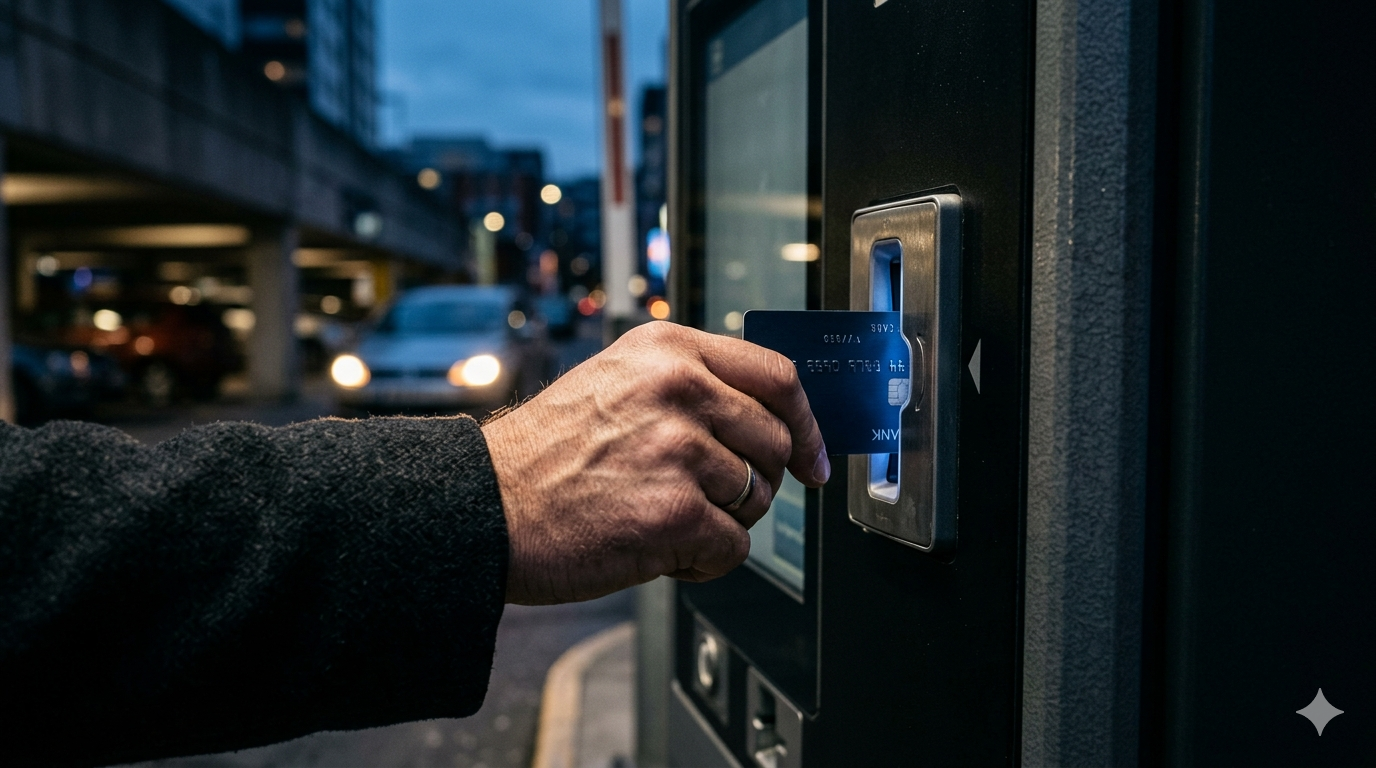
If you operate a parking facility in the United States, you’ve likely heard rumblings about EMV — the chip card technology that’s been standard in Europe and Canada for years. The migration is coming, and parking operators who prepare now will be ahead of the curve. Those who don’t may face increased fraud liability and higher processing costs.
Here’s what you need to know.
What Is EMV and Why Does It Matter?
EMV stands for Europay, Mastercard, and Visa — the three companies that originally developed the chip card standard, now managed by EMVCo. Unlike traditional magnetic stripe cards that store static data, EMV chip cards generate a unique transaction code for every purchase. This makes counterfeiting virtually impossible.
The numbers tell the story. Countries that have adopted EMV have seen counterfeit card fraud drop by 70-80%. The United Kingdom saw a 72% decrease in counterfeit fraud within five years of implementation. Canada, which completed its migration in 2012, experienced similar results.
The US Timeline
The major card networks have announced an October 2015 liability shift deadline. After that date, whichever party in a transaction — the card issuer or the merchant — has the less secure technology will bear the cost of fraudulent transactions.
For parking operators, this means:
- If your payment terminals accept chip cards and fraud occurs, the card issuer absorbs the loss
- If your terminals only accept magnetic stripe and a counterfeit chip card is used, you absorb the loss
This liability shift applies to all card-present transactions, including unattended environments like parking pay stations and exit lanes. The PCI Security Standards Council provides detailed guidance on security requirements that apply alongside EMV compliance.
Why Parking Is Different
The parking industry faces unique challenges in EMV adoption that don’t apply to staffed retail environments:
Unattended terminals — Most parking payment happens at pay stations, kiosks, and exit lane readers with no staff present. These terminals must handle the chip card transaction autonomously, including PIN entry and error recovery.
Transaction speed — Chip card transactions currently take longer than magnetic stripe swipes. In a parking exit lane where drivers expect to process and leave in seconds, even a few extra seconds creates queuing problems.
Weather exposure — Many parking payment terminals are exposed to temperature extremes, moisture, and dust. Chip card readers are more sensitive to environmental conditions than magnetic stripe readers.
Hardware replacement cycles — Pay stations and access control equipment represent significant capital investments. Unlike a retail store that might replace a $200 countertop terminal, parking operators may need to upgrade $15,000-$50,000 pay stations.
What Parking Operators Should Do Now
1. Assess Your Current Equipment
Inventory every payment acceptance point in your facility. For each terminal, determine:
- Can it accept chip cards with a firmware upgrade?
- Does it need a new card reader module?
- Does the entire unit need replacement?
Many modern parking payment systems are designed with modular card readers that can be upgraded to EMV without replacing the entire unit. Older systems may require full replacement.
2. Talk to Your Payment Processor
Your payment processor needs to support EMV transactions end-to-end. Key questions:
- Do they support EMV in unattended environments?
- What certification requirements exist for your specific equipment?
- What are the processing fee implications?
3. Plan for Chip-and-PIN vs. Chip-and-Signature
In attended retail environments, the US is initially rolling out chip-and-signature (the cardholder signs instead of entering a PIN). However, unattended parking environments may need to support chip-and-PIN since there’s no attendant to verify a signature.
Companies like Parking BOXX have already begun integrating EMV-ready payment gateways, partnering with providers like Creditcall to prepare for the transition. This kind of early preparation is what separates operators who will be ready from those scrambling at the deadline.
4. Budget for the Transition
EMV terminal upgrades are not cheap, but the cost of fraud liability after the October 2015 shift could be worse. Build EMV upgrades into your capital expenditure plan now rather than treating it as an emergency later.
The Bigger Picture
EMV is just the beginning. The same chip technology that secures card-present transactions lays the groundwork for future payment innovations. Operators who invest in EMV-capable hardware now are positioning themselves for the next wave of payment security and convenience.
The parking industry has historically been slow to adopt new payment technology. Facilities that move early on EMV will have a competitive advantage — both in reduced fraud costs and in the perception of being a modern, secure operation.
Key Takeaways
- The October 2015 liability shift means parking operators who don’t accept EMV chip cards will bear the cost of counterfeit card fraud
- Unattended parking environments face unique challenges including transaction speed, weather exposure, and equipment costs
- Start assessing your equipment now — some terminals can be upgraded, others will need replacement
- EMV chip technology is the foundation for future payment security improvements
- Early adopters will have both a financial and competitive advantage