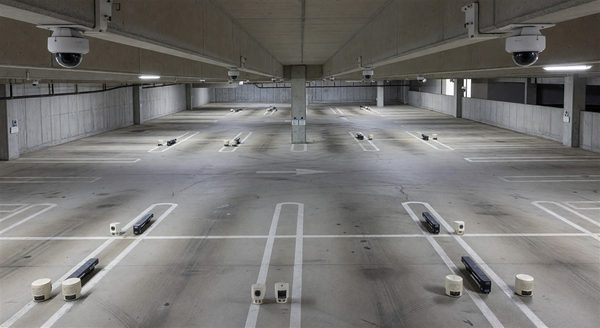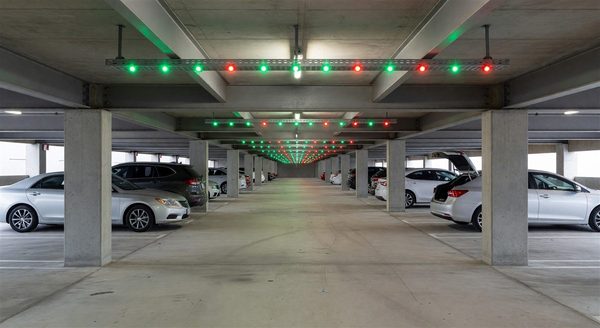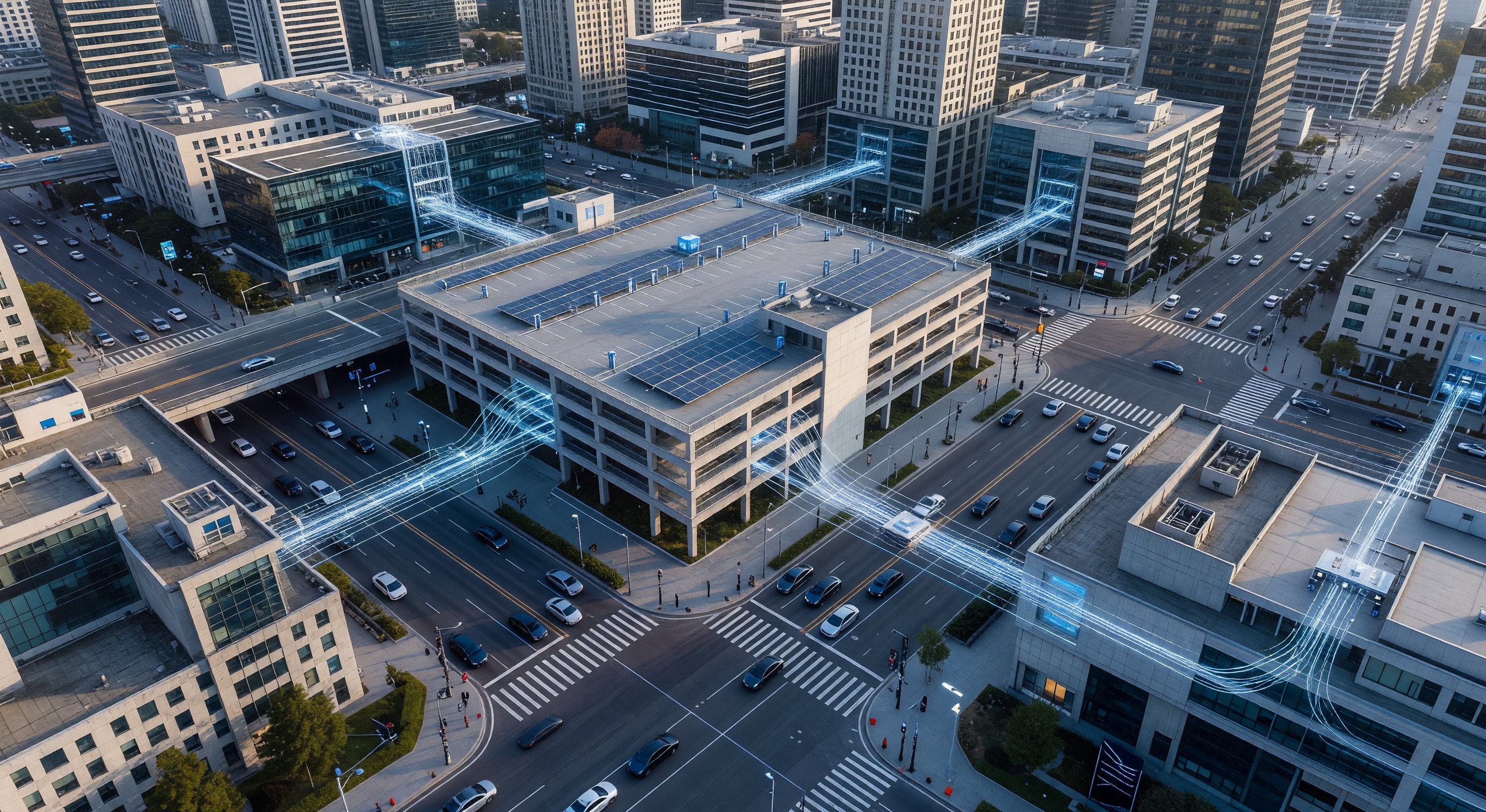
Parking infrastructure has historically operated in isolation — facilities managed independently, with data that never left the facility boundary. Connected parking infrastructure represents a fundamental change in how parking systems are designed and operated: facility data flows outward to city traffic management systems, navigation apps, transit platforms, and urban analytics platforms; and external signals (transit demand, event schedules, city-wide occupancy data) flow inward to inform facility management decisions. Understanding this integration context is important for operators managing facilities in municipalities pursuing smart city strategies.
The Case for Connected Parking
Urban congestion research consistently identifies parking search — vehicles circulating to find available parking — as a meaningful contributor to downtown traffic. A frequently cited series of studies by transportation engineers Donald Shoup and others estimated that cruising for parking accounts for 8 to 74 percent of downtown traffic in various urban studies. While the precision of these figures is debated, the directional finding is robust: drivers searching for parking create congestion that affects all users of the street network, not just those seeking parking.
Connected parking infrastructure — real-time availability data flowing to navigation platforms and traffic management systems — enables drivers to route to available parking before entering congested downtown areas, and enables traffic managers to influence parking demand through dynamic message signs and navigation recommendations. The city benefit extends beyond parking efficiency to overall network performance.
Real-Time Availability Data Sharing
The foundational element of connected parking is real-time availability data sharing — facility occupancy counts or space-level availability transmitted from the facility to external platforms:
Navigation app integration: Google Maps, Apple Maps, Waze, and HERE Technologies all support parking availability data in their platforms. Facilities can share real-time availability through data partnerships with these platforms. When a driver navigates to a destination, they see nearby parking availability before arrival. The driver benefit is direct; the congestion reduction benefit is a secondary effect of fewer circulating vehicles.
Municipal information systems: Cities operating 511 travel information systems, digital message sign networks, and parking guidance networks can integrate facility availability data to display real-time parking availability at freeway off-ramp signs and transit information terminals. Chicago, San Francisco, Los Angeles, and other large cities have implemented city-scale parking guidance systems that aggregate data from multiple facilities.
Multi-modal trip planning: Parking availability data integrated with transit information platforms enables trip planners to recommend park-and-ride combinations based on real-time parking availability at transit hub parking. If a commuter’s usual lot is full, the trip planner can recommend an alternative lot with availability and transit connection.
Integration with Traffic Management
Advanced connected parking infrastructure supports bidirectional data exchange with urban traffic management:
Demand signal integration: City traffic management centers (TMCs) with access to real-time facility occupancy can identify when downtown parking demand is driving unusual circulation patterns and respond with dynamic message sign messages that redirect traffic to facilities with availability.
Event-driven coordination: For major events at stadiums, convention centers, and arenas, connected parking infrastructure enables TMCs to pre-position message sign messaging based on parking reservation data — directing attendees toward reserved lots before they enter the congested area immediately around the venue.
Signal timing coordination: In advanced implementations, parking facility driveway signals are coordinated with adjacent intersection signal timing to smooth egress traffic during peak exit periods. This integration requires the facility’s PARCS to communicate predicted exit volume to the adjacent traffic signal controller.
Municipal Smart Parking Platforms
Several cities have deployed municipal smart parking platforms that aggregate data from public and private facilities:
San Francisco SFpark: Deployed in 2011 and expanded subsequently, SFpark aggregates real-time occupancy from city-owned metered spaces and garages, adjusting rates dynamically based on demand to maintain target occupancy rates (roughly 85 percent). The program aimed to reduce double-parking and circling in high-demand districts. Academic evaluation found that SFpark reduced vehicle miles traveled in pilot areas.
Seattle and Portland on-street programs: Both cities have deployed city-scale metered parking programs with real-time occupancy monitoring and demand-responsive pricing, integrated with navigation platforms and transit information systems.
Urban data marketplace integration: Several cities have developed urban data marketplaces — platforms where public and private mobility data is shared under defined commercial or public-interest terms. Parking operators who share data with these platforms may receive compensation or access to complementary datasets (traffic counts, pedestrian counts) in exchange.
EV Charging as Grid-Connected Infrastructure
EV charging in parking facilities connects the facility to the electrical grid in ways that create smart city integration opportunities:
Vehicle-to-grid (V2G): Bi-directional charging technology allows EVs to discharge energy back to the grid during peak demand periods. Parking facilities with high EV charging capacity and appropriate equipment can participate in demand response programs that provide revenue from grid services.
Smart charging and load management: OCPP-compliant EV charging management systems can receive signals from utilities to modulate charging rates during grid stress periods. This demand response capability is valuable to utilities and can reduce parking facility electricity costs through time-of-use rate optimization.
Integration with building energy management: Parking EV charging load is significant enough to affect building energy management. Connected EV charging management systems share load data with building energy management systems (BMS) to optimize total building energy consumption.
Privacy and Data Governance in Connected Parking
Connected parking infrastructure raises privacy considerations that municipalities and operators must address:
Aggregate vs. individual data: Sharing aggregate facility occupancy counts (300 spaces available) raises minimal privacy concerns. Sharing transaction-level data or LPR data that can identify individual vehicle movements is subject to privacy regulations (DPPA, CCPA, state LPR laws) and requires careful data governance.
Data use restrictions: Operators sharing data with city platforms or navigation companies should define explicitly what data is shared, how it is used, how long it is retained, and whether it can be shared with third parties. Data sharing agreements should include these restrictions contractually.
Security of connected infrastructure: Parking equipment connected to external networks is exposed to cybersecurity risks that isolated systems are not. Network security, firmware management, and security monitoring are operational requirements for connected parking infrastructure.
Frequently Asked Questions
What real-time parking data can facilities share with navigation platforms? Real-time available space count (by zone or facility-wide), facility status (open/closed/full), rate information, and entry/exit restriction information. Individual transaction data, vehicle plate information, and customer account data should not be shared with navigation platforms without explicit legal basis.
What is the business case for a private parking operator to share data with city platforms? Data sharing with city platforms can provide: exposure in city-published parking information resources, access to complementary data, participation in city-run demand-responsive pricing programs that may increase off-peak utilization, and goodwill with the municipalities that control street access, curb regulations, and zoning. Evaluate each opportunity individually.
How does smart city parking integration affect PARCS selection? PARCS platforms with well-documented REST APIs and support for real-time occupancy data feeds are prerequisites for smart city integration. Facilities anticipating municipal connectivity requirements should confirm the PARCS vendor’s existing data sharing relationships with city platforms and navigation providers during selection.
What cybersecurity measures are required for connected parking equipment? PARCS equipment connected to external networks should be protected by: network segmentation (parking equipment on a separate VLAN from office networks), firmware management (regular updates for security patches), strong authentication for administrative access, and encrypted communication for all data transmission. Consider a periodic security assessment of connected infrastructure.
Takeaway
Connected parking infrastructure represents the evolution of parking from isolated facility management to networked urban mobility services. Real-time availability sharing, traffic management coordination, and EV charging grid integration create value beyond the facility boundary — for cities managing congestion, for drivers navigating unfamiliar areas, and for utilities managing demand. Operators who position their facilities as connected infrastructure — with clean API data sharing, appropriate data governance, and OCPP-compliant EV charging — align with the urban mobility direction that will shape parking policy and investment over the coming decade. The technical foundation is accessible today; the operational decisions are about data governance and partnership rather than technological capability.
Further Reading from Authoritative Sources
- FHWA SFpark smart parking program evaluation and urban congestion research — FHWA documented the SFpark program — the most prominent smart parking connected infrastructure deployment in the US — and the article cites this program as the primary evidence for connected parking’s congestion reduction benefit.
- NACTO curb management standards for connected mobility and drop zone integration — NACTO’s curb management program directly addresses the on-street integration of connected parking infrastructure with urban mobility networks, including the digital curb reservation systems and TNC/AV coordination mentioned in this article.