The staffed parking booth has been a fixture of urban infrastructure for the better part of a century. A uniformed attendant hands you a ticket, collects your fee on the way out, and raises the gate. It is a simple transaction — one that operators have long accepted as the cost of doing business.
But that cost is climbing. The U.S. Bureau of Labor Statistics reported steady wage growth for parking attendants throughout the late 2010s, and the pandemic accelerated a labor shortage that many facility managers say they still have not recovered from. Operators who once staffed three shifts across a single garage now struggle to fill even one.
Against this backdrop, the unmanned parking facility has moved from novelty to necessity. Full automation — encompassing license plate recognition, self-service payment, automated barrier gates, and remote monitoring — is reshaping how parking assets get managed across North America. The shift is not merely about cutting headcount. It is about building operations that scale without proportional labor growth, that function identically at 2 a.m. and 2 p.m., and that generate cleaner data for decision-making.
The Economics Driving Unmanned Operations
Labor typically represents the single largest line item in a parking facility’s operating budget. Industry benchmarks from the National Parking Association have pegged staffing costs at 50 to 60 percent of total operating expenses for attended garages. For a mid-sized urban facility running two or three shifts, annual payroll (including benefits, overtime, and turnover-related training) can easily exceed $250,000.
The math changes dramatically when you remove the booth. Equipment amortized over a seven- to ten-year lifecycle often costs less per year than a single full-time attendant. Maintenance contracts, software licensing, and network connectivity add ongoing expenses, but the total cost of ownership for an automated system routinely falls below half of what staffed operations demand.
There is also the matter of consistency. Automated systems do not call in sick, do not take lunch breaks, and do not make change-counting errors at the end of a shift. Revenue leakage — a persistent concern in attended operations — drops measurably when every transaction is electronically recorded and reconciled.
Staffing Costs vs. Automation Investment
To illustrate the point concretely, consider a surface lot running 18 hours a day, seven days a week. Staffing that operation with two overlapping shifts requires roughly 2.5 full-time equivalents when accounting for weekends, holidays, and PTO coverage. At an average loaded cost of $18 to $22 per hour, the annual labor bill lands somewhere between $80,000 and $100,000 for a single lane of entry and exit.
An automated entry and exit lane — encompassing an LPR camera, a ticket dispenser or ticketless reader, a pay station, and a barrier gate — carries a capital cost that varies by manufacturer and feature set, but the payback period for most operators falls inside 24 months. After that, annual operating costs settle into a range that most controllers find far easier to budget and forecast.
Core Technology Components
A truly unmanned facility is not built from a single product. It is an integrated system where each component handles a specific function and communicates with the others in real time.
License Plate Recognition (LPR)
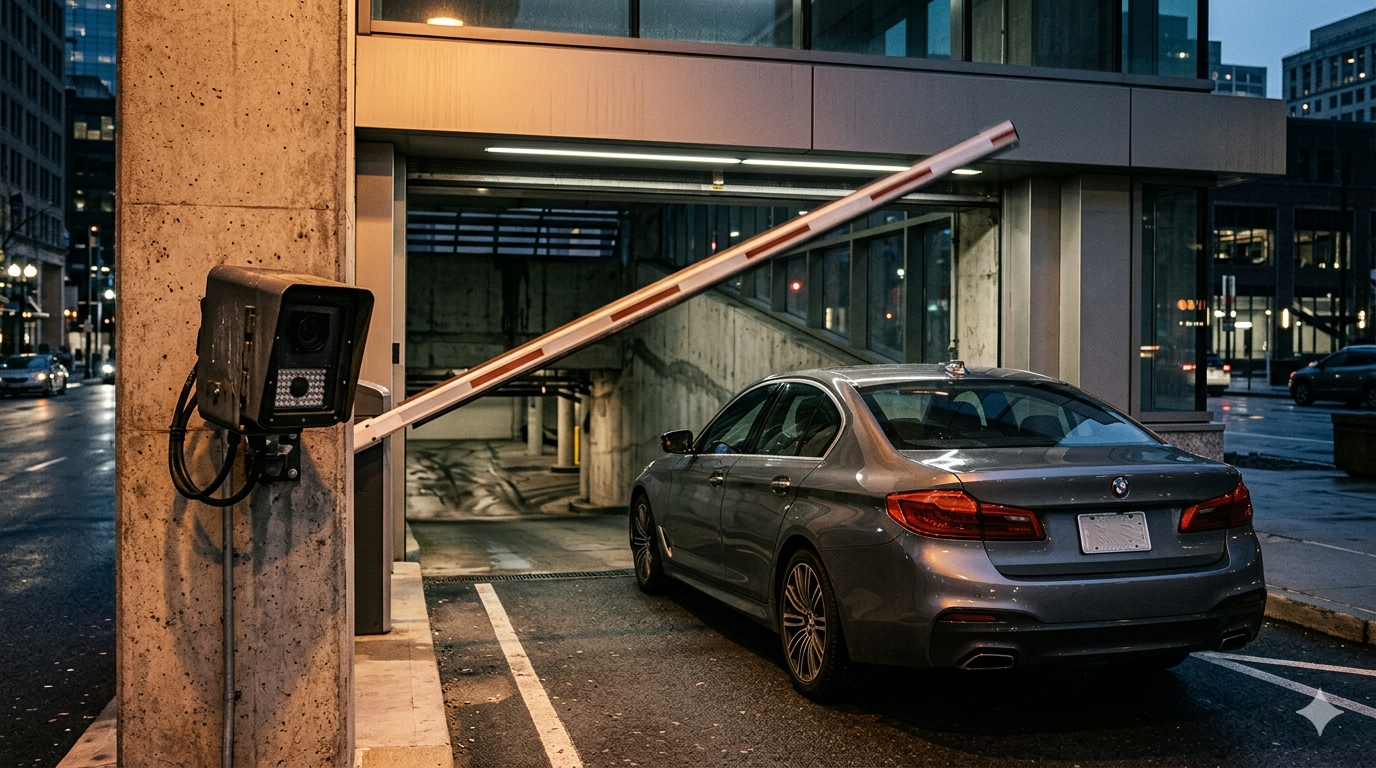
LPR cameras serve as the identity layer of an unmanned operation. Mounted at entry and exit points, they capture plate numbers as vehicles approach, creating a digital record that links each vehicle to its parking session. Modern LPR systems achieve read rates above 95 percent in controlled environments, and the best-performing installations push past 98 percent.
The value of LPR extends beyond simple identification. When integrated with a parking access and revenue control system (PARCS), plate data can trigger automatic gate lifts for pre-registered vehicles, flag known violators, and support time-based rate calculations without the need for a physical ticket.
Automated Payment
Self-service pay stations are the transaction engine of the unmanned facility. Positioned at pedestrian-accessible locations within a garage or at the exit lane of a surface lot, these machines accept cash, credit and debit cards, contactless payments, and — increasingly — mobile wallet transactions.
The design of pay stations has evolved considerably in recent years. Early models were imposing steel cabinets with small screens and confusing button layouts. Current-generation units feature large color touchscreens, multilingual interfaces, and accessibility features that comply with ADA requirements. Some manufacturers have introduced modular designs that allow operators to configure hardware options — bill acceptors, coin mechanisms, receipt printers, barcode scanners — based on the specific needs of each facility.
Barrier Gates and Access Control
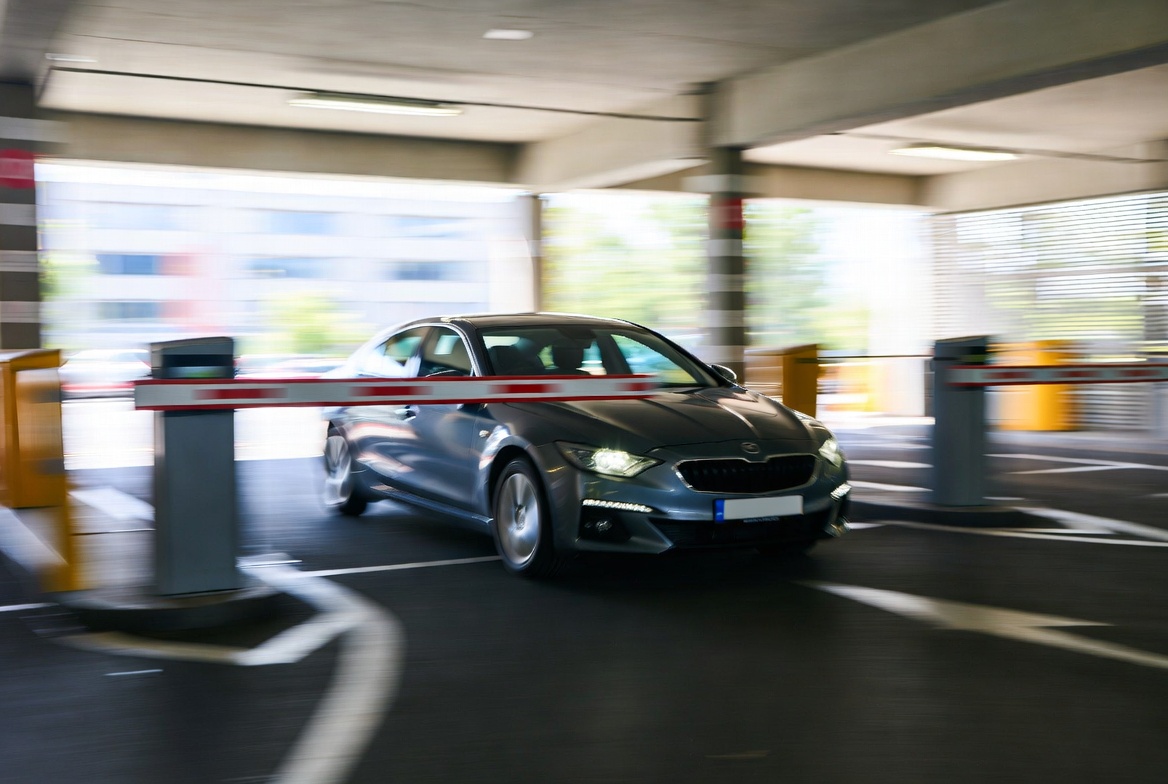
Barrier gates remain the physical enforcement layer in most automated facilities. While some operators have experimented with gateless configurations (relying entirely on LPR and post-visit billing), the majority of facilities still use gates to control vehicle flow, prevent tailgating, and ensure that every entering vehicle is captured by the system.
Modern barrier arms operate at speeds that minimize wait times — typically cycling in under two seconds — and include safety features such as pressure-sensitive edges and vehicle detection loops that prevent the arm from lowering onto a vehicle. Equipment manufacturers like Parking BOXX have developed integrated solutions that combine barrier gates, LPR cameras, and payment processing into unified platforms, reducing the complexity of multi-vendor installations.
Remote Monitoring and Intercom
The final piece of the unmanned puzzle is remote oversight. Even the most reliable systems encounter edge cases: a jammed bill acceptor, a misread plate, a driver who cannot find their way to the pay station. Voice-over-IP intercom systems connected to a centralized monitoring center allow a single remote operator to assist customers across multiple facilities simultaneously.
This model — sometimes called “virtual attendant” or “remote management” — has proven effective at maintaining customer service levels while dramatically reducing on-site staffing requirements. One remote operator can realistically cover five to ten facilities, depending on volume and complexity.
Implementation: Phased vs. Full Cutover
Operators considering the shift to unmanned operations generally follow one of two approaches.
Phased Transition
The phased approach preserves some staffed hours during the transition period. A common pattern is to automate overnight and weekend shifts first — periods when volume is lower and staffing is hardest to maintain — while keeping attendants during peak daytime hours. This allows the operations team to identify and resolve system issues before removing the remaining staff.
Phased transitions also give regular parkers time to adjust. Monthly permit holders, for example, can be migrated to LPR-based access in waves, with support staff available to troubleshoot the first few interactions. The risk of customer confusion drops significantly when the change happens gradually.
Full Cutover
Some operators, particularly those opening new facilities or renovating existing ones, opt for a complete switch to automation from day one. This approach avoids the operational complexity of running parallel systems and delivers cost savings immediately.
Full cutovers work best when the operator has prior experience with automated facilities, when the customer base skews younger and more tech-savvy, and when the facility’s rate structure is straightforward. Complex validations, multiple rate tiers, and high event-parking volumes can complicate an all-at-once transition.
Operational Considerations
Revenue Reconciliation
One of the underappreciated benefits of unmanned operations is cleaner financial data. Every transaction flows through the PARCS software, creating an auditable record that ties vehicle entries to payments to exits. Monthly reconciliation, which might take a bookkeeper several days in an attended operation, can often be completed in hours when the data is digital and centralized.
Maintenance Planning
Automated equipment requires preventive maintenance — cleaning LPR camera lenses, testing bill acceptors, lubricating gate mechanisms, updating software. Operators who neglect maintenance will see system reliability degrade, which translates directly to customer complaints and revenue loss.
The best practice is to establish a maintenance schedule that aligns with manufacturer recommendations and to contract with a qualified service provider for break-fix support. Many equipment suppliers offer service-level agreements with guaranteed response times, which is particularly important for unmanned facilities where a malfunctioning pay station can create a bottleneck with no staff on-site to intervene.
Security and Liability
Removing attendants raises legitimate questions about security. The presence of a human in a booth, even one with no security training, has a deterrent effect. Unmanned facilities compensate with surveillance cameras, improved lighting, emergency call stations, and, in some cases, mobile security patrols.
It is worth noting that many of the most serious parking facility security incidents — vehicle break-ins, assaults in stairwells — occur in staffed garages where the attendant is stationed at the entry or exit, far from the incident location. Camera coverage and remote monitoring can actually provide better situational awareness across the entire facility than a single stationary attendant.
Case Patterns from the Field
While every facility is different, several patterns have emerged among operators who have successfully transitioned to unmanned operations.
Municipal surface lots are often the easiest to automate. The rate structure is simple (flat rate or hourly), the footprint is small, and the political appetite for eliminating booth attendant positions is stronger when the alternative is raising parking rates to cover labor costs.
Private commercial garages in downtown cores have embraced automation to maintain margins as lease rates flatten. The combination of monthly permit access via LPR and transient payment via pay stations covers the vast majority of use cases.
Hospital and medical center facilities present unique challenges due to the stress levels of their customer base and the need for validated parking. However, several large health systems have reported successful unmanned conversions by investing in clear wayfinding signage and robust intercom support.
Airport parking operations — especially off-site economy lots — have been early adopters. The high volume and predictable traffic patterns make automation particularly cost-effective, and the shuttle-bus model means customers expect a different experience than they would in a downtown garage.
Common Objections and Honest Answers
“Our customers expect personal service.” Some do. But surveys consistently show that the majority of parkers prioritize speed and convenience over human interaction. The drive-in, park, drive-out experience is inherently transactional, and most customers do not want to wait in line to interact with a person if a machine can process them faster.
“What happens when the system goes down?” Redundancy is critical. Dual-lane configurations, backup power supplies, and cellular failover for network connectivity all mitigate downtime risk. No system is immune to failure, but a well-designed automated installation has fewer single points of failure than a staffed booth (where the single point of failure is the attendant showing up for their shift).
“We will lose the ability to handle exceptions.” Remote monitoring and intercom systems handle the vast majority of exceptions. For the rare situation that truly requires on-site intervention, operators maintain a dispatch arrangement — either with their own roving staff or through a contracted service.
The Road Ahead
The trajectory is clear. As the Intelligent Transportation Systems Joint Program Office continues to support connected infrastructure research, payment technology advances, LPR accuracy continues to improve, and as operators face persistent pressure on both the labor supply and the cost side, the share of unmanned facilities will grow.
The question for most operators is not whether to automate, but when and how. The technology is proven. The economics are compelling. The operational models are well-established. What remains is the organizational will to make the transition — and the recognition that the staffed parking booth, like the highway toll collector before it, is approaching the end of its era.
Operators who move early will capture the cost advantages and build operational expertise before their competitors. Those who wait will eventually face the same decision, but with less margin for error and fewer skilled integrators available to support the transition.
The unmanned parking facility is no longer a vision of the future. For a growing number of operators, it is simply how they run their business today.