Parking validation programs link retail or service spending to a parking discount, creating a subsidy that merchants provide to attract customers who would otherwise be deterred by parking cost. From the merchant’s perspective, validation is a customer acquisition tool — the cost of validation is compared to the cost of other customer acquisition methods. From the parking operator’s perspective, validation is a volume driver that brings customers into the facility who may also generate full-rate parking revenue from additional visits. Managing validation programs well requires balancing merchant cost, operator economics, and customer experience.
Validation Program Structures
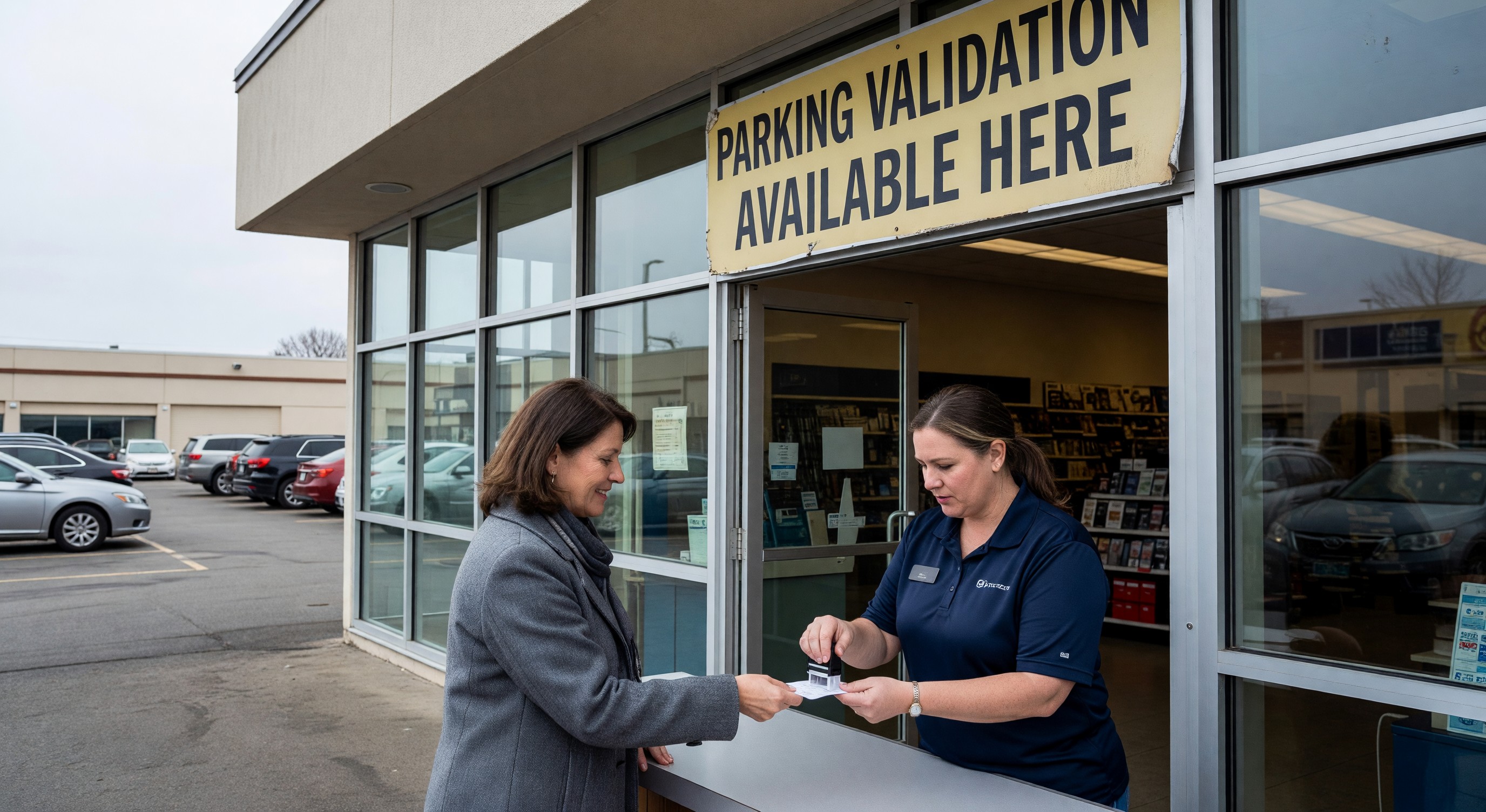
Flat discount validation: A merchant provides a validation that reduces the parking fee by a fixed amount or percentage (e.g., $2 off or free parking for 2 hours). The merchant reimburses the operator for the discount at a defined rate per validation. Simple to administer; easy for customers to understand.
Spend-threshold validation: Free or discounted parking is provided when the customer demonstrates a minimum purchase (e.g., free 3-hour parking with $25 purchase). The merchant controls which customers receive validation based on purchase verification. Incentivizes higher-spending customers while limiting validation cost exposure to those who meet the threshold.
Unlimited validation for tenants: In facilities owned by property owners with commercial tenants (shopping centers, mixed-use development), tenants may receive unlimited validation entitlements as a lease negotiated benefit. Operator receives reimbursement from the property owner, who allocates the cost across tenants through lease provisions.
Self-validation kiosks: In high-volume retail settings, automated validation kiosks (typically located within the merchant’s premises) allow customers to scan their parking ticket independently after entering a purchase verification code. Reduces cashier workload; can be integrated with POS systems for automatic purchase verification.
Setting Validation Rates
The validation rate (the amount the operator charges the merchant per validation event) must reflect:
- The foregone revenue from the discounted parking (the difference between full posted rate and what the customer pays)
- Administrative cost of managing the validation program
- A reasonable margin for the operator
Common structures:
- Cost-plus: Operator charges the merchant the actual discount amount plus a per-transaction administration fee (commonly $0.25 to $0.50)
- Fixed rate per validation: Operator charges a fixed negotiated rate per validation regardless of the actual discount amount (e.g., $2.50 per validation for up to 3 hours of free parking)
- Monthly flat fee: For merchants with predictable, high-volume validation, a monthly flat fee provides budget certainty and simplifies accounting
Validation rates in retail parking programs are a competitive negotiation point between operators and merchants — merchants can choose competitive facilities, and operators need merchant partners to generate traffic volume. Published IPMI data on validation program economics provides benchmarking context.
Validation Controls and Abuse Prevention
Without controls, validation programs are vulnerable to abuse: staff providing validations without customer purchases, customers obtaining multiple validations per visit, or validations distributed for non-qualifying visits. Control measures:
Numbered validation instruments: Stamped cards, sticker rolls, or digital codes linked to the merchant’s account. Each validation has a unique identifier that allows tracking and audit.
Quantity limits per account period: Set monthly validation entitlement limits per merchant account based on expected customer volume. Unusual spikes trigger investigation.
PARCS integration for digital validation: Many modern PARCS systems support merchant portals where the merchant issues a digital validation code linked to the customer’s ticket. The validation is recorded in the system with the merchant’s identifier, providing a complete audit trail without paper stamps.
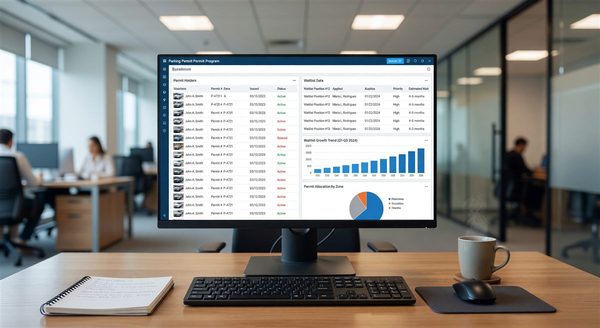
Usage reporting: Provide monthly usage reports to each merchant showing validation volume, redemption patterns, and billing. Merchants who review their reports detect staff abuse (unusually high validation volumes on specific shifts) independently of operator-side audit.
Exit lane verification: At staffed exits, cashiers verify that the validation stamp/code matches an authorized merchant and is correctly applied before accepting the discount.
Reporting and Program Optimization
Validation program data provides valuable intelligence for both operators and merchants:
For operators: Validation volume by merchant identifies top-traffic-generating partners. Validation time-of-day and day-of-week patterns reveal when validation-driven customers park, which informs pricing and capacity planning.
For merchants: Cost per validated customer versus other marketing channels helps evaluate the validation program’s ROI. Sell-through rates (did validated parking customers spend above the threshold?) inform whether the validation threshold is calibrated appropriately.
Monthly merchant statements with validation volume and cost allow merchants to manage their program participation and budget. Operators who provide clear, timely billing and usage data maintain better merchant relationships than those with opaque or irregular billing.
Frequently Asked Questions
How does a parking validation program work? A merchant provides validated parking as a customer benefit, reimbursing the parking operator for the discount at a defined rate per validation. Customers receive a discount on parking in exchange for a qualifying purchase or visit. The validation is documented (stamp, sticker, digital code) and applied at exit payment.
How should validation rates be set? Validation rates should cover the operator’s foregone revenue (the actual discount) plus an administration fee. Fixed rates per validation or monthly flat fees simplify billing and budgeting. Rates are negotiated with each merchant based on expected volume and the facility’s competitive position.
How can validation programs be protected against abuse? Numbered validation instruments with merchant-specific identifiers, quantity limits per account period, monthly usage reporting, and PARCS integration for digital validation audit trails are the primary controls. Unusually high validation volumes from specific merchants or on specific shifts should trigger investigation.
What data should operators provide to merchant validation partners? Monthly statements showing validation volume, redemption patterns by day and time, and total cost. Operators who provide clear, timely, and detailed usage reports maintain better merchant relationships and enable merchants to manage their program participation effectively.
Takeaway
Validation programs serve both operators and merchants when designed with appropriate pricing, clear controls, and good reporting infrastructure. Operators who treat validation as a service to merchant partners — with transparent rates, controlled validation instruments, and reliable monthly billing — build durable merchant relationships that generate consistent traffic. Merchants who receive good usage data can evaluate the program’s marketing ROI and adjust participation accordingly. The combination creates a sustainable program that benefits the facility ecosystem and the customer experience simultaneously.
Further Reading from Authoritative Sources
- IPMI validation program economics benchmarks and merchant partnership guidance — IPMI is explicitly cited in the article as the source for validation program economics benchmarking data.
- IPMI retail parking operations and validation program resources — IPMI publishes guidance on retail parking program design, validation controls, and operator-merchant relationships that directly informs the program management framework in this article.