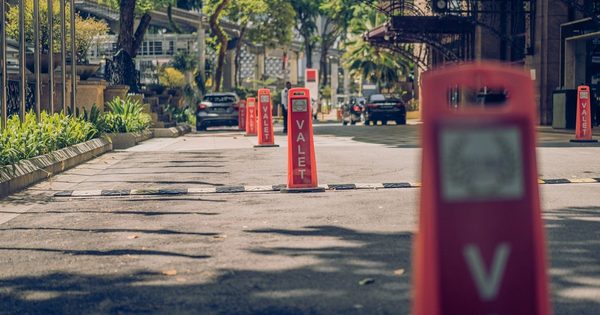
Valet parking creates a fundamentally different liability relationship than self-park. When a customer hands their key to a valet attendant, the parking operator takes legal custody (bailment) of the vehicle and assumes responsibility for its condition until it is returned. This elevated liability exposure makes professional valet operations procedures — particularly key control, vehicle inspection, and damage claim management — not merely good practice but essential risk management.
Bailment Law and Valet Liability
Valet parking creates a “bailment for hire” — a legal relationship in which one party (the bailee/valet operator) takes temporary possession of another party’s property (the bailor’s vehicle) in exchange for compensation. Under bailment law, the bailee has a duty of care to exercise reasonable caution to protect the bailed property and return it in the same condition in which it was received.
In practice, this means that if a vehicle is damaged while in the valet operation’s care — whether by a runner’s driving error, a fender ding in the valet storage area, or vandalism while in valet custody — the operator is presumed responsible unless it can demonstrate that the damage was pre-existing or caused by a third party beyond the operator’s control.
Pre-damage documentation at vehicle acceptance is the primary tool for limiting bailee liability to damage that occurs in valet care.
Vehicle Inspection and Key Receipt Procedures
At the moment a customer presents their vehicle for valet service, a standardized inspection and receipt procedure protects both parties:
Vehicle inspection: The accepting attendant (typically the front captain, not the runner) conducts a walk-around of the vehicle, noting pre-existing damage on the valet claim ticket or handheld inspection device. Standard inspection categories: front bumper, rear bumper, driver door, passenger door, hood, trunk lid, windshield, wheels. Damage is noted with a code (scratch, dent, chip, crack) and approximate location. Many operations use a printed vehicle diagram on the back of the claim ticket for notation.
Customer co-signature or acknowledgment: The customer should be shown the noted pre-existing damage and invited to agree or note additional items. Some operations provide the customer with a carbon copy of the damage notation on their claim ticket; others use digital inspection records sent by text or email.
Claim ticket issuance: A numbered claim ticket (valet stub) is issued to the customer. The ticket number links to the vehicle record, key location, and damage documentation. Lost claim ticket procedures should be posted and communicated — most operations require a delay (30 to 60 minutes) and ID verification before releasing a vehicle without the ticket.
Odometer recording: Recording the odometer reading at acceptance documents the vehicle mileage. This protects against claims that valet runners took the vehicle on unauthorized extended drives.
Key Control Procedures
Vehicle keys are the single most operationally critical item in a valet operation. Lost or misused keys create immediate vehicle recovery problems and significant liability.
Key board system: The central key board (or key safe) is the command point for vehicle key management. Each key position on the board corresponds to a claim ticket number. Keys should never leave the key board area except in the hands of an authorized runner fulfilling a retrieval request.
Runner chain of custody: When a runner is dispatched to retrieve a vehicle, they sign out the key from the board with their name, time, and vehicle description. Upon return with the vehicle, they sign back in. This chain of custody document allows rapid investigation if a vehicle or key cannot be located.
Master key log: A log of all keys received, dispatched for retrieval, and returned at vehicle pickup provides a complete record for any inquiry. Digital valet management systems (ValuValet, Towbook, Sievert Larson Valet Systems, or equivalent) automate this tracking and send digital receipts to customers.
Key security: Key boards should be in a locked, supervise-access area. Master keys (for vehicles where the customer provides only the key fob) should be stored in a locked key cabinet. At the end of each operational period, all keys on the board should be accounted for and the count matched to open claim tickets.
Damage Claim Management
Despite best efforts, damage claims will occur in valet operations. The protocol for handling them:
Immediate documentation: When a damage claim is presented — either at vehicle return or after the customer has departed — document immediately. Photograph the claimed damage with a timestamp. Pull the pre-acceptance inspection record to compare.
Claim form completion: Complete a damage claim form with the vehicle description, damage described, date/time of acceptance and return, names of accepting and returning attendants, and claim ticket number.
Investigation: Review the pre-acceptance inspection record. If the damage was documented at acceptance, the claim is denied. If the damage was not documented, it is presumed to have occurred in valet custody and should be processed for repair.
Claims processing: Most operations pay minor damage claims (small scratches, minor dents under a defined threshold, commonly $300 to $500) directly to avoid insurance claims and maintain customer goodwill. Larger claims are submitted to the valet liability insurance carrier.
Never admit fault without investigation: Staff should be trained to acknowledge the claim, collect information, and inform the customer that the manager will follow up — not to admit fault or deny the claim without completing the investigation and inspection record comparison.
Insurance Requirements
Valet operations require specialized insurance coverage that is distinct from general parking lot liability:
Garage keeper’s legal liability (GKLL): Covers the operator’s legal liability for damage to vehicles in its care. Coverage limits should be set at or above the highest-value vehicles expected in the operation (commonly $100,000 to $500,000 per occurrence for upscale hotel, restaurant, or event valet).
Garage liability: Covers bodily injury and property damage to third parties arising from valet operations — a runner who causes an accident while driving a customer vehicle, for example.
Workers’ compensation: Required for all employees, including part-time valet staff.
Annual certificate of insurance documentation and verification of coverage limits should be required for any valet subcontractor.
Frequently Asked Questions
What legal obligation does a valet operator have for a customer’s vehicle? Valet parking creates a bailment for hire relationship, under which the valet operator is the bailee and assumes a duty of care to protect the vehicle and return it in the same condition received. Operators are presumed responsible for damage that occurs while the vehicle is in their custody and cannot be attributed to pre-existing damage or third-party action.
How should pre-existing vehicle damage be documented at valet acceptance? Use a standardized inspection checklist noting damage by location and type (scratch, dent, chip) on a vehicle diagram. Provide the customer with a copy or digital confirmation. Customer co-signature or explicit acknowledgment at acceptance strengthens the documentation.
What insurance does a valet operation require? Garage keeper’s legal liability coverage (for damage to customer vehicles) and garage liability coverage (for third-party bodily injury and property damage) are required. Coverage limits should reflect the highest-value vehicles expected. Workers’ compensation is required for all employees including part-time staff.
How should a valet damage claim be handled? Document the claim immediately with photographs, complete a claim form, compare against the pre-acceptance inspection record, and advise the customer that the manager will follow up. Pay minor claims directly below a defined threshold; submit larger claims to the GKLL carrier. Never admit or deny fault before completing the investigation.
Takeaway
Professional valet operations are built on rigorous procedures for the moments of highest liability risk: vehicle acceptance, key custody, and damage claim investigation. The investment in standardized inspection forms, numbered claim tickets, a documented key control system, and proper insurance coverage pays for itself in reduced claims, faster dispute resolution, and lower liability exposure. Valet operations that treat these procedures as bureaucratic overhead rather than essential risk management consistently experience higher claim rates and more contentious customer relationships than those that execute them consistently and professionally.
Further Reading from Authoritative Sources
- IPMI valet operations standards and parking service quality guidance — The International Parking and Mobility Institute is the primary professional authority for valet parking operations standards, including the GKLL insurance, driver qualification, and customer service requirements discussed in the article.
- Motor vehicle record verification requirements for commercial vehicle operators — The U.S.