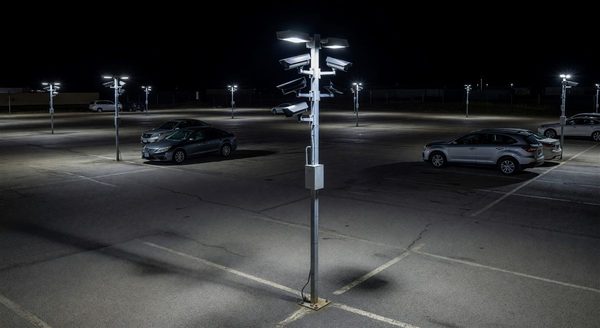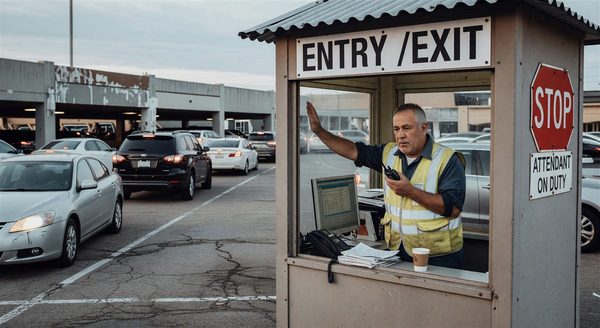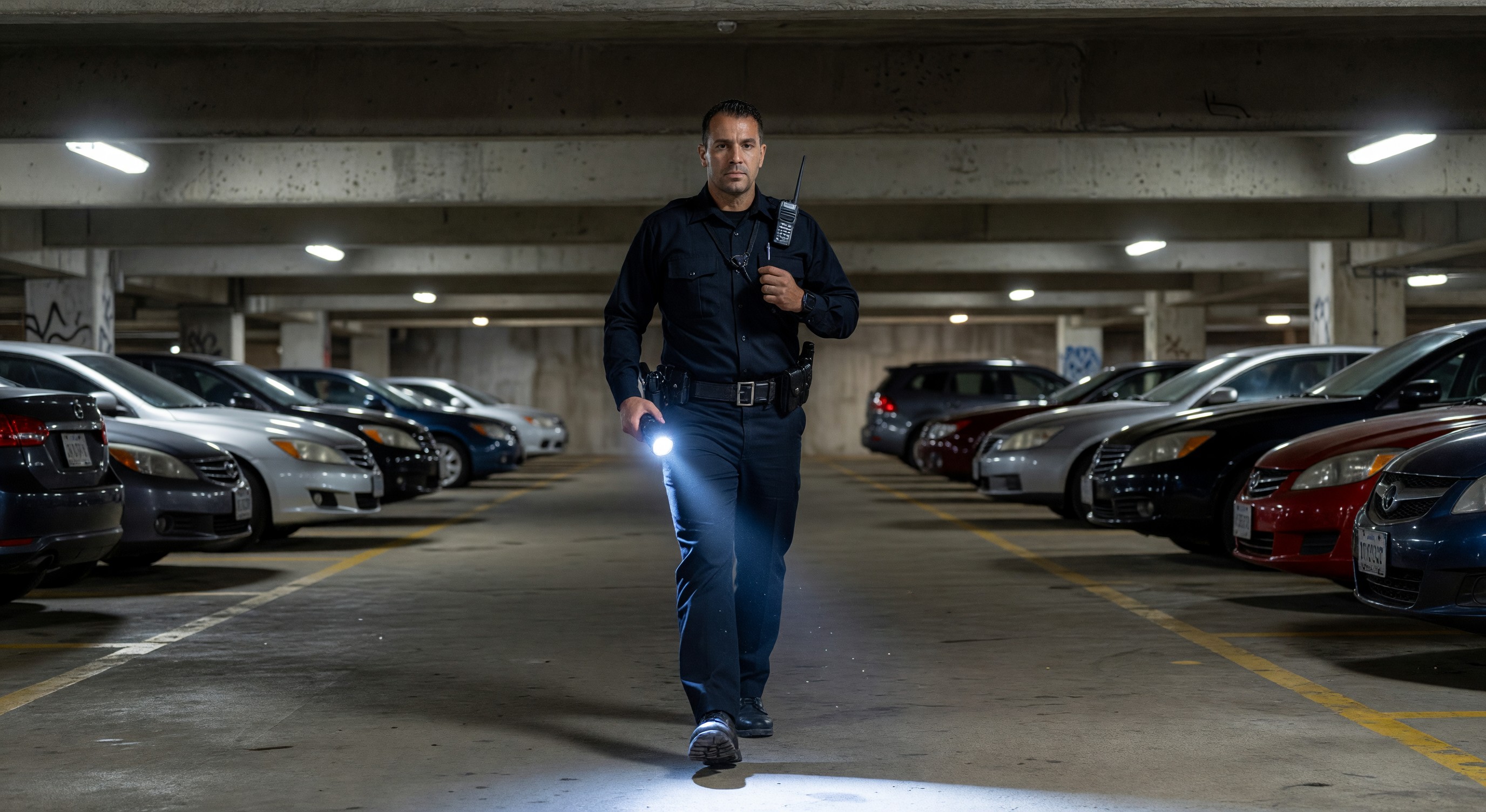
Security patrols in parking facilities serve a deterrence function as much as an incident response function. A uniformed security officer or marked vehicle visible in the facility reduces opportunistic crime — vehicle break-ins, theft, and vandalism — by raising the perceived risk of observation and intervention. When incidents do occur, a patrol officer who observes them or responds quickly is the difference between a documented, managed event and an undetected loss.
Patrol Pattern Design
Effective patrol patterns balance coverage efficiency with unpredictability. A patrol that follows an identical route at identical intervals every time becomes predictable — a motivated offender will identify the pattern and time criminal activity to avoid it.
Zone-based coverage: Divide the facility into zones based on area, lighting conditions, CCTV coverage gaps, and historical incident concentration. Higher-risk zones (poorly lit areas, perimeter sections with limited natural surveillance) receive higher patrol frequency.
Randomized interval patrols: The patrol schedule specifies minimum visit frequency for each zone but not the specific timing. A zone that requires coverage every 30 minutes should receive visits at intervals of 15 to 45 minutes (averaging 30), not at exactly 30-minute fixed intervals.
Patrol mode mix: Patrol on foot provides better observation capability and interpersonal deterrence than vehicle patrol; vehicle patrol covers more area per unit time. Effective patrol programs use both modes — vehicle for initial coverage sweeps, foot for detailed inspection of stairwells, elevator lobbies, and dead-end areas that vehicle patrol cannot adequately observe.
Stairwell and elevator lobby priority: These locations are the highest-risk areas for personal crime in parking structures — they are access points with limited natural surveillance. Patrol should include direct visual inspection of every stairwell and elevator lobby at least every 60 minutes during operational hours.
Observation Standards
Security patrol officers must know what to observe, not merely where to go:
Vehicle condition anomalies: Vehicles with windows left open or down, vehicles with visible valuables in plain sight, vehicles with expired registration or suspicious characteristics (no plates, covered plates, damage patterns suggesting prior criminal activity). These are not grounds for action but warrant notation in the patrol log.
Person behavior anomalies: Individuals who appear to be checking door handles on parked vehicles; persons without apparent purpose moving between vehicles; loitering at stairwells or elevator lobbies for extended periods without using them. These warrant increased observation and, in some cases, contact.
Facility condition: Lighting failures, damaged CCTV cameras, vandalism in progress, open or damaged perimeter fencing, drainage or surface hazards. Patrol officers are the eyes of the facility maintenance team; timely reporting of facility conditions is a core patrol function.
Documentation discipline: Every patrol must be documented in the patrol log. At minimum: patrol start time, route followed, observations noted, and any incidents or actions taken. Facilities using electronic patrol systems (GuardMet, TEAM Software, or equivalent) timestamp guard check-in at defined stations, creating a verifiable patrol record.
Incident Reporting Standards
When a security officer observes or responds to an incident, the report must capture:
- Date, time, and precise location of the incident
- Description of parties involved (appearance, vehicle description if applicable)
- Description of the incident (what was observed or reported)
- Actions taken by the security officer
- Names and contact information of any witnesses
- Whether law enforcement was called and the responding officer’s name and case number
- Whether CCTV footage was preserved
Incident reports should be submitted to the facility manager within 24 hours of the incident, regardless of whether law enforcement was involved. Aggregate incident reports reviewed monthly identify patterns that patrol or physical security improvements can address.
Coordination with Law Enforcement
Security patrol in parking facilities often requires coordination with local law enforcement:
Trespass enforcement: Many jurisdictions allow private property owners or authorized agents to issue trespass notices and request law enforcement assistance in removing trespassers. Security officers should know the applicable state trespass statute and the facility’s posted trespass notice procedure.
Criminal incident reporting: Any criminal incident (theft, assault, vandalism) that is reported to the security officer should also be reported to law enforcement, with the exception of mutual-agreement incidents between parties that they explicitly choose not to report. Facilitate law enforcement access and CCTV footage preservation.
Regular communication: Some high-crime or high-concern facilities establish regular communication channels with local police — briefings on recent incidents, identification of repeat offenders, and coordination on visible patrol in and around the facility. Local crime prevention through environmental design (CPTED) officers can provide facility assessment at no cost in many jurisdictions.
Frequently Asked Questions
What is the ideal parking facility security patrol frequency? High-risk areas (stairwells, poorly lit sections, perimeter zones with limited CCTV coverage) should receive patrol at least every 30 minutes. General parking areas should receive coverage every 60 minutes. Exact timing should be randomized within those windows to prevent predictable pattern recognition by potential offenders.
Should parking security patrol on foot or in vehicles? Both modes should be used. Vehicle patrol covers more area per unit time for initial sweeps; foot patrol provides better observation capability and interpersonal deterrence in enclosed or confined areas (stairwells, elevator lobbies, dead-end zones). A combination of both modes produces the most effective coverage.
What should a security patrol officer document in their log? Patrol log entries should include the patrol start time, route followed, all observations (facility conditions, behavior observations, vehicle anomalies), and any incidents or actions taken. Electronic patrol systems with timestamped check-ins provide a verifiable and legally defensible patrol record.
How should parking security coordinate with local law enforcement? Establish a direct contact with the local precinct or crime prevention unit. Report all criminal incidents to law enforcement. Know the applicable trespass statute for the jurisdiction. Consider formal communication arrangements with police if the facility is in a high-crime area or has recurring incident patterns.
Takeaway
Effective parking facility security patrol is a system of visible presence, structured observation, consistent documentation, and coordinated incident response — not a random walk through the facility. Patrol patterns designed for coverage and unpredictability, observation standards that tell officers what to look for, and documentation practices that create a verifiable record produce security operations that genuinely deter crime and provide useful evidence when incidents occur. Facilities with professional patrol programs consistently experience lower crime rates than comparable facilities with informal or absent patrol practices.
Further Reading from Authoritative Sources
- IPMI parking security and safety operations standards — The International Parking and Mobility Institute is the primary professional authority for parking security operations standards, providing the operational framework referenced in the article.
- Federal transportation facility safety and security guidance — The U.S.