Long-term and overnight parking operations occupy a distinct niche between standard parking and self-storage. Facilities that manage extended-stay parking — RVs, boats, personal watercraft, classic cars, and extended-absence vehicle storage — serve customers whose needs, liability profile, and operational requirements differ significantly from the daily transient parker. Understanding these differences is essential to operating a profitable and legally defensible long-term storage program.
Long-Term Parking Program Types
Airport long-term parking: By far the most common long-term commercial parking application. Passengers leaving for extended trips (1 to 30+ days) park at lower rates than economy daily rates in exchange for distance from the terminal and shuttle service. Rates are set weekly or monthly with significant discount over daily equivalents. Security and vehicle condition documentation are critical because vehicles are left unattended for extended periods.
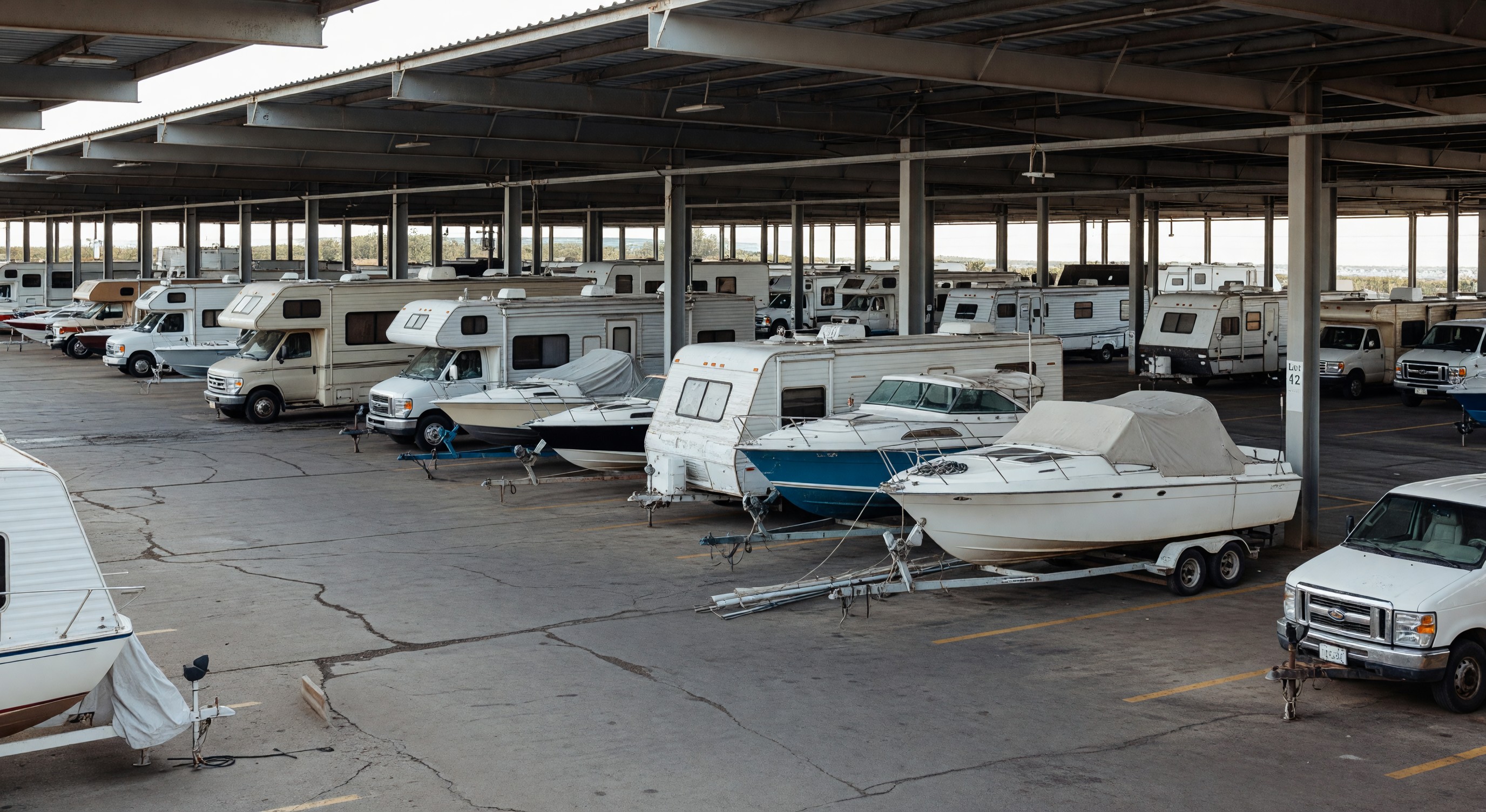
RV and oversized vehicle storage: Storage of recreational vehicles (Class A, B, C motorhomes; travel trailers; fifth-wheels), boats on trailers, personal watercraft, and other oversized vehicles. These vehicles require stall dimensions substantially larger than standard (12 to 16 feet wide, 35 to 50+ feet long). They are seasonal storage items for many owners — stored October through April, used May through September — creating utilization patterns opposite to standard parking.
Boat storage (dry stack and ground-level): Marinas and boat storage facilities offer dedicated boat storage adjacent to water access. Ground-level boat storage is essentially a specialized parking operation — large stalls, seasonal demand, utility connections (shore power), and security requirements. Rates are typically monthly or annual.
Classic and exotic vehicle storage: Enclosed or covered storage for high-value vehicles whose owners want climate and weather protection. A growing market in markets with harsh winters or extreme heat. These programs command premium rates ($100 to $500 per month) and require documented condition at check-in and check-out.
Pricing Structures for Long-Term Storage
Long-term storage pricing should reflect the cost of occupied space over time, reduced turnover (the facility cannot rent the stall to another customer while occupied), and the services provided:
Weekly rates: 4 to 6 times the daily rate. Appropriate for airport long-term parking where vehicles may stay 3 to 14 days.
Monthly rates: For RV and boat storage, monthly rates of $75 to $300 per month for surface storage; $200 to $600 per month for covered storage. Rates vary significantly by market and amenity level.
Annual leases: For stable, year-round storage demand, annual lease rates provide revenue predictability and reduce administrative overhead from month-to-month account management.
Seasonal pricing: RV and boat storage with strong seasonal demand can use higher rates during peak storage season (fall/winter storage) and lower rates during in-use season (spring/summer), reflecting supply and demand dynamics.
Vehicle Condition Documentation
Long-term storage creates extended periods of unobserved custodianship — the vehicle owner is not present to observe its condition for days, weeks, or months. This creates heightened liability for the storage operator. Vehicle condition documentation at check-in and check-out is legally and operationally essential.
Check-in inspection: Photograph all sides of the vehicle, including detailed shots of any pre-existing damage. Record the odometer and fuel level. Document any mechanical issues the customer reports (broken mirrors, existing dents, non-functional items). Have the customer countersign the condition report.
Check-out inspection: Before releasing the vehicle at departure, photograph the same reference points. Any new damage discovered between check-in and check-out photos triggers a damage claim process.
Ongoing storage inspection: For vehicles stored more than 30 days, periodic condition checks (monthly is standard) allow early detection of theft, vandalism, or weather damage. Document each check with timestamped photographs.
Security Requirements for Long-Term Storage
Long-term storage vehicles are high-value assets left in the operator’s custody for extended periods. Security requirements are higher than for transient parking:
Perimeter security: A fenced and gated perimeter with controlled access (key code, card reader, or attended gate) prevents unauthorized access. The fence should be of sufficient height (6 to 8 feet minimum) and construction (chain link or welded mesh) to deter casual intrusion.
CCTV coverage: Video coverage of all entry/exit points, perimeter, and vehicle storage areas. Retention of at least 30 days for all footage. If a theft or vandalism is reported, it is often discovered days or weeks after the event — short retention periods eliminate forensic evidence.
Lighting: Adequate nighttime lighting throughout the storage area. Poorly lit storage areas are more vulnerable to theft. IES RP-20 enhanced security footcandle levels (3 fc minimum average) are appropriate for long-term storage applications.
Check-in/check-out documentation: The access control record (who entered and when) combined with CCTV footage provides the investigation basis if a theft or damage event is reported.
Insurance and Liability
Long-term storage creates a storage bailee relationship — the storage operator takes custody of a high-value asset for an extended period. Insurance coverage must reflect this:
Bailee’s customer goods coverage: Standard commercial liability insurance does not cover damage to property in the operator’s care, custody, and control (CCC). Bailee’s customer goods coverage provides specific protection for stored vehicles. Coverage limits should be set at the aggregate maximum value of vehicles stored simultaneously.
Customer insurance verification: Many long-term storage programs require customers to maintain their own vehicle insurance (comprehensive coverage for damage, theft, etc.) as a condition of storage. Document this requirement in the storage agreement.
Storage agreement terms: A well-drafted storage agreement defines the operator’s duties and limitations of liability, the customer’s obligations (maintaining insurance, notifying of vehicle condition changes), and the process for damage claims.
Frequently Asked Questions
What stall dimensions are required for RV and boat storage? Standard stall dimensions for RV and boat storage are 12 to 16 feet wide and 35 to 50+ feet long, depending on the size of vehicles served. Large Class A motorhomes and 40+ foot trailers require the upper end of this range. Allow maneuvering aprons at least 50 feet deep in front of stall rows for back-in access.
How should vehicle condition be documented for long-term storage? Photograph all sides of the vehicle at check-in, including detail shots of any pre-existing damage. Record odometer and fuel level. Have the customer countersign the condition report. Conduct monthly condition checks with dated photographs for vehicles in storage more than 30 days.
What insurance does a long-term vehicle storage operator need? Bailee’s customer goods coverage provides specific protection for stored vehicles in the operator’s care, custody, and control — standard commercial liability does not provide this coverage. Limits should be set at the aggregate maximum value of vehicles stored simultaneously. Also require customers to maintain their own comprehensive vehicle insurance.
What security is appropriate for long-term vehicle storage? Fenced and gated perimeter with controlled access (minimum 6 to 8-foot fence), CCTV coverage with 30-day minimum retention, adequate nighttime lighting (3 fc minimum average), and access control log documentation. The access control record combined with CCTV provides investigation basis for theft and vandalism claims.
Takeaway
Long-term and overnight vehicle storage operations require more rigorous vehicle condition documentation, security infrastructure, and insurance coverage than standard parking — because the operator holds custody of high-value assets for extended unobserved periods. Facilities that establish clear check-in/check-out documentation procedures, maintain adequate perimeter security, carry appropriate bailee insurance, and have well-drafted storage agreements operate this business with manageable risk. Those that treat long-term storage as simply extended parking — without the additional documentation and security measures — expose themselves to liability claims that far exceed the storage revenue the program generates.
Further Reading from Authoritative Sources
- IPMI long-term storage and specialty parking operations resources — IPMI’s specialty operations resources cover long-term storage, airport parking, and other extended-stay parking program types, providing the professional standards and operational guidance that complement this article’s guidance on RV, boat, and extended vehicle storage management.
- FHWA parking operations best practices for specialized parking programs — FHWA publishes parking operations best practices that cover documentation, security, and liability management relevant to the extended storage operations this article addresses, providing federal transportation authority context for the risk management framework.