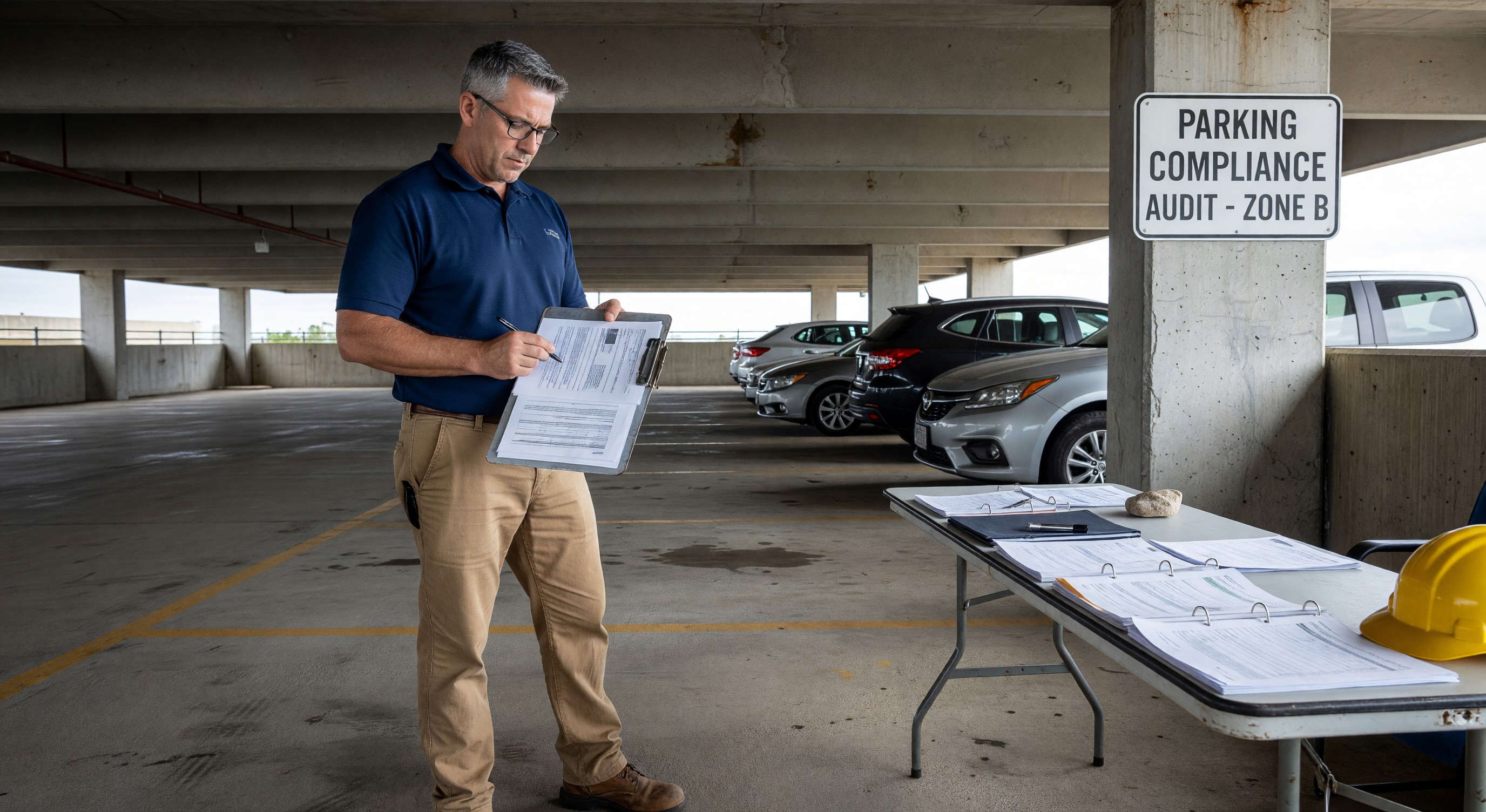
Parking operations audits — whether conducted by facility ownership, management company review teams, or independent third parties — are the systematic check that validates whether the operational standards, revenue controls, and compliance requirements of the facility are being met in practice. The gap between written policy and daily practice is where most operational problems originate. Regular audits close this gap.
Audit Types and Purposes
Self-assessment: Conducted by facility management or the parking operator using a standardized checklist. Purpose is ongoing operational monitoring — identifying and correcting issues before they become significant problems. Recommended frequency: monthly for high-stakes operations (healthcare, airport, high-revenue commercial); quarterly for standard commercial facilities.
Management company audit: For facilities operated by a third-party management company, periodic audits by the management company’s district management or internal audit team assess whether the local facility is operating to company standards. Frequency varies by company; quarterly is typical for standard facilities.
Owner audit: The property owner (or owner’s representative) audits the operator’s performance against the management contract or lease terms. Purpose is contract compliance verification. Frequency: annually or triggered by performance concerns.
Third-party independent audit: An independent firm (accounting firm, parking consulting firm, or dedicated parking audit company) conducts an objective assessment of operations, revenue controls, and compliance. Most appropriate for owner/operator disputes, concerns about revenue integrity, or pre-transaction due diligence.
Revenue Control Audit Elements
Revenue control is the most financially consequential audit focus:
Cash handling procedures:
- Starting bank amounts match documented standards for each cashier position type
- Bank issuance and reconciliation documentation is complete and dual-signed
- Vault drops are documented and match shift reconciliation records
- Cash counting uses counting machine with audit tape retained
- Daily bank deposit receipts match reconciled cash totals
- Dual custody documented for vault access and cash deposits
PARCS transaction records:
- Daily revenue reports generated and reviewed
- Void rate reviewed monthly; rate above 1-2% investigated
- Exception transaction log reviewed weekly
- Revenue reconciliation between PARCS total and deposited amount documented daily
Monthly parker accounts:
- Current account list matches active permit count
- All active permits are billing; no unpaid active accounts
- Permit database updated for recent moves, plate changes, and cancellations
- Waitlist management documented; FIFO queue discipline maintained
ADA Compliance Audit Elements
Accessible space count and location:
- Total accessible spaces equal or exceed the required count for total inventory per ADA table
- At least 1 in 6 accessible spaces is van-accessible
- Accessible spaces located on the shortest accessible route to the accessible building entrance
Space dimensions:
- Accessible stalls are minimum 8 feet wide with 5-foot access aisle (or 11-foot wide with 5-foot aisle for van-accessible)
- Access aisle is at the same level as the stall
- Cross slopes within stalls and aisles do not exceed 2%
Signage:
- ISA signs posted at each accessible space at 60-66 inches mounting height
- Van-accessible designation included on all van-accessible spaces
- Signs visible from the parking position without being blocked by parked vehicles
Accessible route:
- Continuous accessible route from accessible stalls to accessible building entrance
- Crosswalks marked at all drive aisle crossings on accessible route
- Surface is firm, stable, and slip-resistant throughout accessible route
Equipment and Maintenance Audit Elements
- All entry and exit equipment operational; equipment failure log reviewed
- Equipment uptime calculated monthly and compared to SLA
- PM schedule is current; all scheduled visits have been completed and documented
- Lighting inspection completed; burned-out fixtures replaced within 48 hours of report
- CCTV system operational; recording and retention verified
- Pavement condition inspected; cracks, potholes, and surface defects documented
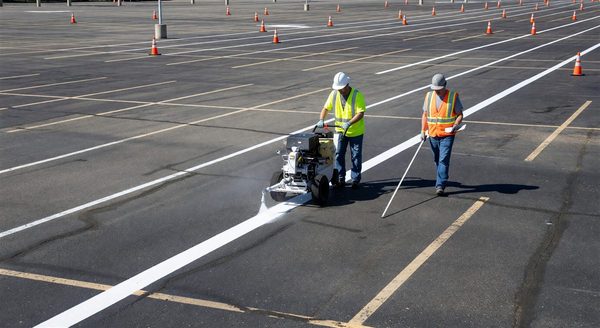
- Striping condition assessed; faded markings identified for restriping schedule
Safety Audit Elements
- OSHA required safety training documentation current for all staff
- Emergency contact list current and posted
- AED locations confirmed and batteries/pads current
- Incident report log reviewed; patterns analyzed
- Fire extinguisher inspections current
- Evacuation procedures posted in stairwells and at building exits
- High-visibility PPE available and worn by staff working in traffic areas
Customer Experience Audit Elements
- Mystery shop results current (within 30 days)
- Online review ratings monitored and responses posted
- Complaint log reviewed and trends identified
- Customer satisfaction survey results reviewed against benchmark
- Facility cleanliness: trash removal, graffiti response time, power washing schedule current
Environmental Compliance Audit Elements
- Stormwater permit conditions reviewed and monitored
- Oil-water separator inspection and pumping current (typically annual)
- De-icing chemical storage and handling documented
- Wash water disposal procedures comply with local stormwater requirements
- Spill response kit available and stocked
Frequently Asked Questions
How often should a parking facility conduct a self-audit? Monthly for high-stakes facilities (healthcare, airport, high-revenue commercial) and quarterly for standard commercial facilities. Self-audits between third-party visits maintain operational standards and identify issues before they become significant.
What triggers a third-party independent parking audit? Common triggers: owner/operator revenue disputes, concerns about cash handling integrity, management contract renewal due diligence, acquisition or disposition of a parking asset, or regulatory compliance questions.
Does ADA compliance require periodic re-auditing? Yes. ADA compliance should be audited after any resurfacing, restriping, or layout change — and at least annually regardless. Pavement settling, striping wear, and layout modifications all create opportunities for non-compliance to develop between active construction events.
What should happen when an audit identifies a compliance deficiency? Document the finding with specifics (location, measurement, photograph). Assign a responsible party and deadline for correction. Re-audit the specific deficiency within 30 days of the correction deadline to confirm resolution. Document the correction in the audit record.
Takeaway
Parking operations audits are the systematic mechanism for closing the gap between written policy and daily practice — the gap where most revenue loss, compliance failures, and operational problems originate. A comprehensive audit checklist covering revenue controls, ADA compliance, equipment condition, safety, customer experience, and environmental compliance provides the framework for consistent self-assessment. Third-party audits add independence and objectivity that self-assessment cannot fully replicate. Together, they constitute the oversight infrastructure that protects facility revenue, operator contract performance, and owner investment.
Further Reading from Authoritative Sources
- ADA parking facility compliance requirements and 2010 Standards reference — ADA.gov is the authoritative federal source for the 2010 ADA Standards for Accessible Design that the audit checklist’s accessible space section references.
- EPA stormwater compliance requirements for parking facility operations — The EPA administers the NPDES stormwater permit program and publishes compliance guidance for parking facility operators, including oil-water separator requirements, de-icing chemical management, and wash water disposal standards.